
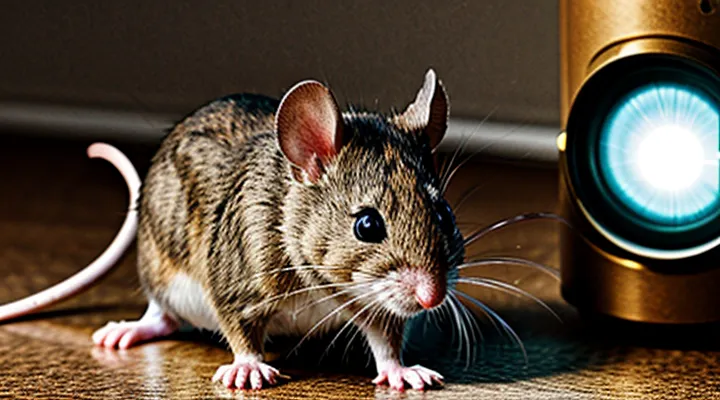
Anatomy of the Mouse Eye
Retina Structure and Photoreceptors
The mouse retina consists of a multilayered neural sheet that transduces photons into electrical signals. Light enters through the cornea and lens, reaching the photoreceptor layer positioned at the outermost edge of the retina. This layer is organized into a mosaic of rods, cones, and intrinsically photosensitive retinal ganglion cells (ipRGCs), each contributing to distinct aspects of visual processing.
- Rods: Highly sensitive to low‑intensity illumination, rods dominate the peripheral retina and enable detection of dim light. Their high quantum efficiency allows mice to respond behaviorally to scotopic conditions within milliseconds.
- Cones: Concentrated in the central retina, cones mediate color discrimination and high‑resolution vision under photopic illumination. Two cone subtypes, S‑cones (short‑wavelength) and M‑cones (medium‑wavelength), provide spectral tuning that influences approach‑avoidance behavior in response to colored stimuli.
- ipRGCs: Express melanopsin and respond directly to ambient light levels. They project to brain regions governing circadian rhythms and pupillary reflexes, shaping physiological and behavioral adaptations to sustained illumination.
The spatial distribution and functional specialization of these photoreceptors determine how mice process varying light intensities and spectra. Rod‑driven pathways trigger rapid locomotor suppression under sudden darkness, while cone pathways support navigation in well‑lit environments. ipRGC signaling modulates sleep‑wake cycles and pupil constriction, aligning internal states with external lighting conditions. Together, retinal architecture and photoreceptor complement provide a comprehensive substrate for the observed light‑driven behaviors in laboratory mice.
Optic Nerve and Brain Connections
The optic nerve in mice consists of axons from retinal ganglion cells that converge at the optic disc and exit the eye as a single bundle. Myelination begins within the optic chiasm, allowing rapid conduction of photic signals to central structures.
Light‑evoked activity travels from the optic nerve to several defined brain nuclei. Primary targets include the dorsal lateral geniculate nucleus (dLGN), which relays visual information to the visual cortex, and the superior colliculus, which coordinates reflexive eye movements. The suprachiasmatic nucleus receives direct retinal input for circadian entrainment, while the pretectal area mediates pupillary light reflexes. Additional projections reach the olivary pretectal nucleus and the ventral lateral geniculate nucleus, supporting motion detection and contrast processing.
Key connections and functional implications:
- dorsal lateral geniculate nucleus – visual cortex feed‑forward pathway, essential for image formation.
- superior colliculus – integration of visual cues with motor output, governing orienting responses.
- suprachiasmatic nucleus – photic entrainment of the master clock, influencing behavioral rhythms.
- pretectal nuclei – mediation of pupillary constriction and reflexive eye movements.
- ventral lateral geniculate nucleus – processing of motion and low‑contrast stimuli.
Electrophysiological recordings demonstrate latency of 5–10 ms from retinal spike initiation to cortical response, highlighting the efficiency of the optic‑brain conduit. Disruption of specific pathways, such as lesions of the dLGN, abolishes cortical visual evoked potentials while preserving reflexive responses mediated by the superior colliculus, confirming functional segregation within the optic projection system.
Circadian Rhythms and Light
Entrainment to Light-Dark Cycles
Mice synchronize their internal circadian clocks to external light‑dark cycles through a process known as photic entrainment. Light exposure during the subjective night induces phase shifts in the suprachiasmatic nucleus (SCN), the master pacemaker, by altering the expression of clock genes such as Per1 and Cry1. Retinal ganglion cells containing melanopsin convey irradiance information to the SCN via the retinohypothalamic tract, establishing a reliable time cue for the organism.
Experimental protocols typically involve:
- 12 h light/12 h dark (LD) schedules with controlled intensity (100–500 lux) to assess phase‑locking.
- Light pulses of 15–30 min administered at various circadian times to generate phase response curves.
- Constant darkness (DD) following LD exposure to measure free‑running period and the stability of entrainment.
Key observations from laboratory studies include:
- Mice exposed to consistent LD cycles maintain a 24‑h activity rhythm with minimal drift.
- Light pulses delivered during the early night produce phase delays, whereas pulses in the late night generate phase advances.
- High‑intensity light accelerates re‑entrainment after a shift in the LD schedule, reducing the number of days required for activity onset to align with the new cycle.
- Genetic disruption of melanopsin or the SCN attenuates entrainment, resulting in fragmented or arrhythmic behavior under LD conditions.
These findings demonstrate that murine circadian systems rely on precise photic cues to align physiological and behavioral processes with the environmental day‑night pattern. Continuous monitoring of locomotor activity, body temperature, and hormone levels confirms that entrainment extends beyond locomotion, influencing metabolism, immune function, and cognitive performance.
Impact of Light Intensity on Circadian Clocks
Mice exhibit precise adjustments of their internal timing mechanisms when exposed to varying levels of illumination. Light intensity directly modulates the suprachiasmatic nucleus (SCN) activity, altering the phase and amplitude of circadian gene expression. High‑intensity light pulses produce rapid induction of Per1 and Cry1 transcripts, resulting in an advance of the activity onset by several hours. Low‑intensity illumination yields modest transcriptional changes, delaying the onset of locomotor activity without fully resetting the clock.
Experimental measurements reveal consistent patterns:
- Photopic illumination (>100 lux) triggers a steep rise in SCN neuronal firing rates within minutes, followed by sustained elevation throughout the light period.
- Dim light (<5 lux) generates a gradual increase in firing, insufficient to shift the phase but capable of fine‑tuning the rhythm’s period.
- Intermediate intensities (10–30 lux) produce proportional changes in gene expression, allowing graded control of circadian timing.
The relationship between intensity and clock adjustment follows a sigmoid dose‑response curve. Threshold intensity for a detectable phase shift lies near 10 lux, while saturation occurs above 300 lux, beyond which additional photons do not produce further advancement. This saturation reflects the limited dynamic range of melanopsin‑expressing retinal ganglion cells that convey photic information to the SCN.
Chronobiological models incorporate intensity‑dependent parameters to predict behavioral outcomes. Simulations calibrated with empirical data accurately forecast activity onset under complex light regimes, such as alternating bright and dim periods. These models demonstrate that manipulating light intensity can synchronize population‑level rhythms without altering the light‑dark cycle length.
In summary, light intensity serves as a quantitative cue that calibrates mouse circadian clocks through graded activation of retinal pathways, transcriptional cascades, and neuronal firing patterns. Precise control of illumination provides a powerful tool for experimental manipulation of temporal physiology.
Behavioral Responses to Light
Light Avoidance and Preference
Mice exhibit distinct behavioral responses when exposed to illumination, ranging from avoidance of bright environments to selective attraction to specific light conditions. Experiments consistently demonstrate that laboratory mice prefer darkness in the light/dark box test, spending 70–90 % of the session in the shaded compartment. This avoidance intensifies with increasing intensity; exposure to 500 lux reduces exploration of the illuminated zone by approximately 45 % compared to 100 lux.
Preference for particular wavelengths emerges under controlled conditions. Mice display a measurable attraction to short‑wave (blue, 470 nm) light when presented with a choice between blue and green (525 nm) LEDs, spending 60 % of the observation period near the blue source. The effect reverses at higher intensities, with blue illumination above 300 lux prompting avoidance similar to that observed with white light.
Key factors influencing light‑related behavior include:
- Circadian phase: Activity peaks during the dark phase; light exposure during subjective night produces stronger avoidance than during subjective day.
- Strain variability: C57BL/6J mice show higher photophobic responses than BALB/c, reflecting genetic differences in retinal photoreceptor density.
- Age: Juvenile mice (3–4 weeks) exhibit reduced avoidance, spending up to 30 % more time in illuminated zones than adults.
- Sex: Male mice generally display marginally greater avoidance, though differences do not exceed 5 % of total time spent in darkness.
Methodological considerations ensure reliable data. The light/dark box should maintain consistent illumination (±5 lux) and allow free movement between compartments. Video tracking software records latency to enter the light side, total time spent, and number of transitions. For wavelength preference, a two‑choice arena equipped with narrow‑band LEDs and neutral density filters standardizes intensity across colors.
Pharmacological manipulation confirms the neural basis of these behaviors. Administration of a melatonin receptor antagonist reduces darkness preference by 20 %, indicating involvement of the suprachiasmatic nucleus in mediating light avoidance. Conversely, activation of melanopsin‑expressing retinal ganglion cells via optogenetic stimulation enhances attraction to low‑intensity blue light.
Overall, mouse responses to illumination comprise a balance between innate aversion to high‑intensity light and selective attraction to specific spectral cues. Experimental parameters—intensity, wavelength, circadian timing, and genetic background—modulate the degree of avoidance or preference, providing a robust framework for studying visual processing and circadian regulation in rodents.
Startle Response to Sudden Light Exposure
Mice exhibit a rapid startle reflex when exposed to an abrupt increase in illumination. The response initiates within 30–80 ms of light onset and consists of a brief whole‑body contraction, followed by a forward thrust of the forelimbs and an immediate cessation of locomotion. Electromyographic recordings show a spike in the trapezius and forelimb flexor muscles synchronized with the visual stimulus, indicating activation of the reticulospinal pathway.
Key characteristics of the photic startle include:
- Latency: 30–80 ms from light onset to muscle activation.
- Duration: 100–250 ms of heightened muscular tension before return to baseline.
- Amplitude: Peak electromyographic activity reaches 1.5–2.5 times the resting level.
- Habituation: Repeated exposures at 1‑Hz reduce response magnitude by ~40 % after 20 trials.
Physiological mechanisms involve retinal ganglion cells sensitive to sudden luminance changes, which transmit signals to the superior colliculus and subsequently to brainstem nuclei governing motor output. The suprachiasmatic nucleus modulates the response amplitude according to circadian phase; nocturnal periods produce larger startle magnitudes than diurnal periods.
Environmental variables influencing the reflex are:
- Intensity: Threshold for elicitation lies near 10 lux; responses scale with intensity up to 500 lux.
- Wavelength: Short‑wave (blue) light generates stronger reactions than long‑wave (red) light at equivalent photon flux.
- Ambient adaptation: Mice adapted to darkness display a 25 % longer latency compared with those adapted to moderate light levels.
These observations provide a reliable assay for assessing sensory-motor integration, neural excitability, and the impact of genetic modifications on rapid visual processing in rodent models.
Neurological Mechanisms of Light Response
Role of Melanopsin-Expressing Retinal Ganglion Cells
Melanopsin‑expressing retinal ganglion cells (ipRGCs) constitute the principal conduit for ambient‑light detection in the murine visual system. Their intrinsic photopigment, melanopsin, activates a G‑protein cascade that generates depolarizing currents at irradiances lower than those required for classical rod‑cone pathways. The resulting spike trains convey luminance information directly to subcortical nuclei, bypassing image‑forming circuits.
The output of ipRGCs drives several non‑image‑forming behaviors. Continuous illumination induces pupil constriction, synchronizes the suprachiasmatic nucleus to the light‑dark cycle, and suppresses nocturnal activity (negative masking). Disruption of melanopsin signaling attenuates these responses, demonstrating the cells’ sufficiency for mediating light‑dependent physiological adjustments.
Key experimental observations include:
- Genetic ablation of melanopsin‑positive ganglion cells eliminates pupillary light reflexes at moderate light levels while preserving rod‑cone‑driven visual acuity.
- Knockout mice lacking Opn4 (the melanopsin gene) display delayed circadian entrainment and reduced suppression of wheel‑running activity under constant light.
- Electrophysiological recordings reveal sustained firing of ipRGCs in response to steady‑state illumination, contrasting with the transient responses of photoreceptors.
- Pharmacological blockade of melanopsin signaling reduces light‑evoked c‑Fos expression in the ventral lateral geniculate nucleus, confirming central projection of ipRGC activity.
Collectively, these data establish ipRGCs as the dominant retinal element translating environmental light into adaptive behavioral and physiological responses in mice.
Genetic Factors Influencing Photophobia
Photophobia in laboratory mice results from specific genetic variations that alter retinal signaling and neural processing of luminance. Mutations in the melanopsin gene (Opn4) reduce intrinsic photosensitivity of retinal ganglion cells, leading to heightened aversion to bright environments. Conversely, loss‑of‑function alleles in the rod‑specific transducin gene (Gnat1) diminish rod pathway input, shifting reliance toward cone and melanopsin pathways and amplifying light avoidance behaviors.
Circadian clock genes also modulate light sensitivity. Disruption of cryptochrome genes (Cry1, Cry2) perturbs the entrainment of the suprachiasmatic nucleus, causing aberrant responses to nocturnal illumination. Polymorphisms in the phosphodiesterase 6B gene (Pde6b) affect phototransduction cascade efficiency, influencing threshold levels at which mice exhibit photophobic reactions.
Key genetic contributors include:
- Opn4 (melanopsin)
- Gnat1 (rod transducin α‑subunit)
- Cry1, Cry2 (cryptochromes)
- Pde6b (phosphodiesterase 6B)
- Rgs9 (regulator of G‑protein signaling)
Experimental evidence demonstrates that targeted knock‑out of Opn4 or Cry1/2 produces measurable increases in time spent in dimly lit zones during open‑field assays. Pharmacological modulation of downstream signaling pathways, such as inhibition of cGMP phosphodiesterase, partially rescues photophobic phenotypes in Pde6b‑deficient strains, confirming the causal link between these genes and light‑driven behavior.
Overall, the genetic architecture governing photophobia in mice integrates photoreceptor function, intracellular signaling, and circadian regulation, providing a mechanistic framework for interpreting light‑avoidance experiments.
Experimental Methodologies
Optogenetic Techniques in Light Studies
Optogenetics provides precise control of neuronal activity in mice using light‑sensitive proteins. By delivering channelrhodopsin, halorhodopsin, or newer opsins through viral vectors, researchers can activate or inhibit specific circuits with millisecond resolution. Light delivery typically employs fiber‑optic cannulae implanted over targeted brain regions, allowing stimulation patterns that mimic natural photic cues.
Experimental designs combine genetically encoded sensors with behavioral assays. Mice expressing calcium indicators reveal real‑time activity changes during light pulses, while open‑field or elevated‑plus maze tests quantify alterations in locomotion, anxiety‑like behavior, and circadian entrainment. Data acquisition relies on synchronized video tracking and electrophysiological recording to correlate optogenetic manipulation with observable phenotypes.
Key methodological considerations include:
- Choice of opsin based on activation spectrum and kinetic profile.
- Viral serotype and promoter selection to achieve cell‑type specificity.
- Implantation depth and angle to ensure uniform illumination of the target area.
- Calibration of light intensity to avoid phototoxic effects while maintaining sufficient photocurrent.
Recent advances integrate multiplexed stimulation, enabling simultaneous activation of distinct neuronal populations with different wavelengths. This approach refines the dissection of pathways that mediate visual perception, pupil reflexes, and mood regulation in rodents. Optogenetic tools thus constitute a central component of contemporary investigations into mouse photic behavior, delivering reproducible, high‑resolution insights into how light influences neural circuits.
Behavioral Assays for Light Sensitivity
Behavioral assays provide quantitative measures of mouse light sensitivity, allowing researchers to correlate neural activity with observable responses. Commonly employed protocols include the following:
- Light/Dark Box Test – Mice are placed in a two‑compartment apparatus, one side illuminated, the other dark. Primary metrics are latency to enter the illuminated zone, total time spent under light, and number of transitions. Adjusting light intensity (e.g., 10–500 lux) reveals dose‑response relationships.
- Phototaxis Assay – A linear track presents a gradient from darkness to a defined light source. Researchers record directional movement, speed, and distance traveled toward the light. Repeated trials control for habituation effects.
- Open‑Field Illumination – Standard open‑field arenas receive brief light pulses (e.g., 1‑s, 100 lux) while video tracking captures changes in locomotor activity, freezing duration, and rearing frequency. Temporal analysis distinguishes immediate versus delayed reactions.
- Visual Cliff Test – A patterned surface creates an illusion of depth; a transparent platform separates a “shallow” and “deep” side, both illuminated equally. Preference for the shallow side indicates visual perception of contrast under light conditions.
- Optomotor Response – Rotating vertical stripes are projected under controlled illumination. Head tracking movements are quantified to assess visual acuity and contrast sensitivity across varying light levels.
Critical experimental considerations include:
- Standardized lighting – Use calibrated LED sources, document spectral composition, and maintain consistent ambient illumination across sessions.
- Acclimation period – Allow a minimum of 5 minutes in the testing environment before stimulus onset to reduce stress‑induced variability.
- Control groups – Include genetically unmodified mice and, when applicable, blind or retinally altered strains to validate assay specificity.
- Data normalization – Express behavioral metrics as ratios to baseline activity or as percent change relative to pre‑stimulus values, facilitating cross‑study comparisons.
Statistical analysis typically employs repeated‑measures ANOVA or mixed‑effects models to evaluate the influence of light intensity, duration, and genotype on behavioral outcomes. Proper implementation of these assays yields reliable insight into the mechanisms governing mouse responses to visual stimuli.
Environmental Light Conditions and Welfare
Effects of Constant Light Exposure
Constant illumination disrupts the circadian system of laboratory mice, leading to measurable physiological and behavioral alterations. Experimental data show that prolonged exposure to unvarying light suppresses melatonin secretion, eliminates the typical nocturnal surge, and flattens the daily rhythm of core body temperature. These hormonal changes correlate with increased corticosterone levels, indicating heightened stress.
Metabolic consequences include elevated blood glucose, reduced insulin sensitivity, and a shift toward adiposity despite unchanged caloric intake. Muscle tissue exhibits decreased oxidative enzyme activity, while hepatic lipid accumulation intensifies, reflecting impaired lipid metabolism.
Behavioral assessments reveal diminished locomotor activity during the subjective night, reduced exploratory behavior in open‑field tests, and impaired performance in maze learning tasks. Social interaction declines, as measured by reduced approach behavior in resident‑intruder paradigms.
Key observations can be summarized:
- Suppressed melatonin and altered hormone profiles
- Elevated stress markers (corticosterone)
- Disrupted glucose regulation and increased fat deposition
- Reduced physical activity and exploratory drive
- Impaired cognitive and social functions
Long‑term constant light exposure also accelerates age‑related phenotypes, such as cataract formation and retinal degeneration, confirming that continuous illumination compromises ocular health. Collectively, these findings underscore the necessity of maintaining a dark phase in experimental protocols to preserve normal physiological and behavioral states in murine models.
Optimal Lighting for Laboratory Mice
Laboratory mice require lighting conditions that support normal circadian rhythms, visual function, and welfare. Research indicates that a light‑dark cycle of 12 hours light and 12 hours dark reproduces natural photoperiods and stabilizes hormonal cycles such as melatonin secretion.
Optimal illumination intensity falls between 100 and 300 lux measured at cage level. Values below 50 lux reduce visual acuity and increase stress markers, while intensities above 500 lux elevate cortisol and disrupt sleep patterns. Light sources should emit a broad spectrum with a correlated color temperature of 4000–5000 K, closely matching daylight and minimizing retinal strain.
Key parameters for establishing an optimal lighting regime include:
- Photoperiod consistency: Maintain identical start and end times daily; avoid abrupt phase shifts.
- Intensity uniformity: Ensure even distribution across the cage floor; use diffusers or indirect lighting to prevent hotspots.
- Spectral composition: Prefer white LED fixtures with minimal ultraviolet and infrared output; supplement with low‑intensity red light during the dark phase if visual monitoring is required.
- Noise reduction: Select fixtures with low flicker frequency (< 100 Hz) to prevent retinal fatigue and behavioral disturbances.
Temperature control interacts with lighting; ambient room temperature should remain within 20‑24 °C, as higher temperatures amplify the physiological impact of bright light. Regular calibration of light meters and periodic verification of fixture performance are essential to sustain the prescribed conditions.
Implementing these standards yields reproducible behavioral data, enhances animal health, and aligns experimental outcomes with ethical guidelines.