
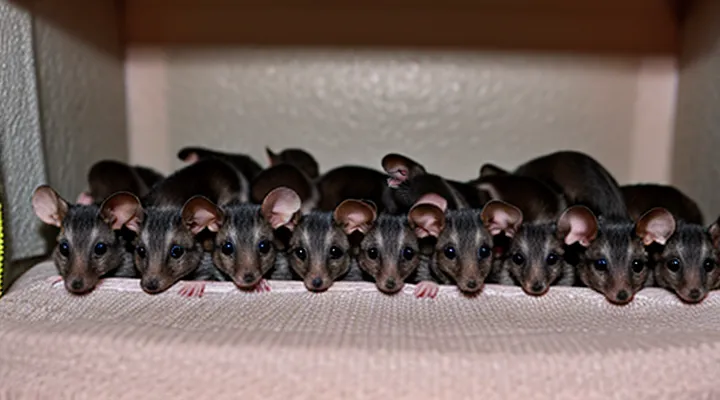
Understanding Mouse Reproduction
The Mouse Reproductive Cycle
Estrous Cycle Duration
The length of the estrous cycle in laboratory mice directly influences the timing of conception and, consequently, the number of offspring produced per delivery. A complete cycle lasts approximately four to five days, comprising four distinct phases that repeat without interruption.
- Proestrus: 12‑14 hours; follicles mature, estrogen peaks.
- Estrus: 12‑14 hours; ovulation occurs, females become receptive.
- Metestrus: 12‑14 hours; corpus luteum forms, progesterone rises.
- Diestrus: 48‑72 hours; progesterone dominates, uterus prepares for implantation.
Short cycles enable frequent breeding opportunities, allowing a female to conceive soon after weaning her previous litter. When estrus recurs every 4‑5 days, a mouse can produce multiple litters within a typical breeding season, each litter averaging 5‑8 pups. Extended cycles delay ovulation, reduce the number of breeding cycles per year, and consequently lower the total offspring count. Monitoring cycle duration therefore provides a reliable predictor of reproductive output in mouse colonies.
Gestation Period
The gestation period of the common laboratory mouse (Mus musculus) averages 19‑21 days from conception to delivery. This interval is remarkably consistent across strains, with minor variations of one to two days attributable to environmental temperature, nutrition, and hormonal status. The short gestational span enables rapid reproductive cycles, directly influencing the number of offspring produced in a single breeding episode.
Key characteristics of mouse gestation:
- Duration: 19 days (average), range 18‑22 days.
- Embryonic development: organogenesis completes by day 12, after which fetal growth accelerates.
- Placental type: hemochorial, allowing efficient maternal‑fetal nutrient exchange.
- Hormonal control: progesterone and prolactin levels peak mid‑gestation, sustaining uterine quiescence until parturition.
Because the gestation period is brief, mice can achieve multiple litters per year, each typically containing 5‑8 pups. The fixed length of pregnancy sets a physiological ceiling on how many young a female can produce in one reproductive event.
Factors Influencing Litter Size
Age of the Mother Mouse
The age of a female mouse directly influences the number of offspring produced in a single delivery. Young females, typically 6–8 weeks old, reach sexual maturity and can generate litters of 5–8 pups. As the mouse ages to the prime reproductive window of 3–6 months, litter size often rises to 7–12 pups, reflecting optimal physiological condition.
Beyond six months, reproductive efficiency declines. Females aged 7–12 months commonly produce 4–7 pups, and individuals older than one year may yield 2–5 offspring per birth. The reduction results from hormonal changes, decreased uterine capacity, and higher incidence of embryonic loss.
Key factors associated with maternal age include:
- Hormone levels: peak estrogen and progesterone during early adulthood support larger litters.
- Ovarian reserve: declines with age, limiting the number of viable ova.
- Uterine elasticity: diminishes over time, restricting embryo implantation space.
Experimental data from laboratory strains (e.g., C57BL/6) align with these trends, showing a statistically significant drop in average litter size after the seventh month of life. Wild‑type populations exhibit similar patterns, though environmental stressors can further modulate outcomes.
Nutritional Status
Nutritional condition of a female mouse determines the number of offspring produced in a single gestation. Adequate protein intake raises average litter size from 5‑6 to 8‑9 pups, whereas diets deficient in essential amino acids reduce it to 3‑4. Energy balance influences embryonic survival; excess caloric intake can increase litter size but also raise the incidence of intra‑uterine mortality.
Key nutritional parameters affecting reproductive output:
- Protein percentage: 18‑20 % of diet yields optimal litter size; below 12 % causes marked decline.
- Caloric density: 3.5–4.0 kcal g⁻¹ supports maximal pup numbers; deficits below 2.8 kcal g⁻¹ limit offspring.
- Micronutrient adequacy: Sufficient vitamin E and selenium improve embryonic viability, indirectly boosting total pups.
- Body condition score: Females with a score of 3–4 on a 5‑point scale produce larger litters than those scoring 1–2.
Timing of nutrient availability also matters. Females receiving a high‑quality diet during the pre‑ovulatory phase generate the largest litters, while supplementation after conception yields modest improvements. Chronic malnutrition leads to extended inter‑litter intervals and reduced pup count, highlighting the direct link between diet quality and reproductive capacity.
Environmental Conditions
Environmental factors exert a direct influence on the number of offspring a mouse produces in a single reproductive event. Temperature extremes reduce litter size; optimal breeding occurs within a narrow thermal window of 20‑26 °C, where metabolic efficiency supports embryonic development. Nutrient availability determines maternal condition; diets rich in protein and energy correlate with larger litters, while deficiencies in essential amino acids or vitamins suppress fetal growth and increase embryonic loss.
Key variables affecting litter size include:
- Ambient temperature: mild warmth promotes higher pup counts; cold stress triggers hormonal suppression.
- Food quality and quantity: caloric surplus and balanced micronutrients enable larger litters; scarcity limits reproductive output.
- Photoperiod length: longer daylight periods stimulate reproductive hormones, leading to increased offspring numbers.
- Housing density: moderate crowding reduces stress and can elevate litter size, whereas excessive crowding raises cortisol levels and diminishes pup production.
- Humidity levels: relative humidity between 40‑60 % maintains optimal respiratory function for pregnant females; extreme dryness or moisture impairs gestation.
Seasonal shifts integrate these parameters, resulting in predictable fluctuations in reproductive output. Monitoring and adjusting environmental conditions in laboratory or breeding facilities yields consistent litter sizes, facilitating experimental reliability and population management.
Genetic Predisposition
Genetic makeup determines the range of offspring a mouse can produce in a single gestation. Specific alleles influence uterine capacity, embryonic survival, and hormonal regulation, resulting in measurable variation among strains. Laboratory mice such as C57BL/6 typically produce 6–8 pups, whereas outbred strains like CD‑1 often reach 10–12. Selective breeding has established lines with consistently larger litters, confirming heritability of this trait.
Key genetic contributors include:
- Genes regulating placental development (e.g., Pappa2, Igf2).
- Loci affecting ovarian follicle maturation (e.g., Fshb, Lhr).
- Polymorphisms linked to maternal behavior that indirectly impact pup survival.
Quantitative trait locus (QTL) mapping consistently identifies regions on chromosomes 2, 7, and 11 associated with increased litter size. Genome‑wide association studies in heterogeneous stock mice corroborate these findings, showing that cumulative effects of multiple loci explain up to 30 % of the phenotypic variance. Consequently, genetic predisposition sets the upper limit for the number of pups a mouse can deliver in one reproductive event.
Typical Litter Sizes
Average Number of Pups
The average litter size for a laboratory mouse typically ranges from five to eight pups per delivery. Wild house mice (Mus musculus) produce slightly larger litters, often eight to twelve offspring, with occasional reports of up to fifteen. The variation depends on strain, age, nutrition, and environmental conditions.
Key factors influencing litter size:
- Genetic background (inbred strains vs. outbred populations)
- Female age (peak fertility around 8–12 weeks)
- Diet quality and caloric intake
- Seasonal temperature and photoperiod
Across multiple studies, the mean number of pups per birth for commonly used strains such as C57BL/6 and BALB/c hovers around six to seven, providing a reliable benchmark for breeding programs.
Range of Litter Sizes
Small Litters
Mice generally produce litters ranging from two to twelve young, with the lower end of this spectrum classified as small litters. Small litters occur more frequently in certain species, such as the house mouse (Mus musculus), and under specific physiological or environmental conditions.
Key factors influencing reduced litter size include:
- Maternal age – younger or older females often deliver fewer pups.
- Nutritional status – limited protein or caloric intake correlates with smaller broods.
- Stress exposure – elevated cortisol levels suppress embryo implantation.
- Genetic background – inbred laboratory strains can exhibit consistently low numbers.
Data from controlled breeding programs show average small litter counts as follows:
- First-generation house mice: 2–4 pups per pregnancy.
- Wild-caught Mus spretus: 3–5 pups.
- Laboratory inbred lines (e.g., C57BL/6): 2–5 pups.
Small litters affect population dynamics by reducing short‑term reproductive output, which can slow colony expansion when resources are scarce. However, they may enhance offspring survival when maternal investment per pup increases, as evidenced by higher weaning weights in litters of three or fewer.
Large Litters
Mice typically produce litters that range from three to twelve offspring per birth. A litter exceeding eight pups is generally classified as large for the species.
Research on the common house mouse (Mus musculus) reports the following maximum litter sizes:
- 13 pups – laboratory strain under optimal feeding conditions
- 12–14 pups – wild populations with abundant resources
- 15 pups – exceptional cases in controlled breeding programs
Other murine species display similar upper limits: the deer mouse (Peromyscus maniculatus) can reach 10–12 pups, while the African pygmy mouse (Mus minutoides) rarely exceeds six.
Factors that increase litter size include:
- Genetic lines selected for high fecundity
- High‑protein diets and unrestricted food access
- Maternal age between three and six months
- Low stress environments with stable temperature
Large litters impose physiological demands on the dam, often reducing individual pup weight and survival probability. Nevertheless, they provide valuable data for studies of reproductive biology, genetics, and population dynamics.
Variations by Mouse Species
House Mouse (Mus musculus)
The house mouse (Mus musculus) is a small rodent with a high reproductive capacity. Females reach sexual maturity at 5‑6 weeks and can produce multiple litters during a single breeding season.
A typical litter contains 5‑8 pups, although recorded extremes range from 3 to 14 individuals. The average number of offspring per parturition is approximately 6.5. Variability depends on factors such as the mother’s age, nutritional status, and environmental conditions.
Key determinants of litter size:
- Maternal age: younger and prime‑aged females tend to have larger litters.
- Food availability: abundant resources increase embryonic survival and offspring count.
- Seasonal temperature: mild climates support higher reproductive output.
Deer Mouse (Peromyscus maniculatus)
The deer mouse (Peromyscus maniculatus) is a small North‑American rodent known for rapid reproductive cycles. Females reach sexual maturity within six weeks and can produce multiple litters each breeding season.
Typical litter size ranges from three to six pups per birthing event. Recorded observations show:
- Minimum: 2 pups
- Common range: 3–6 pups
- Maximum documented: 9 pups
Litter size is influenced by maternal age, nutritional condition, and environmental temperature. Younger, well‑fed females tend to produce larger litters, while food scarcity or extreme cold can reduce offspring numbers.
Breeding occurs primarily from spring to early autumn. In favorable conditions, a single female may give birth to three or four litters per season, resulting in a potential total of 9–24 offspring from one individual over the course of a year.
Post-Birth Care and Development
Neonatal Pups
Appearance at Birth
Newborn mouse pups emerge hairless, pink, and nearly naked. Their bodies measure roughly 1 cm in length and weigh between 0.5 and 1.0 g. Eyes remain sealed, and ears are undeveloped, rendering the pups dependent on maternal care for thermoregulation and nutrition.
Body proportions reflect the size of the litter. Larger litters produce slightly smaller individual pups, while smaller litters yield proportionally heavier offspring. All pups possess a well‑developed tail, though it is short relative to adult length, and their forelimbs and hindlimbs are present but lack coordinated movement.
Key physical traits at birth:
- Hairless, pink skin
- Closed eyelids
- Undeveloped ear pinnae
- Tail present, short
- Weight 0.5–1.0 g
- Length about 1 cm
These characteristics are consistent across the common house mouse (Mus musculus) and closely related species, providing a baseline for assessing neonatal health and developmental progress.
Dependence on Mother
The number of offspring a mouse produces in a single birthing event directly influences the degree of neonatal reliance on the dam. Newborn pups are altricial: they lack fur, open eyes, and thermoregulation, making maternal care essential for survival. Immediate post‑natal periods require the mother for warmth, nutrition, and protection against predators and environmental hazards.
Key aspects of maternal dependence include:
- Thermal regulation: The dam provides a nest of body heat; pups cannot maintain core temperature independently.
- Nutrition: Milk contains antibodies and nutrients vital for growth; pups lack the ability to ingest solid food for the first two weeks.
- Hygiene: The mother cleans each pup, stimulating urination and defecation, preventing infection.
- Protection: The dam guards the nest from conspecific aggression and external threats, reducing mortality risk.
Litter size determines the allocation of maternal resources. Larger litters increase competition for milk and space, potentially extending the period before pups achieve independence. Conversely, smaller litters allow more intensive care per individual, accelerating developmental milestones. The balance between offspring number and maternal investment shapes survival rates and population dynamics.
Parental Investment
Nursing Behavior
Mice typically produce litters ranging from three to twelve offspring, with most laboratory strains averaging six to eight pups per delivery.
Maternal nursing in rodents follows a tightly regulated pattern. Mothers initiate feeding within a few hours after birth and maintain a cycle of brief, frequent suckling bouts that last 1–3 minutes each. Milk production rises sharply during the first postpartum week, reaching peak protein and fat concentrations that support rapid growth. The dam’s nest‑building, pup‑retrieving, and thermoregulatory actions complement direct nursing, ensuring a stable microenvironment.
- Suckling frequency: 30–40 bouts per day during the first week, decreasing to 10–15 by the third week.
- Milk composition: elevated casein and lactose levels during days 1–7; gradual shift toward higher lipid content thereafter.
- Pup grooming: cleaning of oral and fur regions after each bout, reducing infection risk.
- Nest maintenance: regular rearrangement of bedding to preserve optimal temperature and humidity.
Larger litters impose greater demands on the mother’s milk output and time allocation. To meet the nutritional needs of eight or more pups, dams extend the duration of the lactational phase and increase the total volume of milk secreted. Conversely, smaller litters allow for shorter nursing cycles and earlier weaning.
Strain genetics, ambient temperature, and maternal experience modify nursing intensity. Experienced females typically exhibit more efficient suckling schedules and produce higher milk yields than first‑time mothers. Environmental enrichment that reduces stress can also enhance nursing performance, leading to improved pup survival and growth rates.
Nesting Practices
Mice construct nests that provide thermal insulation, predator concealment, and a stable platform for rearing offspring. The architecture typically consists of shredded paper, cloth fibers, or plant material arranged in a shallow depression. Nest density correlates with litter size; larger litters prompt the mother to expand the cavity and increase material volume to maintain optimal temperature (approximately 30 °C) for neonates.
Key nesting behaviors include:
- Material selection: Preference for soft, absorbent fibers that retain heat and reduce moisture loss.
- Layering: Initial foundation of coarse debris followed by a finer inner lining that contacts the pups.
- Maintenance: Periodic rearrangement of bedding to remove waste and adjust for growth, especially during the first two weeks after birth.
Experimental observations indicate that a typical mouse litter ranges from 5 to 8 pups, with occasional extremes of 3 to 12. When litter size approaches the upper limit, females increase nest size by 20‑30 % and augment material intake by a comparable proportion. This adjustment ensures each pup receives adequate warmth and protection without compromising maternal mobility.
The nesting cycle concludes when juveniles attain weaning age (approximately 21 days). At this stage, the mother abandons the nest, and the structure deteriorates as remaining materials are reclaimed for future reproductive events.
Survival Rates of Pups
Predation
The size of a mouse litter directly influences its vulnerability to predators, because each additional pup increases the probability that a predator will encounter the nest. Predators such as owls, snakes, and domestic cats locate nests by detecting movement, scent, and heat signatures; larger litters generate stronger cues. Consequently, natural selection favors a balance between reproductive output and predation risk, resulting in typical litters of five to eight pups for the house mouse (Mus musculus).
Key predation‑related factors affecting litter size:
- Detection intensity: More pups produce louder squeaks and greater body heat, attracting visual and thermal hunters.
- Nest disturbance: Predators that raid nests often remove multiple offspring, reducing overall survival rates per birthing event.
- Maternal investment: Females allocating resources to larger litters may produce weaker offspring, making them easier targets for aerial and ground predators.
- Habitat exposure: Open or sparsely vegetated environments increase predator access, prompting females to limit litter size compared with dense cover habitats.
Empirical studies show that in predator‑rich environments, average litter size declines by up to 30 % relative to predator‑free conditions, confirming that predation pressure is a primary driver of reproductive strategy in mice.
Resource Availability
Resource abundance directly determines the number of offspring a female mouse can produce in a single litter. When caloric intake, protein levels, and essential micronutrients meet or exceed physiological demands, females allocate more energy to embryonic development, resulting in larger litters. Conversely, scarcity of these nutrients forces a reduction in fetal investment, often limiting litters to the minimum viable size.
Empirical studies on laboratory and wild populations demonstrate a clear correlation:
- High‑protein diets increase average litter size by 1‑2 pups compared with standard chow.
- Continuous access to fresh water raises pup numbers by approximately 0.5 per litter.
- Availability of nesting material improves maternal comfort, allowing an additional pup in 10‑15 % of births.
- Spatial freedom that reduces stress elevates litter size similarly to nutritional enhancements.
Maternal body condition, shaped by these resources, serves as the proximate regulator. Adequate fat reserves enable the secretion of hormones that stimulate ovulation and support gestation, while deficits suppress reproductive hormones, truncating embryonic growth.
In summary, the quantity and quality of food, water, shelter, and space collectively set the upper limit for pup output per birth. Enhancing any of these elements expands the reproductive capacity of mice, whereas depletion contracts it.
Reproductive Strategies and Population Dynamics
High Reproductive Rate Benefits
Rapid Population Growth
A female mouse can produce a sizable number of offspring in a single reproductive event. Litter sizes commonly range from five to twelve pups, with occasional reports of fourteen or more. Gestation lasts 19–21 days, and females become fertile again within 24 hours after giving birth, allowing successive litters at roughly three‑week intervals.
- Average litter size: 5‑12 pups
- Maximum recorded litter: 14 pups
- Gestation period: 19‑21 days
- Post‑partum estrus: ≤24 hours
- Potential litters per year: 10‑12
The combination of large litters, short gestation, and rapid return to fertility creates exponential growth. Starting with a single breeding pair, theoretical calculations predict over 2 000 individuals after one year under ideal conditions, assuming no mortality and continuous breeding cycles.
Such reproductive efficiency explains why mouse populations can expand swiftly in confined environments, necessitating proactive control measures in laboratory, agricultural, and residential settings.
Adaptation to Environmental Changes
The number of offspring a female mouse produces in a single reproductive event reflects her capacity to adjust to fluctuating environmental conditions. When resources are abundant, larger litters increase the probability that some pups survive to adulthood; when food is scarce or predation risk rises, smaller litters reduce maternal energy expenditure and improve the chances of nurturing each pup.
Environmental variables influencing litter size include:
- Food availability: high caloric intake correlates with increased pup numbers; limited supply triggers a reduction.
- Temperature extremes: cold stress often leads to fewer embryos, conserving heat production.
- Population density: intense competition prompts mothers to allocate resources to fewer offspring.
- Seasonal cycles: breeding during favorable seasons yields larger litters, whereas off‑season reproduction results in smaller groups.
Physiological mechanisms enable rapid adjustment. Hormonal pathways, particularly variations in estrogen and progesterone, modulate ovulation rates in response to external cues. Metabolic signaling through leptin and insulin informs the reproductive axis about energy reserves, directly affecting embryo implantation success.
Long‑term adaptation emerges through genetic selection. Populations repeatedly exposed to harsh conditions develop alleles favoring reduced litter size, while those in stable, resource‑rich habitats retain genes supporting higher fecundity. This genetic shift aligns reproductive output with the prevailing ecological landscape, ensuring population persistence despite environmental volatility.
Ecological Impact of Mouse Populations
Role as Prey
The number of offspring produced by a female mouse directly influences its vulnerability to predators. Larger litters increase the probability that some pups will be detected by visual, olfactory, or auditory cues, thereby raising overall predation pressure on the nest. Conversely, the sheer volume of newborns can saturate predators, allowing a proportion of the cohort to survive—a phenomenon known as predator swamping.
Key aspects of this dynamic include:
- Detection risk: Each additional pup emits metabolic heat and scent, expanding the spatial footprint of the nest and attracting carnivores such as owls, snakes, and small mustelids.
- Escape opportunity: When a predator breaches the nest, the presence of many pups creates confusion and competition among them, which can delay the predator’s attack and improve the odds that some individuals flee.
- Maternal investment: Females with larger litters often allocate less time per pup, reducing the effectiveness of defensive behaviors like nest guarding and rapid relocation.
- Population turnover: High predation on densely populated nests accelerates turnover, maintaining a steady influx of naïve individuals that are more susceptible to future attacks.
Understanding the relationship between litter size and predation risk clarifies why mouse reproductive strategies balance the benefits of producing numerous offspring against the heightened exposure to natural enemies.
Agricultural Pests
Mice are among the most prolific agricultural pests, capable of generating large populations in a short time. A single female mouse typically delivers between five and eight offspring per litter; under optimal conditions the count can rise to twelve. Gestation lasts approximately twenty‑three days, allowing multiple litters—often three to five—within a single breeding season. Consequently, a solitary breeding female can produce 30 – 60 new mice annually, rapidly expanding infestations in stored grain, orchards, and field crops.
Key biological traits that drive pest pressure:
- Short reproductive cycle (≈ 3 weeks)
- High litter size (5–12 pups)
- Early sexual maturity (≈ 6 weeks)
- Ability to breed year‑round in heated storage environments
Population surges directly increase grain loss, contaminates produce with urine and feces, and facilitates disease transmission to livestock and humans. Effective management relies on integrated approaches: sanitation to eliminate food sources, structural exclusion to block entry, and targeted rodenticides applied according to monitoring data. Regular inspection of storage facilities and field borders reduces the risk of a single mouse establishing a breeding colony capable of overwhelming crops.
Population Control Mechanisms
Natural Predators
Mice produce litters that range from three to twelve offspring, a factor that directly influences their vulnerability to predation. Predators targeting newborns and nursing mothers reduce the effective number of surviving pups and shape reproductive strategies.
- Owls (e.g., barn owl, great horned owl) capture mice during night hunts, often seizing individuals that leave the nest to forage.
- Raptors such as hawks and kestrels attack during daylight, focusing on exposed juveniles.
- Snakes, particularly rat snakes and garter snakes, infiltrate burrows and consume both adult mice and their young.
- Small carnivores, including foxes, weasels, and feral cats, locate nests through scent and disturb litters while foraging.
- Larger mammals like coyotes and raccoons may raid mouse nests when other prey are scarce, adding pressure on pup survival.
Predation pressure lowers the average number of pups reaching independence. Studies show that in habitats with high predator density, litter survival can drop below 30 %, whereas in predator‑free environments survival exceeds 80 %. This discrepancy drives females to increase litter size or produce multiple litters annually to compensate for losses.
The presence of natural enemies also influences mouse behavior: mothers shorten nest attendance, offspring are weaned earlier, and populations exhibit rapid turnover. These adaptations maintain mouse numbers despite significant juvenile mortality caused by the predators listed above.
Disease
Mice commonly produce litters ranging from three to twelve offspring, but disease can dramatically reduce this output. Viral infections such as murine norovirus and Sendai virus suppress ovulation and impair embryonic development, often resulting in fewer than five pups per delivery. Bacterial pathogens, including Salmonella spp. and Streptococcus spp., cause maternal illness that leads to pregnancy loss or premature birth, decreasing the number of viable newborns. Parasitic infestations—Mycoplasma pulmonis, Eimeria spp., and ectoparasites like Myobia mites—induce systemic stress and nutritional deficits, which correlate with smaller litters.
Key disease impacts on mouse reproductive performance:
- Immunosuppression: Chronic viral load weakens the immune system, increasing miscarriage rates.
- Maternal morbidity: Severe bacterial sepsis often forces early parturition, limiting pup count.
- Nutrient competition: Parasites divert essential nutrients, reducing embryo viability.
- Hormonal disruption: Endocrine‑disrupting chemicals produced by certain pathogens alter estrous cycles, shortening the fertile window.
Preventive measures that stabilize litter size include strict biosecurity, routine health monitoring, and prophylactic antimicrobial protocols. Early detection of infection allows timely treatment, preserving both maternal health and the expected number of offspring per gestation.