
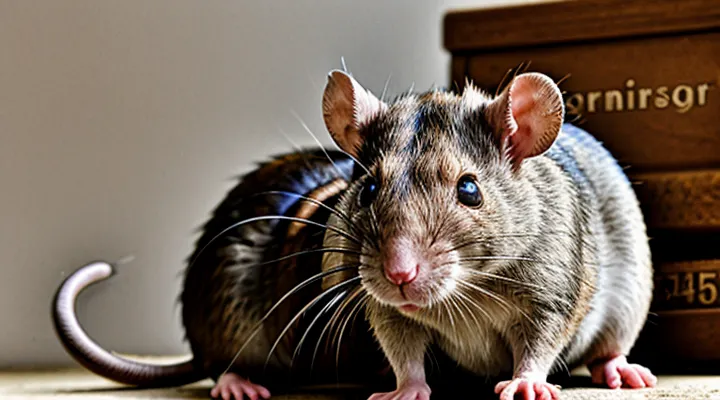
Understanding Rat Lifespan
Average Lifespan of Domestic Rats
Domestic rats (Rattus norvegicus) typically live 2 to 3 years under optimal conditions. Factors such as genetics, diet, housing, and veterinary care influence longevity; well‑managed laboratory or pet environments can extend lifespan to approximately 3 years, while poor conditions may reduce it to 1.5 years.
The conversion of rat age to human age relies on the ratio of average lifespans. Human life expectancy in developed regions averages 78 years. Dividing 78 years by the median rat lifespan of 2.5 years yields a conversion factor of roughly 31 human years per rat year. Applying this factor:
- 6 months of rat life ≈ 15 human years
- 1 year of rat life ≈ 31 human years
- 2 years of rat life ≈ 62 human years
Thus, a domestic rat reaching the end of its typical lifespan corresponds to a human age of about 60–90 years, depending on the exact lifespan achieved.
Factors Influencing Rat Longevity
Genetics and Breeding
Genetic determinants of lifespan set the baseline for translating a rat’s age into human-equivalent years. Shorter telomere length, higher metabolic rate, and specific alleles of the p53 and Sirt1 genes correlate with accelerated aging in laboratory rodents. Selective breeding for longevity introduces allelic variants that extend median survival from approximately 2.5 years to over 3.5 years, thereby shifting the conversion factor used to estimate human-age equivalents.
Breeding strategies influence the reliability of age‑conversion models. Inbred strains provide uniform genetic backgrounds, reducing variability in growth curves and facilitating precise mapping of developmental milestones to human stages. Outbred populations exhibit broader phenotypic ranges, requiring statistical adjustments to account for divergent maturation rates.
Key genetic and breeding considerations for estimating rat-to-human age equivalence:
- Telomere dynamics: shorter telomeres → earlier onset of age‑related decline.
- Metabolic gene variants (e.g., UCP1, CYP2E1): higher basal metabolism → faster aging timeline.
- Longevity‑selected lines: extended median lifespan → lower annual conversion factor.
- Inbreeding coefficient: high coefficient → consistent age markers, improved model accuracy.
- Cross‑generational selection: repeated breeding for delayed senescence → progressive refinement of human‑age estimates.
Applying these parameters, a rat reaching 12 months of age aligns with a human age of roughly 25 years, while a 24‑month‑old rat corresponds to a human age near 50 years. Adjustments for specific genetic backgrounds and breeding histories refine these equivalences, enabling more accurate translational research.
Diet and Nutrition
Rats typically live three to four years under optimal conditions, a span that translates to roughly thirty‑to‑forty human years when age conversion factors are applied. Nutritional quality exerts a decisive influence on this conversion, as diet directly determines health span and the rate of physiological aging.
Key dietary components for laboratory and pet rats include:
- «protein»: 18‑20 % of total calories, sourced from soy, casein or meat‑based meals;
- «fiber»: 4‑6 % of diet, provided by wheat bran, beet pulp or cellulose to promote gut motility;
- «fat»: 4‑6 % of calories, primarily from vegetable oils, supporting energy balance and coat condition;
- «vitamins» and «minerals»: balanced premixes supplying vitamin A, D, E, B‑complex, calcium, phosphorus and trace elements such as zinc and selenium.
Adequate intake of these nutrients slows metabolic decline, reduces incidence of age‑related diseases, and sustains organ function. Consequently, rats receiving a balanced, low‑calorie diet exhibit extended lifespans, shifting their human‑equivalent age upward by several years compared with individuals fed high‑fat or nutrient‑deficient rations.
To maximize longevity, caretakers should:
- Provide fresh, unprocessed feed formulated to meet the specified macro‑ and micronutrient ratios;
- Ensure constant access to clean water, as dehydration accelerates cellular aging;
- Limit caloric excess by adjusting portion sizes as the animal ages, mirroring calorie‑restriction strategies shown to prolong lifespan in rodents;
- Supplement with antioxidant‑rich foods, such as fresh fruits and vegetables, to mitigate oxidative stress that accelerates aging processes.
By adhering to these nutritional guidelines, the rat’s biological clock aligns more closely with the higher end of the human‑equivalent age spectrum, reflecting the critical role of diet in determining comparative longevity.
Environment and Enrichment
Rats reach maturity within a few months and typically survive two to three years, a span that translates to roughly seventy to eighty human years when age conversion is applied. Longevity and physiological development are highly sensitive to the conditions in which the animal lives.
- Adequate cage dimensions prevent chronic stress and promote natural movement.
- Consistent temperature (20‑24 °C) and humidity (40‑60 %) maintain metabolic stability.
- Regular light‑dark cycles (12 h / 12 h) synchronize circadian rhythms.
- Clean, absorbent bedding reduces respiratory irritation and infection risk.
Enrichment strategies further influence health outcomes:
- Nesting material enables construction of shelters, supporting thermoregulation and security.
- Complex structures such as tunnels, platforms, and climbing apparatus encourage exploratory behavior and muscular development.
- Chewable objects satisfy gnawing instincts, protecting dental health.
- Social housing with compatible conspecifics fosters normal social interactions and reduces anxiety.
Research demonstrates that enriched environments extend median lifespan and improve cognitive function. One study concluded, «Environmental enrichment extends lifespan», indicating that optimal housing directly modifies the rat‑to‑human age equivalence by fostering a healthier, longer‑lived specimen. Consequently, accurate age conversion must consider the quality of the animal’s environment and the presence of enrichment.
Veterinary Care
Rats reach sexual maturity at about two months, which corresponds to early adolescence in humans. Their average lifespan of three to five years translates to roughly 30–50 human years, depending on breed and environmental factors. Veterinary care must address this accelerated life stage to prevent premature health decline.
Routine examinations should occur every three to six months. Physical assessment includes weight monitoring, dental inspection, and evaluation of the integumentary system. Early detection of common conditions—such as respiratory infections, tumors, and dental malocclusion—extends functional years.
Preventive measures consist of:
- Balanced diet rich in protein, low in fat, and supplemented with fresh vegetables.
- Environmental enrichment to reduce stress and promote natural foraging behavior.
- Regular cleaning of cages to minimize exposure to pathogens.
- Vaccination only when indicated by regional disease prevalence; most pet rats do not require routine immunization.
Dental health requires particular attention. Continuous incisor growth necessitates provision of chewable objects and periodic trimming under anesthesia. Failure to manage dental overgrowth leads to oral ulceration and systemic infection, effectively reducing the rat’s human-equivalent age.
Emergency care focuses on rapid response to respiratory distress, gastrointestinal blockage, or traumatic injury. Prompt veterinary intervention can reverse acute crises that would otherwise accelerate aging processes.
End-of-life considerations involve humane euthanasia performed by a qualified veterinarian, ensuring a dignified conclusion that respects the animal’s quality of life.
The Concept of «Human Years» for Animals
Why the Comparison is Problematic
Comparing a rat’s lifespan directly to human years relies on oversimplified scaling, which ignores fundamental biological differences.
Rats mature at a rate that accelerates early development and decelerates later, whereas human growth follows a prolonged, multi‑phase trajectory. Consequently, a linear conversion misrepresents the timing of physiological milestones such as sexual maturity, cognitive decline, and organ senescence.
Metabolic processes diverge markedly: rodents exhibit a higher basal metabolic rate, leading to faster turnover of cells and tissues. This disparity alters the relationship between chronological age and functional decline, rendering a one‑to‑one age equivalence unreliable.
Genetic variability among laboratory strains and wild populations introduces further inconsistency. Environmental conditions—diet, housing, stress—modulate lifespan dramatically, so a fixed conversion factor cannot accommodate such heterogeneity.
Statistical extrapolation compounds error. Data sets typically encompass limited age ranges; extending findings to the full human lifespan exceeds the predictive capacity of the original measurements.
The resulting misinterpretation affects research design, risk assessment, and public communication. Users who rely on a simplistic age ratio may overestimate or underestimate the relevance of rodent models to human health outcomes.
Key reasons the comparison fails:
- Non‑linear developmental timelines
- Distinct metabolic rates
- Strain‑specific genetic factors
- Environment‑driven lifespan variation
- Inadequate statistical grounding
«The notion of a universal rat‑to‑human age conversion is scientifically untenable.»
Limitations of Direct Age Conversion
Direct conversion of a rat’s age into human‑equivalent years is attractive for quick comparisons, yet the approach overlooks several biological realities.
Key limitations include:
- Developmental trajectories differ markedly; rats reach sexual maturity within weeks, whereas humans require years, rendering linear scaling inaccurate.
- Lifespan curves are non‑linear; early life stages progress rapidly, while later stages decelerate, so a single multiplier cannot represent all ages.
- Metabolic rates vary across species; higher basal metabolism in rodents accelerates tissue turnover, influencing age‑related markers independently of chronological time.
- Strain‑specific genetics affect longevity; laboratory rat strains exhibit lifespan ranges from 2 to 3 years, contrasting with the broader variability seen in human populations.
- Environmental conditions, such as diet, housing, and stress, alter rat lifespan dramatically, whereas human aging incorporates complex socioeconomic factors.
Consequently, age equivalence must rely on stage‑specific reference points, physiological markers, and species‑tailored models rather than a universal conversion factor.
Differences in Biological Processes
Metabolism Rates
Metabolic rate differences provide the scientific basis for translating a rat’s lifespan into human‑equivalent years. Small mammals expend energy at a higher rate per unit body mass than larger species, causing accelerated physiological aging.
Basal metabolic rate (BMR) scales with body mass according to the power law M^0.75. A laboratory rat (≈250 g) exhibits a BMR roughly five to six times higher than that of an adult human (≈70 kg). Consequently, each calendar day for the rodent corresponds to a greater proportion of its total metabolic budget than a day for a human.
Key parameters for age conversion:
- Average rat BMR: ≈ 5.5 × human BMR per gram.
- Typical rat lifespan: 2–3 years; human lifespan: ≈ 80 years.
- Approximate metabolic‑age factor: ≈ 30 rat days ≈ 1 human year.
Applying the metabolic‑age factor yields a practical estimate: a one‑year‑old rat approximates a 30‑year‑old human, while a two‑year‑old rat aligns with a 60‑year‑old human. This conversion reflects the accelerated cellular turnover and organ wear associated with the higher metabolic demand of the smaller species.
Growth and Development Stages
Rats progress through distinct developmental phases that correspond to specific human‑age intervals. Understanding these phases enables accurate estimation of a rat’s age in human terms.
- Neonatal (0–3 days) – comparable to a newborn human infant; physiological systems are immature, and dependence on maternal care is complete.
- Pre‑weaning (4–21 days) – aligns with early infancy in humans; rapid growth of body weight and organ maturation occur.
- Weaning (22–28 days) – equivalent to late infancy; the animal becomes nutritionally independent and exhibits increased locomotor activity.
- Juvenile (29–60 days) – parallels early childhood; skeletal development continues, sexual organs mature, and social behaviors expand.
- Adult (61–720 days) – corresponds to adolescence through middle adulthood in humans; reproductive capacity peaks, and physical performance stabilizes.
- Senior (721 days onward) – matches senior human age; gradual decline in metabolic rate, immune function, and cognitive performance is observed.
A practical conversion places a 2‑month‑old rat at roughly 15 human years, a 6‑month‑old rat at about 30 human years, and a 2‑year‑old rat at approximately 70 human years. These benchmarks derive from comparative lifespan data, where the average laboratory rat lives 2.5–3 years, while the average human lifespan exceeds 70 years. The mapping provides a reliable framework for translating rat developmental milestones into human‑age equivalents.
Reproductive Cycles
Rats reproduce on a rapid schedule that markedly influences their biological aging. The accelerated reproductive timeline provides a practical framework for converting rat lifespan into human‑equivalent years.
The female estrous cycle lasts approximately four days, comprising proestrus, estrus, metestrus, and diestrus. Gestation extends for 21–23 days, followed by a lactation period of about three weeks. Sexual maturity is reached at 5–6 weeks of age, after which females can produce up to eight litters per year, each averaging 6–12 offspring.
- Estrous cycle: ~4 days
- Gestation: 21–23 days
- Lactation: ~21 days
- Weaning: 21 days post‑birth
- Sexual maturity: 5–6 weeks
High reproductive output accelerates cellular turnover and shortens overall lifespan, resulting in a median natural lifespan of 2–3 years. Each reproductive event corresponds to a measurable increment in physiological aging; therefore, the number of completed cycles serves as a proxy for age conversion.
When estimating human‑equivalent age, each four‑day estrous cycle approximates one human month of developmental progression. Consequently, a rat that has undergone 30 cycles (≈120 days) aligns with a human age of roughly ten months. Extending this ratio across the typical lifespan yields an equivalence of approximately 30 human years for a rat living three years. This conversion accounts for the cumulative impact of reproductive cycles on metabolic rate, hormonal fluctuations, and senescence.
Developing a More Nuanced Comparison
Key Developmental Milestones in Rats
Infancy and Juvenility
Rats mature far more quickly than humans, so early developmental stages correspond to several human years.
Infancy begins at birth and lasts approximately three weeks. During this period a rat experiences rapid organ development, sensory maturation, and weaning. In human terms, the first three weeks of a rat’s life are comparable to the first two to three years of childhood, when basic motor skills and sensory perception are established.
Juvenility follows infancy and extends from the third to the twelfth week of life. Growth during this stage includes skeletal elongation, sexual organ maturation, and the emergence of independent behavior. The juvenile phase equates to roughly ages four to twelve in humans, encompassing the period from early childhood through pre‑adolescence.
Key points for age conversion:
- Birth → 0 human years (baseline)
- 3 weeks (infancy) → ≈ 2–3 human years
- 12 weeks (end of juvenile) → ≈ 4–12 human years
Understanding these correlations enables accurate interpretation of physiological and behavioral data from laboratory rats in relation to human developmental timelines.
Adulthood and Maturity
Rats attain sexual maturity at approximately five to six weeks of age; physiological adulthood is reached around two to three months. At this stage, growth slows, organ development stabilizes, and reproductive capability is fully established. The adult phase extends until the onset of senescence, typically between eighteen and twenty‑four months, after which age‑related decline becomes evident.
Conversion of rat age to human years relies on nonlinear scaling. Early months correspond to rapid human development, while later months reflect slower progression. The following approximations illustrate the relationship:
- 1 month of rat life ≈ 2.5 – 3 human years
- 2 months (early adulthood) ≈ 5 – 6 human years
- 6 months (mid‑life) ≈ 15 – 18 human years
- 12 months (senescence onset) ≈ 30 – 35 human years
- 24 months (maximum lifespan) ≈ 60 – 70 human years
Maturity in rats is marked by stable body weight, consistent behavioral patterns, and full reproductive competence. During adulthood, physiological parameters such as metabolic rate, immune function, and cognitive performance remain relatively constant, providing a reliable baseline for experimental comparison with human adult stages.
Seniority and Old Age
Rats reach adulthood by the age of two to three months, after which physiological changes indicate seniority. In laboratory settings, a rat older than twelve months is classified as entering the stage comparable to human old age. This period corresponds to roughly 70–80 human years, based on widely accepted conversion factors that multiply the rat’s chronological age by six to eight.
Key characteristics of seniority in rats include reduced reproductive capacity, diminished immune response, and the appearance of age‑related pathologies such as cataracts and sarcopenia. These markers align with the human concept of elderliness, providing a reliable model for gerontological research.
Practical implications:
- Experimental designs involving aged rodents should allocate subjects at least twelve months old to represent human senior populations.
- Dosage adjustments for pharmacological studies must consider the altered metabolism typical of the «old age» phase.
- Welfare protocols require enhanced monitoring of mobility, nutrition, and environmental enrichment for rats beyond the seniority threshold.
Understanding the correspondence between rat seniority and human old age enhances the predictive value of animal models, informs translational medicine, and supports ethical standards in biomedical research.
Relating Rat Stages to Human Equivalents
Approximate Age Ranges
Rats mature rapidly; a newborn corresponds roughly to a human infant, while a one‑year‑old rat reaches an age comparable to a middle‑aged adult. Approximate human‑equivalent ages depend on the rat’s life stage and breed, but general ranges are widely accepted in laboratory and veterinary literature.
- Neonatal (0–2 weeks) – equivalent to a human newborn to six months.
- Juvenile (3 weeks–2 months) – comparable to a human toddler (1–3 years).
- Young adult (3 months–6 months) – aligns with a human adolescent (12–18 years).
- Mature adult (6 months–1 year) – matches a human adult in the early thirties.
- Senior (1 year–2 years) – corresponds to a human in the late sixties to early seventies.
Beyond two years, rats enter a geriatric phase; each additional month adds roughly two to three human years, reflecting accelerated aging. These ranges provide a practical framework for translating rat developmental milestones into human‑age equivalents for research, veterinary care, and public communication.
Behavioral and Physiological Parallels
Rats serve as a primary model for estimating human‑equivalent ages because their behavior and physiology closely mirror those of humans during comparable life stages. The correlation relies on documented parallels rather than arbitrary scaling factors.
Behavioral parallels include:
- Social hierarchy formation comparable to human group dynamics.
- Exploration and novelty‑seeking patterns that decline with age, mirroring human adolescent to adult transitions.
- Stress‑induced anxiety responses measurable by elevated corticosterone, analogous to human cortisol fluctuations.
- Learning curves in maze navigation that follow a logarithmic improvement similar to human skill acquisition.
Physiological parallels reinforce the age conversion framework:
- Basal metabolic rate declines proportionally with age, matching human metabolic slowdown.
- Cardiovascular aging exhibits increased arterial stiffness and reduced heart rate variability, reflecting human senescence.
- Neurogenesis in the hippocampus decreases after early adulthood, paralleling the human reduction in neuronal plasticity.
- Immune system maturation progresses from a predominance of innate responses in juveniles to adaptive dominance in mature individuals, comparable to human immunological development.
These behavioral and physiological similarities provide a robust basis for translating rat lifespan metrics into human‑equivalent years, supporting cross‑species research and therapeutic extrapolation.
Beyond Age: Quality of Life Considerations
Providing Optimal Care for Pet Rats
Rats reach sexual maturity at 5–6 weeks and typically live 2–3 years. Translating this span into human-equivalent years provides a useful benchmark for owners: the first month corresponds roughly to a human toddler, the first year approximates a teenager, and the second year aligns with a young adult. Recognizing this rapid progression informs care priorities.
Optimal care rests on four essential domains:
- Nutrition: high‑quality rodent pellets complemented by fresh vegetables, limited fruit, and constant access to clean water.
- Habitat: spacious cage with solid flooring, multiple levels, nesting material, and regular cleaning to prevent ammonia buildup.
- Enrichment: chew toys, tunnels, and puzzle feeders stimulate natural foraging and prevent stereotypic behaviors.
- Health monitoring: weekly weight checks, observation of coat condition, and prompt veterinary assessment of respiratory or dental issues.
Environmental stability, balanced diet, and mental stimulation together extend the rat’s lifespan toward the upper end of its potential, ensuring a healthy translation of its brief life into a rewarding companionship.
Understanding Rat Health Needs
Rats mature rapidly; a one‑month‑old rat corresponds roughly to a teenage human, while a two‑year‑old rat reaches an age comparable to a 70‑year‑old person. This accelerated lifespan creates specific health requirements that differ from those of longer‑lived species.
Nutritional demands shift with age. Juvenile rats need diets high in protein and calcium to support skeletal growth, whereas senior rats require reduced calories, increased fiber, and supplemental omega‑3 fatty acids to mitigate obesity and joint degeneration. Consistent access to fresh water remains essential at all stages.
Preventive care focuses on early detection of common conditions. Regular veterinary examinations should include:
- Physical assessment of body condition and coat quality
- Oral inspection for tooth overgrowth, a frequent issue in mature rodents
- Screening for respiratory infections, which are prevalent in densely populated environments
- Monitoring of weight fluctuations to identify metabolic disorders
Environmental enrichment reduces stress and promotes longevity. Appropriate cage size, nesting material, and opportunities for climbing and foraging mimic natural behaviors, supporting cardiovascular and musculoskeletal health.
Vaccination and parasite control are critical components of a comprehensive health plan. Core vaccines protect against hantavirus‑related diseases, while routine deworming prevents intestinal parasites that can compromise nutrient absorption. Implementing these measures aligns rat care with the accelerated aging timeline, ensuring optimal well‑being throughout their brief but vigorous lives.
Recognizing Signs of Aging in Rats
Rats reach adulthood within six weeks, and their average lifespan of two to three years corresponds roughly to a human’s 70‑80 years when adjusted for metabolic rate and developmental milestones. Recognizing the onset of senescence allows timely adjustments in husbandry and veterinary care.
Common indicators of aging in rats include:
« Graying of the fur, especially around the whisker pads »
« Reduced activity levels, with prolonged periods of rest »
« Weight loss or irregular weight gain despite unchanged diet »
« Diminished grooming behavior leading to a rough coat »
« Slower wound healing and increased susceptibility to infections »
« Changes in dental wear, causing difficulty chewing »
« Altered social interaction, such as decreased aggression or avoidance »
Monitoring should involve regular weight measurements, coat inspections, and observation of locomotor patterns. Blood panels and imaging may reveal organ decline before external signs appear. Adjustments in diet, enrichment, and environmental temperature support physiological stability during later life stages. Early detection of these markers extends quality of life and aligns care practices with the rat’s advanced age relative to human years.