
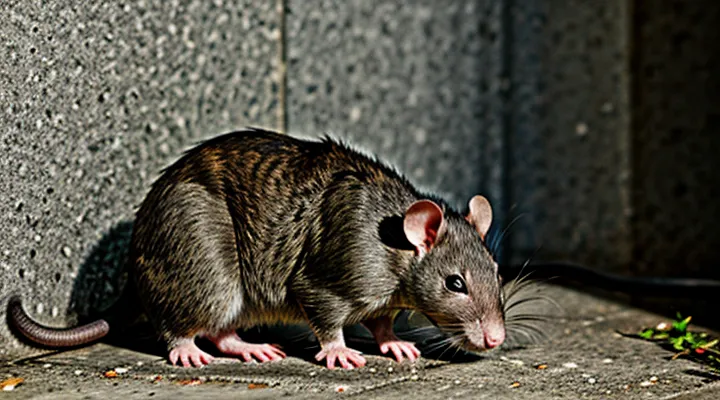
The Basics of Rodent Sleep
Defining Rat Sleep
Rats experience a polyphasic sleep pattern, dividing rest into multiple short episodes throughout the 24‑hour cycle. Their sleep comprises two primary stages: rapid eye movement (REM) sleep, characterized by low muscle tone and vivid brain activity, and non‑REM (NREM) sleep, marked by slower electroencephalographic waves and reduced physiological arousal.
During NREM periods, rats display synchronized cortical activity that facilitates memory consolidation and metabolic recovery. REM episodes, though brief, are essential for synaptic plasticity and emotional regulation. Both stages alternate rapidly, resulting in sleep cycles lasting approximately 10–15 minutes each.
Key physiological markers of rat sleep include:
- Decreased heart rate and respiratory frequency during NREM.
- Muscle atonia and irregular breathing patterns in REM.
- Elevated theta rhythm in the hippocampus, especially during REM bouts.
- Reduced locomotor activity and lowered body temperature throughout rest phases.
Environmental factors such as light exposure, cage enrichment, and predator cues can modulate the distribution and duration of sleep episodes, but the fundamental architecture of rat sleep remains consistent across laboratory strains. Understanding this architecture provides a baseline for interpreting experimental data on sleep‑related interventions and comparative chronobiology.
Sleep Cycles in Rats
Rats exhibit a polyphasic sleep pattern, dividing rest into multiple short bouts throughout the 24‑hour cycle. Each bout typically lasts 5–15 minutes, allowing a total daily sleep time of roughly 12–15 hours. The sleep architecture consists of alternating non‑rapid eye movement (NREM) and rapid eye movement (REM) phases, each following a predictable ultradian rhythm.
Key characteristics of rat sleep cycles:
- Cycle length: approximately 30–40 minutes from the onset of NREM to the end of REM.
- NREM proportion: 80–85 % of each cycle, dominated by slow‑wave activity.
- REM proportion: 15–20 % of each cycle, occurring toward the cycle’s end.
- Frequency: 12–15 cycles per day, aligning with the animal’s high metabolic rate and foraging behavior.
- Age influence: juvenile rats display longer REM periods, whereas adult rats show shortened REM duration and increased NREM stability.
Environmental factors such as light‑dark schedule, temperature, and cage enrichment modulate cycle timing but rarely alter the overall distribution of NREM and REM within a 24‑hour period.
Factors Influencing Rat Sleep Duration
Age and Sleep
Rats exhibit a clear relationship between age and daily sleep duration. Neonatal pups, defined as rats younger than three weeks, typically sleep 14–16 hours per day, with a predominance of rapid eye movement (REM) sleep. Juvenile rats, ranging from three to eight weeks, maintain an average of 13 hours, distributed across multiple short sleep bouts. Adult rats, aged three to twelve months, consolidate sleep to approximately 12 hours, balancing REM and non‑REM phases. Senescent rats, older than twelve months, show a modest reduction to 10–11 hours, accompanied by fragmented sleep episodes and a relative decline in REM proportion.
Key observations:
- Neonates: 14–16 hours, high REM proportion.
- Juveniles: ~13 hours, polyphasic pattern.
- Adults: ~12 hours, stable REM/non‑REM ratio.
- Aged: 10–11 hours, increased fragmentation.
These figures derive from laboratory recordings using electroencephalographic monitoring under controlled light‑dark cycles. The trend reflects developmental maturation of circadian regulation and age‑related neurophysiological changes.
Environmental Impact on Sleep
Rats typically rest between 12 and 15 hours each day, but the exact amount varies with environmental conditions. Light intensity, temperature, and noise level directly modify sleep architecture. Bright illumination suppresses rapid eye movement phases, while dim cycles promote longer uninterrupted bouts. Ambient temperature outside the thermoneutral zone forces metabolic adjustments that shorten total sleep time.
Key environmental factors influencing rat sleep:
- Light cycle: constant darkness extends total sleep; irregular light schedules fragment it.
- Temperature: optimal range (29‑30 °C) maximizes rest; colder or hotter settings reduce duration.
- Noise: chronic background noise above 60 dB interrupts sleep cycles, decreasing deep sleep proportion.
- Cage enrichment: presence of nesting material and complex structures encourages natural resting patterns, increasing overall sleep time.
Laboratory protocols that standardize these variables produce more reliable measurements of daily rat sleep duration. Adjusting lighting schedules, maintaining stable temperature, minimizing acoustic disturbances, and providing appropriate enrichment collectively ensure that observed sleep amounts reflect physiological norms rather than stress‑induced alterations.
Health and Medical Conditions
Rats typically rest between 12 and 15 hours each day, a pattern that mirrors their nocturnal nature. This extensive sleep is divided into short episodes of rapid eye movement (REM) and non‑REM stages, each lasting a few minutes. The high proportion of REM sleep supports neural plasticity, memory consolidation, and emotional regulation, making it a critical factor in laboratory studies of cognition.
Sleep deprivation in rats triggers measurable physiological changes. Elevated corticosterone levels indicate stress response activation, while impaired glucose tolerance reflects metabolic disruption. Cardiovascular markers, such as increased heart rate variability, emerge after chronic sleep restriction, suggesting heightened risk for hypertension. Immune function also declines; reduced lymphocyte proliferation and altered cytokine profiles have been documented following limited sleep periods.
Research exploiting rat sleep patterns contributes to the understanding of human medical conditions. Models of insomnia, obstructive sleep apnea, and narcolepsy rely on manipulating sleep duration to assess therapeutic interventions. Observations of sleep‑dependent clearance of neurotoxic waste in the brain provide insight into neurodegenerative diseases, including Alzheimer’s pathology.
Key health implications of rat sleep patterns:
- Stress hormone elevation → heightened anxiety‑like behavior.
- Metabolic dysregulation → insulin resistance and obesity risk.
- Cardiovascular strain → increased blood pressure and arrhythmia susceptibility.
- Immune suppression → reduced infection resistance.
- Neurodegeneration markers → accumulation of amyloid‑beta during sleep loss.
Understanding the quantitative aspects of rat sleep therefore informs experimental design, disease modeling, and the development of pharmacological strategies targeting sleep‑related disorders.
The Importance of Sleep for Rats
Physical Restoration and Repair
Rats that obtain extensive daily sleep allocate a substantial portion of that time to physical restoration and repair. During sleep, metabolic rates decline, allowing energy to be redirected toward cellular maintenance. Protein synthesis peaks in the early phases of non‑rapid eye movement (NREM) sleep, facilitating the rebuilding of damaged muscle fibers and the replacement of worn cellular components. Concurrently, the secretion of growth hormone rises, promoting tissue growth and the regeneration of bone and cartilage.
Key physiological activities that occur while rats are asleep include:
- Elevated synthesis of structural proteins such as collagen and actin, supporting muscle and connective‑tissue repair.
- Activation of autophagic pathways that remove dysfunctional organelles, preserving cellular integrity.
- Increased proliferation of immune cells, enhancing the clearance of pathogens and the resolution of inflammation.
- Upregulation of DNA repair enzymes, correcting replication errors and mitigating mutagenic damage.
The cumulative effect of these processes shortens recovery time after physical exertion, improves overall health, and sustains the high metabolic demands typical of rodent life. Consequently, the amount of sleep a rat obtains each day directly influences the efficiency of its restorative mechanisms.
Cognitive Function and Learning
Rats typically sleep between 12 and 15 hours each day, a pattern that directly influences their cognitive performance. Extended periods of rapid eye movement (REM) sleep correspond with enhanced synaptic plasticity, facilitating the formation of new neural connections essential for learning tasks such as maze navigation. Non‑REM sleep contributes to the consolidation of procedural memories, stabilizing motor sequences acquired during training sessions.
Experimental data reveal a dose‑response relationship between sleep quantity and task acquisition speed. When sleep is restricted to fewer than eight hours, rats exhibit slower learning curves, increased error rates, and diminished retention of spatial cues. Conversely, allowing uninterrupted sleep cycles restores performance to baseline levels, indicating that adequate sleep duration is a prerequisite for optimal cognitive function.
Key observations from recent investigations include:
- REM sleep proportion positively correlates with hippocampal long‑term potentiation.
- Non‑REM slow‑wave activity predicts accuracy in operant conditioning tasks.
- Chronic sleep deprivation leads to reduced dendritic spine density in prefrontal cortex neurons.
«Sleep deprivation impairs spatial memory in rats» summarizes the consensus that insufficient daily rest compromises both learning efficiency and memory stability. Maintaining natural sleep patterns therefore constitutes a fundamental condition for preserving the cognitive abilities of laboratory rodents.
Behavioral Implications of Sleep Deprivation
Rats typically rest between 12 and 15 hours each day; reduction of this natural sleep quota produces measurable alterations in behavior. Acute sleep loss diminishes exploratory activity, evidenced by fewer entries into open arms of an elevated plus‑maze and reduced locomotion in open‑field tests. Chronic restriction heightens anxiety‑like responses, manifested as prolonged immobility in forced‑swim assays and increased grooming frequency.
Cognitive performance declines under sleep deprivation. Rats exhibit lower accuracy in discrimination tasks, longer latencies in maze navigation, and impaired reversal learning. Social interaction suffers as well; deprived individuals display reduced affiliative behaviors and heightened aggression toward conspecifics.
Key behavioral effects include:
- Decreased exploratory drive
- Elevated anxiety indicators
- Impaired learning and memory
- Diminished social engagement
- Increased aggression
These outcomes underscore the necessity of adequate daily rest for maintaining normal rat behavior and provide a comparative framework for studying sleep‑related dysfunctions in other species.
Comparing Rat Sleep to Other Mammals
Similarities with Human Sleep
Rats exhibit polyphasic sleep patterns, alternating brief periods of wakefulness with sleep throughout the 24‑hour cycle. Their total daily sleep time, approximately 12–15 hours, overlaps the range observed in adult humans.
- Both species display rapid eye movement (REM) sleep, marked by low muscle tone and heightened brain activity.
- Sleep architecture follows a sequence of non‑REM (NREM) stages preceding REM, with cycle durations comparable across mammals.
- Homeostatic regulation relies on similar neurochemical mechanisms, including adenosine accumulation that promotes sleep pressure.
- Circadian rhythms are synchronized by the suprachiasmatic nucleus, aligning activity to the light‑dark environment.
These parallels enable rats to serve as reliable models for investigating human sleep disorders, facilitating translational research on therapeutic interventions.
Differences with Other Rodents
Rats typically sleep between 12 and 15 hours per day, a pattern that distinguishes them from many other rodent species. Laboratory studies show that nocturnal rats consolidate most sleep during the light phase, while remaining active during darkness. This biphasic distribution contrasts with the more uniform sleep–wake cycles observed in several ground‑dwelling rodents.
Key distinctions in sleep architecture include:
- Total sleep time – House mice average 10–12 hours, whereas hamsters often reach 8 hours; both fall short of the rat’s higher total.
- REM proportion – Rats allocate roughly 20 % of sleep to rapid eye movement (REM) stages, higher than the 12 % typically recorded in gerbils.
- Sleep fragmentation – Rats exhibit longer uninterrupted sleep bouts, while squirrels display frequent micro‑awakenings linked to foraging behavior.
Ecological factors shape these variations. Burrowing species, such as pocket gophers, prioritize extended wakefulness for tunnel maintenance, reducing overall sleep. Arboreal rodents, like tree‑dwelling voles, balance predator vigilance with shorter, more fragmented rest periods. Consequently, the rat’s comparatively lengthy and consolidated sleep reflects its adaptation to a nocturnal, opportunistic lifestyle distinct from its rodent relatives.