
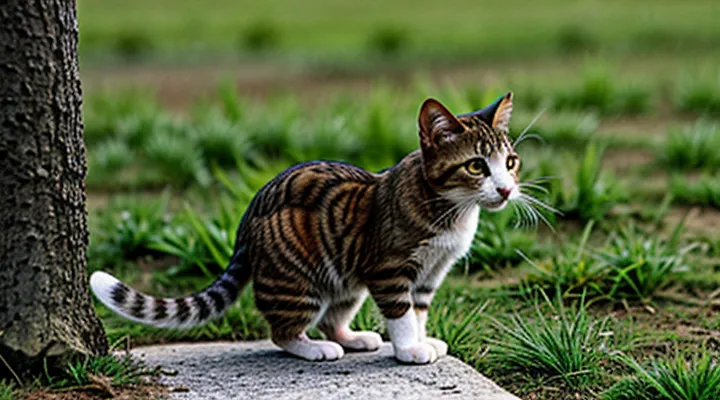
Evolutionary Roots of Feline Predation
From Wild Ancestors to Domestic Companions
Cats trace their predatory instincts to wild ancestors that relied on small rodents for survival. Early felids, such as Felis silvestris lybica, developed acute hearing, rapid reflexes, and a flexible spine, enabling swift ambushes of mice in open terrain. These physical traits persisted through domestication, allowing modern house cats to retain efficient hunting techniques despite a sedentary environment.
Domestic cats inherit the same ocular adaptations that grant superior low‑light vision, a critical advantage when tracking nocturnal rodents. Their whiskers detect minute air currents generated by mouse movement, facilitating precise strikes even in cluttered indoor spaces. The combination of stealthy gait, retractable claws, and a powerful bite ensures that a single encounter can subdue prey quickly.
Key evolutionary continuities include:
- Retention of a carnivorous diet focused on protein‑rich rodents.
- Preservation of instinctual stalking behavior, observable in play that mimics hunting sequences.
- Maintenance of a territorial instinct that drives cats to patrol areas where mice are likely to appear.
Selective breeding for companionship did not eliminate these innate abilities. Instead, human households often provide environments—such as basements, garages, and gardens—where mice thrive, thereby sustaining the predator‑prey dynamic. The presence of cats in such settings reduces rodent populations, a phenomenon documented in agricultural studies that report lower crop losses where felids are present.
Overall, the lineage from wild hunters to household pets illustrates a direct anatomical and behavioral continuity. Cats remain effective natural hunters, with evolutionary heritage that shapes their interaction with mice across both outdoor and indoor habitats.
The Thrill of the Chase: More Than Just Food
Cats pursue mice with a vigor that exceeds the simple need for sustenance. The act of chasing activates sensory pathways, sharpens reflexes, and reinforces predatory circuitry inherited from wild ancestors.
Visual detection of rapid movement triggers a cascade of neural responses that prepare the feline’s muscles for swift acceleration. Auditory cues from rustling fur augment spatial awareness, while tactile feedback from contact with the prey fine‑tunes grip and bite pressure.
Repeated pursuit hones motor coordination. Each successful interception refines timing, balance, and the ability to adjust trajectory mid‑air. This practice translates into improved agility for navigating complex environments, such as cluttered household interiors.
Cognitive engagement rises during the chase. Anticipating evasive maneuvers demands problem‑solving, which mitigates boredom and reduces stress‑related behaviors. The mental load associated with tracking a moving target offers enrichment comparable to structured play sessions.
Key outcomes of the chase:
- Enhanced sensory integration
- Strengthened muscular endurance
- Refined motor skills and balance
- Elevated cognitive stimulation
- Decreased incidence of anxiety‑driven actions
The pursuit of mice, therefore, functions as a multifaceted stimulus that supports physical health, neurological development, and emotional equilibrium in domestic cats.
Feline Hunting Techniques
Cats rely on a set of refined hunting techniques that enable efficient capture of mice. These methods combine sensory precision, muscular coordination, and learned behavior, allowing felines to function as effective natural predators.
- «Stalk» – The cat lowers its body, aligns the spine, and advances with minimal sound, using whisker feedback to gauge distance.
- «Pounce» – A rapid extension of the hind limbs propels the cat forward, delivering force sufficient to overcome the mouse’s escape reflex.
- «Bite and hold» – Once the prey is within reach, the cat clamps the mouse’s neck with incisors, targeting the carotid arteries to induce swift incapacitation.
- «Playful chase» – Repeated short bursts of pursuit sharpen motor skills; the cat often releases and recaptures the mouse, reinforcing predatory efficiency.
- «Auditory localization» – Acute hearing detects rustling or squeaks, enabling the cat to orient its body toward the source before visual confirmation.
Each technique integrates sensory input with motor output, ensuring that the cat adapts to varying environments—from cluttered indoor spaces to open fields. Mastery of these strategies underlies the cat’s role as a competent rodent controller.
The Art of Stalking: Patience and Precision
Sensory Acuity: Sight, Sound, and Smell
Cats rely on exceptionally fine‑tuned senses to locate and capture rodents. Visual acuity, auditory precision, and olfactory sensitivity combine to create a predator that detects prey in low‑light environments, identifies subtle movements, and follows scent trails through cluttered spaces.
Vision in felines is adapted for twilight hunting. The retina contains a high density of rod cells, enabling detection of motion at light levels far below human capability. A reflective layer behind the retina, the tapetum lucidum, amplifies available photons, granting cats the ability to discern a mouse’s silhouette against a dim background. Their visual field spans approximately 200 °, providing a wide peripheral sweep while maintaining a focused central area for depth perception.
Auditory structures support detection of ultrasonic frequencies produced by rodent vocalizations and footfalls. The external ear can rotate up to 90 °, directing sound waves toward a middle‑ear mechanism that isolates frequencies between 45 kHz and 64 kHz—well above the human hearing range. This frequency range aligns with the high‑pitched squeaks emitted by mice during distress, allowing cats to pinpoint source direction with millimetric accuracy.
Olfaction supplies chemical cues that complement sight and sound. The olfactory epithelium houses millions of receptors capable of distinguishing individual mouse pheromones and urine markers. Cats can track scent gradients across several meters, even when visual or auditory information is obstructed. This chemical tracking becomes especially valuable in dense vegetation or confined indoor settings.
Key sensory parameters:
- Visual detection threshold: approximately 0.001 cd/m² (scotopic illumination).
- Auditory sensitivity: peak response at 48 kHz, detection limit near 20 kHz.
- Olfactory discrimination: ability to differentiate concentrations as low as 10⁻⁹ M.
Together, these sensory systems create a predator that efficiently locates, stalks, and subdues mice, illustrating the evolutionary refinement of feline hunting capabilities.
The Pounce: A Coordinated Attack
The pounce represents the climax of a cat’s hunting sequence, where precision and timing converge to secure the prey. Muscular contraction initiates a rapid forward thrust, propelled by the hind limbs. The cat’s spine arches, allowing the fore‑body to extend while the forepaws remain poised for contact. Visual focus sharpens as the animal locks onto the mouse’s movement, minimizing latency between detection and strike.
Key components of the coordinated attack include:
- Acceleration phase: Hind legs generate force exceeding 30 m·s⁻², delivering a burst speed that often surpasses 5 m·s⁻¹.
- Trajectory control: Flexible spine and tail act as stabilizers, adjusting mid‑air orientation to align the paws with the target.
- Contact timing: Paw pads close within 0.2 seconds of reaching the mouse, ensuring grip before the prey can evade.
Successful execution depends on synchronized neural signals from the visual cortex to the motor centers. Reflex arcs trigger instantaneous muscle response, while proprioceptive feedback refines limb placement during the leap. The result is a swift, decisive capture that exemplifies the cat’s adaptation as a natural predator.
The Aftermath: What Happens After the Catch
Playing with Prey: Understanding Cat Behavior
Cats frequently engage in a sequence that begins with observation, proceeds to stalking, and often culminates in a period of play before the lethal bite. The playful phase serves multiple functions: it hones motor skills, tests prey vitality, and reduces the risk of injury from defensive movements.
During play, a cat may bat the mouse with its paws, toss it into the air, or deliver gentle bites. This behavior reflects the predator’s instinct to perfect capture techniques while conserving energy for subsequent hunts.
Key observations about this pattern include:
- Repeated paw swats improve coordination and timing.
- Aerial tosses assess the prey’s ability to escape, informing the cat’s decision to kill.
- Light bites allow the cat to gauge the mouse’s resistance without expending full force.
- After a successful kill, cats often resume play, reinforcing the learned sequence.
Research notes that « Cats often engage in mock attacks before delivering the final bite », indicating that play is not merely entertainment but an essential component of hunting proficiency. Understanding this dynamic clarifies why domestic cats retain vigorous predatory rituals even when food is readily supplied.
Consuming Prey: Nutritional Aspects
Cats obtain the majority of their dietary requirements from the flesh of captured rodents. Muscle tissue supplies high‑quality protein that meets the amino‑acid profile felines need for tissue repair and growth. Liver delivers essential vitamins A and B, while the heart contributes a reliable source of taurine, a compound cats cannot synthesize in sufficient amounts. Bones provide calcium and phosphorus in a bioavailable form that supports skeletal health. The blood and fluids of the prey contribute hydration, reducing the need for separate water intake.
Key nutritional components delivered by a typical mouse include:
- Protein: approximately 20 % of body weight, rich in essential amino acids.
- Taurine: concentrated in cardiac muscle, meeting daily feline requirements in a single kill.
- Vitamin A: stored in hepatic tissue, supplying retinol directly.
- B‑vitamins: especially B₁₂ and niacin, supporting metabolic functions.
- Minerals: calcium, phosphorus, magnesium, and trace elements in digestible ratios.
- Energy: roughly 4 kcal per gram of wet tissue, providing sufficient caloric density for active predators.
Digestibility of raw prey exceeds that of many processed foods because the cellular structures are naturally broken down during chewing and gastric digestion. The act of killing also stimulates the release of stress‑related hormones in the mouse, which can increase the availability of certain nutrients, such as glucose and catecholamines, that may benefit the cat’s short‑term energy supply.
When prey size aligns with the cat’s body mass, the intake of nutrients remains balanced; excessive consumption of large rodents can lead to over‑loading of fat and protein, potentially stressing hepatic function. Regular ingestion of appropriately sized mice supports maintenance of lean muscle mass, ocular health, and immune competence without the need for supplemental additives.
Overall, the nutritional profile of captured mice fulfills the feline’s obligate carnivore requirements, delivering a complete package of macronutrients, micronutrients, and hydration in a single, naturally acquired meal.
Cat-Mouse Dynamics Beyond the Kill
Cats approach mice with a repertoire that extends beyond the lethal strike. Initial contact often consists of silent stalking, where the predator matches the prey’s movements to assess speed and escape routes. This observation phase provides data for future hunts and reinforces the cat’s hunting instincts.
Key aspects of post‑capture interaction include:
- Playful batting that refines motor skills and timing.
- Gentle mouth‑holding that tests bite force without inflicting fatal injury.
- Release and recapture cycles that simulate predator‑prey dynamics for learning.
- Scent marking on the mouse’s fur, which conveys territorial information to other felines.
- Vocalizations such as low purrs or chirps that communicate satisfaction or alertness to nearby conspecifics.
These behaviors illustrate a complex communication channel between predator and prey, where the cat gathers sensory feedback, hones technique, and reinforces social signals while the mouse experiences intermittent stress that can influence its own survival strategies.
The Fear Factor: How Mice React to Cats
Survival Strategies of Prey Animals
Cats rely on acute senses and swift strikes to capture small rodents. Mice and similar prey species have evolved a suite of defensive behaviors that increase survival odds during such encounters.
- Immediate detection of predator movement through whisker‑mediated airflow changes.
- Rapid, erratic locomotion that disrupts a cat’s timing and trajectory.
- Utilization of complex burrow networks providing escape routes inaccessible to larger hunters.
- Temporal adjustment of activity patterns, concentrating foraging during periods of reduced feline activity.
- Group cohesion, where individuals alert conspecifics to danger via ultrasonic vocalizations.
- Reproductive strategy of producing large litters, offsetting high predation mortality.
These tactics function collectively to reduce encounter frequency, limit capture success, and maintain population stability despite constant predation pressure.
Field observations confirm that mice employing burrow escape routes experience a 30 % lower capture rate than surface‑only foragers. Laboratory studies report that erratic sprint patterns increase the time required for a cat to align a bite by up to 0.4 seconds, often exceeding the predator’s strike window.
Effective prey survival mechanisms shape predator hunting efficiency, influencing the balance of ecosystems where felines and rodents coexist.
Cats and Pest Control: A Practical Perspective
Natural Deterrents: The Scent of a Predator
Cats emit a complex blend of chemical signals that function as natural deterrents for rodents. The scent of a predator, primarily composed of felid-specific pheromones and urinary compounds, triggers innate avoidance behaviors in mice, reducing the likelihood of entry into a cat‑occupied area.
Key aspects of the predator scent effect include:
- Presence of felinine, a sulfur‑containing compound found in cat urine, which mice detect through their highly sensitive olfactory receptors.
- Release of facial pheromones during grooming, leaving trace amounts on fur that linger on surfaces the cat contacts.
- Elevated levels of volatile fatty acids in feline skin secretions, creating an environment perceived as hostile by small mammals.
Research demonstrates that exposure to these odors can suppress exploratory activity in mice for up to several hours, limiting foraging and nesting attempts. Application of synthetic analogues of feline scent has been employed in pest‑management programs, achieving measurable reductions in rodent populations without chemical poisons. The effectiveness of such deterrents relies on maintaining a consistent concentration of predator‑derived volatiles in the target area.
Limitations of Cats as Pest Controllers
Cats possess innate predatory instincts, yet several factors limit their effectiveness as pest controllers. Domestic felines often lack exposure to live prey, reducing hunting motivation. Indoor environments remove opportunities for practice, resulting in diminished skill development. Additionally, many breeds exhibit low prey drive, preferring play over capture.
Physiological constraints affect performance. Age‑related decline in agility and vision hampers pursuit of swift rodents. Health conditions such as obesity or arthritis further reduce chase capability. Seasonal variations in daylight influence activity levels, with shorter days decreasing hunting frequency.
Ecological considerations restrict utility. Cats target primarily small mammals, leaving larger pest species unchecked. Their selective predation can alter local ecosystems, potentially suppressing beneficial rodent populations while encouraging overpopulation of insects or other pests. Moreover, predation does not guarantee eradication; surviving rodents reproduce rapidly, sustaining infestation levels.
Practical limitations emerge in managed settings. Professional pest control requires predictable, quantifiable results, whereas feline hunting is sporadic and unmonitored. Reliance on cats may lead to false security, delaying implementation of comprehensive integrated pest management strategies.
Key points summarizing limitations:
- Inconsistent hunting behavior among individual cats
- Reduced effectiveness of indoor‑only animals
- Age, health, and seasonal factors diminishing performance
- Selective predation influencing ecosystem balance
- Inadequate coverage for large‑scale or diverse infestations
Recognizing these constraints informs realistic expectations of feline contributions to rodent control and guides integration with proven mitigation techniques.
Debunking Myths About Cats and Mice
Do All Cats Hunt Mice?
Cats possess a predatory drive, but the drive does not guarantee that every individual will hunt mice. Breed characteristics, upbringing, and personal temperament determine whether a cat engages in rodent pursuit.
Factors influencing hunting behavior include:
- Genetic background: breeds such as Maine Coon, Bengal, and Siamese often display stronger chase instincts.
- Environment: outdoor access increases exposure to prey, while strictly indoor living reduces opportunities.
- Socialization: cats raised with frequent human interaction may prioritize play over hunting.
- Health status: pain, obesity, or chronic illness can diminish motivation to chase.
- Age: kittens exhibit high curiosity and practice hunting, whereas senior cats may lose interest.
Even cats confined to indoor spaces may perform predatory play, swatting at toys that mimic mouse movements. Such behavior reflects the underlying instinct without resulting in actual capture.
Conversely, some domestic cats never exhibit mouse‑hunting behavior. Reasons may involve lack of exposure, selective breeding for docility, or individual disinterest. Absence of hunting does not indicate a deficiency; it simply reflects the variability of feline predatory expression.
The «Cat and Mouse Game» in Pop Culture Versus Reality
The representation of the «Cat and Mouse Game» in movies, cartoons, and literature often emphasizes dramatized chase sequences, exaggerated intelligence, and anthropomorphic motives. In these narratives, the feline pursuer is portrayed as a cunning strategist, while the rodent opponent displays heroic resilience or clever deception. This stylized conflict serves entertainment, not scientific observation.
In reality, domestic and wild cats rely on instinctive predatory behavior honed by evolution. Their hunting technique follows a predictable pattern: stealthy approach, brief burst of speed, and a swift bite targeting the prey’s neck or spinal cord. Mice react with rapid, erratic movements designed to evade detection rather than to outwit the predator. The outcome of most encounters favors the cat, with success rates ranging from 30 % to 70 % depending on the cat’s experience and the mouse’s environment.
Key differences between cultural depictions and actual feline‑rodent interactions include:
- Motivation: Fiction assigns narrative purpose to the chase; real cats act on hunger or instinct without moral intent.
- Outcome: Stories often end with the mouse escaping or outsmarting the cat; in nature, the mouse is usually captured or killed.
- Behavioral cues: Media highlights dramatic pauses and exaggerated gestures; actual predation involves silent stalking and minimal visual display.
- Learning: Pop culture suggests one‑time cleverness; cats improve hunting efficiency through repeated practice and sensory refinement.
Understanding these contrasts clarifies why the mythologized «Cat and Mouse Game» persists: it simplifies complex predator‑prey dynamics into a relatable conflict, while the biological reality remains a matter of instinct, physiology, and environmental factors.