
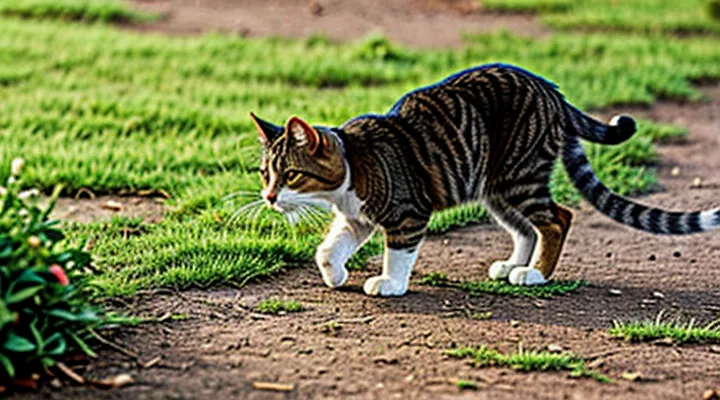
Understanding Feline Predation
Evolutionary Roots of Hunting
Wild Ancestors and Survival
Cats retain the hunting techniques honed by their wild forebears, enabling efficient capture of small rodents. The ancestral lineage of Felis silvestris, the African wildcat, exhibits traits that persist in domestic cats: acute auditory perception, binocular vision attuned to motion, and a flexible spine that stores kinetic energy for rapid acceleration.
Key survival attributes inherited from wild ancestors include:
- Muscular forelimbs designed for precise pounce and grip.
- Retractable claws that provide stealth during approach and traction during the strike.
- A highly developed vestibular system that maintains balance while leaping from varied angles.
- Scent‑marking behavior that delineates territory and reduces competition for prey.
These physiological and behavioral adaptations form a coordinated predatory sequence: detection, stealth, ambush, and subdual. During detection, low‑frequency sounds emitted by mice trigger the cat’s auditory cortex, prompting head rotation to align binocular vision. Stealth involves crouching with reduced body height, minimizing silhouette against the substrate. The ambush phase relies on rapid extension of hind limbs, converting stored elastic energy into forward momentum. Subdual concludes with a bite to the cervical vertebrae, delivering a swift kill.
Research on wildcat hunting patterns confirms that domestic cats mirror the same sequence, demonstrating that domestication has not diminished the core predatory instinct. «The efficiency of the feline pounce reflects millions of years of evolutionary pressure», notes a comparative ethology study, underscoring the continuity between ancestral survival strategies and contemporary feline behavior.
Domestication and Retained Instincts
Domestication of Felis catus began approximately 9 000 years ago when humans provided reliable food sources in exchange for rodent control. Selective pressures favored individuals that tolerated proximity to humans while preserving the neural circuitry responsible for predation. Consequently, domestic cats retain the same sensory acuity, motor coordination, and motivational drives observed in their wild ancestors.
Neurological studies reveal that the optic tectum, motor cortex, and limbic system of domestic cats remain highly responsive to rapid prey movements. Dopaminergic pathways activated during successful capture are indistinguishable from those measured in feral populations, indicating that the reward mechanism underlying hunting persists despite generations of human cohabitation.
Typical hunting behaviors manifest in three observable phases:
- Stalk: low‑profile movement, ears forward, whiskers oriented toward target.
- Pounce: sudden acceleration, forelimb extension, precise bite at the neck.
- Kill/Play: rapid bite, followed by repetitive batting or carrying of prey.
These phases appear in play sessions with toys, underscoring that the instinctual sequence operates even without live prey.
Retention of predatory instinct benefits both species. Cats receive mental stimulation and physical exercise, while humans experience reduced rodent populations in agricultural and urban settings. The mutualistic relationship persists because domestication has not eliminated the fundamental hunting program encoded in feline biology.
The Hunting Sequence
Stalking: Patience and Precision
Stalking represents the foundational phase of feline predation, relying on sustained stillness and meticulous body alignment. A cat’s musculature can lock joints in a low‑profile stance, minimizing visual and auditory cues that could alert prey.
Sensory integration drives the stalking process. Whisker feedback gauges proximity to obstacles, while retinal cells detect minute movements at distances up to several meters. Auditory localization pinpoints rustling, allowing the predator to adjust trajectory without breaking concealment.
Key steps in the stalking sequence:
- Identify target and assess distance.
- Assume a crouched posture, distributing weight evenly across forelimbs.
- Advance in incremental, silent bursts, maintaining eye contact.
- Align the body line of attack directly toward the prey’s escape routes.
The combination of patience and precision maximizes capture success, reducing energy expenditure and enhancing reproductive fitness across feline species.
The Pounce: Speed and Agility
The pounce represents the decisive phase of a feline’s hunt, converting visual detection into rapid, precise motion. Muscular contraction begins in the hind limbs, generating thrust that propels the body forward while the fore‑limbs extend to close the gap with the prey.
Key physical factors that supply speed and agility:
- Explosive hind‑limb power – fast‑twitch muscle fibers produce high acceleration within milliseconds.
- Flexible spine – vertebral articulation stores and releases kinetic energy, extending stride length.
- Retractable claws – sharpened pads increase grip on varied surfaces, preventing slip during acceleration.
- Tail balance – dynamic counter‑movement stabilizes trajectory, allowing mid‑air adjustments.
Neural coordination synchronizes these elements. Visual cortex rapidly processes motion cues, transmitting signals to motor neurons that trigger the hind‑limb burst. Simultaneously, cerebellar pathways fine‑tune limb placement, ensuring the cat lands accurately on the target. The combined effect yields a burst of speed that often exceeds 30 mph, enabling successful capture of swift prey.
The Kill: Instinctive Methods
The final phase of a cat’s pursuit, known as «the kill», relies on innate motor patterns that translate sensory input into swift, lethal action. Muscular coordination peaks as the feline closes distance, deploying a sequence of precise movements without conscious deliberation.
Key instinctive methods include:
- Bite to the cervical vertebrae – a rapid, perpendicular jaw pressure severs the spinal cord, causing immediate neural shutdown.
- Jaw clamp on the throat – sustained compression of the trachea restricts airflow, leading to hypoxia within seconds.
- Neck hold with forelimbs – immobilization of the prey’s torso prevents escape while the cat delivers the fatal bite.
- Mouth‑to‑body twist – a rotational force applied to the torso dislocates the spine, incapacitating the mouse instantly.
These tactics emerge from a genetically encoded hunting program that activates the brainstem’s predatory circuitry. Sensory whisker feedback refines strike angle, while the cat’s retractable claws provide anchorage, ensuring the prey cannot slip during the decisive bite. The entire process unfolds in a matter of milliseconds, reflecting the evolutionary efficiency of feline predation.
Anatomy and Physiology for Hunting
Sensory Adaptations
Vision: Low-Light Prowess
Feline ocular anatomy equips predators with exceptional performance under dim conditions. The retina contains a high density of rod photoreceptors, which are more sensitive to light than cones and enable detection of movement at luminance levels far below human thresholds. Behind the retina, the tapetum lucidum reflects stray photons back through the photoreceptive layer, effectively doubling photon capture and enhancing visual acuity in twilight and nocturnal settings.
Pupil dynamics further augment low‑light capability. Muscular sphincter fibers allow rapid dilation, expanding the aperture to a near‑circular opening that maximizes light influx. Concurrently, the iris constricts sharply in bright environments, protecting retinal tissue from phototoxic damage and preserving contrast sensitivity across a wide illumination spectrum.
Key functional outcomes of these adaptations include:
- Immediate identification of small, fast‑moving prey silhouettes against complex backgrounds.
- Precise depth perception through binocular overlap, even when ambient light is minimal.
- Sustained visual tracking during prolonged hunts, supported by high retinal blood flow and metabolic efficiency.
Collectively, these physiological mechanisms grant cats a decisive advantage when pursuing rodents in low‑light habitats.
Hearing: Pinpointing Prey
Cats rely on acute auditory perception to locate hidden rodents. The external ear, with large, mobile pinnae, captures sound waves from multiple directions and directs them toward the tympanic membrane. Muscles controlling the pinnae enable rapid adjustments, aligning the ear to the source of faint noises such as rustling fur or footfalls.
The feline auditory system processes frequencies ranging from 48 Hz to 85 kHz, far exceeding human limits. High‑frequency sensitivity detects the subtle squeaks of a mouse’s movement, while low‑frequency detection reveals larger disturbances in the environment. The auditory cortex integrates these signals, generating a spatial map that guides the cat’s head and body orientation.
Behavioral response follows a precise sequence:
- Ear rotation toward the sound source.
- Head tilt to align the auditory axis.
- Crouching posture to minimize visual cues.
- Silent, calculated approach based on the estimated distance.
These steps reduce the prey’s chance of detection and increase the probability of a successful capture. The integration of anatomical specialization, broad frequency range, and swift motor coordination makes hearing a decisive factor in feline hunting efficiency.
Smell: Aiding Detection
Cats rely on a highly developed olfactory system to locate prey. The nasal cavity contains millions of receptors that detect volatile compounds emitted by rodents. These chemical cues travel through the air and reach the olfactory epithelium, where specialized neurons convert them into neural signals. The signals are transmitted to the olfactory bulb and integrated with visual and auditory information, allowing the cat to form a precise spatial map of the mouse’s position.
Key olfactory features that enhance detection include:
- Sensitivity to low‑concentration pheromones and urine markers released by mice.
- Rapid adaptation that distinguishes fresh scents from background odors.
- Integration with the vomeronasal organ, which processes non‑volatile chemicals for additional confirmation of prey identity.
The combined sensory input enables the feline predator to initiate a stealthy approach, adjust its trajectory, and execute a successful capture.
Physical Tools
Claws: Retractability and Grip
Cats possess a specialized claw system that combines retractability with a powerful grip, essential for capturing prey. Each forelimb contains five digits, each ending in a keratinized claw mounted on a distal phalanx. The claw rests within a fibroelastic sheath when not in use, allowing the animal to walk silently and protect the sharp tip from abrasion. When a hunting sequence begins, rapid contraction of the digital flexor muscles pulls the claw forward, exposing the tip within milliseconds.
The retractable design serves two functional purposes. First, it preserves the sharpness of the tip, ensuring maximum penetration efficiency when striking a mouse. Second, it minimizes noise and visual cues during stalking, enhancing stealth. The sheath also contributes to thermoregulation by reducing heat loss from the paw pads.
Grip strength derives from the claw’s curvature and the angle at which it contacts the prey’s body. The tip forms an acute point that concentrates force, while the curved edge creates a hooking action that resists lateral escape. Muscular control allows cats to adjust pressure precisely, delivering enough force to immobilize small rodents without causing excessive injury. This fine-tuned coordination between muscle contraction and claw extension results in a rapid, decisive capture.
Key mechanical features:
- Sheath retention: fibroelastic tissue encloses the claw, preventing accidental exposure.
- Muscle-driven extension: digital flexors generate a pull force of up to 30 N, sufficient to overcome a mouse’s resistance.
- Curvature geometry: an average curvature radius of 5 mm optimizes hooking efficiency.
- Tip hardness: keratin composition provides a hardness of approximately 2 GPa, resisting wear during repeated use.
«The retractable mechanism reduces wear and enhances hunting precision», notes a comparative study of felid predation. Collectively, these attributes enable cats to execute swift, controlled strikes, securing prey with minimal effort and maximal success.
Teeth: Designed for Capture and Consumption
Cats possess a dentition uniquely suited for seizing, disabling, and ingesting small prey such as mice. Sharp incisors trim fur and whisker pads, while elongated canines puncture vital organs and deliver a rapid, fatal bite. The subsequent premolars and molars complete the capture by slicing flesh and crushing bone.
- Incisors: narrow, backward‑curved; trim tissue and facilitate grip.
- Canines: long, conical; penetrate deep, ensure swift incapacitation.
- Premolars: serrated edges; shear muscle fibers and skin.
- Molars: broad, ridged surfaces; grind bone fragments and crush cartilage.
The bite force generated by the mandibular muscles exceeds the resistance of a rodent’s skeletal structure, allowing efficient transmission of energy through the tooth row. The coordinated action of cutting, tearing, and crushing reduces handling time, a critical factor for a nocturnal predator.
Evolutionary pressure favored dental morphology that maximizes prey retention and minimizes energy expenditure during consumption. Comparative analysis of felid dentition confirms that each tooth type contributes to a seamless predation sequence, from capture to digestion. «The cat’s dentition is a specialized tool for predation», reflecting a convergence of form and function that underpins successful hunting behavior.
Musculature: Power and Flexibility
Cats rely on a specialized musculoskeletal system to pursue and subdue rodents. The hind limbs generate the explosive thrust needed for the initial sprint, while the flexible spine stores and releases kinetic energy during each leap. This combination of power and elasticity enables rapid acceleration from a stationary position and precise control during mid‑air adjustments.
Key muscular groups include:
- Gluteal and quadriceps muscles – produce the force that propels the cat forward and upward.
- Lumbar extensors and abdominal muscles – allow the spine to arch and contract, amplifying stride length and jump height.
- Shoulder and pectoral muscles – stabilize the forelimbs and provide the grip strength required to seize prey.
- Forearm flexors and extensors – coordinate claw extension and retraction, delivering swift, controlled strikes.
The vertebral column exhibits a high degree of flexibility thanks to loosely connected intervertebral joints and robust paraspinal musculature. This design permits the cat to twist its body mid‑jump, aligning the head and forepaws with the target. Simultaneously, the tendon network stores elastic energy during the crouch phase, releasing it instantaneously to maximize launch speed.
Overall, the integration of powerful limb muscles with a highly pliable spinal structure creates a biomechanical system optimized for short bursts of extreme speed, precise maneuvering, and effective prey capture. «The synergy of strength and flexibility distinguishes feline hunting from other predators.»
Behavioral Aspects of Mouse Catching
Play as Practice
Kittenhood Training
Kittenhood training shapes the predatory reflexes that enable young felines to capture small prey. Early exposure to moving objects stimulates the visual tracking system, while tactile interaction with textured surfaces refines paw coordination. Structured play sessions introduce the sequence of stalking, pouncing, and grasping, mirroring the natural hunting cycle.
Key components of effective training include:
- Presentation of lightweight, erratically moving toys that mimic rodent motion.
- Gradual reduction of human assistance, encouraging independent initiation of the chase.
- Reinforcement of successful captures with brief, consistent rewards to strengthen neural pathways.
- Incorporation of varied environments (elevated platforms, narrow passages) to develop adaptability.
Monitoring progress involves observing latency between stimulus and response, precision of bite placement, and the ability to retrieve captured objects. Consistent practice during the developmental window enhances muscle memory and sharpens sensory integration, resulting in competent hunting behavior in adulthood.
Simulating Real Hunts
Simulating authentic predatory scenarios provides domestic felines with opportunities to exercise innate tracking and pouncing skills. Controlled environments replicate the sensory cues—movement, sound, and scent—that trigger the chase response, thereby reinforcing muscular coordination and decision‑making processes essential for successful capture.
Effective simulation relies on three core elements:
- Dynamic motion: toys that accelerate unpredictably mimic the erratic flight patterns of typical prey.
- Tactile feedback: objects with textured surfaces emulate the resistance felt when seizing a live target.
- Auditory stimuli: soft rustling or chirping sounds accompany movement, enhancing auditory localization.
Integrating these components into structured play sessions yields measurable improvements in reaction time and precision. Regular exposure also mitigates frustration associated with unfulfilled hunting drives, contributing to overall wellbeing.
Data from observational studies indicate that felines engaged in realistic hunt simulations display increased burst speed and more accurate targeting compared to those provided with static toys. Consequently, incorporating varied, lifelike challenges aligns domestic play with natural predatory behavior.
Environmental Factors
Indoor vs. Outdoor Hunting
Indoor hunting relies on limited spatial cues. Domestic environments provide static obstacles, predictable lighting, and a reduced scent field. Cats compensate by sharpening auditory detection of rodent movement beneath furniture and by using whisker feedback to navigate narrow gaps. The confined arena forces rapid, short‑range pounces, often triggered by visual contrast of a mouse’s tail against a uniform background.
Outdoor hunting exposes felines to dynamic variables. Variable terrain, vegetation, and fluctuating ambient noises broaden the sensory spectrum. Olfactory trails become primary guides; wind direction and humidity influence detection distance. Stalk‑and‑ambush tactics extend over longer intervals, allowing the predator to assess wind, cover, and escape routes before committing to a strike.
Key distinctions:
- Prey density: indoor settings host occasional infestations; outdoor habitats sustain continuous rodent populations.
- Energy expenditure: indoor pursuits involve brief bursts; outdoor chases may require sustained locomotion.
- Risk factors: indoor encounters limit exposure to predators and parasites; outdoor hunts introduce threats from larger carnivores, traffic, and disease vectors.
- Learning curve: indoor cats develop refined micro‑motor skills; outdoor cats acquire broader spatial awareness and adaptability to seasonal prey behavior.
Understanding these contrasts clarifies how feline hunting instincts manifest across environments, shaping both technique and success probability.
Prey Availability and Opportunity
Prey availability directly influences the frequency and success of feline hunting episodes. When rodent populations surge, domestic and wild cats encounter increased encounter rates, reducing the energy expenditure required to locate a target. Conversely, sparse rodent densities extend search intervals, prompting cats to expand their foraging range or shift to alternative prey.
Opportunity arises from environmental structures that facilitate ambush or pursuit. Dense vegetation, cluttered floor coverings, and concealed entry points create concealment zones where mice can move undetected until a cat initiates a strike. Open spaces limit stealth, favoring rapid chase tactics that demand higher stamina.
Key factors determining prey accessibility include:
- Seasonal fluctuations in mouse reproduction cycles, which alter population density.
- Human‑driven changes such as food storage practices that attract rodents to specific zones.
- Architectural designs that provide shelter or hideouts for small mammals.
- Temporal patterns of rodent activity, often peaking during twilight hours, aligning with cats’ crepuscular hunting peaks.
Adaptations in cat behavior reflect these conditions. In environments with abundant, easily reachable mice, cats display shorter stalking phases and higher capture ratios. In contrast, limited prey prompts prolonged observation, increased use of auditory cues, and occasional opportunistic scavenging.
«Effective predation hinges on the intersection of prey density and spatial opportunity, shaping the hunting rhythm of felines».
Motivation Beyond Hunger
Instinctual Drive
The predatory behavior of felines relies on a powerful internal mechanism known as «Instinctual Drive». This drive originates in the brain’s limbic system, where neural pathways trigger rapid assessment of movement, shape, and sound. When a potential prey item appears, sensory input is processed almost instantaneously, prompting the cat to initiate a chase.
Activation of the drive involves several physiological responses. Heart rate accelerates, adrenal glands release catecholamines, and muscle fibers prepare for explosive contraction. These changes ensure that the animal can achieve the speed and precision required to close the distance to the target.
Key characteristics of «Instinctual Drive» include:
- Automatic recognition of prey-like stimuli, independent of prior learning.
- Immediate transition from observation to action, bypassing conscious deliberation.
- Reinforcement through successful captures, strengthening neural circuits.
The drive operates continuously, shaping hunting patterns from kittenhood through adulthood. Even well‑fed domestic cats display bouts of predatory activity, illustrating that the mechanism persists regardless of nutritional status. Consequently, the presence of «Instinctual Drive» explains why cats exhibit consistent, efficient hunting techniques across diverse environments.
The Thrill of the Chase
The pursuit of prey generates a heightened sensory state that activates the cat’s visual, auditory, and olfactory systems simultaneously. Rapid eye movements track the target, while whisker vibrations detect subtle airflow changes, creating a feedback loop that sharpens spatial awareness.
Physiological reactions include a surge of adrenaline, increased cardiac output, and elevated cortisol levels. These changes concentrate attention, suppress non‑essential motor activity, and prepare muscular fibers for explosive force.
Typical actions observed during the chase are:
- Low, silent crouch to reduce visibility.
- Incremental, rhythmic footfalls that maintain proximity without alerting the prey.
- Sudden acceleration timed to the prey’s escape direction.
- Precise forelimb extension to secure the catch.
The intense engagement of motor circuits and sensory pathways reinforces neural pathways associated with predatory efficiency. Repeated exposure to this dynamic improves coordination, timing, and decision‑making, ensuring that the feline hunting instinct remains finely tuned. «The hunt triggers innate circuitry that sharpens both physical and cognitive performance».
The Role of Instincts
Innate Programs
Genetic Predisposition
Genetic predisposition determines the innate hunting capacity of domestic felines. Specific alleles influence muscle fiber composition, visual acuity, and neural circuitry that prioritize rapid prey detection and capture. Studies of Felis catus reveal a high frequency of the Myrt1 variant, associated with enhanced motor coordination during pursuit.
Key genetic components include:
- Myrt1 allele: strengthens synaptic transmission in the midbrain, facilitating swift reflexes.
- Opsin gene polymorphisms: broaden spectral sensitivity, improving detection of rodent movement in low light.
- Myostatin regulation: modulates skeletal muscle growth, yielding the powerful hind‑limb extension required for pouncing.
Selective breeding reinforces these traits, as observed in feral populations where survival depends on efficient predation. Comparative analysis with wild ancestors, such as Felis silvestris, shows conserved haplotypes responsible for stalk‑and‑pounce strategies.
Epigenetic factors modulate gene expression based on environmental exposure. Early interaction with moving objects triggers methylation patterns that amplify neural pathways linked to hunting. Consequently, kittens raised without stimulus exhibit reduced activation of the same genetic circuits, underscoring the interplay between inherited predisposition and experiential reinforcement.
Hardwired Behaviors
Hardwired behaviors in felines constitute innate neural patterns that trigger predatory actions without conscious deliberation. Sensory receptors in the whiskers and ears detect minute vibrations, instantly activating motor circuits that coordinate pounce timing. The visual system, tuned to detect rapid motion, generates a reflexive lock‑on response, aligning the head and forelimbs toward the target.
- Fixed‑action pattern: rapid crouch, tail elevation, and ear pivot precede the leap.
- Stereotyped bite: precise mandibular closure at the neck vertebrae ensures swift incapacitation.
- Post‑kill handling: grooming and consumption follow a predetermined sequence that minimizes exposure to predators.
These circuits reside in the brainstem and midbrain, particularly within the periaqueductal gray and superior colliculus, where sensory input converges on motor output pathways. Genetic expression of hunting‑related genes stabilizes synaptic connections, preserving the sequence across generations. Environmental variation seldom alters the core sequence, confirming that the behavior is encoded at the biological level rather than acquired through learning.
Learning and Refinement
Observation and Experience
Observations of feline predatory behavior reveal a consistent sequence of sensory detection, silent approach, and rapid capture. Vision, particularly motion detection in low light, guides the cat toward potential prey. Ear positioning aligns with the direction of rustling sounds, allowing precise localization of a mouse’s movement. Whisker contact with the substrate provides tactile confirmation of proximity before the final strike.
Experiential accounts from households and field studies illustrate the efficiency of the pounce. A cat typically crouches to lower its center of gravity, then releases stored muscular energy in a forward thrust that exceeds its body length. The claws extend at the moment of contact, securing the prey while the jaws clamp with a bite to the neck, ensuring swift immobilization.
Key observations derived from systematic monitoring include:
- Stalk duration averaging 2–5 seconds before the attack.
- Pounce speed reaching 6–8 m s⁻¹ in domestic breeds.
- Success rate above 70 % when prey is within 30 cm of the cat’s initial position.
- Repeated attempts on the same mouse until capture is achieved, indicating persistent drive.
Experience from veterinary examinations confirms that even well‑fed cats retain these hunting sequences, suggesting an innate drive rather than a response to hunger. Neurological studies support the presence of a hard‑wired circuitry that triggers predatory actions upon detection of specific prey cues. The combination of direct observation and practical experience provides a comprehensive understanding of the mechanisms underlying feline mouse capture.
Adapting Techniques
Cats modify their predatory approach according to habitat, prey size, and sensory feedback. In dense vegetation, they rely on low‑profile stalking, flattening bodies against the ground to minimize silhouette. Open spaces prompt rapid bursts of acceleration, using hind‑leg power to close distance before the mouse detects motion.
Sensory systems adjust in real time. Whiskers detect minute changes in air currents, allowing precise gauging of the mouse’s position when visual cues are limited. Vision shifts from high‑resolution focus on the target’s eyes to a broader field that monitors peripheral movement, ensuring escape routes remain visible.
Experience refines technique. Juvenile cats practice pouncing on moving objects, storing successful motor patterns in neural circuits. Older individuals incorporate observed strategies from conspecifics, such as ambush positions near known rodent pathways, thereby expanding their repertoire without direct trial.
Key adaptive techniques include:
- Variable stride length to match prey speed.
- Tail positioning for balance during sudden direction changes.
- Silent paw pads that reduce acoustic detection.
- Adjustable ear orientation to isolate prey-generated sounds.
These modifications enable felines to maintain hunting efficiency across diverse environments and prey behaviors.
Instinct vs. Training
Unteachable Behaviors
The term «Unteachable Behaviors» refers to actions that persist in domestic cats despite systematic conditioning attempts. These patterns arise from the species‑specific hunting instinct, which operates independently of external reinforcement.
Such behaviors resist modification because they are encoded in neural circuits governing predatory sequences. The circuitry activates automatically when sensory cues—movement, scent, or sound—signal potential prey. Conditioning protocols that rely on reward or punishment cannot override this automatic response.
Key examples include:
- Immediate pounce upon detecting a moving target, regardless of prior training to inhibit the response.
- Rapid transition from stalk to capture phase, executed with precise timing that does not adapt to human instruction.
- Persistent use of ear‑flattening and tail flicking as preparatory signals, maintained even when these gestures are discouraged.
The presence of these innate actions enhances mouse‑catching efficiency. Automatic pounce timing reduces prey escape probability, while the unaltered sequence of stalk, ambush, and bite ensures consistent lethal precision. Consequently, attempts to reshape these patterns offer limited benefit for improving hunting outcomes.
Enhancing Natural Abilities
Cats rely on acute vision, rapid reflexes, and silent movement to locate and seize prey. Training environments that simulate natural terrain improve spatial awareness and encourage instinctive stalking behavior. Repetitive exposure to varied lighting conditions sharpens low‑light detection, a critical factor when hunting in dim settings.
Enhancement methods focus on three core areas:
- Sensory stimulation: Introducing moving objects with erratic trajectories strengthens tracking precision.
- Motor coordination: Obstacles that require climbing, leaping, and squeezing develop muscular strength and flexibility.
- Problem‑solving: Puzzle devices that conceal food reward strategic planning and patience, mirroring the deliberation required before a pounce.
Nutrition that supports muscle tone and neural function complements physical training. Diets rich in taurine, omega‑3 fatty acids, and high‑quality protein sustain endurance and reaction speed, allowing the animal to maintain peak performance during extended hunting sessions.