
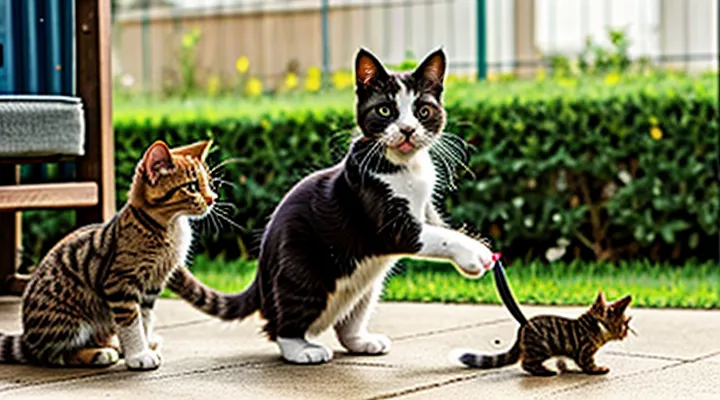
The Instinctive Hunter: Feline Predatory Behavior
The Innate Drive to Hunt
Genetic Predisposition
Genetic predisposition shapes the innate hunting capacity that a mother cat passes to her kittens. Inherited sensory and motor traits create a baseline competence for tracking and capturing prey, which maternal instruction refines into effective technique.
Key hereditary characteristics include:
- Enhanced low‑light vision that detects subtle movement of rodents.
- Acute auditory range attuned to the high‑frequency rustle of mouse feet.
- Precise fore‑limb coordination enabling rapid pounce and grip.
- Strong olfactory receptors that locate hidden prey.
When a queen initiates hunting lessons, these genetic endowments accelerate skill acquisition. Kittens with superior visual acuity respond more quickly to the mother’s demonstration of stalking posture, while heightened auditory sensitivity improves their ability to anticipate escape routes. The combination of innate aptitude and observational learning produces a rapid transition from tentative swipes to successful captures.
Selective breeding programs exploit this relationship by prioritizing lines that exhibit robust predatory instincts. Understanding the genetic foundation of feline hunting behavior informs both conservation efforts for rodent‑control cats and domestic management strategies that encourage natural predation without excessive reliance on training alone.
Early Play as Practice
Early play sessions provide kittens with essential motor coordination. Mother cat initiates short chases with soft objects, encouraging rapid paw strokes and precise tail balance. These activities develop reflex latency, enabling swift reaction when a rodent appears.
During play, kittens learn to:
- Judge distance by adjusting stride length.
- Synchronize eye movement with paw placement.
- Transition from stationary pounce to dynamic pursuit.
The mother’s intermittent vocal cues, such as low growls, reinforce focus and signal successful capture attempts. Repeated exposure to moving targets refines muscle memory, allowing kittens to extrapolate learned patterns to live prey.
Gradual escalation of difficulty—introducing faster, erratically moving toys—conditions the young felines to anticipate sudden changes in a mouse’s trajectory. This progressive training ensures that, by the time independent hunting begins, kittens possess the agility and timing required for effective capture.
The Mother Cat's Role in Training
Demonstration and Observation
Bringing Live Prey
A mother cat introduces live prey to her kittens to demonstrate the mechanics of hunting. She captures a mouse, secures it briefly, and then releases it within the nest area. The kittens observe the prey’s movements, receive tactile feedback from the mother’s mouth, and practice pouncing under her supervision.
The sequence follows a predictable pattern:
- Capture – the adult secures the target.
- Presentation – the prey is placed near the litter.
- Release – the kitten initiates the chase.
- Correction – the mother intervenes if the kitten’s technique is unsafe.
Direct exposure accelerates development of reflexes, depth perception, and bite control. It also conditions the young felines to recognize prey scent, sound, and escape responses, establishing a foundation for independent hunting. «Experience with live prey shapes future predatory competence», notes a feline ethologist.
Injured Prey as Teaching Tools
The mother cat frequently drags a wounded rodent into the den, presenting it as a controlled learning object for her offspring. The prey’s limited mobility eliminates immediate danger while preserving realistic movement cues that kittens must interpret.
Using an injured animal allows the adult to demonstrate each phase of the hunt without the unpredictability of a fully healthy target. The kittens observe the sequence of bite placement, neck grip, and immobilization, then practice these actions under close supervision. Repetition with a compromised victim reinforces motor patterns and sharpens sensory discrimination.
Typical instructional steps include:
- Capture of the subdued rodent, positioned where kittens can see the entire process.
- Demonstration of precise bite locations, highlighted by the adult’s repeated strikes.
- Guided handling, where kittens are prompted to grasp the prey’s torso while the mother restrains movement.
- Controlled termination, allowing the kittens to complete the kill under watchful oversight.
- Release of the carcass, offering the kittens an opportunity to explore the result of their effort.
Successful completion of these stages results in kittens acquiring the ability to assess prey condition, adjust attack strategy, and execute a swift capture when presented with fully active mice. The method accelerates skill acquisition while minimizing injury risk to the learning cats.
Gradual Escalation of Challenge
From Dead to Live Prey
The mother cat initiates training by presenting kittens with immobile prey, allowing them to explore texture, scent, and the mechanics of bite placement. This exposure builds confidence in handling a non‑responsive target before exposure to movement.
Subsequently, the adult models stalking behavior, pausing behind cover, and executing a swift pounce on a live mouse. Kittens observe the sequence, then practice in short, controlled bouts that alternate between dead and live capture. The progression sharpens reflexes, timing, and the ability to anticipate erratic flight patterns.
Key stages of the transition:
- Identification of static prey, followed by tactile manipulation.
- Observation of adult pursuit, focusing on low‑profile movement and silent approach.
- Guided attempts on live rodents, beginning with restrained individuals and advancing to free‑running targets.
- Reinforcement through successful capture, followed by immediate feeding to associate effort with reward.
Through repeated cycles, kittens acquire the competence to shift from handling «dead prey» to securing «live prey», establishing the foundational skill set required for autonomous hunting.
Releasing Prey for Pursuit
A mother cat frequently captures small animals and releases them at a short distance, prompting the kittens to initiate a chase. This deliberate act creates a controlled hunting scenario that mirrors natural prey encounters.
The release is timed when kittens display sufficient motor coordination. The mother selects prey that is easy to subdue yet capable of brief, erratic movement, ensuring the pursuit remains manageable. She positions the prey within the kittens’ visual field, then lets it slip, initiating the chase without direct interference.
The process develops several competencies:
- Rapid assessment of prey speed and direction
- Coordination of pounce timing with body alignment
- Adjustment of force during capture attempts
Repeated exposure refines these abilities, allowing kittens to transition from passive observation to active predation. The mother’s role shifts from provider to facilitator, delivering live targets that require immediate response, thereby accelerating the acquisition of hunting proficiency.
Reinforcement and Encouragement
Positive Feedback for Successful Hunts
Positive reinforcement drives skill acquisition in young felines. When a mother cat observes a kitten capture a mouse, she delivers immediate, unambiguous signals that the action meets her expectations.
- Auditory cue: a brief, sharp trill or a low purr conveys approval.
- Tactile cue: a gentle nudge with the paw or a brief grooming stroke reinforces success.
- Visual cue: a lingering stare followed by a relaxed posture signals safety and acceptance.
These cues occur instantly after the hunt, preventing ambiguity. The kitten associates the prey‑capture event with the rewarding signals, strengthening the neural pathways responsible for stalking, pouncing, and handling. Repeated exposure to such feedback accelerates the transition from clumsy attempts to efficient predation.
Consistent positive responses also shape confidence. A kitten that repeatedly hears «Good catch!» and receives a soothing rub is more likely to initiate future hunts without hesitation. The adult cat’s feedback thus functions as both a teacher’s approval and a catalyst for autonomous hunting behavior.
Correcting Mistakes Gently
In the feline training scenario, a mother cat refines her kittens’ hunting technique through subtle, corrective actions that preserve confidence while eliminating errors. When a kitten lunges prematurely or misses the target, the adult intervenes with a brief pause, allowing the youngster to observe the correct posture before attempting again. This pause functions as a non‑verbal cue, signaling that the previous attempt required adjustment without invoking fear.
The corrective sequence includes three observable stages:
- Observation – the adult positions itself near the kitten, maintaining eye contact to draw attention to the upcoming demonstration.
- Modeling – a swift, precise strike is performed, highlighting the optimal angle, timing, and paw placement.
- Repetition – the kitten is given an immediate opportunity to replicate the action, reinforcing the newly demonstrated pattern.
Gentle feedback often manifests as a soft nudge or a brief, low‑purring sound, both interpreted by the kitten as encouragement rather than reprimand. Such auditory signals are analogous to the human phrase «soft correction», emphasizing the low intensity of the corrective stimulus.
Consistent application of this method yields rapid improvement. Kittens adjust their strike timing, align their bodies correctly, and develop the patience necessary to stalk prey effectively. The mother’s approach eliminates the risk of discouragement, ensuring that each misstep becomes a learning moment rather than a source of anxiety.
Developmental Stages of Kitten Learning
Imitation and Observation Phase
Learning from Mother's Movements
The mother cat demonstrates a precise sequence of movements that kittens internalize through observation. Each step emphasizes balance, timing, and silence, creating a template for successful predation.
Key components of the mother’s instructional pattern include:
- Stealthy approach: low crouch, minimal paw contact with substrate, tail low to maintain a low profile.
- Silent pause: brief stillness at optimal striking distance, allowing prey to remain unaware.
- Rapid thrust: coordinated front‑leg extension synchronized with a swift bite, delivering decisive capture.
- Recovery posture: swift retreat to a safe spot, followed by consumption or transport of prey.
Kittens replicate these actions by mirroring the mother’s posture and rhythm. Repeated exposure to the sequence refines motor skills, enhances spatial awareness, and builds confidence in hunting scenarios. The process aligns with established principles of observational learning, where visual cues translate directly into motor programs without explicit instruction.
«Observe and imitate» serves as the guiding maxim within the feline training environment. By continuously shadowing the mother’s movements, kittens transition from passive observers to competent hunters capable of independently securing mice.
Mimicking Hunting Techniques
A mother cat introduces her kittens to prey capture by demonstrating each phase of the hunt. She begins with silent movement, positioning her body low to the ground while ears swivel to locate rustling sounds. The kittens observe the crouched stance and the precise alignment of the head and tail, then attempt to replicate the posture.
The training sequence proceeds through a series of controlled exercises:
- Stalking: The adult cat walks slowly along a predetermined path, pausing intermittently to gauge the kitten’s attention. Kittens are encouraged to follow the same trajectory without breaking the silence.
- Pouncing: At a pre‑selected target, the cat launches a rapid leap, claws extended. The kittens are prompted to spring from the same launch point, focusing on timing and body extension.
- Capture: After the strike, the cat secures the “prey” with a firm grip, demonstrating how to hold and subdue. Kittens practice gripping with their paws, mirroring the pressure and angle of the adult’s bite.
Each repetition reinforces neural pathways associated with predatory behavior. The adult cat adjusts the difficulty by altering distance, speed, and obstacle placement, ensuring that kittens develop adaptive hunting skills. Continuous observation and imitation enable the young felines to transition from play to effective predation.
Active Participation Phase
First Attempts at Prey Capture
A mother cat initiates the learning process by positioning a live mouse within reach of her kittens. The presence of the prey triggers instinctual attention, prompting the young felines to observe the adult’s capture technique.
During the first attempt, a kitten launches a tentative pounce, often missing the target. The movement combines a brief crouch, rapid extension of the hind limbs, and a forward thrust of the forepaws. Sensory feedback from the mouse’s scent and rustling fur guides the adjustment of timing and angle.
The adult intervenes by gently redirecting the kitten’s paw or by briefly restraining the forelimb to illustrate proper grip. This tactile correction occurs repeatedly until the kitten’s strike aligns with the mouse’s escape trajectory.
Typical progression of early prey capture includes:
- Observation of adult’s approach and strike.
- Initial, uncoordinated pounce.
- Maternal adjustment of limb placement.
- Repeated attempts with incremental improvement in accuracy.
Successful refinement results in the kitten securing the mouse with a firm bite, then delivering it to the mother for consumption. The cycle of observation, attempted strike, and corrective guidance establishes the foundational hunting competence required for independent rodent capture.
Developing Coordination and Agility
The mother cat initiates physical drills that compel kittens to synchronize limb movement with rapid directional changes. Each session begins with low‑level pouncing on moving objects, forcing the young felines to adjust balance while extending claws. Repetitive exposure to these micro‑hunts strengthens proprioceptive feedback, essential for precise strike timing.
Progression follows a tiered structure. Initial exercises involve stationary targets; subsequent rounds introduce moving stimuli that simulate fleeing prey. The cat alternates between short bursts of sprinting and sudden halts, teaching kittens to accelerate, decelerate, and pivot without loss of stability. This pattern builds muscular endurance and refines neuromuscular coordination.
Key components of the training regimen:
- Obstacle navigation – small barriers encourage leaping and landing accuracy.
- Speed variation – alternating tempos develop rapid response capabilities.
- Target tracking – moving objects sharpen visual‑motor integration.
- Claw positioning – repeated strikes condition proper extension and retraction.
Through consistent practice, kittens acquire the agility required to capture rodents efficiently, demonstrating refined motor control and heightened reflex speed.
Factors Influencing Training Effectiveness
Mother Cat's Experience and Skill
Experienced Hunters Make Better Teachers
Seasoned feline hunters convey essential hunting techniques to their offspring through direct observation and hands‑on practice. A mother cat that has captured numerous prey demonstrates precise timing, silent movement, and the optimal bite point, allowing kittens to internalize these patterns without verbal instruction.
During training sessions, the adult cat employs three core methods:
- Demonstration: The cat executes a complete hunt, showcasing stealth, pounce, and kill. Kittens watch the sequence repeatedly, forming neural pathways that mirror the adult’s actions.
- Guided participation: The mother permits kittens to approach a restrained mouse, encouraging them to practice the pounce while providing corrective nudges when the strike misses.
- Feedback through scent: After a successful capture, the cat leaves scent markers on the prey, reinforcing the association between scent cues and the appropriate attack angle.
These approaches accelerate skill acquisition, reducing the period between birth and independent hunting. Kittens that receive instruction from experienced hunters achieve higher capture rates earlier, thereby increasing survival prospects and contributing to the colony’s overall food security.
«Experience breeds competence», a principle observable in the natural hierarchy of feline predation. The transfer of knowledge from veteran hunters to novices exemplifies how practical expertise enhances teaching effectiveness within the animal kingdom.
Patience and Persistence of the Mother
Patience defines the rhythm of the mother’s instruction. She allows each kitten to approach a moving target at its own pace, waiting until the young cat shows curiosity before presenting the next challenge. This measured approach prevents fear responses and encourages steady observation of mouse behavior.
Persistence shapes the repetition of each lesson. The mother repeatedly demonstrates the crouch‑strike sequence, then steps back while the kittens attempt the motion. When attempts fail, she calmly resets the scenario, offering additional chances until success emerges. This cycle reinforces neural pathways associated with predatory timing and precision.
Key elements of the mother’s method include:
- Gradual exposure to live prey, starting with immobilized rodents and progressing to swift, escaping mice.
- Consistent timing of practice sessions, spaced to match the kittens’ attention spans.
- Immediate, silent correction when a kitten’s posture deviates from the optimal form.
The combined effect of deliberate pacing and relentless rehearsal equips the offspring with the competence required for independent hunting. As the feline proverb states, «Patience yields skill», and the mother’s steadfast commitment embodies this principle.
Kitten's Natural Aptitude
Individual Differences in Hunting Drive
Maternal felines convey hunting techniques to their offspring through a combination of observation, practice, and reinforcement. Within this instructional process, kittens exhibit marked variability in their innate drive to pursue prey. Genetic predisposition shapes baseline motivation, influencing latency to initiate a chase and persistence during repeated attempts. Early exposure to live or simulated prey alters sensory acuity and sharpens motor coordination, thereby amplifying or diminishing individual enthusiasm for hunting.
Key factors contributing to divergent hunting drive include:
- Genetic lineage – certain breeds display heightened predatory instinct, reflected in quicker response times.
- Maternal interaction – frequency of successful captures demonstrated by the mother correlates with kittens’ willingness to emulate the behavior.
- Environmental enrichment – access to varied prey-like stimuli encourages exploratory testing of skills.
- Social hierarchy – dominant kittens often receive preferential feeding, reinforcing aggressive pursuit, while subordinates may adopt a more opportunistic approach.
- Health status – nutritional deficits or illness reduce energy reserves, curtailing sustained hunting effort.
Observational learning operates alongside these intrinsic differences. A mother cat adjusts her teaching intensity based on each kitten’s responsiveness, providing more guidance to less motivated individuals while allowing highly driven kittens to refine techniques independently. This adaptive strategy maximizes overall litter proficiency in mouse capture, ensuring that both naturally eager and comparatively hesitant kittens acquire functional predatory competence.
Quick Learners vs. Those Needing More Practice
Kittens acquire hunting competence through direct observation of the mother’s technique. The learning curve diverges sharply between individuals that grasp the sequence of stalking, pouncing, and capture after a few demonstrations and those that require repeated exposure.
Quick learners exhibit the following traits:
- Immediate replication of the mother’s crouch and silent approach.
- Accurate timing of the leap, often within the first three attempts.
- Rapid adjustment to variations in prey size and speed.
Kittens needing more practice display contrasting behaviors:
- Hesitation before initiating a stalk, resulting in delayed strikes.
- Inconsistent coordination of hind‑leg thrust and fore‑paw extension.
- Dependence on multiple corrective cues, such as tactile nudges or vocal prompts from the mother.
The mother cat tailors her instruction accordingly. For fast adapters, she reduces the frequency of demonstrations, allowing independent hunting sessions that reinforce confidence. For slower learners, she prolongs the demonstration phase, intersperses brief rest periods to prevent fatigue, and intensifies tactile guidance to shape motor patterns.
Outcome differences become evident as the litter matures. Quick learners typically secure prey independently by the third week, contributing to the household’s rodent control early. Those requiring extensive practice achieve comparable proficiency by the fifth or sixth week, after accumulating a larger repertoire of successful captures.
Overall, the disparity in learning speed dictates the allocation of maternal effort, influencing the timeline for each kitten’s transition from observer to autonomous hunter.
Beyond Mice: Broader Implications of Feline Hunting Education
Survival Skills in the Wild
Essential for Feral Cat Populations
Mother cats demonstrate hunting techniques to their kittens through direct observation and hands‑on practice. The adult captures a mouse, brings the prey to the litter, and allows each kitten to bite and manipulate the carcass. Repeated sessions refine motor skills, timing, and prey assessment.
Kittens learn to stalk, pounce, and deliver a precise bite to the neck. The mother intervenes when a kitten hesitates, positioning the prey to guide the correct grip. This experiential learning replaces instinctual trial and error, shortening the period between birth and independent hunting.
Effective early training raises survival rates among young feral cats. Higher hunting proficiency reduces dependency on human‑provided food, stabilizes colony size, and curtails rodent infestations in urban and rural settings. Consequently, colonies become self‑sustaining and less likely to attract pest‑control interventions.
Key outcomes of maternal instruction:
- Accelerated acquisition of hunting competence
- Decreased juvenile mortality due to starvation
- Enhanced control of rodent populations, limiting disease vectors
- Lower human‑cat conflict, as colonies rely less on garbage and feeding stations
The practice constitutes a core element of feral cat ecology, shaping population resilience and ecosystem interactions.
Adaptation to Different Prey Types
The mother cat guides her kittens through a series of staged encounters that require precise adjustments to the characteristics of each target animal. This process exemplifies «Adaptation to Different Prey Types», where learning is driven by variations in size, speed, and defensive behavior.
- Small, erratic insects demand rapid paw flicks and keen visual tracking.
- Medium‑sized rodents trigger a combination of stealth, ambush, and precise bite placement.
- Agile birds require elevated positioning, timing of swoops, and coordinated leaps.
Demonstration begins with the adult’s silent stalking, followed by brief pauses that allow kittens to observe body posture and ear orientation. Playful pounces on harmless objects introduce motor patterns without risk. Gradual exposure to live prey increases difficulty, compelling kittens to refine timing and force modulation.
Through repeated cycles of observation, imitation, and hands‑on practice, kittens acquire a flexible predatory toolkit. The resulting competence enables successful hunting across a spectrum of prey, ensuring survival in diverse environments.
The Bond Between Mother and Offspring
Nurturing and Protective Instincts
The mother cat’s nurturing drive initiates a structured apprenticeship for her kittens. From birth she provides warmth, frequent grooming, and close physical contact, establishing a secure base that encourages exploratory behavior. This secure attachment reduces anxiety, allowing the young felines to focus on skill acquisition rather than survival concerns.
Protective instincts manifest in constant vigilance. The adult cat patrols the nesting area, intercepting potential threats and positioning herself between danger and the offspring. When a mouse appears, she blocks the kitten’s path, forcing the youngster to observe the predator‑prey interaction without immediate exposure to risk.
Training proceeds through a sequence of demonstrative actions:
- The mother captures a mouse, immobilizes it, and presents the carcass within the kittens’ reach. - She performs precise bite‑and‑release motions, highlighting the optimal grip and bite placement. - She encourages the kitten to make contact, rewarding successful attempts with gentle nuzzles. - Repeated exposure to live prey refines timing, coordination, and stalking technique.
Through these steps the cat translates instinctual care into practical instruction, ensuring the next generation inherits both the desire to protect and the competence to secure food.
Strengthening Family Ties Through Shared Activity
A mother cat demonstrates hunting techniques to her kittens, turning instruction into a collaborative exercise. Each pounce, each chase, occurs under the watchful eye of the adult, while the young participants mimic movements and respond to cues. The activity requires simultaneous attention, physical coordination, and mutual reliance.
Repeated joint practice creates a pattern of interaction that extends beyond the immediate goal of catching prey. Trust develops as kittens learn that the adult’s guidance leads to successful captures. Communication improves through subtle signals—tail flicks, ear positions, vocalizations—shared in real time. The shared experience reinforces a sense of belonging within the small group.
Benefits of collaborative learning in this context include:
- Enhanced emotional bonds formed through synchronized effort
- Increased confidence in each participant’s abilities
- Strengthened communication skills based on non‑verbal cues
- Consolidated group identity rooted in a common purpose
«Family cohesion grows when members cooperate» illustrates the broader principle: shared activity, whether in a feline family or human household, cultivates enduring relational ties. The model of a feline mentor guiding offspring provides a clear example of how coordinated effort translates into stronger, more resilient family connections.