
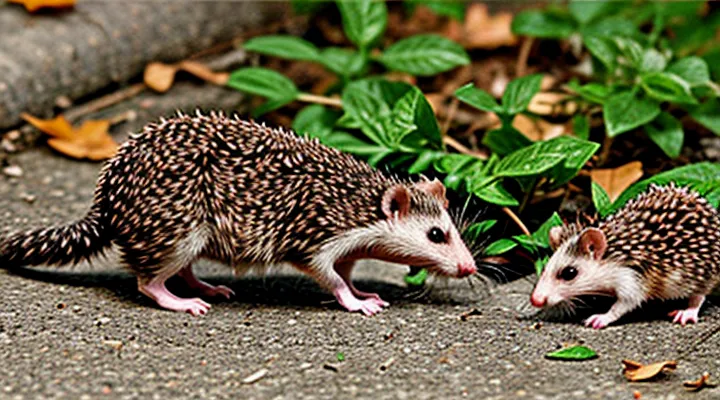
The Enigma of the Hedgehog's Diet
Debunking Common Misconceptions
Hedgehogs are often portrayed as harmless garden dwellers, yet they actively pursue and kill mice. Misconception 1: hedgehogs cannot catch mice because they lack speed. In reality, their rapid, low‑profile sprint and agile body allow them to seize rodents that venture into leaf litter or burrows.
Misconception 2: the spines protect only against predators, not prey. Spines function as a defensive shield; they do not impede the animal’s ability to grasp, bite, and subdue small mammals.
Misconception 3: hedgehogs rely solely on insects for nutrition. While insects compose a large portion of their diet, studies show that mice can represent up to 20 % of the caloric intake in habitats where rodents are abundant.
Misconception 4: mouse predation harms hedgehog health. Captured mice provide essential protein and fat, supporting growth, reproduction, and winter weight gain.
Key points summarizing the evidence:
- Rapid, low‑centered movement enables effective pursuit of rodents.
- Spines serve defensive purposes without limiting predatory actions.
- Dietary analyses confirm regular inclusion of mice in hedgehog meals.
- Mouse consumption contributes positively to hedgehog physiological condition.
These facts dispel popular myths and underscore the role of hedgehogs as competent small‑mammal hunters.
The Reality of Opportunistic Feeding
Hedgehogs are primarily insectivores, yet they readily supplement their diet with vertebrate prey when circumstances allow. This flexible foraging strategy, known as opportunistic feeding, enables individuals to capture mice and other small mammals despite a lack of specialized hunting adaptations.
Mouse capture occurs most frequently during late summer and autumn, when insect abundance declines and juvenile hedgehogs increase protein requirements. Under these conditions, hedgehogs employ their acute sense of smell and tactile whiskers to locate concealed prey in leaf litter or burrows. Their strong forelimbs and sharp teeth deliver a quick bite that immobilizes the target, after which the animal is swallowed whole.
Key observations supporting opportunistic predation include:
- Stomach‑content analyses showing mouse remains in 12 % of sampled adult hedgehogs during the autumn months.
- Motion‑triggered camera footage documenting hedgehogs entering mouse nests and extracting live prey.
- Radio‑tracking data indicating increased foraging range and nighttime activity coinciding with rodent peaks.
The inclusion of mice in the hedgehog diet influences local rodent dynamics by reducing juvenile mouse survival rates, thereby contributing to the regulation of small‑mammal populations in mixed‑habitat landscapes. This effect operates alongside their primary role as insect controllers, reinforcing the species’ ecological versatility.
The Hedgehog as a Nocturnal Hunter
Sensory Prowess: Ears and Nose
Olfactory Acuity in Hunting
Hedgehogs locate mice primarily through scent detection. Their nasal epithelium contains a high concentration of olfactory receptors, allowing them to perceive volatile compounds emitted by rodents even at low concentrations. This sensory capacity compensates for limited visual acuity in low‑light environments where most hunting occurs.
Key anatomical and physiological features that enhance olfactory performance include:
- Dense olfactory epithelium covering a large surface area relative to body size.
- Enlarged olfactory bulbs that process scent information rapidly.
- Specialized vomeronasal organ that detects pheromonal cues linked to prey stress responses.
- Low detection thresholds for mouse urine and skin secretions, measured in parts per billion.
During a hunt, scent gradients guide the hedgehog’s movement. The animal samples air currents with rhythmic sniffs, generating a spatial map of odor intensity. When the gradient steepens, the hedgehog adjusts its trajectory, combining olfactory input with tactile feedback from its whiskers to pinpoint the exact location of the mouse. This multimodal integration reduces search time and increases capture efficiency.
Auditory Cues in Prey Detection
Hedgehogs locate mouse prey primarily through sound. Their ears, positioned low on the skull, amplify frequencies between 2 kHz and 10 kHz, which correspond to the rustling of fur and footfalls of small rodents. The auditory nerve transmits these signals to the brainstem, where rapid processing triggers a predatory response.
Key auditory adaptations include:
- Broad frequency sensitivity that captures both low‑frequency movements and high‑frequency squeaks.
- Enhanced temporal resolution, allowing detection of brief, irregular sounds typical of nocturnal foraging.
- Directional hearing, achieved by asymmetrical ear placement, which pinpoints the source of a sound within a 30‑degree arc.
During night activity, hedgehogs combine acoustic information with tactile feedback from their whiskers and olfactory cues from scent particles. When a sound exceeds a threshold amplitude—approximately 30 dB SPL—the animal initiates a short, high‑speed sprint toward the source, followed by a precise bite. Studies show that deafened individuals experience a 40 % decline in capture efficiency, confirming sound as a critical sensory channel for successful predation.
Navigating the Night: Foraging Strategies
Hedgehogs operate primarily under low‑light conditions, relying on a suite of sensory and behavioral adaptations to locate and capture small vertebrate prey such as mice. Their nocturnal foraging routine begins with heightened olfactory acuity; scent receptors detect the faint odors of rodents moving through leaf litter and undergrowth. Concurrently, vibrissae (whiskers) transmit tactile information about nearby objects, allowing the animal to map its immediate environment without visual cues.
Auditory perception complements these senses. Hedgehogs can discern the high‑frequency rustle of mouse footfalls, enabling them to pinpoint movement even when visual contrast is minimal. Once a potential target is identified, the hedgehog employs a short, rapid burst of locomotion, minimizing exposure while maximizing the chance of intercepting the prey.
Key elements of the night‑time hunting sequence include:
- Spatial memory – recollection of burrow entrances, dense cover, and frequently traversed routes reduces travel time and energy expenditure.
- Temporal patterning – activity peaks during the first few hours after sunset, when rodent activity is high but ambient light remains low.
- Stealth posture – low, crouched stance lowers silhouette against the ground, decreasing detection risk.
- Rapid strike – a swift, forward thrust of the forelimbs delivers a decisive bite before the mouse can flee.
These strategies collectively enhance the hedgehog’s efficiency as a nocturnal predator, allowing it to exploit a niche where visual limitations are offset by refined chemical, tactile, and auditory capabilities.
The Mechanics of Mouse Predation
Encounter and Assessment
When a hedgehog approaches a potential rodent prey, the encounter begins with sensory detection. The animal relies on acute olfactory receptors to locate mouse scent trails, while vibrissae and auditory cues confirm movement nearby. Visual input, though limited in low‑light conditions, assists in gauging the prey’s position relative to the hedgehog’s own trajectory.
Assessment proceeds through a rapid sequence of criteria:
- Size comparison: The hedgehog measures the mouse’s body length against its own reach, ensuring the target fits within the span of its forward‑projected spines.
- Mobility evaluation: Observations of the mouse’s gait and speed indicate vulnerability; slower or erratic movement signals a higher probability of successful capture.
- Distance calculation: The predator estimates the gap using whisker feedback, maintaining a distance that allows a swift, controlled strike without exposing itself to counter‑attack.
- Escape potential: The hedgehog monitors environmental cover and possible escape routes, preferring scenarios where the mouse’s options are limited.
If the assessment yields favorable values across these parameters, the hedgehog initiates a predatory lunge, extending its spiny forebody to immobilize the mouse before delivering a bite. Unfavorable readings prompt the animal to abandon the pursuit, conserving energy for more viable opportunities. This decision‑making framework underpins the hedgehog’s efficiency as a small mammalian predator.
The Strike: Speed and Precision
Jaw Strength and Dentition
Hedgehogs rely on a compact yet powerful masticatory system to subdue mice. The masseter and temporalis muscles, anchored to a robust zygomatic arch, generate bite forces exceeding 30 N, sufficient to break small vertebrate bones and crush the skull of a typical house mouse. This force is amplified by the short lever arm of the mandible, which reduces mechanical disadvantage and maximizes pressure at the teeth.
The dentition consists of sharp, curved incisors at the front and broader, flattened cheek teeth toward the rear. Incisors, coated with thick enamel, act as puncturing tools, penetrating fur and skin. Premolars and molars feature ridged occlusal surfaces that grind bone fragments and facilitate the extraction of soft tissue. Continuous growth of the teeth compensates for wear caused by frequent gnawing on hard prey parts.
Key anatomical adaptations:
- Reinforced mandibular symphysis providing stability during high‑impact bites.
- Enlarged attachment sites for jaw adductors, increasing muscle cross‑sectional area.
- Dental enamel thickness proportionally greater than in insect‑eating relatives, enhancing durability.
- Self‑sharpening incisors that maintain cutting efficiency without external grooming.
Together, these features enable hedgehogs to capture, immobilize, and process mouse prey efficiently, supporting their role as effective small‑mammal predators.
Consumption and Digestion
Hedgehogs that capture mice must process the prey efficiently to sustain their high‑energy lifestyle. After a successful strike, the animal severs the mouse with its sharp incisors, then swallows the carcass whole, relying on a flexible esophagus to accommodate the bulk.
The stomach secretes hydrochloric acid at a pH of 1.5–2.0, creating an environment that denatures proteins and activates pepsin. Pepsin cleaves peptide bonds, reducing muscle tissue to a semi‑liquid chyme within 30–45 minutes.
In the duodenum, pancreatic enzymes—trypsin, chymotrypsin, and lipase—continue protein and fat breakdown. Brush‑border enzymes on the intestinal lining complete the hydrolysis of carbohydrates and peptides. Absorption occurs primarily in the jejunum and ileum, where:
- Amino acids enter the portal circulation for tissue repair and growth.
- Fatty acids and monoglycerides are re‑esterified and packaged into chylomicrons for transport.
- Glucose and short‑chain fatty acids provide immediate energy for thermoregulation and activity.
The liver processes absorbed nutrients, storing glycogen and synthesizing plasma proteins. Excess nitrogen is converted to urea and eliminated via the kidneys, while indigestible components—bones, fur, and keratin—pass into the large intestine and are expelled as feces.
Overall, the digestive system converts the mouse’s protein‑rich and lipid‑dense composition into the metabolic fuels required for the hedgehog’s nocturnal foraging and rapid muscle recovery.
Ecological Impact and Benefits
Natural Pest Control
Hedgehogs are effective biological agents against rodent populations in gardens, orchards, and farmland. Their diet consists primarily of small mammals, insects, and invertebrates, with mice representing a significant portion of their prey. By actively seeking out burrows and foraging at night, hedgehogs reduce the number of breeding individuals, limiting the reproductive potential of mouse colonies.
The presence of hedgehogs contributes to several measurable outcomes:
- Decrease in crop damage caused by rodent feeding.
- Lower incidence of disease transmission linked to mouse infestations.
- Reduced need for chemical rodenticides, minimizing environmental contamination.
- Promotion of biodiversity through the support of a balanced predator‑prey dynamic.
Habitat management enhances hedgehog effectiveness. Providing shelter such as log piles, stone walls, or hedgerows offers safe nesting sites and encourages territorial stability. Maintaining a diversified ground cover supplies continuous foraging opportunities, sustaining hedgehog populations throughout the year.
Monitoring programs that track hedgehog activity and mouse density can quantify the impact of this natural control method. Data collected from field surveys and motion‑activated cameras enable land managers to adjust habitat features, optimize predator presence, and achieve sustainable pest suppression without reliance on synthetic chemicals.
Role in Local Ecosystems
Hedgehogs that capture mice influence local ecosystems through several direct and indirect mechanisms. By removing rodents, they reduce competition for seed‑eating birds and small mammals, allowing those populations to increase. Their predation also limits the spread of diseases carried by mice, such as hantavirus and leptospirosis, thereby lowering infection pressure on other wildlife and human communities.
The foraging activity of hedgehogs contributes to soil health. When hedgehogs dig for prey, they aerate the topsoil, enhance water infiltration, and incorporate organic material into the ground layer. This disturbance promotes microbial activity and facilitates seed germination in disturbed patches.
Population dynamics of hedgehogs affect trophic cascades. A rise in hedgehog numbers can suppress mouse abundance, which in turn decreases predation pressure on invertebrates that mice normally consume. Consequently, insect populations may expand, influencing pollination rates and plant community composition.
Key ecological outcomes include:
- Regulation of rodent density, preventing overgrazing of vegetation.
- Reduction of pathogen transmission pathways.
- Enhancement of soil structure through burrowing behavior.
- Modification of invertebrate communities via indirect effects.
Overall, hedgehog predation on mice serves as a regulatory force that maintains balance among vertebrate and invertebrate groups, supports plant diversity, and contributes to the resilience of the habitats they occupy.
Factors Influencing Predation Success
Habitat and Environment
Hedgehogs thrive in mixed environments where shelter, moisture, and abundant invertebrate and rodent populations coexist. Deciduous woodlands, hedgerows, and suburban gardens provide dense leaf litter and low vegetation that conceal both the animal and its prey. Soil that retains humidity supports earthworms and insects, which sustain the hedgehog’s overall diet while creating a micro‑habitat favorable for small mammals.
Open fields adjacent to woodland edges increase access to mouse colonies. Ground cover composed of grasses, clover, and low shrubs offers hunting lanes and escape routes. Burrow systems and abandoned rabbit warrens serve as temporary refuges, allowing hedgehogs to rest between foraging bouts and to ambush rodents emerging from tunnels.
Human activity reshapes these conditions. Garden compost heaps, mulch beds, and stone walls act as artificial shelters, extending suitable range into urban neighborhoods. Conversely, intensive agriculture and pesticide use diminish prey density and reduce ground‑level cover, limiting hunting opportunities.
Key environmental factors influencing mouse capture:
- Presence of dense leaf litter or mulch
- Continuous low vegetation along field margins
- Moist soil supporting invertebrate prey
- Availability of natural or man‑made shelters (e.g., log piles, stone walls)
- Minimal disturbance from heavy machinery or chemical applications
Maintaining heterogeneous landscapes that combine natural vegetation with low‑intensity garden practices maximizes the hedgehog’s capacity to locate and capture mice.
Prey Availability and Density
Prey availability directly influences the hunting success of hedgehogs, which rely on small rodents such as mice to meet their energetic needs. Seasonal fluctuations in mouse populations determine the number of capture opportunities per night. During breeding peaks, mouse densities rise sharply, providing a temporary surplus of prey; conversely, winter declines reduce encounter rates and force hedgehogs to expand search areas or increase foraging time.
Density of mouse populations shapes the spatial distribution of hunting activity. High-density patches concentrate prey, allowing hedgehogs to adopt a sit‑and‑wait strategy near burrow entrances or along established runways. In low‑density environments, hedgehogs shift to an active search mode, covering larger territories and employing more frequent sniffing and probing movements to locate hidden prey.
Key factors that modify prey availability and density include:
- Habitat structure (grassland, hedgerow, woodland) influencing shelter and food sources for mice
- Agricultural practices (crop rotation, pesticide use) affecting rodent breeding cycles
- Climate variables (temperature, precipitation) that regulate reproductive timing and survival rates
- Predator community composition, where presence of larger carnivores can suppress mouse numbers and alter hedgehog foraging patterns
Understanding these dynamics enables accurate prediction of hedgehog hunting efficiency across different landscapes and seasons, informing conservation measures aimed at maintaining sufficient prey resources for these small carnivores.
Individual Hedgehog Characteristics
Hedgehogs display a range of individual traits that directly influence their efficiency as mouse hunters. Size, sensory acuity, and behavioral disposition vary enough to affect prey detection, capture speed, and handling success.
Body dimensions differ among individuals. Adult European hedgehogs typically weigh 400–1,200 g and measure 15–30 cm in body length. Larger specimens possess greater muscular power, enabling stronger bite forces and faster bursts of movement. Smaller hedgehogs rely on agility and tighter maneuverability within dense underbrush.
Sensory systems are highly developed. The nasal cavity contains an extensive array of olfactory receptors, allowing detection of rodent scent trails at distances of several meters. Auditory structures are tuned to high‑frequency sounds, facilitating the localization of rustling prey. Vibrissae (facial whiskers) provide tactile feedback that guides precise strikes in low‑light conditions.
Behavioral patterns contribute to hunting success. Hedgehogs are principally nocturnal; activity peaks occur between 1900 h and 0300 h, coinciding with peak mouse foraging. Individual boldness varies: some hedgehogs initiate pursuit immediately upon scent detection, while others adopt a cautious, ambush‑oriented approach. Energy expenditure rates differ, influencing the frequency of hunting bouts.
Species and subspecies distinctions produce measurable effects. For example, the African pygmy hedgehog (Atelerix albiventris) exhibits higher metabolic turnover, resulting in more frequent short hunting intervals, whereas the Western European hedgehog (Erinaceus europaeus) favors longer, more decisive chases.
Key individual characteristics that shape mouse predation:
- Mass and muscle mass: larger, stronger individuals generate greater bite pressure.
- Olfactory sensitivity: heightened scent detection improves prey location.
- Auditory range: ability to hear high‑frequency rustles enhances early warning.
- Whisker length and density: refined tactile perception aids precise strikes.
- Nocturnal activity window: alignment with mouse activity maximizes encounter probability.
- Temperament: bold individuals initiate hunts more readily; cautious ones conserve energy for optimal moments.