
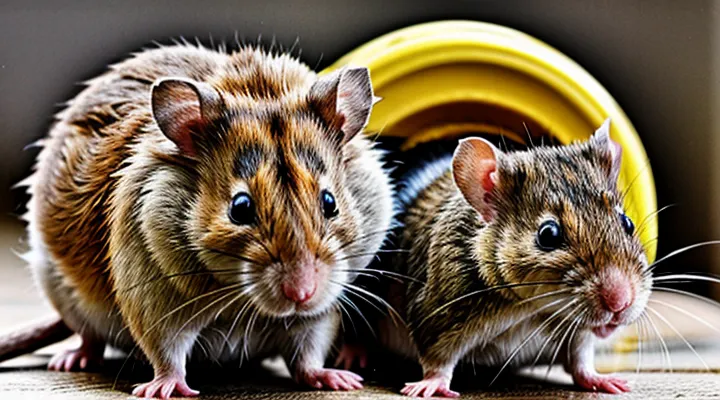
Introduction to Rodents
General Characteristics of Rodents
Classification and Taxonomy
Hamsters belong to the family Cricetidae, subfamily Cricetinae. Their scientific name is Mesocricetus for the most common species, such as the Syrian hamster (Mesocricetus auratus). The taxonomic hierarchy is:
- Kingdom: Animalia
- Phylum: Chordata
- Class: Mammalia
- Order: Rodentia
- Family: Cricetidae
- Subfamily: Cricetinae
- Genus: Mesocricetus
Rats are classified within the family Muridae, subfamily Murinae. The typical laboratory and brown rat is Rattus norvegicus. Their taxonomic hierarchy is:
- Kingdom: Animalia
- Phylum: Chordata
- Class: Mammalia
- Order: Rodentia
- Family: Muridae
- Subfamily: Murinae
- Genus: Rattus
Both groups share the order Rodentia, confirming their placement among rodents. The divergence occurs at the family level: Cricetidae for hamsters and Muridae for rats. This distinction reflects differences in dental morphology, skull structure, and genetic markers. Molecular phylogenetics consistently separates the two families, supporting their independent evolutionary lines. Despite shared order, the families exhibit distinct adaptive radiations, with hamsters specializing in arid environments and rats displaying broader ecological tolerance.
Key Differences Between Hamsters and Rats
Physical Characteristics
Size and Weight
Hamsters typically measure 7–10 cm in body length, with the Syrian species reaching up to 18 cm. Adult weight ranges from 80 g to 150 g, depending on species and diet. Their compact build includes a short tail, often less than 2 cm, contributing to a low overall mass.
Rats exhibit greater dimensions, with body lengths of 20–25 cm and tails extending an additional 15–20 cm. Mature individuals weigh between 200 g and 500 g, reflecting a more robust skeletal and muscular structure. The extended tail adds minimal weight but significantly increases total length.
Key comparative points:
- Length: hamsters ≈ 7–18 cm; rats ≈ 20–25 cm (body only).
- Tail length: hamsters ≤ 2 cm; rats ≈ 15–20 cm.
- Weight: hamsters ≈ 80–150 g; rats ≈ 200–500 g.
Tail Morphology
Hamsters possess very short, rudimentary tails that are often concealed beneath fur. The tail length typically measures less than 2 cm and lacks vertebral extension beyond the sacrum, resulting in a vestigial structure. In contrast, rats exhibit long, hairless tails comprising multiple vertebrae that may reach 15–20 cm, providing balance and thermoregulation.
Key morphological distinctions:
- Length: hamster tail < 2 cm; rat tail ≈ 15–20 cm.
- Covering: hamster tail fully furred; rat tail naked, with sparse hair.
- Skeletal development: hamster tail contains few, reduced caudal vertebrae; rat tail contains a complete series of well‑developed vertebrae.
- Functionality: hamster tail contributes minimally to locomotion; rat tail serves as a prehensile aid for climbing and a surface for heat exchange.
Both species share a basic caudal axis derived from the same embryonic structures, yet evolutionary pressures have produced a pronounced reduction in hamsters and an elaboration in rats. The divergent tail morphology reflects adaptations to differing habitats and behaviors, while the underlying vertebral pattern remains a common anatomical foundation.
Fur and Coat Types
Hamsters possess a short, dense undercoat covered by a fine, velvety guard hair. The coat is typically uniform in color, with occasional patches of darker pigment along the back. Shedding occurs seasonally, resulting in a noticeable increase in loose fur during spring and autumn.
Rats feature a coarser guard hair overlaying a thinner undercoat. Their fur displays a broader spectrum of coloration, including distinct patterns such as dorsal stripes or patches. Seasonal shedding is less pronounced, and the loose hair that falls off is generally finer than that of hamsters.
Key distinctions
- Texture: hamster guard hair is softer; rat guard hair is coarser.
- Color variability: hamsters usually exhibit solid hues; rats often show patterned or multi‑tonal coats.
- Shedding intensity: hamsters shed more heavily during transitional seasons; rats maintain a relatively steady loss of hair year‑round.
Common characteristics
- Both species rely on their fur for thermoregulation and tactile sensing.
- Each animal’s coat provides protection against minor abrasions and parasites.
- The undercoat in both serves as insulation, while the guard hairs repel moisture and dirt.
Cheek Pouches vs. No Cheek Pouches
Hamsters possess expandable cheek pouches that extend from the mouth to the shoulders. The pouches are lined with a thin, elastic membrane and can hold several times the volume of a typical bite. Food is collected, compressed, and transferred to a safe location for consumption or storage. The pouches also serve as a protective environment for seeds and insects, reducing exposure to predators while the animal retreats to its burrow.
Rats lack any form of external cheek pouch. Instead, they rely on rapid mastication and immediate ingestion. Food is broken down in the oral cavity and passed to the esophagus without intermediate storage. The absence of pouches correlates with a foraging strategy that emphasizes constant movement and frequent feeding bouts.
Key contrasts and functional implications:
- Cheek pouch capacity: present in hamsters, absent in rats.
- Food transport method: bulk carrying versus immediate swallowing.
- Burrow usage: hamsters often stockpiled supplies; rats maintained a continuous intake.
- Predator avoidance: hamsters concealed food in pouches; rats minimized exposure by swift consumption.
Both species exhibit nocturnal foraging and possess incisors adapted for gnawing. The divergence in cheek pouch development reflects distinct ecological adaptations rather than a fundamental anatomical similarity.
Behavioral Traits
Social Structure and Interaction
Hamsters exhibit a predominantly solitary social structure. Individuals maintain exclusive territories, especially during the breeding season, and display aggressive behavior toward conspecific intruders. Chemical signals, such as scent marking, reinforce boundaries and convey reproductive status. Vocalizations are limited, with ultrasonic calls occurring mainly in distress or maternal contexts.
Rats develop complex, highly social colonies. Hierarchical organization emerges quickly, with dominant individuals exerting control over access to resources and mating opportunities. Communication relies on a rich repertoire of ultrasonic vocalizations, body postures, and olfactory cues. Cooperative behaviors include nest building, grooming, and coordinated foraging, which enhance group cohesion and predator avoidance.
Key points of similarity and difference:
- Both species employ olfactory cues for individual recognition.
- Hamsters prioritize territoriality; rats prioritize group cohesion.
- Ultrasonic vocalizations appear in both, but serve broader social functions in rats.
- Maternal care is intensive in hamsters, while rats share caregiving responsibilities among group members.
Understanding these patterns informs comparative studies of rodent social evolution and aids in designing appropriate husbandry practices for each species.
Nocturnal vs. Crepuscular Activity
Hamsters exhibit predominantly nocturnal activity, initiating foraging and wheel‑running shortly after dark and maintaining high locomotor levels throughout the night. Their circadian rhythm aligns with a peak of alertness during the scotophase, followed by a prolonged rest period in daylight.
Rats display a crepuscular pattern, concentrating most intense activity at dawn and dusk. During these transitional periods, rats engage in exploration, food intake, and social interaction, while remaining relatively subdued in the middle of the photophase and scotophase.
Key comparative points:
- Timing: hamsters → night; rats → twilight.
- Duration of peak activity: hamsters sustain activity for several hours after sunset; rats concentrate activity within narrower windows around sunrise and sunset.
- Rest phases: hamsters rest primarily during daylight; rats distribute rest more evenly, with brief naps interspersed throughout both day and night.
- Environmental cues: hamsters rely heavily on light‑dark cycles; rats respond strongly to changes in ambient light intensity at dawn and dusk.
Both species are adaptable; laboratory lighting schedules can shift their activity toward more diurnal or nocturnal phases, but intrinsic preferences persist under standard conditions.
Burrowing Habits
Hamsters construct extensive, solitary burrow systems that often reach depths of 30–45 cm. Tunnels are lined with shredded material and feature a single nesting chamber equipped with food storage. Burrow entrances are concealed by vegetation or loose soil, providing protection from predators and environmental extremes.
Rats typically create shallower, communal burrows, rarely exceeding 20 cm in depth. Multiple individuals share a network of tunnels that includes several nesting chambers and escape routes. Burrows are frequently integrated with existing structures such as sewer lines or abandoned rodent holes, reducing excavation effort.
Both species employ burrowing for shelter, thermoregulation, and offspring rearing. The activity influences soil aeration and nutrient mixing, contributing to ecosystem processes.
Key points:
- Hamsters: solitary, deeper tunnels, single nest chamber, extensive lining.
- Rats: communal, shallower networks, multiple nests, use of pre‑existing cavities.
- Shared functions: protection, temperature control, breeding site, ecological impact.
Temperament and Trainability
Hamsters display a cautious demeanor, preferring solitary environments and reacting strongly to sudden stimuli. Their activity peaks during twilight hours, and they tend to retreat into burrows when threatened.
Rats exhibit a sociable disposition, thriving in groups and seeking interaction with conspecifics and humans alike. Their curiosity drives exploration throughout daylight, and they tolerate handling more readily than hamsters.
Both species possess distinct emotional profiles, yet each can adapt to captive conditions when provided with appropriate enrichment. Hamsters require hiding spaces to mitigate stress, whereas rats benefit from complex tunnels and nesting materials that stimulate cooperative behavior.
Training hamsters proves challenging; they respond best to repetitive conditioning focused on simple tasks such as wheel use or tunnel navigation. Positive reinforcement with food treats can shape limited behaviors, but learning curves remain steep compared to rodents with higher social motivation.
Rats excel in operant conditioning, quickly associating cues with rewards. They master obstacle courses, lever presses, and scent discrimination tasks, demonstrating flexibility across varied training protocols. Consistent reinforcement schedules accelerate skill acquisition, allowing rapid progression to complex sequences.
Key comparative points:
- Temperament: solitary caution (hamster) vs. sociable curiosity (rat)
- Stress mitigation: hideouts needed (hamster) vs. group enrichment (rat)
- Trainability: limited, task‑specific learning (hamster) vs. broad, rapid acquisition (rat)
Understanding these distinctions enables targeted care and effective training programs for each species.
Lifespan and Health Considerations
Average Lifespan
The average lifespan of a domestic hamster typically ranges from two to three years, with some individuals reaching four years under optimal care. In contrast, the average lifespan of a pet rat spans two to four years; laboratory strains often live two to three years, while well‑cared domestic rats may approach the upper limit of four years.
Key lifespan figures:
- Hamster: 2 – 3 years (up to 4 years in exceptional cases)
- Rat: 2 – 4 years (average 2.5 – 3 years for most pets)
Both species share a relatively short adult phase compared with larger mammals, reflecting rapid metabolic rates and high reproductive turnover. The principal distinction lies in the broader variability of rat longevity, influenced by strain, diet, and environmental enrichment, whereas hamster lifespan remains more narrowly constrained. Consequently, lifespan considerations for owners should account for the slightly greater potential longevity of rats when planning long‑term care.
Common Health Issues
Both hamsters and rats frequently encounter health problems that stem from their similar size, metabolic rate, and environmental requirements.
Common ailments affecting these rodents include:
- Respiratory infections such as pneumonia and sinusitis, often triggered by poor ventilation or high humidity.
- Dental overgrowth, resulting from continuous incisor growth; inadequate wear leads to malocclusion and difficulty eating.
- Skin disorders, including dermatitis and fungal infections, typically linked to damp bedding or unclean cages.
- Gastrointestinal disturbances like diarrhea or constipation, caused by dietary imbalances or abrupt food changes.
- Tumors, particularly in the mammary glands of females and the peritoneal cavity, with incidence rising in older individuals.
Preventive measures—regular cage cleaning, balanced nutrition, appropriate chew toys, and routine veterinary examinations—reduce the likelihood and severity of these conditions.
Dietary Needs
Hamsters and rats share a basic requirement for a balanced omnivorous diet, yet the proportion of nutrients differs markedly between the two species.
Both rodents need:
- Commercially formulated pellets or blocks as a staple source of carbohydrates and fiber
- Fresh water available at all times
- Small amounts of fresh vegetables (e.g., carrots, broccoli, leafy greens) for vitamins and minerals
- Protein supplements such as boiled egg, mealworms, or low‑fat dairy
Hamsters require a diet higher in fat and lower in protein than rats. Their natural foraging behavior favors seeds and nuts, making a 5–7 % fat content optimal. Excess protein can strain their kidneys. Rats thrive on a diet with a higher protein ratio (approximately 15–20 % of total calories) and benefit from a broader variety of fruits and grains. Their digestive system tolerates moderate sugar intake, allowing occasional pieces of apple or banana.
Feeding recommendations:
- Hamsters: 1–2 tablespoons of pellets per day, supplemented with 1 teaspoon of mixed seeds and a few vegetable pieces every other day. Treats should not exceed 10 % of total caloric intake.
- Rats: 1–2 cups of pellets daily, complemented by 2–3 tablespoons of cooked lean protein and daily portions of fresh fruit or vegetable. Treats limited to 5 % of total calories.
Proper nutrition supports dental health, energy levels, and reproductive success in both animals. Adjustments may be necessary for age, health status, and activity level, but the core principles outlined above provide a reliable framework for meeting the dietary needs of each species.
Similarities Between Hamsters and Rats
Rodent Family Traits
Gnawing and Dental Structure
Hamsters and rats possess continuously growing incisors that require regular gnawing to maintain functional length. The incisors consist of a hard enamel layer on the front surface and softer dentine behind, creating a self‑sharpening edge as the animal chews.
Differences in dental morphology and gnawing behavior include:
- Hamsters have relatively shorter incisors with a pronounced curvature, suited for cracking seeds and nuts; their molar rows are limited to three on each side of the jaw.
- Rats exhibit longer, straighter incisors that enable extensive gnawing of diverse materials such as wood and plastic; they possess four molars per side, providing greater grinding capacity.
- Hamsters gnaw primarily during brief, frequent bouts, while rats engage in prolonged gnawing sessions, especially when constructing nests or accessing food.
Similarities between the two species are:
- Incisor growth persists throughout life, driven by stem cells at the root.
- Enamel covers only the anterior quarter of each incisor, exposing dentine posteriorly; this differential wear maintains a sharp cutting edge.
- Both rely on gnawing to prevent dental overgrowth, a behavior essential for oral health and survival.
Reproductive Capabilities
Hamsters reach sexual maturity at 4–6 weeks for Syrian species and 6–8 weeks for dwarf varieties. Gestation lasts 16–22 days, producing litters of 4–12 pups. Breeding occurs seasonally, with a pronounced estrus cycle of 4 days; females become receptive only during a brief window.
Rats mature sexually at 5–6 weeks. Gestation period extends 21–23 days, yielding litters of 6–12 offspring. Estrous cycles repeat every 4–5 days, allowing continuous breeding under favorable conditions.
Key reproductive parameters:
- Gestation: hamsters ≈ 16–22 days; rats ≈ 21–23 days.
- Litter size: overlapping ranges, hamsters 4–12, rats 6–12.
- Sexual maturity: hamsters slightly earlier in dwarf strains, rats comparable.
- Breeding frequency: hamsters limited by seasonal estrus; rats capable of year‑round cycles.
Both species exhibit rapid reproductive turnover, high fecundity, and parental care limited to the early neonatal period. Differences arise chiefly in estrous timing, gestation length, and the influence of photoperiod on hamster breeding cycles.
Senses and Communication
Hamsters and rats exhibit distinct sensory specialisations that influence their interaction with the environment. Vision in hamsters is limited to low‑light conditions; the retina contains a high proportion of rod cells, supporting nocturnal foraging. Rats possess a broader visual spectrum, with a greater density of cones that enable better discrimination of shapes and movement during daylight.
Auditory capacity differs markedly. Hamsters detect frequencies up to 30 kHz, sufficient for recognizing conspecific squeaks. Rats respond to a wider range, extending beyond 40 kHz, which facilitates detection of ultrasonic communication used in social hierarchies.
Olfactory acuity is pronounced in both species, yet the relative emphasis varies. Hamsters rely on scent trails for territory navigation, while rats employ a complex pheromonal system to convey reproductive status and dominance. «Rodents rely heavily on olfactory cues» encapsulates this reliance.
Tactile perception centers on vibrissae. Hamsters exhibit shorter whiskers that aid in substrate exploration within burrows. Rats feature longer, more mobile vibrissae, providing detailed spatial mapping during surface locomotion.
Communication mechanisms encompass several modalities:
- Vocalizations: short squeaks for alarm, ultrasonic chirps for courtship (more diverse in rats).
- Scent marking: urine and glandular secretions to delineate territory (prominent in hamsters).
- Body language: tail posture, ear orientation, and grooming gestures to signal aggression or submission.
- Vibrissal signaling: rapid whisker movements convey tactile information during close‑range encounters.
These sensory and communicative traits define the ecological niches occupied by each rodent, shaping behaviour, social structure, and survival strategies.
Pet Ownership Aspects
Enclosure Requirements
Both hamsters and rats require cages that prevent escape, protect against predators, and allow easy cleaning. Secure wire bars or solid panels must be spaced no wider than ½ inch to block teeth. Adequate ventilation prevents respiratory problems, while a solid base supports bedding and accessories.
Hamsters benefit from deep, absorbent substrate that permits natural burrowing; a minimum depth of 3 inches is recommended. Rats prefer a flatter bedding layer of 1–2 inches, supplemented by tunnels and climbing structures. Social behavior differs: hamsters are solitary and need only one enclosure per individual, whereas rats thrive in groups and require a cage large enough to accommodate multiple occupants without crowding.
Key enclosure dimensions:
- Hamster: floor area at least 450 sq in (≈ 2900 cm²); height 12 in (≈ 30 cm) to allow vertical activity.
- Rat: floor area at least 2000 sq in (≈ 13 000 cm²) for a pair; height 18 in (≈ 45 cm) to support multiple levels.
- Both: wire spacing ≤ ½ inch; solid bottom; removable tray for waste.
Enrichment items such as chew toys, tunnels, and hideouts are essential for dental health and mental stimulation. Regular replacement of worn accessories maintains safety and hygiene. Proper enclosure design minimizes stress, supports natural behaviors, and promotes longevity for both species.
Enrichment Needs
Enrichment serves the behavioral health of both hamsters and rats, providing opportunities for exploration, problem‑solving, and physical activity.
Hamsters require environments that accommodate their solitary nature and nocturnal habits. Essential elements include:
- Multi‑level cages with solid flooring to prevent foot injuries.
- Burrowing material such as shredded paper or safe wood chips.
- Exercise wheels of appropriate size (minimum 8 inches in diameter) to allow full stride.
- Chewable items like untreated wooden blocks to support dental wear.
- Hideouts that mimic natural burrows, positioned in low‑light zones.
Rats thrive in socially complex settings and benefit from stimuli that encourage interaction and cognition. Critical components comprise:
- Spacious cages with vertical and horizontal enrichment, allowing climbing and tunneling.
- Nesting material (e.g., fleece) for communal nest building.
- Manipulable toys, puzzles, and foraging devices that require problem‑solving.
- Safe chew sticks to maintain incisor length.
- Opportunities for supervised out‑of‑cage exploration, including tunnels and tunnels.
Both species share several enrichment categories, yet the execution differs. Hamsters favor solitary, enclosed structures, whereas rats seek group‑oriented, interactive apparatus. Providing species‑specific items while maintaining overlapping concepts—exercise, chewing, and hiding—optimizes welfare and reduces stress‑related behaviors.
Common Misconceptions
Common misconceptions about hamsters and rats often blur the line between these two small mammals, leading to confusion in pet selection and care.
• A frequent belief claims that rats are inherently aggressive, while hamsters are universally gentle. In reality, individual temperament varies; rats display social intelligence and can be calm, whereas hamsters may exhibit territorial aggression, especially when housed together.
• Another myth suggests that hamsters require no environmental enrichment because of their simple nature. Proper enrichment, including tunnels, wheels, and chew objects, is essential for preventing boredom and stereotypic behavior.
• Some owners assume that rats are unsuitable for households with children due to disease risk. Proper hygiene and routine veterinary care eliminate health concerns, making rats a viable companion for families.
Accurate information clarifies that both species possess distinct behavioral patterns, nutritional needs, and social structures. Recognizing these differences dispels myths and supports responsible ownership.