
Understanding Rodent Identification
Why Accurate Identification Matters
Health Risks Associated with Rodents
Rodent infestations create direct threats to human health; accurate species identification is essential for targeted risk mitigation.
- Bacterial infections: Salmonella spp., Leptospira interrogans, Streptobacillus moniliformis.
- Viral diseases: Hantavirus pulmonary syndrome, Lymphocytic choriomeningitis virus.
- Parasitic hazards: Hymenolepis nana, Toxocara spp., fleas and mites that may bite humans.
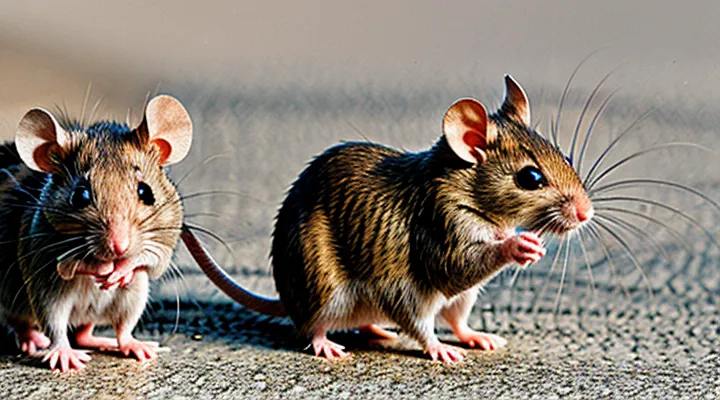
External characteristics enable reliable separation of mice from rats. Mice exhibit a slender body, proportionally large ears, a pointed snout, and a hair‑covered tail that tapers sharply. Rats present a heavier build, smaller ears relative to head size, a blunter snout, and a thicker, often scaly tail. These distinctions guide epidemiological assessment because rats more frequently harbor hantavirus and leptospira, while mice are common vectors for LCMV and certain ectoparasites.
Effective control relies on species‑specific strategies: sealing entry points sized for the smaller mouse, employing bait stations calibrated for rat appetite, and implementing sanitation protocols that disrupt food sources preferred by each species. Continuous monitoring of external traits in captured specimens ensures that health‑risk profiles remain accurate and that interventions are appropriately directed.
Damage Caused by Different Rodent Species
Mice and rats inflict distinct patterns of damage that reflect their size, behavior, and feeding habits. Recognizing which species is present allows targeted mitigation and reduces material loss.
Small rodents such as house mice (Mus musculus) create fine gnaw marks on insulation, wiring, and delicate components. Their ability to enter through minute openings enables them to reach storage areas, where they contaminate dry goods with urine and feces, leading to spoilage and health hazards. Their rapid breeding cycle produces frequent population spikes, amplifying the extent of damage over short periods.
Larger rodents, including Norway rats (Rattus norvegicus) and roof rats (Rattus rattus), generate broader gnawing damage. Their stronger jaws enlarge holes in structural timbers, concrete, and drainage systems, compromising building integrity. They deposit larger quantities of droppings, which attract insects and spread pathogens. Their nocturnal foraging includes seeds, fruits, and stored grain, resulting in significant loss of agricultural products.
Key differences in damage manifestation:
- Size of gnaw marks: mice produce narrow, shallow bites; rats leave wide, deep grooves.
- Location of activity: mice favor upper levels, ceiling voids, and pantry shelves; rats concentrate near ground, basements, and sewer lines.
- Quantity of waste: rat droppings are larger and more numerous, increasing contamination risk.
- Structural impact: rat burrowing can undermine foundations, while mouse activity rarely affects load‑bearing elements.
Effective identification relies on external characteristics: mice display a pointed snout, large ears relative to head size, and a hairless, scaly tail; rats possess a blunt snout, smaller ears, and a thicker, fur‑covered tail. Observing these traits in captured specimens or tracks confirms the responsible species, guiding appropriate control measures.
Key External Features for Differentiation
Size and Body Shape
Overall Body Length
Mice typically measure 2–4 inches (5–10 cm) from nose to the base of the tail, whereas rats range from 7–10 inches (18–25 cm) in the same dimension. This size disparity remains consistent across adult specimens regardless of breed or sex.
- Maximum length: Mice rarely exceed 5 inches (13 cm); rats often surpass 12 inches (30 cm).
- Average length: Common house mouse averages 3 inches (7.5 cm); Norway rat averages 9 inches (23 cm).
- Growth pattern: Both species increase proportionally with age, but the rat’s growth curve yields a markedly larger adult size.
When observing an unfamiliar rodent, measuring the overall body length provides a rapid, reliable criterion for species identification. A length under 5 inches almost certainly indicates a mouse; a measurement above 7 inches strongly suggests a rat.
Proportion of Head to Body
Mice have a head that occupies roughly 30 % of total body length, while rats exhibit a head proportion near 20 % of their overall size. This disparity results from mice’s shorter torso and longer skull relative to body mass.
Key measurements:
- Head length (snout to occipital ridge) in house mice: 12–14 mm; in common rats: 20–25 mm.
- Body length (excluding tail) in mice: 55–95 mm; in rats: 180–250 mm.
- Ratio of head length to body length: mice ≈ 0.22–0.25; rats ≈ 0.10–0.13.
The higher head‑to‑body ratio in mice gives them a more rounded appearance, whereas rats display a flatter, elongated profile. When assessing live specimens or photographs, measuring the distance from the tip of the nose to the back of the skull and comparing it with the distance from the base of the skull to the ventral abdomen provides a rapid, reliable indicator of species.
Body Build and Robustness
Mice and rats can be separated by the overall sturdiness of their bodies. A mouse typically presents a slender frame, a relatively narrow torso, and a light‑weight skeleton that supports quick, agile movement. In contrast, a rat exhibits a bulkier, more muscular build; its torso is broader, the ribs are more pronounced, and the animal carries a higher body mass relative to its length. These differences affect posture: mice often appear hunched with a tapered abdomen, while rats maintain a flatter, more rectangular silhouette.
Key external indicators of robustness:
- Torso width – mouse: narrow; rat: wide.
- Body mass – mouse: low; rat: high.
- Rib cage prominence – mouse: subtle; rat: well‑defined.
- Overall silhouette – mouse: tapered; rat: rectangular.
- Leg proportion – mouse: long relative to body; rat: shorter, thicker.
Assessing these traits allows reliable separation of the two species without recourse to internal examination.
Head and Facial Features
Ear Size and Shape
Ear dimensions provide a reliable criterion for separating mice from rats. Mice possess ears that are proportionally large, often approaching the length of the head, and exhibit a triangular outline with pointed tips. The pinna is thin, hair‑free, and appears translucent when illuminated. In contrast, rat ears are noticeably smaller relative to the skull, generally rounded rather than angular, and covered with a thin layer of fur that reduces translucency. The rat pinna is thicker, with a more robust cartilage structure, giving it a blunt appearance.
Key distinctions can be summarized:
- Relative size: mouse ear length ≈ head length; rat ear length ≈ half head length.
- Shape: mouse – triangular, pointed; rat – circular, blunt.
- Surface: mouse – hairless, smooth; rat – lightly furred, slightly textured.
These attributes remain consistent across common species (e.g., house mouse, Norway rat) and persist regardless of age, making ear morphology a practical tool for accurate rodent identification in field and laboratory settings.
Eye Prominence and Size
Mice possess relatively large, bulging eyes that dominate the skull’s lateral surface. The orbital rim is low, allowing the eyeball to protrude noticeably. Typical eye diameter ranges from 3 to 5 mm, proportionally larger than the head length. This prominence enhances visual acuity for nocturnal foraging and facilitates rapid head movements.
Rats display smaller, recessed eyes set deeper within the cranial cavity. The orbital rim is higher, creating a flatter facial profile. Eye diameter averages 5 to 7 mm, but the overall head size is considerably greater, resulting in a lower eye‑to‑head ratio. The reduced prominence reflects a reliance on tactile and olfactory senses rather than acute vision.
Key morphological contrasts:
- Eye‑to‑head proportion: Mice >0.25; Rats <0.15.
- Orbital placement: Low, protruding (mouse); High, recessed (rat).
- Typical diameter: 3–5 mm (mouse); 5–7 mm (rat).
These measurable traits enable reliable separation of the two species when external examination is the only tool available.
Snout Length and Pointiness
The snout provides a reliable visual cue for separating mice from rats. Mice typically exhibit a short, blunt snout that ends in a rounded tip. The overall length of the rostrum measures roughly one‑third of the head’s total length, giving the face a compact appearance. In contrast, rats possess a longer, more tapered snout that extends to about half the head length, culminating in a distinctly pointed tip.
Key comparative points:
- Length proportion: mouse snout ≈ 30 % of head length; rat snout ≈ 50 % of head length.
- Tip shape: mouse tip rounded; rat tip sharply pointed.
- Overall profile: mouse profile appears blunt and compact; rat profile appears elongated and angular.
Observing these characteristics allows accurate identification without reliance on behavior or habitat cues.
Tail Characteristics
Tail Length Relative to Body
Tail length, expressed as a proportion of head‑body length, offers a clear criterion for separating the two common rodent groups. Mice typically possess tails that equal or exceed the length of their head‑body segment, often ranging from 100 % to 130 % of that measurement. In contrast, rats display tails that are shorter relative to body size, usually falling between 60 % and 90 % of the head‑body length.
Key measurements:
- Mice: tail‑to‑body ratio ≈ 1.0 – 1.3 : 1
- Rats: tail‑to‑body ratio ≈ 0.6 – 0.9 : 1
These ratios remain consistent across common species and provide a rapid visual cue for field identification. When assessing an unknown specimen, compare the full tail length to the combined head and torso measurement; a ratio above unity indicates a mouse, while a sub‑unity ratio signals a rat.
Tail Thickness and Tapering
Tail morphology offers a clear external criterion for separating mice from rats.
Mice possess tails that are noticeably slender, often comparable in diameter to a pencil lead. The tail surface is typically covered with fine, short hairs, and the overall thickness remains uniform along most of its length.
Rats display tails that are substantially thicker, approaching the width of a thin knitting needle. The tail may exhibit a slight taper, but the reduction in diameter is modest; the distal portion retains a relatively robust cross‑section.
Key diagnostic observations:
- Relative thickness: mouse tail diameter is roughly 2–3 mm; rat tail diameter ranges from 5–8 mm.
- Tapering pattern: mouse tails gradually narrow to a fine tip; rat tails show minimal taper, ending with a blunt or only slightly narrowed tip.
- Surface texture: mouse tails are smoother with sparse hair; rat tails may have denser, coarser hair and occasional scales.
When assessing an unknown specimen, compare tail thickness to body length, note the degree of taper, and evaluate surface texture. Consistent application of these parameters yields reliable identification between the two species.
Presence and Density of Hair on Tail
Mice typically have a tail covered with a fine, dense coat of hair that extends along the entire length, often giving the tail a uniformly fuzzy appearance. Rats possess a tail that is largely naked; hair, when present, is sparse and confined to the distal tip, resulting in a smooth, scaly surface over most of the tail.
Key comparative points:
- Hair coverage: continuous and dense in mice; limited or absent in rats.
- Texture: soft and velvety on mouse tails; dry and leathery on rat tails.
- Length of hairy segment: extends to the tip in mice; usually restricted to the final few centimeters in rats.
Fur Color and Texture
Common Color Variations
Color patterns provide a reliable indicator when separating mice from rats. Both groups display a limited palette, yet each species favors distinct combinations that aid rapid identification.
Mice commonly exhibit:
- Light brown (agouti) fur with a darker dorsal stripe.
- Uniform gray or white coats in laboratory strains.
- Reddish‑brown patches in some wild populations.
- Black or dark brown pelage in melanistic individuals.
Rats typically present:
- Dark brown to black fur covering the entire body, often with a glossy sheen.
- Light brown or tan coloration on the ventral side, creating a pronounced contrast with a darker dorsal coat.
- Grayish‑brown fur in certain wild species, especially in coastal environments.
- Albinism, resulting in pink eyes and a stark white coat, observed in laboratory and feral rats alike.
Overlap occurs in gray or brown shades, but the distribution differs. Mice usually retain a uniform tone across the body, whereas rats display a clear dorsal‑ventral contrast. Additionally, the presence of a glossy, coarse coat is characteristic of rats, contrasting with the finer, softer fur of mice.
When evaluating a specimen, note the dominant hue, the presence of dorsal‑ventral contrast, and coat texture. These external color traits, combined with other morphological cues, enable accurate species separation.
Smoothness vs. Coarseness of Fur
Fur texture provides a clear external indicator when separating mice from rats.
Mice possess a fine, silky pelage that lies close to the skin. The hair shafts are uniformly short, giving the animal a sleek appearance. Under magnification, individual strands lack the tactile roughness observed in larger rodents. This smooth coat facilitates rapid heat loss, supporting the mouse’s higher metabolic rate.
Rats exhibit a dense, coarse fur composed of longer, thicker hairs. The outer layer feels rough to the touch, and the undercoat is often bristly. The hair shafts display visible variations in diameter, creating a textured surface that retains warmth and protects against abrasive environments.
Practical identification based on fur texture:
- Run a fingertip lightly over the dorsal surface; a velvety glide suggests a mouse, while a gritty resistance indicates a rat.
- Observe coat uniformity; mice show consistent smoothness across the body, whereas rats display patches of coarser hair, especially near the tail base.
- Examine the tail’s covering; mice often have a naked or sparsely haired tail, while rat tails retain a thin layer of coarse fur.
These tactile and visual cues enable reliable differentiation without reliance on size or behavior alone.
Droppings and Other Indirect Signs
Size and Shape of Fecal Pellets
Fecal pellet dimensions provide a reliable external indicator for separating mice from rats.
Mice produce pellets that are typically 2–5 mm long, 1–2 mm wide, and cylindrical with a smooth surface. Rat pellets range from 10–20 mm in length, 4–6 mm in width, and exhibit a more tapered, spindle‑shaped profile. The larger size and distinct taper of rat droppings reflect the greater body mass and longer digestive tract of the species.
Key measurements for field identification:
- Length: mouse ≤ 5 mm; rat ≥ 10 mm.
- Width: mouse ≈ 1–2 mm; rat ≈ 4–6 mm.
- Shape: mouse – uniform cylinder; rat – tapering ends, often slightly flattened.
When pellets are found in mixed environments, select specimens that match the mouse size range for confirmation of mouse presence, and those aligning with the rat range for rat activity. Consistent measurement of these parameters enhances accuracy in distinguishing the two rodents without reliance on live capture.
Gnaw Marks and Their Scale
Gnaw marks provide a reliable criterion for separating mice from rats when visual inspection is required. The dimensions of the bite imprint correspond directly to the size of the incisors, which differ markedly between the two species.
- Width of the groove: mouse gnaw marks are typically 2–3 mm across; rat marks range from 5–8 mm.
- Depth of the cut: mouse impressions rarely exceed 1 mm; rat impressions often reach 2–3 mm.
- Edge pattern: mouse teeth produce a shallow, V‑shaped notch with a smooth interior; rat teeth generate a broader, U‑shaped notch with pronounced ridges.
The scale of gnaw marks also reflects feeding behavior. Mice produce numerous fine scratches on soft materials such as paper or thin cardboard, while rats create fewer but larger, more forceful gouges on wood, plastic, or thick fabric. Observers should match the measured dimensions of a mark against the ranges above to identify the culprit with confidence.