
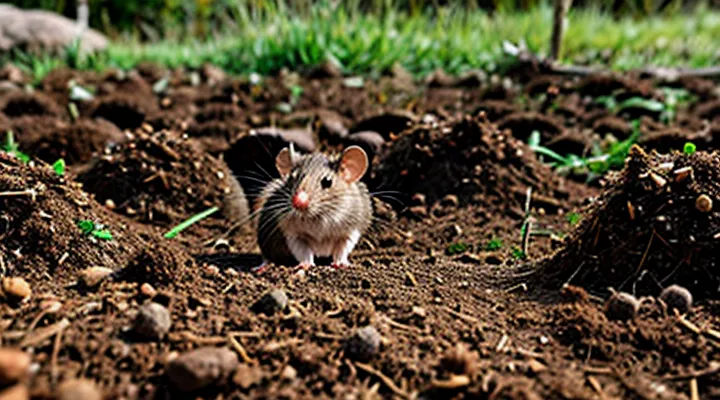
Understanding Soil as a Habitat
Physical Properties Influencing Habitation
Soil Texture and Structure
Soil texture, defined by the relative proportions of sand, silt and clay particles, determines pore size distribution, water retention capacity and mechanical resistance. Fine‑textured soils retain moisture and present smaller pores, whereas coarse‑textured soils drain quickly and provide larger voids. These physical properties directly influence the depth at which small mammals construct burrows, the stability of those burrows, and the availability of resources within the soil profile.
Soil structure describes the arrangement of soil particles into aggregates and the continuity of macropores. Granular aggregates promote extensive pore networks that facilitate movement and ventilation, while blocky or platy structures limit vertical connectivity and may restrict deeper excavation. Aggregate stability affects the persistence of tunnels and the protection of nesting chambers from collapse.
The interaction of texture and structure shapes the vertical distribution of mouse habitats. Coarse, loosely structured soils allow rapid burrow extension to greater depths, but may lack sufficient moisture for seed and invertebrate prey. Fine, well‑aggregated soils support deeper, more stable chambers with higher humidity, enhancing survival during dry periods. Habitat selection therefore reflects a trade‑off between ease of excavation and microenvironmental conditions required for foraging and thermoregulation.
Typical texture classes and associated structural forms:
- Sand → granular or massive structure, large macropores, rapid drainage.
- Silt → blocky to subangular structure, moderate pore continuity, balanced moisture.
- Clay → platy or columnar structure, small pores, high water retention, potential for compaction.
Soil Moisture and Aeration
Soil moisture directly influences the availability of water to subterranean rodents, affecting their foraging efficiency and physiological balance. High moisture levels increase microbial activity, which accelerates organic matter decomposition and releases nutrients essential for seed consumption by mice. Conversely, overly saturated soils reduce oxygen diffusion, creating hypoxic pockets that impair burrow ventilation and increase mortality risk.
Aeration determines the rate at which atmospheric gases reach the root zone and burrow chambers. Well‑aerated soils maintain a stable oxygen gradient, supporting aerobic respiration of both the rodents and the associated microbial community. Adequate pore space also facilitates the removal of carbon dioxide and metabolic waste, preserving a healthy microenvironment within the tunnel network.
Key interactions between moisture and aeration can be summarized:
- Moderate moisture combined with high aeration: optimal for burrow stability, nutrient turnover, and respiratory efficiency.
- Excess moisture with poor aeration: leads to waterlogging, reduced gas exchange, and increased pathogen prevalence.
- Low moisture with high aeration: promotes soil drying, potentially limiting food availability and forcing deeper excavation.
Management of these parameters in experimental or conservation settings should focus on maintaining a balance that supports both the physical integrity of the burrow system and the biological needs of the resident mouse populations.
Temperature Gradients
Temperature gradients describe the systematic change in soil temperature with increasing depth. In subterranean rodent environments, these gradients create distinct thermal zones that influence burrow architecture and occupancy patterns.
Near the surface, temperature fluctuates diurnally, reflecting atmospheric conditions. At greater depths, thermal inertia stabilizes temperatures, producing a relatively constant environment. The transition zone, where temperature changes most rapidly, typically lies within the upper few centimeters of soil and marks the limit of suitable microhabitats for many small mammals.
Thermal conditions affect metabolic rates, reproductive timing, and predator avoidance. Elevated temperatures near the surface accelerate metabolism but increase exposure to predators and desiccation. Cooler, stable zones deeper in the profile reduce metabolic demand and provide refuge during extreme weather events.
Measurement of soil temperature gradients employs several established techniques:
- Thermistor or thermocouple probes inserted at predefined depth intervals.
- Data loggers recording temperature at regular time steps to capture diurnal cycles.
- Infrared thermography for surface temperature mapping, combined with subsurface probe data for gradient reconstruction.
Accurate profiling of temperature gradients informs predictions of habitat suitability, population dynamics, and the ecological resilience of underground dwelling rodents.
Chemical Properties and Nutrient Availability
pH Levels
Soil pH strongly influences the distribution of small rodent burrows. Acidic conditions (pH < 5.5) reduce the abundance of organic matter and microbial activity, limiting the availability of food resources for subterranean mice. Neutral to slightly alkaline soils (pH 5.5‑7.5) support a diverse microbial community that enhances seed and invertebrate populations, providing optimal foraging grounds. Highly alkaline environments (pH > 7.5) may lead to mineral precipitation that hardens the substrate, making burrow construction more energy‑intensive.
Key relationships between pH and burrow depth:
- Upper soil layers (0‑10 cm): pH fluctuations are most pronounced; mild acidity correlates with shallow burrow avoidance.
- Intermediate depths (10‑30 cm): stable neutral pH promotes persistent burrow systems and higher nest density.
- Deep layers (>30 cm): pH tends toward neutrality; alkaline shifts can increase soil compaction, restricting deep burrowing.
Management implications:
- Soil amendment with lime or sulfur can adjust pH toward the neutral range, fostering suitable conditions for mouse habitation across depth gradients.
- Regular pH monitoring enables detection of acidification trends that may force habitat contraction toward deeper, less favorable strata.
Organic Matter Content
Organic matter content determines the physical and chemical properties of the soil layers that host small rodents. High concentrations of decomposed plant and animal material increase porosity, allowing greater air and water movement through the profile. These conditions sustain the microhabitats preferred by mice that occupy subsurface environments.
Key effects of organic matter on mouse habitats include:
- Enhanced moisture retention, which stabilizes the humidity levels required for burrow integrity.
- Improved aggregate stability, reducing the risk of collapse in deeper tunnels.
- Elevated nutrient availability, supporting microbial communities that form the base of the food web accessed by foraging mice.
- Increased cation‑exchange capacity, influencing the distribution of essential minerals within the soil matrix.
Measurements of organic matter typically involve loss‑on‑ignition or wet oxidation methods, providing quantitative data that correlate with habitat suitability indices. Studies consistently show that areas with organic matter percentages above 5 % exhibit higher burrow density and greater reproductive success among resident mouse populations.
«Soil organic matter improves structure and moisture retention», a principle that underpins the relationship between substrate quality and the spatial distribution of rodent activity across vertical soil gradients.
Mineral Composition
The mineral composition of soils that host field‑mouse populations determines the physicochemical environment available to burrowing rodents. Soil layers occupied by these mammals typically contain variable proportions of silica, calcium carbonate, iron oxides, and aluminosilicates, each influencing texture, pH, and nutrient availability.
Key minerals and their functional implications:
- Silica — provides structural rigidity to soil aggregates, enhancing tunnel stability.
- Calcium carbonate — buffers acidity, maintaining pH levels conducive to microbial activity.
- Iron oxides — affect redox potential, influencing organic matter decomposition.
- Aluminosilicates — contribute to cation‑exchange capacity, regulating the supply of essential nutrients.
Depth gradients modify mineral distribution. Upper horizons exhibit higher organic matter and calcium carbonate, while deeper strata show increased silica and iron oxides due to leaching and weathering processes. These shifts alter moisture retention and aeration, thereby affecting burrow microclimates.
The resultant mineral profile shapes field‑mouse physiology and behavior. Elevated calcium availability supports bone development; stable silica‑rich substrates reduce tunnel collapse risk. Conversely, excessive iron concentrations can increase oxidative stress, potentially impacting reproductive success.
Understanding the precise mineral makeup of subterranean habitats enables targeted soil management strategies that sustain healthy field‑mouse communities while preserving ecosystem functions.
Field Mouse Adaptations to Subterranean Life
Burrowing Behaviors and Strategies
Burrow Construction and Architecture
Burrow systems created by field mice exhibit sophisticated structural organization that enhances survival in subterranean environments. Primary tunnels extend vertically to intersect the water table, providing moisture regulation, while horizontal shafts connect nesting chambers to foraging galleries. Soil composition influences tunnel stability; fine loam permits smooth excavation, whereas clay layers require reinforcement with compacted walls.
Key architectural components include:
- Entrance shafts, typically angled to reduce predation risk and facilitate rapid escape.
- Nest chambers, lined with shredded vegetation and compacted earth to maintain thermal consistency.
- Food storage alcoves, positioned near foraging tunnels for efficient retrieval.
- Ventilation passages, arranged to create passive airflow that removes carbon dioxide and excess humidity.
Construction proceeds in stages. Initial digging creates a shallow pilot tunnel, followed by expansion into a network of secondary passages. Muscular forelimb movements generate soil displacement, while secreted saliva moistens particles, allowing finer manipulation. Periodic reinforcement using packed soil or root fragments prevents collapse under variable load conditions.
Morphological variations correspond to habitat heterogeneity. In sandy substrates, burrows display increased depth to reach stable moisture zones, whereas in compacted soils, horizontal expansion dominates to maximize usable space without excessive excavation effort. This adaptive architecture reflects evolutionary optimization for resource acquisition, predator avoidance, and microclimatic control within the underground domain.
Microclimate Regulation within Burrows
Microclimate regulation inside subterranean mouse tunnels is achieved through a combination of structural and physiological mechanisms. Soil composition, tunnel geometry, and the activity of the occupants create a stable thermal and humidity environment that differs markedly from the surrounding matrix.
Key processes include:
- Thermal inertia of surrounding earth – reduces rapid temperature fluctuations by buffering heat exchange.
- Ventilation shafts and tunnel orientation – promote convective airflow that moderates temperature and removes excess moisture.
- Excretory deposits and fungal growth – enhance moisture retention and influence local humidity levels.
- Burrow lining with plant material – adds insulation and contributes to organic matter decomposition, releasing heat.
These factors together maintain conditions conducive to reproductive success, foraging efficiency, and predator avoidance for the resident rodent populations.
Foraging Tunnels
Foraging tunnels constitute the primary conduit through which small rodents acquire nutrients within the multilayered soil matrix. These burrows extend vertically and horizontally, intersecting zones of differing moisture, organic content, and compaction. Their architecture reflects adaptive responses to resource distribution and predator avoidance.
Key functional attributes:
- Vertical stratification – tunnels reach depths where root exudates and fungal mycelia concentrate, providing access to high‑energy food sources.
- Lateral connectivity – horizontal passages link multiple feeding sites, facilitating efficient exploitation of dispersed seed caches and invertebrate populations.
- Structural reinforcement – walls are compacted with soil particles and reinforced by secreted mucus, maintaining stability in variable substrate conditions.
- Ventilation channels – auxiliary shafts promote airflow, regulating oxygen levels and removing metabolic waste.
The spatial arrangement of foraging tunnels influences the overall occupancy pattern of subterranean mouse populations. Deeper sections correspond with reduced predation risk but increased energy expenditure for excavation, while shallower segments offer rapid access to surface detritus. Consequently, the balance between tunnel depth and horizontal reach determines foraging efficiency and reproductive success.
Physiological Adaptations for Low Oxygen Environments
Metabolic Adjustments
Soil‑dwelling mice inhabiting zones that range from the shallow litter layer to deeper mineral strata encounter fluctuations in oxygen tension, temperature, and nutrient availability. These environmental gradients compel precise regulation of energy metabolism to sustain locomotion, thermoregulation, and reproductive output.
Key metabolic adjustments include:
- Up‑regulation of glycolytic enzymes when oxygen levels decline, enabling rapid ATP production through anaerobic pathways.
- Enhancement of mitochondrial density and oxidative phosphorylation capacity in well‑oxygenated zones, supporting sustained aerobic activity.
- Modulation of uncoupling protein expression to balance heat production with energy efficiency under variable thermal conditions.
- Shifts in substrate utilization, favoring fatty acid oxidation during periods of abundant lipid stores and carbohydrate catabolism when glycogen reserves dominate.
- Activation of hypoxia‑inducible factors that orchestrate transcriptional programs for angiogenesis, erythropoiesis, and glycolysis.
These adjustments collectively confer metabolic flexibility, allowing mice to exploit a wide vertical range within the soil matrix. The capacity to toggle between aerobic and anaerobic energetics, adjust thermogenic output, and re‑prioritize fuel sources underpins survival in habitats where depth imposes distinct physiological stresses.
Respiratory System Enhancements
Subterranean mouse environments in soil impose restricted oxygen availability and elevated carbon‑dioxide concentrations. Respiratory adaptations mitigate these challenges, enabling sustained metabolic activity.
Key physiological enhancements include:
- Elevated hemoglobin–oxygen affinity, reducing the partial pressure required for effective oxygen loading.
- Expanded alveolar surface area, increasing diffusion capacity across the respiratory membrane.
- Enlarged nasal turbinate structures, facilitating efficient air humidification and heat exchange while filtering particulate matter.
- Elevated myoglobin concentrations in skeletal muscle, providing an internal oxygen reservoir during prolonged hypoxic periods.
- Modified ventilation patterns, characterized by slower respiratory rates and deeper breaths to maximize tidal volume.
These modifications collectively support aerobic performance in low‑oxygen, high‑CO₂ soil niches, allowing mice to exploit deep burrow systems with minimal respiratory compromise.
Sensory Adaptations for Subterranean Navigation
Olfaction
Olfaction provides subterranean rodents with a chemical interface to the heterogeneous environment of soil layers. The sense detects volatile organic compounds emitted by roots, decaying organic matter, and conspecifics, allowing mice to discriminate among microhabitats that differ in moisture, temperature, and nutrient availability.
The detection process relies on specialized olfactory receptors that respond to minute concentration gradients. Chemical cues from plant exudates indicate zones of high root density, while pheromonal signals mark territories and reproductive status. Soil-borne predator odors trigger avoidance responses, steering individuals toward safer strata.
Key functional outcomes of olfactory perception include:
- Localization of seeds, insects, and fungal spores that serve as food resources.
- Selection of moisture-rich layers that prevent desiccation.
- Identification of conspecific markings that facilitate social cohesion and mating.
- Rapid withdrawal from areas saturated with predator-derived volatiles.
Research on soil-dwelling mouse populations incorporates odor-baited traps and gas‑chromatography analysis to map the vertical distribution of activity. Correlating olfactory cue density with capture rates yields quantitative estimates of habitat preference across depth gradients.
Vibrissae and Tactile Senses
Vibrissae constitute the primary tactile apparatus for mice inhabiting subterranean environments. These specialized hairs transmit mechanical stimuli to mechanoreceptors, enabling the detection of surface texture, object proximity, and spatial gradients within compacted soil matrices. The rapid displacement of vibrissae generates neural signals that are integrated with proprioceptive input, facilitating precise navigation through narrow burrow channels and the assessment of tunnel depth.
Key functions of vibrissae in soil-dwelling contexts include:
- Immediate identification of obstacles and voids, allowing timely course correction.
- Measurement of substrate density variations, supporting the selection of stable pathways.
- Coordination of locomotor patterns with tactile feedback, optimizing energy expenditure during burrowing.
Tactile sensitivity extends beyond whisker input; the skin of the forepaws and the snout contain dense arrays of Merkel cells and Meissner corpuscles. These receptors complement vibrissal data by providing fine-grained information about particle size, moisture levels, and chemical cues. The combined sensory network produces a high-resolution map of the immediate environment, essential for foraging, predator avoidance, and nest construction within the complex three-dimensional structure of soil habitats.
Auditory Perception
Auditory perception in subterranean rodents is adapted to the three‑dimensional structure of their burrow systems. Sound detection relies on the transmission of low‑frequency vibrations through compacted soil, which preserves directional cues despite attenuation. Specialized tympanic membranes and cochlear hair cells enhance sensitivity to frequencies generated by conspecific movement, predator approach, and environmental shifts such as soil collapse.
Key functional aspects include:
- Frequency tuning centered around 1–5 kHz, matching the acoustic profile of underground activity.
- Temporal resolution capable of distinguishing rapid footfall sequences, facilitating navigation through complex tunnel networks.
- Spatial localization achieved by comparing interaural time and intensity differences, allowing precise determination of source depth and direction.
Physiological mechanisms supporting these capabilities involve:
- Enlarged auditory bullae that amplify pressure waves within the dense medium.
- Enhanced ossicular chain stiffness, reducing energy loss during transmission.
- Neural circuitry with shortened latency pathways, enabling swift behavioral responses to auditory stimuli.
The integration of auditory cues with tactile and vestibular information creates a multimodal map of the burrow environment. This map informs decisions on tunnel expansion, resource allocation, and predator avoidance, thereby optimizing survival in a habitat where visual input is limited.
Factors Influencing Burrow Depth
Predation Pressure and Escape Strategies
Avian Predators
Avian predators exert direct pressure on rodent populations that occupy the lower strata of terrestrial ecosystems. Predatory birds locate prey through visual and auditory cues, often targeting mice that construct burrows or forage near the soil surface.
- Common buzzard (Buteo buteo)
- Eurasian sparrowhawk (Accipiter nisus)
- Red-tailed hawk (Buteo jamaicensis)
- Marsh harrier (Circus aeruginosus)
These raptors employ soaring, perch‑and‑pounce, and low‑flight hunting techniques. Flight altitude and maneuverability enable interception of mice emerging from subterranean tunnels or moving across litter layers. Ground‑level foraging by hawks and sparrowhawks aligns with the vertical distribution of mouse activity, increasing encounter rates.
Ecological consequences involve:
- Reduction of juvenile mouse survival, influencing population turnover.
- Modulation of soil turnover rates, as decreased burrowing activity alters aeration and nutrient cycling.
- Indirect effects on plant seed dispersal, given the role of mice in seed predation and transport.
Research protocols that assess soil‑dwelling rodent dynamics must account for avian predation intensity. Seasonal variation in predator abundance correlates with fluctuations in mouse capture rates, requiring temporal stratification of sampling efforts. «Predatory birds significantly reduce subterranean rodent densities», notes a recent field study, underscoring the necessity of integrating predator monitoring into habitat‑depth analyses.
Terrestrial Predators
Terrestrial predators exert significant pressure on subterranean mouse communities, shaping the distribution and behavior of rodents within layered soil environments. Predatory groups include:
- Ground beetles (Carabidae) that actively chase small mammals through burrow networks.
- Centipedes (Chilopoda) capable of penetrating deep tunnels to seize prey.
- Soil‑dwelling spiders (Lycosidae, Nemesiidae) that construct silk traps adjacent to mouse galleries.
- Small mammals such as shrews (Soricidae) that hunt using acute tactile senses.
- Amphibians like salamanders (Plethodontidae) that exploit moist zones near mouse chambers.
These organisms influence mouse populations by reducing juvenile survival rates, prompting increased burrow complexity, and encouraging nocturnal foraging patterns. Predation risk also affects nutrient cycling; the removal of rodents by predators accelerates the decomposition of organic matter and alters microbial activity in deeper soil layers. Consequently, predator presence contributes to the dynamic equilibrium of the underground ecosystem, maintaining biodiversity and preventing overexploitation of resources. «Predators act as regulators of subterranean rodent density, ensuring ecosystem stability».
Environmental Stressors and Mitigation
Extreme Temperatures
Extreme temperature episodes shape the physical structure of subterranean mouse environments. When soil temperatures surge above the thermal tolerance of resident species, moisture evaporates, causing pore collapse and reducing the continuity of burrow networks. Conversely, prolonged cold periods increase soil rigidity, limiting excavation and forcing mice to retreat to deeper, thermally stable layers.
Key physiological and ecological responses include:
- Accelerated metabolic rates during heat spikes, leading to higher food consumption and altered foraging patterns.
- Suppressed reproductive cycles under sustained low temperatures, reducing litter size and frequency.
- Shifts in microbial communities that affect nutrient availability, indirectly influencing mouse health and population density.
Management of these habitats requires monitoring of thermal gradients and implementing measures such as mulching or artificial shading to mitigate temperature extremes. Continuous data collection enables predictive modeling of habitat viability under changing climatic conditions. «Temperature extremes dictate the survivability of soil-dwelling rodent populations».
Flooding and Waterlogging
Flooding and waterlogging introduce high water tables that transform the physical properties of the soils occupied by field mice. Saturated conditions reduce pore‑space air content, increase bulk density, and create anaerobic zones that alter the microhabitat structure.
Soil saturation produces several direct consequences for subterranean rodent populations:
- Decreased oxygen availability limits aerobic respiration in burrow chambers.
- Elevated moisture levels soften tunnel walls, raising the risk of collapse.
- Accumulation of surface runoff introduces sediments and organic matter that modify food resources.
- Persistent water presence raises the likelihood of pathogen proliferation.
These environmental shifts force mice to modify their spatial behavior. Burrow systems are often relocated to higher strata, and nests are constructed on elevated platforms to avoid inundation. Reproductive output declines when nesting sites are compromised, and mortality rates increase in prolonged waterlogged periods.
Adaptive strategies observed in populations include:
- Construction of vertical escape shafts that connect shallow burrows to deeper, drier layers.
- Seasonal migration toward mesic upland patches during peak precipitation.
- Selection of soil types with better drainage capacity for new burrow establishment.
Management actions aimed at preserving viable habitats focus on controlling excess water input. Techniques such as strategic ditching, installation of subsurface drainage tiles, and restoration of native vegetation that promotes infiltration help maintain soil aeration and structural integrity, thereby supporting the persistence of mouse communities despite hydrological disturbances.
Resource Availability and Distribution
Food Sources
Mice occupying subterranean zones rely on a limited yet diverse array of nutritional resources. Organic matter incorporated into the soil matrix provides the primary energy base. Decaying leaf litter and plant residues are broken down by microbial activity, creating a nutrient‑rich layer that can be ingested directly or indirectly through associated microorganisms.
Key food categories include:
- Microbial biomass: bacteria and fungi proliferating on organic detritus serve as a protein source.
- Root exudates: sugars and amino acids released by living plant roots are accessible to foraging individuals.
- Small invertebrates: nematodes, collembola, and arthropod larvae present in the upper soil strata contribute additional protein and lipids.
- Seed fragments: dispersed seeds that lodge in the soil provide carbohydrates and essential fats.
- Mycorrhizal structures: hyphal networks linked to plant roots supply carbohydrates not otherwise available in bulk soil.
Seasonal fluctuations influence the relative importance of each category. In early spring, microbial proliferation dominates; during late summer, seed availability increases; autumn brings a surge in detritus accumulation, enhancing fungal growth. Understanding these dynamics assists in predicting mouse population responses to changes in soil composition and vegetation cover.
Nesting Material
Nesting material provides the structural core of subterranean mouse chambers, supplying insulation, moisture regulation, and protection from predators. Material composition directly influences the stability of burrow walls and the thermal microclimate experienced by occupants.
Typical components include:
- Fine grasses and herbaceous stems, harvested from surface litter;
- Decaying leaf fragments, offering high absorbency and organic content;
- Bark shavings and woody twigs, contributing rigidity and resistance to compression;
- Root fibers and rhizome sections, delivering structural reinforcement and moisture balance;
- Fungal mycelium, occasionally incorporated for antimicrobial properties.
Selection criteria prioritize:
- Availability within the immediate soil horizon, reducing transport effort;
- Particle size compatible with tunnel dimensions, preventing blockage;
- Low hygroscopicity to avoid excess dampness that can foster mold growth;
- Chemical composition that deters ectoparasites and limits microbial proliferation.
Material distribution varies with burrow depth. Shallow chambers frequently contain abundant surface litter, whereas deeper nests rely on compacted root fibers and bark fragments that maintain integrity under higher soil pressure. Moisture gradients further dictate the proportion of absorbent versus desiccating components.
For ecological investigations, accurate identification of nesting constituents assists in reconstructing habitat quality, estimating energy expenditure for construction, and evaluating the impact of soil disturbance on reproductive success. Sampling protocols should target multiple depth intervals to capture the full spectrum of material use.
Ecological Implications of Burrow Depth
Soil Ecosystem Engineering
Soil Aeration and Water Infiltration
Soil aeration describes the exchange of gases between the soil matrix and the atmosphere. Primary mechanisms include diffusion through pore spaces, convection driven by temperature gradients, and bioturbation by organisms that create macropores. Water infiltration refers to the movement of water from the surface into deeper soil layers, governed by hydraulic conductivity, soil texture, and the continuity of pore networks. Both processes shape the physical environment that subterranean rodents occupy.
Aeration and infiltration directly influence burrow conditions. Adequate oxygen supply supports aerobic microbial activity, which regulates organic matter decomposition and nutrient cycling within the burrow zone. Sufficient moisture maintains soil cohesion, preventing collapse of tunnel walls while avoiding waterlogging that could suffocate occupants. Conversely, excessive compaction reduces pore connectivity, limiting gas exchange and slowing water percolation, which leads to hypoxic zones and unstable tunnel structures.
Management practices that enhance these soil properties include:
- Incorporating organic amendments to increase aggregate stability and pore size distribution;
- Implementing reduced‑tillage techniques to preserve macropores created by root growth and fauna activity;
- Applying controlled irrigation to maintain optimal moisture gradients without saturating the profile.
Optimizing aeration and infiltration therefore sustains viable underground habitats for small mammals, promoting population persistence and ecological function.
Nutrient Cycling
Soil‑dwelling mice create micro‑habitats that intersect with biogeochemical pathways. Their burrowing activity redistributes organic matter, accelerates decomposition, and links surface inputs to deeper layers. By transporting leaf litter and feces into tunnels, mice increase substrate availability for microbial consortia, thereby enhancing mineralization rates at various depths.
Key mechanisms of «nutrient cycling» in these environments include:
- Physical mixing of organic and mineral fractions through excavation and back‑filling.
- Deposition of waste products that serve as nitrogen‑rich hotspots.
- Stimulation of fungal hyphal growth along tunnel walls, promoting phosphorus solubilization.
- Alteration of soil aeration, which modulates redox‑sensitive processes such as denitrification.
The combined effect of these processes generates vertical nutrient gradients that support plant root uptake and sustain ecosystem productivity. Continuous interaction between mouse activity and soil chemistry maintains a dynamic flow of carbon, nitrogen, and phosphorus across the depth profile.
Interspecific Interactions
Competition with Other Burrowing Species
Field mice occupying underground environments encounter direct competition from a range of other organisms that excavate or inhabit similar soil layers. Overlap in dietary needs, shelter requirements, and spatial use creates a dynamic where multiple species vie for limited resources.
Key competitors include:
- Small rodents such as voles and shrews that construct extensive tunnel systems.
- Insectivorous mammals like moles, which modify soil structure while hunting earthworms.
- Certain beetle larvae and earthworm species that consume organic matter within the same strata.
Competition manifests through several mechanisms. Overlapping foraging zones lead to reduced availability of seeds, plant roots, and invertebrate prey. Spatial interference occurs when burrow networks intersect, prompting aggressive encounters or forced relocation. Additionally, shared predation risk intensifies pressure, as predators exploit densely populated burrow complexes.
Consequences of interspecific rivalry shape community composition. Dominant species may expel less aggressive mice, resulting in localized displacement. In some cases, coexistence persists via niche partitioning, with each species exploiting distinct microhabitats or temporal feeding windows. Population densities consequently reflect the balance between resource depletion and the capacity for spatial segregation within the soil matrix.
Facilitation of Invertebrate Communities
Mice construct extensive tunnel networks that intersect multiple soil layers, generating a heterogeneous physical environment. These burrows increase pore connectivity, alter bulk density, and create microsites with distinct moisture and temperature regimes. The resulting mosaic directly influences the distribution and activity of soil-dwelling invertebrates.
Facilitation of invertebrate communities occurs through several mechanisms:
- Physical disturbance: excavation loosens compacted soil, providing access to organic matter and enhancing movement pathways for detritivores and predators.
- Nutrient deposition: fecal pellets and carrion introduced into tunnels enrich localized nutrient pools, stimulating microbial growth that serves as food for microbivores.
- Microhabitat formation: burrow walls develop biofilm and fungal colonization, offering refuge and breeding sites for nematodes, collembolans, and mites.
- Predator refuge: the complex tunnel architecture reduces exposure to surface predators, allowing vulnerable taxa to persist and reproduce.
Consequences include elevated species richness, increased functional redundancy, and accelerated decomposition rates. Enhanced invertebrate activity promotes soil aeration and nutrient cycling, reinforcing the stability of the subterranean ecosystem.
Population Dynamics and Distribution
Habitat Suitability and Carrying Capacity
Habitat suitability for subterranean rodent populations depends on soil structure, moisture regime, organic content, temperature stability, and predator exposure. Fine‑textured soils with moderate compaction retain moisture and provide tunnels resistant to collapse, while high organic matter supplies food resources and nesting material. Temperature fluctuations are dampened at depths where rodents construct burrows, creating a microclimate conducive to survival. Predation risk declines with increased tunnel depth and complexity, enhancing site suitability.
Carrying capacity reflects the maximum number of individuals that a given area can support under prevailing conditions. It is determined by the balance between available resources and mortality factors. Primary constraints include:
- Food availability, measured by seed and invertebrate density within the soil profile.
- Space for burrow networks, limited by soil hardness and depth of suitable strata.
- Water accessibility, governed by soil moisture gradients.
- Disease prevalence, influenced by population density and sanitation within burrow systems.
Assessment of suitability and capacity combines field sampling with quantitative modeling. Soil cores reveal texture, moisture, and organic layers; pitfall traps and live‑capture grids estimate population density; GIS layers integrate vegetation cover and predator distribution. Models incorporate these variables to predict spatial variations in carrying capacity, guiding conservation and management decisions.
Dispersal Patterns
Dispersal of small rodents inhabiting subterranean environments regulates gene flow, colonization of vacant burrows, and resource exploitation across heterogeneous soil strata.
Active movement through interconnected tunnel systems constitutes the primary mechanism. Passive transport occurs when soil disturbances—such as flooding, burrow collapse, or agricultural tillage—relocate individuals to adjacent chambers. Seasonal migration follows reproductive peaks, extending reach into deeper layers during periods of increased moisture.
Key factors shaping dispersal patterns include:
- Soil moisture gradients that modify tunnel stability and ease of movement.
- Compaction levels influencing energetic cost of excavation.
- Predator presence aboveground, prompting deeper retreats.
- Spatial distribution of food resources, especially seed caches and invertebrate prey.
- Microclimatic conditions, notably temperature and humidity differentials with depth.
Spatial organization separates dispersal into three scales. Micro‑dispersal operates within a single colony’s burrow network, allowing rapid redistribution of individuals. Meso‑dispersal connects neighboring colonies through occasional tunnel extensions, facilitating occasional gene exchange. Macro‑dispersal spans distinct habitat patches, often mediated by surface transport events or human‑induced soil turnover.
Temporal dynamics reflect reproductive cycles and environmental triggers. Breeding season intensifies movement toward optimal nesting depths, while post‑rain events generate temporary corridors that accelerate inter‑colony exchange. Anthropogenic activities—plowing, irrigation, construction—introduce abrupt shifts in dispersal routes, potentially reshaping population structure.
Research employs mark‑recapture protocols, miniature radio transmitters, and high‑resolution soil tomography to map tunnel architecture. Genetic markers reveal connectivity patterns across colonies, confirming the influence of the outlined mechanisms and environmental variables on dispersal outcomes.
«Effective management of soil‑dwelling rodent populations requires integration of dispersal data with landscape‑scale planning».