
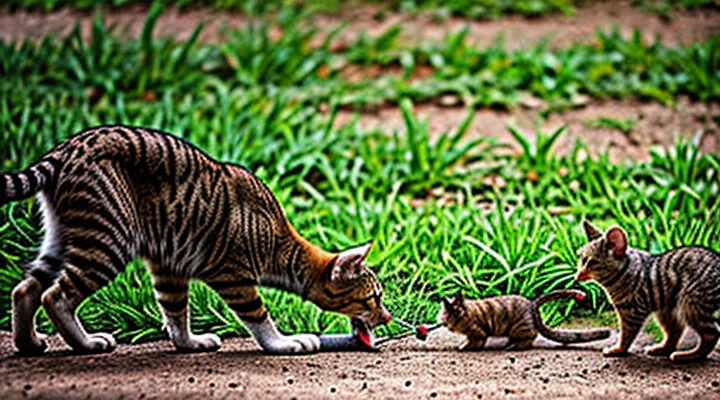
Understanding the Cat's Predatory Nature
Evolutionary Roots of Hunting
Cats exhibit predation on small rodents as a direct expression of inherited hunting mechanisms. The behavior traces to the Felidae lineage, where obligate carnivory shaped anatomy and neurobiology for capture and killing.
Early felids developed retractable claws, specialized forelimb musculature, and acute binocular vision. These traits enabled rapid acceleration, precise bite placement, and silent approach. Evolutionary pressure favored individuals that could subdue prey efficiently, reinforcing genetic pathways that govern motor coordination and sensory processing.
Neural circuits underlying predatory sequences are conserved across species. The hypothalamic hunting center initiates pursuit, while the midbrain periaqueductal gray modulates attack intensity. Sensory feedback from whiskers and auditory cues refines targeting, resulting in a stereotyped kill pattern that minimizes struggle.
Key evolutionary adaptations include:
- Sharp, retractable claws for grasping and immobilization.
- Carnassial teeth designed for shearing flesh.
- High density of rodent‑detecting olfactory receptors.
- Muscular forelimbs capable of delivering a lethal bite to the cervical vertebrae.
These inherited characteristics explain why domestic cats instinctively hunt mice, reflecting a lineage that optimized predator efficiency long before domestication.
Instinct vs. Hunger in Feline Predation
Feline predation on small rodents illustrates the tension between innate hunting programs and immediate energy deficits. The neural circuitry that triggers pursuit and capture operates independently of caloric need, ensuring that kittens acquire essential motor skills even when food is abundant. When hunger intensifies, the same circuitry receives amplified dopaminergic input, shortening reaction times and increasing bite force, thereby converting a practice behavior into a survival‑critical act.
Metabolic signals modulate instinctual patterns through the hypothalamus. Elevated ghrelin levels lower the threshold for attack, while satiety hormones such as leptin suppress unnecessary kills. This hormonal gating prevents wasteful expenditure of energy on prey that does not contribute to nutritional balance, aligning instinct with physiological demand.
Environmental variables shape the balance between instinct and hunger. Dense vegetation, prey availability, and competition force cats to prioritize efficient kills, whereas solitary, well‑fed individuals may engage in play‑like stalking that reinforces neural pathways without nutritional payoff.
Key distinctions:
- Instinctual drive: genetically encoded, active regardless of hunger, essential for skill development.
- Hunger‑driven response: hormone‑mediated amplification of predatory behavior, directly linked to energy intake.
- Hormonal gating: ghrelin enhances, leptin suppresses attack likelihood.
- Contextual adaptation: prey density and competition calibrate the cost‑benefit analysis of each hunt.
The Hunt: From Stalk to Kill
Identifying Prey: Sensory Cues
Cats locate rodent prey through a combination of visual, auditory, olfactory, and tactile information. The detection process begins with rapid assessment of movement and contrast against the surrounding environment, allowing the predator to focus attention on potential targets.
- Vision: High‑contrast motion triggers retinal pathways; cats are attuned to small, erratic trajectories typical of mice. Light‑sensitive cells prioritize low‑light conditions, enabling hunting at dawn, dusk, or indoors.
- Hearing: Pinpoint frequency range (approximately 45 kHz) captures ultrasonic rustling of whiskers and footfalls. Directional cues derive from the slight time difference between ear canals, guiding head orientation.
- Smell: Volatile compounds released by the mouse’s urine, feces, and skin surface generate a scent plume. Olfactory receptors differentiate these chemicals from background odors, confirming prey identity.
- Whisker (vibrissal) feedback: When the cat approaches, whiskers detect air currents and surface proximity, refining the strike distance and angle.
The integration of these signals occurs in the brainstem and thalamic nuclei, producing a rapid motor response. Neural circuits prioritize cues that confirm prey size, health, and escape potential, culminating in the characteristic pounce. This multimodal strategy ensures efficient capture of small mammals during natural predatory feeding.
Stalking Techniques and Ambush Tactics
Cats rely on precise stalking and rapid ambush to capture small rodents. Successful predation demands stealth, accurate distance assessment, and coordinated muscle activation.
Stalking involves a sequence of observable actions:
- Lowered spine and flattened ears reduce silhouette.
- Slow, deliberate steps keep motion below the prey’s detection threshold.
- Fixed gaze tracks the mouse’s position, allowing continuous calculation of relative speed.
- Tail adjustments maintain balance while the cat shifts weight forward.
When the prey is within striking range, the cat transitions to an ambush posture:
- Muscles contract explosively, propelling the body forward in a fraction of a second.
- Front paws extend, claws unsheathed to secure grip upon contact.
- A bite targets the neck or spinal region, delivering immediate incapacitation.
- After capture, the cat secures the kill with a brief hold before consumption.
These combined techniques enable felines to convert minimal energy expenditure into high capture rates, illustrating the evolutionary refinement of mammalian predatory behavior.
The Kill Bite: Precision and Efficiency
The kill bite represents the final, decisive action a domestic feline employs to subdue a captured rodent. This maneuver relies on precise jaw alignment, rapid closure, and targeted force application to the prey’s cervical vertebrae, causing immediate disruption of the spinal cord and swift loss of consciousness.
Anatomically, the bite exploits the cat’s specialized dentition: canine teeth deliver a concentrated pressure point, while the premolars stabilize the skull. Muscular contraction of the temporalis and masseter groups generates the necessary torque within milliseconds. Neurologically, the bite activates mechanoreceptors that trigger a reflexive, high‑velocity clamp, ensuring minimal struggle and rapid termination of the prey’s life functions.
Key characteristics of the kill bite:
- Target zone: upper cervical vertebrae (C1–C2) and trachea.
- Force vector: perpendicular to the spinal column, maximizing neural disruption.
- Duration: less than 0.1 second from contact to incapacitation.
- Outcome: instant loss of motor control and respiration, preventing escape.
Dietary Aspects of Mouse Consumption
Nutritional Value for Cats
A domestic cat that captures and consumes a mouse obtains a diet closely aligned with the nutritional profile required for optimal feline physiology. The prey delivers a complete set of macronutrients and micronutrients in forms that the cat’s digestive system processes efficiently.
- Protein: approximately 55 % of mouse tissue, rich in essential amino acids, particularly arginine and lysine.
- Taurine: 0.1 %–0.2 % of wet weight, sufficient to meet the cat’s obligate requirement for retinal and cardiac health.
- Fat: 15 %–20 % of body mass, providing omega‑6 and omega‑3 fatty acids that support skin, coat, and inflammatory regulation.
- Moisture: 70 %–80 % of fresh mouse, contributing to hydration without separate water intake.
- Vitamins: high levels of vitamin A (retinol), B‑complex (B1, B2, B6, B12), and vitamin D, all in bioavailable forms.
- Minerals: calcium, phosphorus, magnesium, potassium, and trace elements such as zinc and iron, balanced to prevent deficiencies.
The nutrients are presented in a matrix that mimics the cat’s evolutionary diet, resulting in superior absorption compared with many commercial formulations. Protein and taurine from animal muscle are directly usable, reducing the metabolic cost of conversion. Fatty acids derived from mouse tissue integrate readily into cell membranes, enhancing neurological function. The high water content supports renal health and urinary tract stability.
While the natural prey supplies essential nutrients, occasional consumption should be complemented with regular veterinary oversight to monitor for parasites or disease vectors. Nonetheless, the mouse remains a benchmark for evaluating the adequacy of formulated cat foods, providing a reference point for protein quality, amino acid completeness, and overall nutrient density.
Potential Risks and Precautions
When a domestic cat captures a mouse, several hazards can arise for both the animal and the surrounding environment.
The primary concerns include:
- Transmission of parasites such as fleas, ticks, and intestinal worms that may be carried by the rodent.
- Exposure to bacterial pathogens like Salmonella, E. coli, and Pasteurella, which can infect the cat through ingestion of contaminated tissue.
- Risk of injury from defensive bites or scratches inflicted by the mouse, potentially leading to puncture wounds or secondary infection.
- Environmental contamination from discarded carcasses, attracting scavengers and contributing to disease spread within a household or shelter.
Mitigation measures should be implemented promptly:
- Conduct a thorough health examination of the cat after any predation event, focusing on oral injuries and signs of gastrointestinal upset.
- Administer broad‑spectrum antiparasitic treatment according to veterinary guidelines to eliminate ecto‑ and endoparasites.
- Provide immediate wound care for any punctures, including cleaning, antiseptic application, and, if necessary, suturing or antibiotic therapy.
- Dispose of the mouse carcass safely—seal in a plastic bag and discard in a secure trash container to prevent scavenger access.
- Maintain regular vaccination schedules for cats, emphasizing vaccines that protect against common zoonotic bacteria.
- Limit outdoor access or supervise outdoor activity to reduce opportunities for hunting, especially in areas with high rodent disease prevalence.
Adhering to these precautions minimizes health risks for the cat and reduces the potential for zoonotic transmission to humans and other animals sharing the same environment.
Ecological Role of Feral and Domestic Cats
Impact on Rodent Populations
Feline predation on small rodents directly lowers local mouse numbers through immediate mortality. Each successful hunt removes an individual from the breeding pool, shortening the generation turnover and decreasing overall population density.
The reduction in rodent abundance triggers several secondary effects:
- Survivors adopt more cautious foraging patterns, limiting exposure to food sources and reducing intake.
- Reproductive output declines as stress hormones suppress breeding cycles.
- Competitive release allows other small mammals to expand, reshaping community composition.
Lower mouse densities influence broader ecological processes. Fewer rodents diminish seed predation, potentially increasing plant recruitment. Reduced host availability can alter the prevalence of rodent‑borne pathogens, affecting disease dynamics for both wildlife and humans.
Monitoring cat‑driven predation informs management strategies. Data on kill rates guide decisions about outdoor access, population control, and habitat modifications aimed at balancing predator impact with conservation objectives.
Ethical Considerations of Predation
A domestic cat hunting a mouse exemplifies a natural predatory interaction that raises ethical questions about the treatment of both predator and prey. The act occurs instinctively, yet observers must evaluate the moral implications of allowing such behavior in controlled environments.
Key ethical considerations include:
- Animal welfare – The prey experiences pain and death; the predator may suffer stress if its natural drive is suppressed.
- Species rights – Predators possess an inherent right to fulfill biological functions, while prey hold a right to life.
- Ecological balance – Predation contributes to population regulation and disease control; interference can disrupt these processes.
- Human responsibility – Owners decide whether to permit hunting, provide alternatives, or intervene to prevent suffering.
Pet owners face decisions about feeding practices, enrichment, and habitat design. Providing live prey or simulated hunting opportunities satisfies instinct but introduces deliberate harm. Alternatives such as interactive toys, puzzle feeders, and scheduled meals reduce predatory pressure while preserving behavioral health.
Assessing predation ethically requires weighing the predator’s natural needs against the prey’s suffering, acknowledging ecological benefits, and recognizing human authority over domestic animals. A balanced approach respects innate behaviors, minimizes unnecessary cruelty, and maintains ecological integrity.
Human-Cat Interactions and Predation
Managing Hunting Behavior in Domestic Cats
Domestic cats retain instinctive predatory drives that can result in hunting small animals, including rodents. Understanding the biological basis of this behavior informs effective management strategies and reduces unintended wildlife losses.
Owners should implement environmental modifications that satisfy hunting impulses without harming prey. Practical measures include:
- Providing interactive toys that mimic the movement of live prey, encouraging predatory play in a controlled setting.
- Scheduling multiple short play sessions daily to expend energy and diminish spontaneous hunting urges.
- Installing bell-equipped collars to alert potential prey and give the cat an auditory cue that may reduce successful captures.
- Offering puzzle feeders that require problem‑solving, thereby stimulating mental engagement and redirecting focus from live prey.
Training techniques reinforce alternative behaviors. Positive reinforcement, such as rewarding the cat for disengaging from a captured animal, establishes a clear association between non‑lethal outcomes and desirable actions. Consistency in response timing enhances learning efficiency.
Monitoring and adjusting the cat’s diet supports behavior control. A diet rich in protein and balanced nutrients satisfies nutritional needs, reducing the drive to seek additional protein sources through hunting. Regular veterinary assessments ensure health factors do not exacerbate predatory intensity.
Providing Alternatives to Live Prey
Domestic felines exhibit innate predatory instincts toward small mammals. When natural hunting is restricted, owners must supply substitutes that satisfy nutritional requirements and behavioral drives without exposing the animal to live prey.
Effective alternatives include:
- Commercially formulated wet or dry diets that replicate the protein profile of rodent meat, enriched with taurine and arachidonic acid.
- Frozen‑thawed mouse or rat portions, sourced from reputable suppliers, providing authentic tissue composition while eliminating the risk of injury.
- Mechanically prepared meat blends, blended with organ and bone powders to mimic whole‑prey nutrient balance.
- Interactive feeding devices that dispense soft food fragments in response to a cat’s paw or bite, encouraging predatory motions.
Supplementary enrichment strategies reinforce hunting patterns without live capture. Scented toys infused with ferret or rabbit odor stimulate olfactory pathways; laser pointers and feather wands provoke chase and pounce sequences; puzzle feeders require problem‑solving before access to food, mirroring the effort required to secure prey.
Implementing these measures aligns dietary intake with physiological needs and reduces the ethical and safety concerns associated with live prey. Regular veterinary monitoring ensures that the chosen substitutes meet the cat’s health parameters and that behavioral satisfaction remains high.
The Cycle of Life: A Natural Perspective
A domestic cat captures a mouse, demonstrating a direct transfer of biomass from prey to predator. The event illustrates how energy stored in the mouse’s tissues becomes available to the cat for growth, reproduction, and maintenance. This conversion aligns with the fundamental principle that organisms obtain nutrients by consuming other living beings.
The predation process initiates several ecological effects:
- The mouse’s population is reduced, preventing overconsumption of plant seeds and insects.
- The cat’s nutritional intake supports the production of offspring, which will continue the predatory cycle.
- Decomposers receive remnants of the meal, recycling nutrients back into the soil for plant uptake.
From a physiological perspective, the cat’s digestive enzymes break down proteins, fats, and carbohydrates present in the mouse, supplying amino acids and fatty acids essential for cellular functions. The absorbed nutrients raise the cat’s metabolic rate, enabling movement, thermoregulation, and immune response.
Evolutionarily, the cat’s hunting behavior reflects adaptations such as acute vision, rapid reflexes, and specialized dentition. The mouse exhibits counter‑adaptations, including heightened alertness and reproductive strategies that offset predation losses. This reciprocal development maintains a dynamic equilibrium within the ecosystem.
Overall, the interaction between feline predator and rodent prey exemplifies the continuous flow of energy and matter that sustains biological communities. Each consumption event contributes to the perpetual renewal of life cycles across species.