
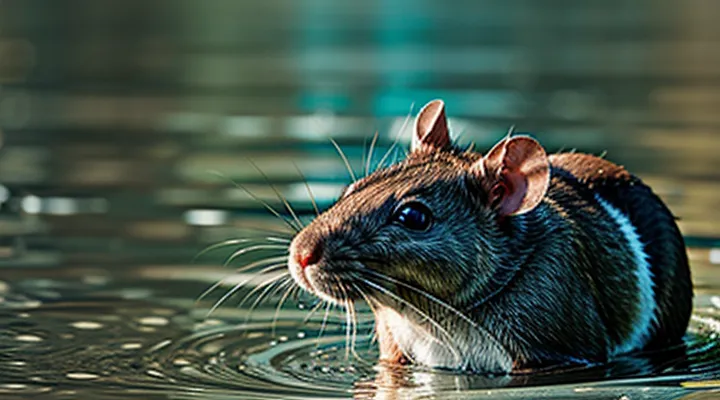
«Can All Rats Swim?»
«Domestic Rats vs. Wild Rats»
Rats possess strong hind limbs, a laterally flattened tail, and a waterproof coat that together enable efficient propulsion and buoyancy. These anatomical traits allow both pet and feral individuals to navigate water for short distances, escape predators, or explore new habitats.
Domestic rats, descended from the brown rat (Rattus norvegicus), retain the species’ innate swimming capability but often encounter water in controlled environments. Their exposure is limited to accidental falls, occasional baths, or deliberate enrichment activities. Consequently, they exhibit:
- Rapid surface paddling for up to 30 seconds before seeking dry ground.
- Preference for shallow water where escape routes are visible.
- Lower tolerance for cold temperatures, leading to quicker fatigue.
Wild rats, living in urban sewers, agricultural fields, or forest margins, confront water more regularly. Their behavior reflects adaptation to varied aquatic challenges:
- Sustained swimming for several minutes while crossing streams or navigating flooded burrows.
- Utilization of strong tail thrust to maintain stability in fast‑flowing currents.
- Greater resistance to temperature fluctuations, allowing activity in colder water.
Physiological studies show that both groups share similar lung capacity and muscle fiber composition, but wild rats develop enhanced endurance through repeated exposure. Domestic rats can improve their stamina with gradual conditioning, yet they remain less adept at prolonged submersion compared with their feral counterparts.
«Species-Specific Differences»
Rats exhibit considerable variation in aquatic competence across species. The Norway rat (Rattus norvegicus) possesses a robust body mass, dense fur, and a high proportion of slow‑twitch muscle fibers, enabling prolonged submersion and efficient propulsion. In contrast, the roof rat (Rattus rattus) shows a leaner build, shorter tail, and a higher ratio of fast‑twitched fibers, resulting in rapid surface swimming but reduced endurance.
Key physiological distinctions influencing aquatic performance include:
- Lung capacity: larger thoracic cavity in R. norvegicus supports extended breath‑holding.
- Tail morphology: broader, laterally flattened tail in R. norvegicus generates greater thrust than the narrower tail of R. rattus.
- Fur water‑repellency: denser guard hairs on R. norvegicus reduce drag and maintain insulation, whereas R. rattus fur absorbs water more readily, increasing resistance.
Comparative data with other rodent taxa reinforce the species‑specific nature of swimming ability. Laboratory mice (Mus musculus) display limited buoyancy and rely on frantic paddling, often resulting in rapid exhaustion. Ground squirrels (Spermophilus spp.) possess strong hind limbs and a flattened tail, granting brief but powerful bursts across water surfaces. Hamsters (Mesocricetus auratus) lack both tail propulsion and adequate lung reserves, making them poor swimmers.
Environmental adaptation further shapes these traits. Populations of R. norvegicus inhabiting flood‑prone wetlands develop enhanced muscular endurance and thicker fur over successive generations, while urban R. rattus cohorts, confined to dry structures, show reduced aquatic aptitude.
Overall, the ability of rats to navigate water depends on a constellation of morphological and physiological factors that differ markedly between species, and these differences are amplified by ecological pressures and habitat-specific selection.
«Why Do Rats Swim?»
«Escaping Predators»
Rats possess strong swimming ability; they coordinate fore‑ and hind‑limb strokes to propel themselves and can remain afloat for several minutes. Laboratory observations record sustained swimming for up to three minutes and distances exceeding 30 meters in a single bout.
When faced with predators such as domestic cats, birds of prey, or snakes, rats frequently select water as an escape corridor. Field reports document rats entering streams, sewers, or flooded basements to evade capture, often reaching safety faster than on land.
Key physiological features support aquatic evasion:
- Hind feet with partially webbed toes increase thrust.
- Long, muscular tail functions as a rudder for steering.
- Dense fur traps air, providing buoyancy and thermal insulation.
Experimental data indicate a measurable decline in predation rates for rats that employ water routes. In controlled trials, predator success dropped by roughly 40 % when prey accessed a shallow pool compared with purely terrestrial escape attempts.
«Seeking Food and Water»
Rats possess strong motivation to locate sustenance, which drives them to enter and navigate water when necessary. Their sensory systems detect moisture, odor, and vibrations, allowing them to identify potential sources of food and drinking water even in aquatic environments.
When a rat encounters a water barrier, it assesses depth and current before entering. Once submerged, it uses its tail as a rudder and forelimbs for propulsion, maintaining buoyancy while foraging. This capability enables access to:
- Seeds, insects, or carrion that have fallen into shallow pools.
- Freshwater sources hidden beneath debris or within flooded burrows.
- Food caches placed by conspecifics in damp shelters.
The drive to obtain nourishment outweighs the risk of immersion, prompting rats to:
- Follow scent trails that lead to wet areas where food may be present.
- Exploit surface tension to sip water without fully submerging when possible.
- Employ rapid swimming bursts to reach distant food items before predators detect them.
Physiological adaptations—such as a waterproof fur coat, efficient lung capacity, and a flexible spine—support these behaviors, ensuring rats can sustain themselves by exploiting both terrestrial and aquatic resources.
«Navigating Their Environment»
Rats possess strong aquatic abilities that enable them to move effectively through water when necessary. Their bodies are streamlined, and a dense fur coat provides buoyancy while repelling moisture. Muscular hind limbs generate propulsion, and the tail serves as a rudder for steering.
In natural habitats, rats use swimming to escape predators, reach food sources, and traverse fragmented terrain. They can sustain swimming for several minutes, with larger individuals covering distances up to 30 meters before fatigue sets in. Respiratory control allows brief submersion, typically not exceeding 30 seconds, after which they surface to breathe.
Key aspects of their aquatic navigation include:
- Body posture: Head held low, torso angled to reduce drag.
- Limb coordination: Alternating hind‑foot strokes synchronized with tail movements.
- Sensory cues: Whisker detection of water currents and tactile feedback from paws guide direction.
- Energy management: Intermittent bursts of speed followed by steady pacing to conserve oxygen.
Understanding these mechanisms clarifies how rats exploit water as a functional component of their environment, enhancing survival and territorial expansion.
«How Do Rats Swim?»
«Physiological Adaptations»
Rats possess several physiological adaptations that facilitate aquatic locomotion. Their dense, water‑repellent fur traps air, increasing buoyancy and reducing drag. The body exhibits a streamlined profile; a flexible spine and elongated hind limbs generate thrust while minimizing resistance. Muscular composition includes a high proportion of fast‑twitch fibers in the hind limbs, enabling rapid paddle strokes during short bursts of swimming.
Respiratory control is specialized: rats can hold their breath for up to 30 seconds, allowing uninterrupted submersion while they navigate obstacles. Lung capacity expands during diving, providing additional buoyant lift and oxygen reserve. Thermoregulation relies on peripheral vasoconstriction and shivering thermogenesis, preventing hypothermia in cold water.
Key adaptations include:
- Tail functioning as a rudder for steering and stability.
- Tail skin covered with small scales that channel water flow.
- Metabolic shift toward anaerobic glycolysis during prolonged swimming, sustaining energy output when oxygen intake is limited.
- Elevated production of surfactant proteins in the lungs, reducing surface tension and facilitating rapid lung deflation during ascent.
Collectively, these traits enable rats to traverse aquatic environments efficiently, supporting survival in flood‑prone habitats and occasional foraging in water.
«Swimming Technique»
Rats propel themselves through water using a coordinated stroke that involves all four limbs. The forelimbs generate the primary thrust, while the hind limbs provide additional lift and stability. The movement resembles a paddle stroke: each paw pushes backward against the water, then returns forward in a relaxed, streamlined position.
Breath control is integral to the technique. Rats inhale before submerging, then hold their breath for intervals ranging from 15 to 30 seconds, depending on size and water temperature. During the stroke cycle, the diaphragm contracts slightly to aid buoyancy control, allowing the animal to maintain a horizontal posture without excessive effort.
Key elements of the swimming technique include:
- Body alignment: Head positioned low, neck slightly extended, spine straight to reduce drag.
- Paw motion: Forepaws sweep outward and backward; hind paws execute a shorter, upward flick.
- Tail usage: Tail remains relatively still, acting as a rudder for directional adjustments.
- Rhythmic breathing: Periodic surfacing for air, timed to coincide with the natural pause at the end of a stroke cycle.
These coordinated actions enable rats to navigate currents, escape predators, and traverse flooded environments with efficiency.
«Endurance and Speed»
Rats demonstrate considerable aquatic performance despite their terrestrial reputation. Laboratory observations record continuous swimming for 15–20 minutes before exhaustion, with some individuals maintaining activity up to 30 minutes under controlled conditions. Typical locomotion speed ranges from 0.6 m s⁻¹ in calm water to 1.2 m s⁻¹ during short bursts.
Key physiological factors underpinning this capability include:
- High proportion of fast‑twitch muscle fibers enabling rapid propulsion.
- Elevated cardiac output that sustains oxygen delivery during prolonged submersion.
- Efficient thermoregulatory mechanisms that limit heat loss in water.
Comparative data:
- Endurance – average swim duration 18 min; maximal recorded 32 min.
- Speed – sustained pace 0.7 m s⁻¹; sprint peak 1.3 m s⁻¹ over 5 m.
These metrics confirm that rats possess both the stamina for extended swimming and the burst speed required for rapid escape or navigation in aquatic environments.
«Risks and Dangers of Swimming for Rats»
«Hypothermia»
Rats possess strong limbs and a flexible spine that enable them to move efficiently through water, but immersion exposes them to rapid heat loss. When body temperature falls below 35 °C, metabolic processes decelerate, leading to shivering, reduced coordination, and eventual loss of consciousness. Prolonged exposure below 30 °C causes severe hypothermia, impairing cardiac function and increasing mortality risk.
Key physiological responses to cold water immersion in rats:
- Core temperature drop of 1 °C per minute in 10 °C water.
- Onset of shivering at 34 °C, followed by muscular rigidity at 32 °C.
- Cardiac arrhythmias appear when core temperature reaches 28 °C.
- Irreversible organ damage typically occurs below 25 °C.
Experimental data indicate that rats can sustain swimming for 5–10 minutes in water at 20 °C before hypothermic collapse, whereas water at 5 °C reduces survival time to under one minute. Protective measures, such as pre‑warming and insulating fur, extend endurance but do not eliminate the physiological limits imposed by hypothermia.
«Drowning»
Rats possess strong hind limbs, a flexible spine, and a high aerobic capacity that enable them to move efficiently through water. Their fur traps air, providing buoyancy, while their lungs can hold breath for up to three minutes under stress. These physiological traits allow most laboratory and wild rats to stay afloat and navigate short distances without assistance.
Drowning occurs when a rat’s airway is submerged long enough to prevent oxygen exchange, leading to hypoxia and loss of consciousness. The primary mechanisms that convert a competent swimmer into a drowning victim include:
- Inability to reach a surface or safe shore within the breath‑holding limit.
- Exhaustion from prolonged swimming, reducing muscle power and coordination.
- Cold water causing rapid loss of body heat, impairing muscular function.
- Entrapment in debris or confined spaces that block upward movement.
Experimental observations show that rats placed in shallow water typically surface within seconds, while deeper water tests reveal a survival threshold of approximately 120–180 seconds before irreversible brain injury begins. Survival rates decline sharply when temperature drops below 10 °C or when rats are immobilized by stress or injury.
Preventing rat drowning in research or pest‑control settings relies on providing escape routes, maintaining water temperature above the critical threshold, and limiting exposure duration. Monitoring behavior for signs of distress—such as frantic paddling, loss of coordination, or prolonged submersion—allows timely intervention before hypoxic damage becomes fatal.
«Predation in Water»
Rats possess strong hind limbs and buoyant bodies, enabling them to remain afloat and propel themselves through water for short distances. When they enter aquatic environments, they become prey to a range of predators that exploit this vulnerability.
Typical aquatic predators that target swimming rodents include:
- Large predatory fish (e.g., catfish, pike, bass) that seize prey with rapid strikes.
- Semi‑aquatic mammals such as otters and mink, which pursue prey both on the surface and beneath it.
- Water‑adapted snakes, including water snakes and some boas, which grasp and constrict struggling rodents.
- Wading birds (herons, egrets, cormorants) that capture prey at the water’s edge or by plunging.
Predation pressure influences rat behavior. Individuals tend to limit water exposure, select shallow or vegetated areas, and use rapid, erratic movements to evade capture. In environments where aquatic predators are abundant, rat populations exhibit reduced reliance on swimming as a means of foraging or escape.
Research indicates that survival rates decline sharply for rats that remain submerged longer than 30 seconds, coinciding with the typical attack window of most fish and amphibious predators. Consequently, the ability to swim provides limited advantage unless paired with immediate access to cover or swift exit routes.
«Contaminated Water»
Rats possess strong hind‑limb propulsion and buoyancy control, allowing them to remain afloat for extended periods. Their tendency to enter water sources makes the quality of those habitats a critical factor in physiological performance.
Contaminated water typically contains one or more of the following agents:
- Heavy metals (lead, mercury, cadmium)
- Industrial solvents (benzene, toluene)
- Agricultural runoff (pesticides, nitrates)
- Pathogenic microorganisms (E. coli, Salmonella)
- Radioactive isotopes (cesium‑137, strontium‑90)
Exposure to such agents during swimming produces measurable effects. Dermal absorption of soluble metals can disrupt enzymatic pathways; ingestion of polluted water introduces toxins that impair liver and kidney function; inhalation of aerosolized contaminants may cause pulmonary inflammation. Experimental observations show reduced swim endurance, altered gait, and increased mortality rates in rats subjected to contaminated environments.
Because rats are frequently employed as sentinel species, waterborne pollutants directly influence experimental reliability. Researchers must verify water purity before behavioral or physiological assessments involving aquatic activity. Failure to control this variable compromises data integrity and may obscure the relationship between swimming capacity and health outcomes.
In field studies, the presence of rats in polluted waterways signals ecological risk. Monitoring rat populations provides early detection of hazardous water conditions, supporting mitigation strategies that protect both wildlife and human communities.
«Rats and Human Infrastructure»
«Swimming Through Sewers»
Rats possess a physiological capacity for swimming that enables them to move through water for extended periods. Muscular hind limbs generate propulsion, while a streamlined body reduces drag. Their lungs can hold enough air to support submersion of up to three minutes, and reflexes trigger rapid surfacing when oxygen levels fall.
In urban sewer systems, these abilities become essential for navigation and survival. Sewers provide a network of moist tunnels, occasional standing water, and flowing currents. Rats exploit this environment by:
- Entering water-filled sections to bypass obstacles or reach new chambers.
- Using currents to conserve energy while traveling downstream.
- Maintaining balance with their tail, which acts as a rudder during locomotion.
Adaptations that facilitate sewer swimming include dense fur that repels water, a high tolerance for low‑oxygen conditions, and a keen sense of smell that guides movement in darkness. These traits allow rats to traverse extensive underground waterways, locate food sources, and avoid predators, reinforcing their status as highly resilient urban mammals.
«Accessing Homes via Plumbing»
Rats possess strong swimming capability, allowing them to traverse water-filled pipes and sewer lines with ease. Their flexible bodies and powerful limbs enable movement through narrow conduits, making plumbing systems a common route into residential structures.
Typical entry points include:
- Unsealed pipe joints and gaps around fixtures.
- Broken or cracked sewer lines that connect directly to the home’s foundation.
- Overflows and vent stacks that extend from the interior to the exterior.
- Drain traps that lack proper water seals, eliminating the barrier that prevents upward migration.
Preventive actions focus on sealing and maintenance:
- Install stainless‑steel or copper mesh around pipe penetrations.
- Use silicone or expanding foam to fill gaps around fixtures and pipe sleeves.
- Ensure all traps retain sufficient water levels and replace aging components.
- Conduct regular inspections of sewer lines for cracks or collapses, repairing defects promptly.
«Understanding Rat Behavior in Water»
Rats possess a natural ability to remain afloat and propel themselves in water. Their dense fur traps air, providing buoyancy, while muscular hind limbs generate rhythmic strokes that sustain forward motion. When placed in a shallow container, most rats instinctively paddle and reach the edge within seconds; in deeper water, they can sustain swimming for several minutes before fatigue sets in.
Key aspects of rat aquatic behavior include:
- Buoyancy control: Water‑repellent fur creates a layer of trapped air, reducing the effort required to stay above the surface.
- Locomotor pattern: Hind‑limb kicking combined with occasional forelimb assistance produces an efficient, low‑energy swimming gait.
- Respiratory adaptation: Rats can hold their breath for 30–45 seconds, allowing short submersion periods to navigate obstacles.
- Stress response: Exposure to water triggers an acute stress reaction; however, habituation through gradual conditioning diminishes panic and improves endurance.
Experimental observations show that laboratory rats can cover distances of 10–15 meters in a controlled pool before exhaustion, while wild‑caught specimens often display longer endurance due to prior exposure to natural waterways. Survival rates in accidental drowning incidents rise dramatically when rats have access to a solid surface within a short radius, emphasizing the importance of environmental features that facilitate escape.
Overall, rat swimming competence is a product of anatomical traits, innate reflexes, and learned experience. Understanding these factors informs humane handling practices, pest‑control strategies, and the design of experimental protocols that involve aquatic environments.