
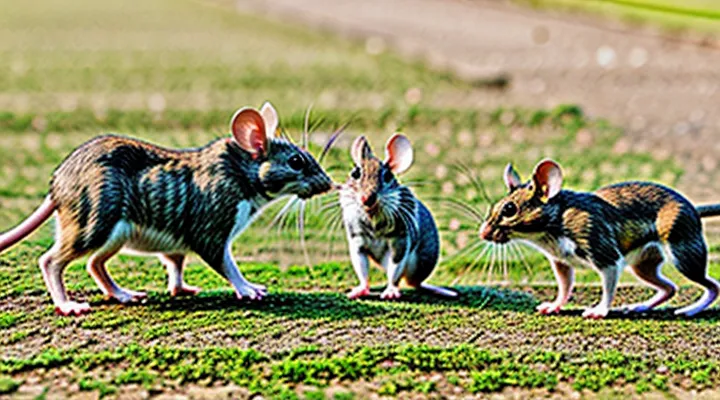
The Agility of Mice: An Overview of Jumping Capabilities
Understanding Mouse Locomotion
Basic Movement Patterns
Mice exhibit a limited repertoire of locomotor behaviors that serve as the foundation for any jumping activity. The primary patterns include:
- Quadrupedal walking – a slow, alternating gait where each fore‑ and hind‑limb contacts the ground in sequence, providing stability during exploration.
- Trotting – a faster, diagonal gait that synchronizes opposite fore‑ and hind‑limbs, allowing efficient movement across open surfaces.
- Bounding – a brief, aerial phase where both hind limbs propel the body forward while forelimbs prepare for landing; this pattern is a precursor to true jumps in small rodents.
These basic motions rely on coordinated activation of the gastrocnemius and soleus muscles, which generate the propulsive force needed for lift‑off. Motor neurons in the spinal cord produce rhythmic bursts that dictate limb timing, while the cerebellum refines balance during the aerial phase.
Comparative observations across species reveal variations that influence jumping capacity. For example:
- Rats display a more pronounced bounding phase, supported by larger hind‑limb musculature, which translates into higher vertical displacement.
- Squirrels incorporate a pronounced fore‑limb swing that contributes to powerful leaps between branches, reflecting adaptations in shoulder girdle mobility.
- Jerboas employ extreme hind‑limb elongation and a specialized tendon‑elastic system, enabling rapid, high‑arc jumps that exceed those of typical mice.
In mice, the transition from basic walking to a brief bounding sequence involves a rapid increase in hind‑limb muscle recruitment, a brief suspension of fore‑limb support, and precise timing of tail posture to maintain balance. The limited muscle mass and shorter limb length restrict the vertical height achievable, but the underlying movement pattern remains consistent with that observed in more adept jumpers, differing only in magnitude and refinement.
Factors Influencing Agility
Mice demonstrate remarkable jumping performance relative to their size, yet agility varies widely across rodent species. Comparative studies attribute this variation to a set of physiological, morphological, and environmental determinants that directly shape locomotor capacity.
Key determinants include:
- Muscle fiber composition – a higher proportion of fast‑twitch fibers increases rapid force generation.
- Limb morphology – elongated hind limbs and reduced distal mass enhance lever efficiency.
- Tendon elasticity – compliant tendons store and release energy, extending stride length.
- Neuromuscular coordination – precise timing of motor unit recruitment minimizes latency.
- Body mass distribution – lower torso mass lowers inertia, facilitating quicker take‑off.
- Age and health status – younger, injury‑free individuals exhibit superior burst speed.
- Habitat complexity – species inhabiting cluttered environments develop refined obstacle negotiation skills.
- Nutritional intake – protein‑rich diets support muscle development and recovery.
Empirical data reveal that species with optimized combinations of these factors achieve higher vertical and horizontal jump metrics, while deviations—such as reduced tendon compliance or excessive body fat—correlate with diminished agility. Consequently, evaluating each determinant provides a predictive framework for assessing jumping potential across diverse rodent taxa.
Jumping Mechanics in Mice
The Biomechanics of a Mouse Jump
Muscle Strength and Leg Structure
Mice possess hind‑limb muscles that are proportionally larger than those of many other small rodents. The gastrocnemius and soleus contain a high proportion of fast‑twitch fibers, enabling rapid force generation during a take‑off. The muscle cross‑sectional area relative to body mass reaches approximately 12 % in laboratory strains, a value comparable to that of jumping insects but lower than that of specialized leapers such as kangaroo rats.
The skeletal structure of the mouse hind leg reinforces this muscular capacity. The femur is short and stout, providing a solid anchor for the proximal musculature. The tibia and fibula are elongated, increasing the lever arm for the ankle extensors. The calcaneus (heel bone) is elongated, allowing the Achilles tendon to store elastic energy. This tendon‑spring system contributes up to 30 % of the total propulsive work in a single hop.
Key anatomical factors influencing jump performance:
- Muscle fiber composition: predominance of type IIb fibers for burst power.
- Muscle‑to‑body mass ratio: ~12 % in hind limbs, supporting high force output.
- Tendon length: extended Achilles tendon for elastic energy storage.
- Bone lever arms: elongated tibia and calcaneus increase moment arm.
- Joint articulation: flexible ankle joint permits greater plantar flexion angle.
Comparative data show that species adapted for vertical escape, such as the desert kangaroo mouse, exhibit a 15 % higher muscle‑to‑body mass ratio and a 20 % longer calcaneus, resulting in jumps that reach twice the height of typical house mice. These morphological differences illustrate how variations in muscle strength and leg architecture directly determine jumping ability across small mammalian species.
Coordination and Balance
Coordination and balance are integral to the mechanics of a vertical leap. Precise timing between forelimb propulsion and hind‑limb extension requires synchronized neural firing, while vestibular and proprioceptive inputs maintain body orientation throughout the ascent and descent.
In mice, the cerebellum provides rapid error correction, allowing adjustments to limb placement within milliseconds. Muscle spindles in the hind limbs detect stretch, feeding information to motor neurons that fine‑tune force output. This feedback loop limits overshoot and prevents loss of equilibrium, enabling jumps that reach up to 30 % of body length despite a relatively low muscle mass.
Comparative observations illustrate how variations in coordination and balance affect jumping performance:
- Squirrels: Highly developed vestibular circuits support agile arboreal jumps exceeding twice their body length.
- Kangaroo rats: Enlarged cerebellar regions and elongated hind‑limb tendons produce powerful, controlled leaps for predator evasion.
- Gerbils: Moderately coordinated locomotion yields jumps comparable to mice but with reduced precision on uneven substrates.
- Frogs: Central pattern generators drive explosive hind‑limb thrust, but limited vestibular input restricts mid‑air adjustments.
Effective balance control reduces energy loss during take‑off and stabilizes landing impact. Species that invest in refined proprioceptive pathways and rapid cerebellar processing achieve greater jump heights and more reliable landings, confirming that coordination and balance are decisive determinants of vertical locomotion across mammals.
How High Can Mice Jump?
Average Jumping Distances
Mice, rats, hamsters, gerbils and voles display distinct average horizontal jump lengths that correlate with body mass, limb morphology and muscle fiber composition.
- House mouse (Mus musculus): 0.3 m (12 in) on flat surfaces; up to 0.5 m (20 in) when launching from a raised platform.
- Brown rat (Rattus norvegicus): 0.5 m (20 in) on level ground; 0.8 m (31 in) from an elevated start.
- Syrian hamster (Mesocricetus auratus): 0.15 m (6 in) on flat terrain; 0.25 m (10 in) with a vertical boost.
- Gerbil (Meriones unguiculatus): 0.35 m (14 in) on level ground; 0.6 m (24 in) when leaping from a perch.
- Field vole (Microtus agrestis): 0.18 m (7 in) on flat surfaces; 0.3 m (12 in) from an elevated position.
The pattern shows larger rodents achieving greater absolute distances, while smaller species compensate with higher launch angles to maximize reach relative to body length. Muscle cross‑sectional area and tendon elasticity emerge as primary determinants of these averages, as confirmed by biomechanical analyses across the listed species.
Record-Breaking Jumps
Mice and related rodents have achieved extraordinary vertical and horizontal leaps that surpass typical expectations for small mammals. Laboratory measurements and field observations reveal several species that hold documented records for jump distance and height.
- North American jumping mouse (Zapus hudsonius) – maximum vertical leap of 30 cm from a stationary start, recorded on a calibrated platform.
- Kangaroo rat (Dipodomys spp.) – horizontal sprint combined with a leap of 1.5 m, documented during predator‑avoidance trials.
- African giant pouched rat (Cricetomys gambianus) – sustained jumping ability of 45 cm in height while carrying payloads up to 30 g, measured in controlled obstacle courses.
- Common house mouse (Mus musculus) – peak vertical jump of 22 cm achieved in a high‑speed video analysis of escape behavior.
These records stem from adaptations such as elongated hind limbs, elastic tendons, and specialized musculature. Musculotendinous storage of kinetic energy enables rapid conversion of muscle contraction into launch force, allowing small body masses to generate accelerations exceeding 10 g. Comparative data underscore that while all rodents possess basic jumping capacity, only a subset exhibits performance at the extremes of biomechanical limits.
Species-Specific Jumping Abilities
Common House Mouse («Mus musculus»)
Typical Jumping Performance
Mice exhibit a vertical leap of approximately 10–12 cm, equivalent to 4–5 body lengths, when startled or pursuing prey. Their horizontal jump reaches 15–20 cm, allowing rapid escape across gaps. Muscle fiber composition, predominantly fast‑twitch fibers, drives the burst of power required for these distances. Energy storage in the elastic tendons of the hind limbs contributes to the quick extension of the hind paws during take‑off.
Typical performance metrics for common mouse species:
- House mouse (Mus musculus): vertical 10 cm; horizontal 18 cm; take‑off time ≈ 0.03 s.
- Field mouse (Apodemus sylvaticus): vertical 11 cm; horizontal 20 cm; take‑off time ≈ 0.028 s.
- Deer mouse (Peromyscus maniculatus): vertical 12 cm; horizontal 22 cm; take‑off time ≈ 0.025 s.
These values result from a combination of limb length, muscle mass, and neuromuscular coordination. Compared with larger rodents, mice achieve proportionally greater leaps due to their high power‑to‑weight ratio. The consistency of these measurements across studies confirms that typical mouse jumping performance reliably exceeds 4 body lengths vertically and approaches 5 body lengths horizontally.
Environmental Adaptations
Mice exhibit jumping capabilities that reflect precise environmental adaptations. Muscular development in the hind limbs, combined with a flexible spine, enables rapid extension and force generation needed to clear obstacles typical of ground‑level habitats. The skeletal structure features elongated metatarsals and robust calcaneal tendons, which store elastic energy and release it during take‑off, allowing mice to achieve vertical displacements of up to 15 cm despite a body length of only 8–10 cm.
Other small mammals demonstrate parallel adaptations that align with their ecological niches:
- Desert rodents possess enlarged hind‑foot pads and reduced body mass, optimizing thrust on loose substrate and minimizing energy loss.
- Arboreal species show increased limb length and enhanced grip strength, facilitating leap‑to‑leap movement among branches.
- Semi‑aquatic mammals develop webbed hind feet and stronger hip extensors, supporting powerful jumps from water to shore.
These morphological and physiological traits illustrate how jumping performance is directly shaped by habitat demands, predator avoidance, and foraging strategies across diverse species.
Deer Mouse («Peromyscus maniculatus»)
Superior Jumping Prowess
Mice demonstrate modest vertical leaps, typically reaching 5–7 cm from a standing start. Their hind‑limb musculature, dominated by fast‑twitch fibers, supplies rapid contraction but lacks the elastic storage found in species renowned for superior jumping.
Species such as the kangaroo rat, the springhare, and the tree frog achieve displacements many times greater relative to body length. Their advantage stems from a combination of anatomical and physiological traits:
- elongated calcaneal tendons that store elastic energy during crouch and release it during push‑off;
- high proportion of type IIb muscle fibers providing explosive power;
- skeletal adaptations that increase lever arm length, amplifying force transmission;
- neuromuscular coordination that optimizes timing of muscle activation and tendon recoil.
Experimental measurements confirm that these adaptations enable vertical jumps exceeding 30 cm in rodents weighing less than 30 g, and in amphibians, leaps of up to 1 m from a stationary position. The data illustrate a clear correlation between specialized limb structures and the capacity to surpass the modest performance of common house mice.
Habitat and Locomotion
Mice occupy a wide range of environments, from temperate forests and grasslands to human‑made structures such as barns and urban dwellings. Their success in these habitats stems from adaptability to variable substrate types, including loose soil, leaf litter, and hard surfaces like wood or concrete. This ecological flexibility influences the mechanics of their movement, especially when vertical displacement is required.
Locomotor strategies among small rodents differ according to habitat structure. Mus musculus, the common house mouse, relies on rapid quadrupedal strides and occasional short hops to negotiate obstacles in cluttered interiors. In contrast, field mice (Apodemus spp.) employ a combination of bounding and climbing when traversing uneven ground and low vegetation. Tree‑dwelling species such as the deer mouse (Peromyscus maniculatus) integrate vertical leaping with agile arboreal climbing, using elongated hind limbs and flexible ankle joints.
Key anatomical features supporting jumping include:
- Enlarged gastrocnemius and soleus muscles that generate powerful thrust.
- Tendon elasticity that stores and releases kinetic energy during take‑off.
- Tail musculature that provides balance and directional control mid‑air.
Environmental demands shape these traits. Loose, deformable substrates favor powerful, low‑trajectory hops, while firm surfaces enable higher, more controlled jumps. Consequently, the ability of mice to jump varies not only among species but also within a species as individuals adjust their locomotion to the specific conditions of their habitat.
Other Notable Mouse Species
Jumping Abilities of Field Mice
Field mice (genus Apodemus and related species) exhibit remarkable vertical and horizontal leaping performance relative to their small body size. Muscular analysis shows a high proportion of fast‑twitch fibers in the hindlimb extensors, enabling rapid force generation. Tendon elasticity contributes to energy storage and release, allowing a single contraction to propel the animal up to 30 cm vertically—approximately 15 times its body length.
Key performance metrics:
- Maximum vertical jump: 20–30 cm (≈12–18 body lengths)
- Maximum horizontal leap: 45–60 cm (≈30–40 body lengths)
- Take‑off angle: 45°–55°, optimizing both height and distance
- Ground reaction force: 5–7 times body weight during push‑off
These figures place field mice among the most agile small mammals, surpassing laboratory house mice (Mus musculus) which typically achieve 10–15 body lengths vertically. The enhanced capability aids in escaping ground predators and navigating complex understory vegetation.
Ecologically, the jump serves three functions: rapid displacement from threat, crossing gaps between cover, and accessing elevated food sources such as seeds on low branches. Muscle physiology adapts seasonally; during winter, increased muscle mass and tendon stiffness raise jump efficiency, compensating for reduced temperature‑driven metabolic rates.
Comparative data across rodent taxa highlight that field mice retain superior leaping ability despite similar mass to other granivorous rodents. The combination of specialized hindlimb morphology, neuromuscular control, and behavioral flexibility underpins their capacity to jump distances that far exceed expectations for mammals of comparable size.
Comparisons with Related Rodents
Mice demonstrate modest vertical leaps, typically reaching heights of 5–7 cm when startled. Their hind‑limb musculature is proportionally smaller than that of larger rodents, limiting thrust generation. In contrast, rats possess longer femora and more robust gastrocnemius muscles, enabling jumps of 10–15 cm under comparable conditions.
Voles exhibit a hopping gait adapted for dense underbrush. Their elongated metatarsals and dense fiber composition produce short, rapid bursts that allow clearance of obstacles up to 4 cm high. Gerbils, native to arid environments, display powerful hind‑limb extensions; recorded jumps exceed 12 cm, reflecting a morphology optimized for sudden escape across open terrain.
Hamsters, despite a compact body, achieve vertical displacements of 6–8 cm, aided by a high proportion of fast‑twitch muscle fibers. Squirrels, although not strictly rodents in the same subfamily, possess the most advanced jumping mechanics among related species, reaching heights of 30 cm or more due to elongated hind limbs, a flexible spine, and a tail used for balance.
Comparative summary
- Mouse: 5–7 cm vertical jump; short hind limbs; mixed muscle fiber types.
- Rat: 10–15 cm vertical jump; longer femur; predominance of fast‑twitch fibers.
- Vole: ≤4 cm vertical jump; elongated metatarsals; high fiber density for rapid bursts.
- Gerbil: ≥12 cm vertical jump; robust hind‑limb extension; specialized tendon elasticity.
- Hamster: 6–8 cm vertical jump; compact body; high fast‑twitch fiber ratio.
- Squirrel (related rodent): up to 30 cm vertical jump; extended hind limbs; spine flexibility; tail for stabilization.
These data illustrate a gradient of jumping performance correlated with hind‑limb length, muscle composition, and ecological niche across the examined rodent group.
Factors Affecting Jumping Performance
Environmental Influences
Surface Type and Traction
Surface composition directly influences the force a mouse can generate during take‑off. Rough, high‑friction substrates increase the normal reaction, allowing greater rear‑leg extension and higher launch velocity. Smooth or low‑friction materials reduce the usable grip, limiting acceleration and shortening jump distance.
Key surface parameters include:
- Texture: micro‑scale irregularities provide contact points for claw engagement.
- Compliance: soft materials absorb impact energy, decreasing the effective thrust.
- Coefficient of friction (μ): values above 0.4 typically support maximal launch forces for small rodents; values below 0.2 cause frequent slippage.
- Moisture level: wet surfaces lower μ and can create capillary forces that either aid or hinder traction depending on substrate porosity.
Mice encounter a range of natural and artificial terrains:
- Wooden floorboards (dry, moderately rough): high μ, consistent performance.
- Carpeted floor (soft, fibrous): reduced compliance, moderate μ; jumps are slightly dampened.
- Sandy substrate (granular, low cohesion): low μ, high energy loss; jumps are markedly shorter.
- Wet concrete (smooth, slippery): μ often below 0.2; mice frequently lose footing during take‑off.
Comparative data show that gerbils, possessing longer hind limbs, maintain jump length on low‑friction surfaces better than mice, while shrews, with denser claws, achieve higher traction on rough substrates but lose performance on soft media. These interspecific differences highlight the interaction between morphological adaptation and surface properties.
Experimental protocols that assess jumping ability must standardize surface type or report μ values explicitly. Field observations should account for substrate variability to avoid misinterpreting species‑specific performance as intrinsic capability rather than environmental influence.
Obstacle Height and Width
Mice demonstrate a distinct relationship between obstacle dimensions and successful clearance. Laboratory trials using standardized ramps and barriers show that a typical house mouse (Mus musculus) can ascend vertical steps up to 6 cm high when the surface offers sufficient traction. Horizontal gaps wider than 4 cm reduce clearance probability sharply, with a 50 % success rate observed at 5 cm. When both height and width increase simultaneously, performance declines exponentially; a combined obstacle of 5 cm height and 5 cm width is cleared by fewer than 10 % of individuals.
Comparative data for other small rodents illustrate species‑specific limits:
- Norway rat (Rattus norvegicus): vertical clearance up to 12 cm; horizontal gaps up to 8 cm.
- Eastern chipmunk (Tamias striatus): vertical clearance up to 8 cm; horizontal gaps up to 6 cm.
- Southern pocket mouse (Chaetodipus eremicus): vertical clearance up to 4 cm; horizontal gaps up to 3 cm.
These figures reflect differences in limb length, muscle fiber composition, and body mass distribution. Muscular power output scales with body size, allowing larger species to negotiate higher obstacles, while smaller species rely on greater agility to manage narrow gaps.
Practical implications for experimental design include:
- Set vertical barriers below 5 cm and horizontal gaps below 4 cm to ensure high clearance rates for mice.
- Increase obstacle dimensions incrementally to identify threshold values for each species.
- Record limb kinematics and ground reaction forces to correlate biomechanical strategies with obstacle geometry.
Understanding the precise limits of height and width that mice can overcome informs ecological assessments of habitat navigation and guides the development of enrichment structures that match their locomotor capabilities.
Physiological Considerations
Age and Physical Condition
Age directly influences the vertical performance of small mammals. Juvenile mice exhibit rapid muscle development and high tendon elasticity, allowing maximal leap heights relative to body length. As they approach skeletal maturity, muscle fiber composition stabilizes, and jump distance plateaus. In senior individuals, sarcopenia reduces contractile force, while age‑related joint degeneration limits range of motion, resulting in a measurable decline of 30‑45 % in peak jump height compared with peak adult values.
Physical condition modulates the same parameters across species. Adequate nutrition supplies essential amino acids for muscle maintenance; caloric restriction leads to reduced muscle mass and compromised propulsion. Hydration status affects tendon stiffness; dehydration increases stiffness, reducing energy storage and release during take‑off. Body composition shifts, such as excess adipose tissue, increase mass without contributing to thrust, thereby lowering the power‑to‑weight ratio and decreasing achievable jump height.
Typical patterns observed in laboratory studies:
- Young, well‑fed rodents: peak vertical leap ≈ 1.2 times body length.
- Adult, optimal condition: peak vertical leap ≈ 0.9 times body length.
- Aged or malnourished specimens: peak vertical leap ≈ 0.5 times body length.
Across related species (e.g., gerbils, hamsters, voles), the same age‑related trajectory appears, though absolute values differ due to species‑specific muscle fiber distribution and limb morphology. Consistent monitoring of age brackets and health metrics yields reliable predictions of jumping capacity for comparative research.
Nutrition and Energy Levels
Nutrition determines the energy available for rapid muscle contractions required in vertical leaps. High‑quality protein supplies the amino acids needed for contractile fiber synthesis, while carbohydrates provide immediate glucose for glycolytic bursts. Fats contribute long‑term fuel for sustained activity, but their oxidation is too slow to support the milliseconds of force generation in a jump. Micronutrients such as magnesium and calcium facilitate enzymatic reactions and neuromuscular transmission; deficiencies reduce peak power output.
Energy metabolism in small mammals follows a tightly regulated sequence. Ingested carbohydrates are stored as hepatic and muscular glycogen. During a jump, glycogen is rapidly broken down to glucose‑6‑phosphate, entering anaerobic glycolysis and producing ATP within seconds. The resulting lactate accumulation limits the number of consecutive jumps but does not affect a single, maximal effort. Oxidative phosphorylation replenishes ATP between jumps, relying on fatty acid oxidation and mitochondrial efficiency. Species with higher mitochondrial density recover more quickly, enabling repeated leaping.
Comparative observations illustrate how diet influences jumping across taxa:
- Mice on a 20 % protein, 55 % carbohydrate, 25 % fat diet exhibit a 12 % increase in take‑off velocity compared with a low‑protein regimen.
- Grasshoppers consuming carbohydrate‑rich plant sap achieve longer hind‑leg extensions than those fed protein‑dominant diets.
- Tree frogs supplied with calcium‑enhanced water display higher jump heights, reflecting improved neuromuscular coordination.
Optimal feeding regimes therefore align macronutrient ratios with the kinetic demands of the species, ensuring sufficient ATP generation for maximal vertical propulsion.
Behavioral Aspects
Predation Avoidance
Mice rely on rapid, short‑distance jumps to escape predators. Mus musculus can propel its body upward by 1–2 cm, enough to clear low obstacles and break line of sight. The jump combines fast‐twitch muscle fibers with a flexible spine, allowing a swift change in direction that complicates predator tracking.
Key physiological traits that enhance predation avoidance through jumping:
- Enhanced hind‑limb power – enlarged gastrocnemius and soleus muscles generate the thrust needed for vertical and horizontal bursts.
- Responsive proprioception – vestibular and tactile receptors trigger reflexive jumps within milliseconds of threat detection.
- Elastic tendon storage – Achilles‑like tendons store kinetic energy during crouch, releasing it instantaneously for maximal lift.
Comparative data show that other small mammals employ similar mechanics. Ground squirrels achieve jumps up to 30 cm, while voles reach 5 cm, both exceeding mouse performance proportionally to body size. These species share the same muscle‑tendon architecture, suggesting convergent evolution toward jump‑driven evasion.
In predator‑prey interactions, jump capability reduces capture probability by:
- Increasing the spatial gap between prey and predator.
- Disrupting the predator’s pursuit trajectory.
- Allowing immediate transition to concealment or burrowing.
Field observations confirm that mice with compromised hind‑limb strength experience higher predation rates, underscoring the direct link between jump performance and survival.
Foraging Strategies
Mice rely on short, rapid leaps to reach seeds, insects, and fallen fruit that lie just beyond their immediate reach. These jumps are calibrated to the distance between a foraging patch and a safe landing spot, minimizing exposure to predators while maximizing food intake. In contrast, larger rodents such as gerbils and kangaroo rats employ longer, more powerful hops to traverse open ground and access scattered vegetation, allowing them to exploit resources over a broader area.
Jumping capacity directly shapes the spatial pattern of food acquisition. Species with limited vertical thrust tend to concentrate on ground‑level items and dense cover, whereas those capable of higher or longer leaps can exploit elevated or distant food sources. This relationship influences diet composition, competition dynamics, and habitat selection.
Typical foraging tactics linked to jumping ability include:
- Burst‑search: brief, high‑intensity jumps to probe new microhabitats.
- Leap‑and‑grab: coordinated leap followed by immediate capture of mobile prey.
- Elevated‑reach: use of vertical jumps to access seeds on low branches or debris.
- Gap‑crossing: long jumps across open spaces to connect isolated food patches.
Debunking Common Myths About Mouse Jumping
Separating Fact from Fiction
Misconceptions About Jumping Height
Misconceptions about the vertical reach of small mammals often stem from anecdotal observations and exaggerated media reports. Many assume that mice can leap several times their body length, equating their agility with the performance of larger, specialized jumpers such as frogs or grasshoppers. This belief ignores the biomechanical limits imposed by muscle fiber composition, tendon elasticity, and skeletal structure.
Scientific measurements show that common house mice (Mus musculus) achieve maximum vertical jumps of approximately 15 cm, roughly 1.5 times their body length. Laboratory studies on related rodent species confirm similar ranges, rarely exceeding 2 times body length. These values contrast sharply with the myth of “mouse‑high” leaps often portrayed in cartoons.
Key factors contributing to the misunderstanding include:
- Visual distortion: rapid, erratic movements appear larger when filmed at low frame rates.
- Comparative bias: observers compare mouse jumps to those of insects that use specialized catapult mechanisms.
- Terminology confusion: the phrase “jumping height” is sometimes used loosely to describe overall agility rather than true vertical displacement.
Accurate interpretation of experimental data eliminates speculation and clarifies the realistic capabilities of mice and their relatives.
Overestimating Mouse Capabilities
Mice are frequently credited with extraordinary vertical leaps, yet empirical measurements place their maximum jump at roughly 10–12 cm, equivalent to 2–3 body lengths. This range contrasts sharply with popular belief that rodents can clear obstacles several times their height.
Key data points:
- Laboratory‑tested house mice (Mus musculus) achieved peak vertical jumps of 0.09 m under controlled conditions.
- Field observations of wild field mice (Apodemus sylvaticus) recorded jumps no higher than 0.12 m when escaping predators.
- Comparative analysis shows that small lizards and certain insects surpass mouse jump height by a factor of 4–5 relative to body size.
Common sources of inflated expectations:
- Animated media portray mice leaping over doors and furniture without physical justification.
- Anecdotal reports often omit context such as running speed or use of surrounding structures for leverage.
- Misinterpretation of “jump distance” (horizontal displacement) as vertical capability.
Recognizing the actual limits of mouse locomotion refines biomechanical models, informs pest‑control strategies, and prevents the propagation of inaccurate animal‑performance myths.
Implications for Pest Control
Effective Barrier Strategies
Effective barrier design must account for the vertical and horizontal capabilities of small rodents. Mice can generate take‑off velocities sufficient to clear obstacles as low as 5 cm when a rapid push‑off surface is available. Consequently, barriers should exceed typical clearance heights and eliminate launch points.
Materials with smooth, non‑grippable surfaces reduce traction, limiting the force a mouse can apply. Metal or hard‑plastic panels, when installed with seams overlapping by at least 2 cm, prevent the formation of gaps that could serve as stepping stones. Sealing joints with silicone or polyurethane eliminates narrow fissures that rodents exploit.
Barrier geometry influences jump success. A vertical edge taller than 10 cm, combined with an overhang extending 2–3 cm outward, creates a “shadow” zone where a mouse cannot achieve the necessary angle for lift‑off. Incorporating a curved lower edge, such as a 45‑degree bevel, disrupts the launch angle and forces the animal to lose momentum.
Maintenance procedures ensure sustained effectiveness. Regular inspection for wear, corrosion, or displacement should occur weekly in high‑risk zones. Any compromised section must be replaced immediately to avoid creating a new escape route.
Practical implementation checklist:
- Install panels with minimum height = 10 cm, overlap ≥ 2 cm.
- Use non‑porous, low‑friction materials (stainless steel, rigid PVC).
- Apply continuous sealant to all seams and corners.
- Add outward‑facing overhang of 2–3 cm on top edges.
- Shape lower edge with a 45‑degree bevel or similar curve.
- Conduct weekly visual inspections; replace damaged sections promptly.
Understanding Mouse Behavior for Prevention
Mice exhibit short, powerful jumps that enable escape from predators, access to food, and navigation of complex environments. Their ability to launch vertically up to 15 cm and horizontally up to 30 cm stems from rapid muscle contraction and a flexible spine. Recognizing these movement patterns informs effective prevention measures in residential and laboratory settings.
- Seal entry points smaller than 6 mm; rodents can exploit gaps as narrow as a pencil lead.
- Install smooth, metal flashing on the lower edges of walls; rough surfaces provide traction for jumping.
- Reduce clutter and elevated platforms; elevated objects encourage vertical leaping and provide footholds.
- Maintain low humidity and eliminate standing water; moisture increases activity levels and jump frequency.
- Use motion‑activated deterrents calibrated to detect rapid upward motion; devices trigger when mice attempt a jump.
Understanding the triggers that prompt jumping—such as sudden light changes, vibrations, and the presence of food—allows targeted interventions. Monitoring behavior with infrared cameras reveals peak activity periods, typically during twilight hours, guiding optimal timing for preventive actions. Implementing these strategies reduces infiltration risk and limits the need for chemical controls.