
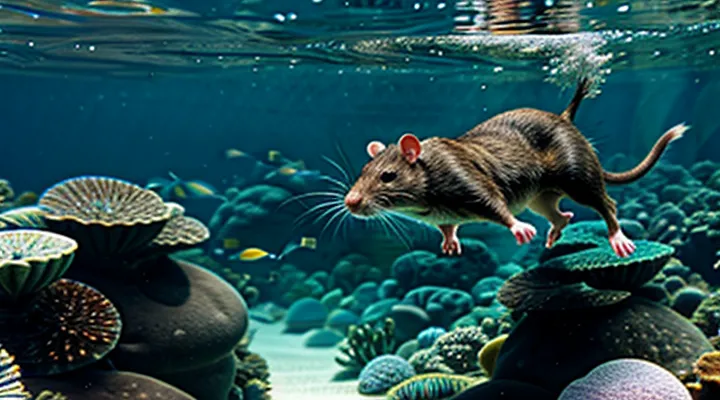
Rat Anatomy and Physiology for Swimming
Adaptations for Aquatic Environments
Physical Traits
Rats possess several anatomical features that enable them to move through water and remain submerged for short periods. Muscular limbs generate propulsion, while a streamlined body reduces drag. The fur traps air, creating a buoyant layer that assists in surface flotation and provides insulation against cold temperatures. A flexible ribcage allows the chest to compress, facilitating breath‑holding during submersion. The tail, rich in blood vessels, functions as a rudder, steering and stabilizing motion.
Key physical traits relevant to underwater locomotion:
- Strong fore‑ and hind‑limb muscles for paddling
- Dense, water‑repellent fur that traps a thin air film
- Elastic thoracic cavity permitting lung compression
- Long, tapered tail with vascular control for direction
- Efficient cardiovascular system delivering oxygen to tissues quickly
These characteristics collectively support a rat’s capacity to swim beneath the surface, maintain orientation, and survive brief underwater excursions.
Respiratory System Considerations
Rats possess a relatively high metabolic rate, which demands rapid oxygen uptake during aerobic activities. When submerging, the animal must suspend ventilation, relying on stored oxygen in the lungs and blood. The limited breath‑hold duration restricts the distance and speed achievable underwater.
Lung volume in rodents is proportionally smaller than in larger mammals, resulting in a reduced oxygen reserve per breath. Oxygen consumption rises sharply during vigorous swimming, accelerating the depletion of this reserve. Consequently, rats exhibit brief submersion intervals, typically measured in seconds rather than minutes.
Respiratory control mechanisms enable temporary closure of the glottis, preventing water entry while maintaining airway pressure. Nasal passages can be sealed to reduce water ingress, and the diaphragm contracts to limit lung collapse. Some species display minor cutaneous gas exchange, but this contributes insignificantly to overall oxygen supply.
Key considerations for underwater locomotion in rats:
- Breath‑hold capacity limited to a few seconds.
- Rapid rise in oxygen demand during active swimming.
- Anatomical adaptations for airway protection (glottal closure, nasal sealing).
- Minimal contribution from skin respiration.
Rat Swimming Capabilities
Natural Instincts and Behaviors
Rats possess an innate ability to enter water and move beneath its surface when circumstances demand rapid escape or resource acquisition. This behavior stems from a survival instinct that triggers immediate locomotor responses upon contact with liquid environments.
The instinct to submerge activates several coordinated actions: whisker sensors detect water resistance, hind‑limb strokes generate thrust, and the tail functions as a rudder. These reflexes operate without conscious deliberation, allowing the animal to transition from terrestrial sprinting to aquatic propulsion within seconds.
Physiological traits support brief submersion. Lung capacity permits breath retention for up to thirty seconds, while a high proportion of fast‑twitch muscle fibers sustains vigorous paddling. The dense, water‑repellent fur reduces drag and maintains thermal insulation, preventing rapid heat loss during underwater excursions.
Experimental observations confirm typical performance parameters:
- Maximum dive depth: approximately 15 cm.
- Average underwater duration: 20–30 seconds.
- Preferred escape routes: narrow channels and shallow pools.
Key natural instincts governing this behavior include:
- Predator evasion through rapid immersion.
- Foraging for aquatic insects or seeds.
- Exploration of submerged tunnels during territory expansion.
- Social play involving brief water bouts.
- Thermoregulatory cooling during elevated ambient temperatures.
Collectively, these instinctual and physiological components enable rats to execute effective «underwater swimming» despite the species’ primary classification as terrestrial.
Underwater Swimming Mechanics
Breathing Techniques
Rats possess a flexible glottis that can seal the airway, allowing brief submersion without water entering the lungs. This anatomical feature underlies their capacity for underwater locomotion.
Breath‑holding in rats relies on two primary mechanisms. First, a voluntary apnea triggered by the animal’s decision to dive. Second, an involuntary reflex that automatically suppresses respiration when facial receptors detect immersion.
Key techniques that enable successful submersion include:
- Closure of the glottis to prevent water ingress.
- Activation of the diving reflex, which reduces heart rate and conserves oxygen.
- Utilization of stored lung air, typically limited to 10–15 seconds of continuous swimming.
- Rapid surface ascent for replenishment of oxygen stores.
Training protocols for laboratory rats often involve gradual exposure to water, encouraging the animal to practice glottal closure and to develop tolerance to hypoxic conditions. Controlled sessions increase the duration of apnea, improving the likelihood of sustained underwater movement.
Duration and Depth
Rats possess a limited capacity for underwater activity. Muscular respiration and a flexible diaphragm enable brief submersion, but the physiological design prioritizes terrestrial locomotion.
Key parameters governing submerged performance include:
- Breath‑holding time typically ranges from 15 seconds to 30 seconds under normal conditions; stress or training can extend this to roughly one minute.
- Maximum depth is constrained by the need to reach the surface for air; practical observations record dives of 1–2 feet (0.3–0.6 m) in laboratory tanks.
- Pressure increase beyond a few metres does not affect short‑duration dives, but prolonged exposure to higher pressures leads to rapid fatigue and loss of motor control.
These limits reflect the balance between aerobic metabolism and oxygen reserves stored in the blood and muscles. «Rattus norvegicus exhibits a submersion tolerance of approximately 30 seconds at shallow depths», a finding consistent across multiple physiological studies.
Factors Affecting Underwater Performance
Water Temperature
Rats possess a high metabolic rate that enables brief submersion, but water temperature critically influences their physiological tolerance. Cold water (< 5 °C) induces rapid peripheral vasoconstriction, reducing oxygen delivery to muscles and accelerating hypothermia, which shortens underwater endurance to a few seconds. Warm water (20 °C–30 °C) maintains core temperature, allowing longer breath‑holding intervals, typically up to 30 seconds, and supports efficient muscular function. Temperatures above 35 °C increase metabolic demand and risk of overheating, potentially causing distress and faster exhaustion.
Key temperature effects:
- ≤ 5 °C – severe hypothermia, minimal submersion time.
- 10 °C–15 °C – moderate cooling, reduced stamina, increased heart rate.
- 20 °C–30 °C – optimal range for prolonged breath‑holding, stable core temperature.
- > 35 °C – elevated metabolic rate, risk of heat stress, decreased endurance.
When evaluating a rat’s capacity to swim beneath the surface, assess ambient water temperature alongside other variables such as body condition and acclimatization. Proper temperature management extends underwater performance and minimizes physiological risk.
Predation Risk
Rats that enter water to escape terrestrial threats encounter a distinct set of predation pressures. Submergence reduces visibility to ground‑based predators but introduces exposure to aquatic hunters capable of detecting movement, scent, and vibrations.
Key aquatic predators include:
- Fish that pursue prey by lateral line detection; many species respond to low‑frequency ripples generated by a swimming rodent.
- Amphibians such as large salamanders that ambush in shallow pools.
- Aquatic snakes that strike from submerged positions, relying on heat and chemical cues.
Surface and aerial predators retain effectiveness against a submerged rat. Water‑skimming birds and wading herons can spot silhouettes or water disturbances, while otters and raccoons exploit the brief intervals when the animal surfaces for air. The need to breathe imposes regular surfacing, creating predictable windows for attack.
Balancing these risks involves trade‑offs between reduced terrestrial exposure and increased aquatic vulnerability. Successful avoidance depends on rapid, erratic swimming, selection of habitats with limited predator density, and minimization of time spent underwater. The net predation risk therefore hinges on the predator community composition and the rat’s ability to exploit water as a transient refuge.
Individual Variation
Rats possess a natural capacity for swimming, yet the extent of underwater performance varies markedly among individuals. Genetic background, age, and prior exposure to water influence lung volume, buoyancy control, and endurance. Physiological differences, such as hemoglobin affinity and muscle fiber composition, determine how long a rat can remain submerged before surfacing for oxygen.
Key factors contributing to variability include:
- Age: Juvenile specimens exhibit higher metabolic rates, limiting submersion time; mature adults typically sustain longer periods.
- Sex: Males often display greater muscle mass, enhancing propulsion, while females may possess slightly larger lung capacity.
- Habituation: Rats repeatedly trained in aquatic environments develop improved coordination and stress tolerance, extending underwater activity.
- Health status: Respiratory or cardiovascular impairments reduce the ability to maintain submersion.
Observational studies confirm that while most rats can navigate surface water with ease, only a subset demonstrate prolonged underwater swimming, reflecting the interplay of genetic, developmental, and experiential variables.