
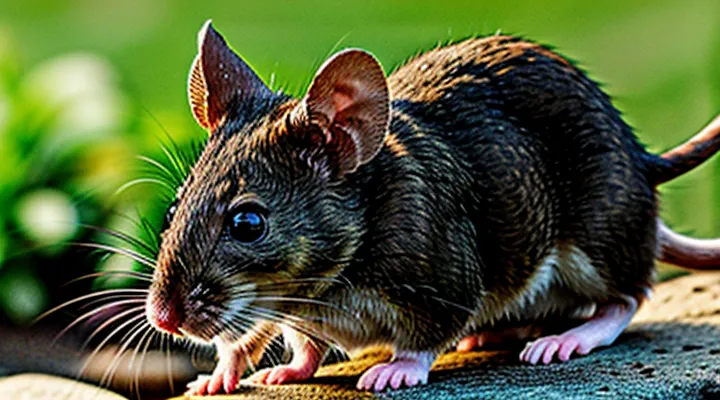
The Ecological Significance of Mice
Key Ecological Roles
Prey for Predators
Mice constitute a major food source for a wide range of carnivorous mammals, birds of prey, and reptiles. Species such as foxes, owls, hawks, snakes, and weasels rely on rodents to meet daily energetic demands, especially during breeding seasons.
- Foxes: obtain protein and fat necessary for pup growth.
- Barn owls: consume large numbers of mice, supporting clutch size.
- Red-tailed hawks: capture mice to maintain territorial defense.
- Rattlesnakes: use mice as primary prey for venom acquisition.
Energy transferred from mice to predators supports higher trophic levels with relatively low loss compared with plant-based diets. Consumption of rodents directly influences predator body condition, reproductive output, and survival rates.
Fluctuations in mouse populations trigger corresponding changes in predator abundance and movement patterns. Years of high rodent density often precede increases in predator breeding success, while population declines can lead to reduced predator numbers or shifts toward alternative prey.
By sustaining diverse predator assemblages, mice contribute to the regulation of herbivore and insect populations, reinforcing overall ecosystem resilience. Their role as prey underpins the stability of food webs and the persistence of natural control mechanisms.
Seed Dispersal
Mice interact with seeds through foraging behavior that results in the movement of plant propagules across habitats. When seeds are collected, stored, or consumed, individuals transport them away from the parent plant, often covering distances of several meters to dozens of meters.
Transport mechanisms include:
- Cheek‑pouch carriage, allowing live seeds to be carried intact to new microhabitats.
- Scatter‑caching, where seeds are buried for later retrieval, creating persistent seed banks.
- Ingestion followed by defecation, which deposits seeds together with nutrient‑rich feces that enhance germination conditions.
These processes modify plant distribution patterns by establishing seedlings in sites with reduced competition and altered soil characteristics. Dispersal by mice promotes colonization of disturbed areas, supports regeneration after fire or logging, and increases genetic exchange among plant populations, thereby strengthening ecosystem resilience.
Overall, mouse‑mediated seed dispersal contributes to:
- Expansion of plant range limits.
- Creation of spatial heterogeneity in vegetation structure.
- Improvement of seedling survival rates through favorable microsite selection.
Soil Aeration and Nutrient Cycling
Mice create extensive tunnel networks that displace compacted soil, forming channels through which air and water can move freely. The resulting increase in pore space improves root penetration and promotes microbial activity, both of which are vital for plant health.
Burrowing activity also brings deeper mineral layers closer to the surface. This mixing process makes nutrients such as nitrogen, phosphorus and potassium more accessible to vegetation, accelerating the turnover of organic matter.
Key mechanisms linking mouse activity to soil function include:
- Mechanical disruption of soil aggregates, enhancing aeration;
- Redistribution of organic residues via feces and urine, enriching the upper soil horizon;
- Transport of seed fragments and fungal spores, supporting plant regeneration and symbiotic relationships;
- Creation of microhabitats that sustain diverse invertebrate communities, further accelerating decomposition.
Collectively, these processes sustain a dynamic soil environment, fostering productive ecosystems and maintaining ecological balance.
Impact on Biodiversity and Ecosystem Health
Influence on Plant Communities
Seed Predation and Germination
Mice influence plant population dynamics through direct consumption of seeds and indirect effects on germination. By removing a proportion of seeds, they reduce overcrowding, allowing surviving seeds access to resources such as light, water, and nutrients. This selective pressure favors species with traits that enhance escape from predation, contributing to increased genetic diversity within plant communities.
In addition to consumption, mice transport seeds beyond the immediate area of parent plants. Dispersal through caching creates micro‑habitats where seeds encounter favorable soil conditions and reduced competition. Cached seeds that are not retrieved often germinate, establishing new seedlings at distances that promote habitat connectivity.
Key outcomes of mouse‑mediated seed interactions include:
- Regulation of seed density, preventing dominance of prolific producers.
- Enhancement of spatial heterogeneity, supporting niche differentiation.
- Promotion of seedling survival through placement in protected microsites.
- Stimulation of coevolutionary adaptations, such as seed coat hardness or chemical deterrents.
Overall, mouse activity modifies the seed bank composition and accelerates successional processes, reinforcing ecosystem resilience and productivity. The combined actions of predation, transport, and caching underscore the integral function of these rodents in shaping plant regeneration patterns.
Herbivory and Plant Growth
Mice consume a variety of seeds, sprouts, and tender shoots, directly influencing plant community composition. Their selective feeding reduces dominance of fast‑growing species, allowing slower‑establishing plants to persist and increasing biodiversity.
Herbivory by mice stimulates compensatory growth in many grasses and forbs. Repeated defoliation triggers the activation of dormant meristems, leading to:
- accelerated leaf production,
- enhanced root development,
- improved nutrient uptake efficiency.
These physiological responses contribute to higher primary productivity in habitats where mouse populations are stable.
Mice also act as vectors for seed dispersal. By transporting seeds in fur or through fecal deposition, they introduce propagules to microhabitats with favorable conditions. The resulting spatial heterogeneity supports mosaic patterns of vegetation that buffer ecosystems against disturbances.
Overall, mouse‑driven herbivory and seed movement promote resilient plant assemblages, reinforce trophic linkages, and sustain ecosystem functions.
Contributions to Food Webs
Support for Predator Populations
Mice constitute a reliable food source for a broad spectrum of carnivores and raptors. Their high reproductive rate ensures a steady supply of prey, which in turn stabilises predator numbers. When mouse populations increase, breeding pairs of owls, hawks, foxes and snakes produce larger litters, directly linking prey abundance to predator reproductive success. Conversely, declines in mouse abundance often precede reductions in predator recruitment, demonstrating a tight ecological coupling.
Key effects of mouse availability on predator communities include:
- Enhanced body condition of individual predators, leading to higher survival rates during winter months.
- Expansion of predator territories into areas with abundant rodent activity, promoting greater habitat utilisation.
- Increased species richness of predators, as diverse hunting specialists can coexist when a common prey base is present.
- Regulation of predator population cycles, with mouse booms triggering predator peaks that later decline as prey availability wanes.
Conservation of grassland and shrubland habitats that support robust mouse populations indirectly preserves the health of predator assemblages. Land‑management practices that avoid excessive pesticide use, maintain vegetation complexity, and protect nesting sites for rodents create conditions where predator species can thrive without direct intervention.
Decomposers and Nutrient Release
Mice contribute to decomposition by consuming a wide range of organic material, including seeds, insects, carrion and feces. Their foraging activity fragments matter, increasing surface area available for microbial breakdown.
Excretion of nutrient‑rich feces introduces nitrogen, phosphorus and potassium directly into the soil profile. These elements become readily accessible to plants and microorganisms, accelerating the recycling of matter within the ecosystem.
Key mechanisms of nutrient release through mouse activity:
- Ingestion of detritus and subsequent digestion, producing partially broken down material.
- Deposition of fecal pellets that contain high concentrations of essential nutrients.
- Construction of burrows that aerate soil, promote mixing of organic layers and enhance microbial colonisation.
- Predation on soil invertebrates that otherwise slow decomposition processes.