
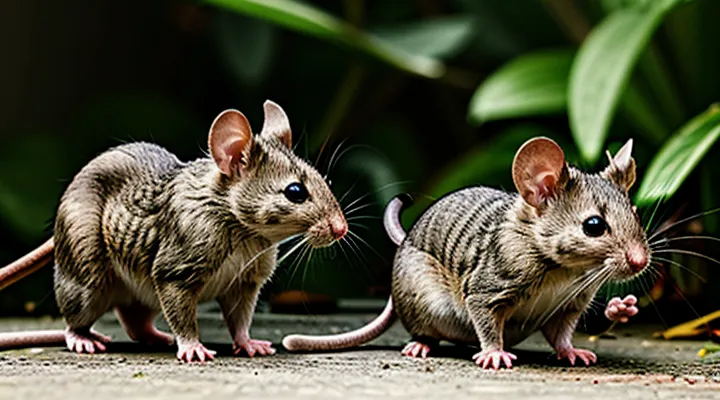
Ultrasonic Vocalizations: The Unheard Language
What are USVs?
Ultrasonic vocalizations (USVs) are high‑frequency sounds emitted by rodents, typically ranging from 20 to 110 kHz, beyond the range of human hearing. Specialized microphones and spectrum analyzers capture these signals, allowing precise measurement of frequency, duration, and pattern.
USVs serve multiple communicative functions. In the context of affectionate interactions between mice and rats, they convey positive social intent and reinforce bonding. The most frequent call types observed during such exchanges include:
- Flat calls – steady frequency, duration 30–100 ms; associated with close contact.
- Frequency‑modulated sweeps – rapid upward or downward pitch changes; linked to gentle grooming or nest building.
- Complex chirps – series of brief, varied‑frequency elements; appear during reciprocal play.
Production originates in the laryngeal muscles, which adjust tension to generate the required ultrasonic frequencies. Neural pathways involving the periaqueductal gray and the vocal motor cortex coordinate call emission with somatic behaviors such as whisker movement and tail positioning.
Research employing USV analysis quantifies emotional valence in laboratory settings, distinguishes between affiliative and aversive states, and informs genetic or pharmacological studies targeting social deficits. Accurate interpretation of these signals enhances understanding of the nuanced acoustic repertoire that underlies affectionate communication in rodents.
Why Rodents Use USVs
Rodents emit ultrasonic vocalizations (USVs) primarily as a means of rapid, discreet communication. The high‑frequency range prevents detection by many predators while allowing precise transmission of information among conspecifics.
Key functions of USVs include:
- Mother–offspring bonding: pups produce distinct calls when isolated; dams respond with retrieval behavior and nursing adjustments.
- Courtship and mating: males generate patterned sequences that attract females and convey fitness.
- Territorial and aggressive signaling: dominant individuals emit specific syllable structures to deter intruders and establish hierarchy.
- Alarm and distress: abrupt, broadband calls alert nearby rodents to threats such as predators or environmental hazards.
Neurobiological studies show that USV production is linked to limbic system activation and dopaminergic pathways, indicating that vocal output reflects emotional states and motivational drives. Acoustic analyses reveal that variations in frequency, duration, and modulation encode different social messages, enabling rodents to convey nuanced information without visual cues.
Environmental factors modulate USV usage. Light cycles, temperature, and population density influence call rates, while social experience shapes repertoire complexity. Laboratory observations confirm that mice and rats adapt their vocal patterns in response to experimental manipulations, underscoring the flexibility of this communication channel.
Types of USVs and Their Functions
Ultrasonic vocalizations (USVs) emitted by mice and rats convey a range of social and physiological information. Researchers classify these calls primarily by frequency range, temporal pattern, and behavioral context, allowing precise interpretation of the animal’s internal state.
- 22‑kHz calls – low‑frequency, long‑duration signals; typically associated with distress, aggression, or predator avoidance.
- 50‑kHz calls – high‑frequency, brief bursts; frequently produced during play, mating, and positive social interactions, indicating a rewarding or affiliative context.
- Ultrasonic chirps (30‑45 kHz) – rapid frequency modulations; observed in mother‑infant communication, facilitating pup retrieval and bonding.
- Trill‑type calls (60‑80 kHz) – complex, multi‑element structures; linked to exploratory behavior and novelty detection, often preceding investigative actions.
Each USV type serves a distinct function within the rodent’s communication repertoire. Low‑frequency distress calls alert conspecifics to threats, prompting defensive or evasive responses. High‑frequency affiliative calls reinforce social cohesion, synchronize group activities, and enhance reproductive success. Mother‑infant chirps maintain parental care dynamics, ensuring offspring survival. Trill‑type vocalizations modulate attention and encourage environmental exploration, supporting learning and adaptation.
Understanding these categories clarifies how rodents encode emotional valence and intent through sound, providing a foundation for interpreting their affective vocal behavior.
Deciphering Affectionate Sounds
Purrs and Chirps: Signs of Contentment
Mice and rats produce a range of vocalizations that signal their emotional state. Among these, low‑frequency purrs and short, high‑pitched chirps are most closely associated with contentment.
Purr‑like sounds emerge when the animal is relaxed, often while grooming or resting in a familiar enclosure. The vibration frequency typically falls between 30 and 50 Hz, and the amplitude remains steady. Observers can detect these tones with a sensitive microphone or by feeling the subtle tremor through a cage wall.
Chirps accompany the same relaxed condition but differ in structure. They consist of rapid, tonal bursts lasting 0.1–0.3 seconds, repeated at intervals of 2–4 seconds. The frequency range spans 4–8 kHz, making the calls audible to human ears without amplification. Chirps frequently occur during social interactions such as gentle nose‑to‑nose contacts or when a group settles together.
Key indicators of positive affect:
- Continuous low‑frequency purrs while the animal lies still
- Intermittent high‑pitched chirps during calm social contact
- Absence of alarm calls or rapid squeaks
- Body posture showing relaxed musculature and lowered ear position
These acoustic patterns provide reliable cues for researchers and caretakers to assess welfare and to differentiate comfort from stress or aggression.
The "Brux": A Rodent's Purr
The term “brux” refers to a low‑frequency, continuous vibration produced by mice and rats when they are relaxed and content. Unlike the high‑pitched squeaks associated with alarm, the brux manifests as a soft, rhythmic purr that can be heard when the animal is nestled in a nest, being groomed, or receiving gentle tactile stimulation.
Acoustic analysis shows that brux frequencies typically range between 30 and 80 Hz, with amplitudes barely exceeding ambient noise levels. The sound originates from rapid contractions of the masseter and other masticatory muscles, which generate a subtle airflow through the oral cavity. Electromyographic recordings confirm synchronized muscle activity that persists for several seconds to minutes, matching the observed duration of the vocalization.
Behavioral contexts in which brux appears include:
- Resting in a secure enclosure or burrow
- Interaction with a familiar conspecific during grooming
- Exposure to warm, low‑stress environments such as heated pads or nests
Interpretation of the brux relies on its association with physiological markers of relaxation: reduced heart rate, lowered corticosterone levels, and increased body temperature. When these indicators co‑occur, the vibration signals a state of safety and social bonding, reinforcing pair or group cohesion.
Comparative studies indicate that the brux shares functional similarities with the purring of domestic cats, despite divergent anatomical mechanisms. Both serve as auditory cues that strengthen affiliative relationships, suggesting convergent evolution of soothing vocalizations across mammalian taxa.
Squeaks and Soft Calls: Social Bonding
Squeaks and soft vocalizations serve as primary mechanisms for establishing and maintaining affiliative relationships among rodents. These brief, high‑frequency sounds occur during grooming, nest building, and close physical contact, signaling tolerance and mutual acceptance. When a mouse emits a low‑amplitude squeak while being nuzzled, the receiver typically responds with a complementary call, reinforcing the interaction and reducing the likelihood of aggression.
Key functions of these vocal exchanges include:
- Recognition of individuals – each animal produces a distinctive acoustic signature that enables group members to identify familiar partners.
- Coordination of cooperative behavior – synchronized calls precede joint activities such as food sharing or collective nest construction.
- Stress mitigation – soft calls during brief separations trigger immediate vocal responses that restore proximity and lower cortisol levels.
Experimental observations confirm that disrupting these vocal patterns, either through acoustic masking or genetic alteration of vocal cord musculature, leads to fragmented social networks and increased territorial disputes. Consequently, the integrity of squeak‑based communication is essential for the cohesion of mouse and rat colonies.
Contextual Understanding of Rodent Sounds
Sounds During Play and Interaction
Mice and rats produce a distinct repertoire of vocalizations while engaged in play and social interaction. These sounds convey emotional states, coordinate activities, and reinforce bonds among conspecifics.
During playful bouts, high‑frequency chirps dominate. Chirps rise in pitch and intensity as the encounter escalates, then taper off when the interaction subsides. The acoustic pattern signals excitement and invites continued engagement.
Squeaks of lower frequency accompany gentle wrestling or grooming. These tones are brief, often accompanied by a soft rustle of fur, and indicate contentment and mutual tolerance. The presence of such squeaks predicts a higher likelihood of repeated affiliative behavior.
Ultrasonic “purr‑like” pulses emerge when animals nest together or share a confined space. Though inaudible to humans, these emissions are measurable with specialized equipment and correlate with reduced stress hormone levels, suggesting a calming function.
Typical sound categories observed in play and interaction:
- Chirps: rapid, high‑frequency, escalation marker.
- Soft squeaks: low‑frequency, reassurance cue.
- Ultrasonic pulses: continuous, affiliative signal.
- Grunts: brief, low‑pitch, often linked to minor disputes that quickly resolve.
Researchers record these vocalizations using ultrasonic microphones and analyze spectrograms to differentiate contexts. Frequency range, duration, and modulation pattern provide reliable indicators of the underlying emotional tone. Consistent acoustic signatures allow caretakers and scientists to assess welfare without direct observation.
Sounds During Grooming
Rodents emit distinct vocalizations while performing grooming activities, and these sounds provide reliable indicators of their internal state. During self‑grooming, mice and rats produce low‑amplitude, broadband chirps that rise in pitch as the animal progresses through the cleaning sequence. In paired grooming, the same species generate brief, high‑frequency squeaks synchronized with the partner’s movements, creating a rhythmic acoustic pattern that persists throughout the exchange.
Acoustic analysis reveals that grooming‑related calls occupy a frequency band of 4–12 kHz in mice and 5–14 kHz in rats, with durations of 20–150 ms. The amplitude remains modest, often below 50 dB SPL, ensuring the signal functions within the immediate social sphere rather than as a long‑range alarm. Spectrographic profiles show a smooth upward frequency glide for self‑grooming chirps, whereas mutual‑grooming squeaks display abrupt onset and offset, reflecting rapid emotional shifts.
Interpretation of these vocalizations aligns with physiological measurements. Elevated grooming sounds correspond with decreased plasma corticosterone levels and increased heart‑rate variability, signifying a relaxed, affiliative condition. Conversely, the absence of grooming calls during cleaning episodes may indicate stress, illness, or social isolation.
- Low‑amplitude chirps: self‑grooming, indicate comfort and low stress.
- High‑frequency squeaks: mutual grooming, signal social bonding and reciprocal attention.
- Frequency range: 4–14 kHz, species‑specific peaks.
- Duration: 20–150 ms, brief enough for rapid exchanges.
- Physiological correlation: reduced corticosterone, higher heart‑rate variability.
These characteristics enable researchers to assess welfare and social dynamics in laboratory and captive rodent populations through non‑invasive acoustic monitoring.
Sounds During Mating and Rearing
Mice and rats produce a spectrum of vocalizations that intensify during courtship and parental care. These sounds convey physiological status, coordinate interactions, and influence reproductive outcomes.
During mating, males emit short ultrasonic chirps ranging from 30 to 80 kHz. Calls appear shortly before mounting, peak during intromission, and cease after ejaculation. Frequency modulation varies with male vigor; higher‑frequency bursts often precede successful copulation. Females respond with low‑amplitude ultrasonic trills (40–60 kHz) that increase when receptive, providing feedback that can alter male call structure.
In the rearing phase, pups generate isolation calls at 50–70 kHz when separated from the dam. The calls intensify with temperature drop and increase in duration as hunger rises. Dams emit retrieval vocalizations—broadband squeaks (2–10 kHz) combined with ultrasonic components—when detecting pup distress. Adult rats produce affiliative chirps (20–30 kHz) during nest building and grooming, facilitating cohesion among littermates.
Key acoustic patterns:
- Male courtship chirps: 30–80 kHz, brief (10–50 ms), frequency‑modulated, linked to mounting.
- Female receptivity trills: 40–60 kHz, sustained (100–300 ms), increase in rate during estrus.
- Pup isolation calls: 50–70 kHz, high amplitude, frequency rises with distress level.
- Maternal retrieval squeaks: 2–10 kHz broadband, accompanied by ultrasonic overlay, triggered by pup vocalizations.
- Affiliative nest chirps: 20–30 kHz, rhythmic, associated with grooming and nest maintenance.
These vocalizations form a bidirectional communication system that synchronizes mating behaviors and ensures offspring survival through precise acoustic signaling.
Recognizing Distress vs. Affectionate Sounds
High-Pitched Squeals of Alarm
High‑pitched alarm squeals are brief, ultrasonic bursts that rodents emit when they perceive immediate danger. The signal typically rises sharply to frequencies between 30 and 80 kHz, lasts 0.1–0.3 seconds, and is repeated at intervals of 0.5–2 seconds until the threat subsides. Acoustic analysis shows a rapid rise time, a dominant frequency peak, and a steep spectral slope, distinguishing alarm calls from affiliative chirps that are longer, lower in frequency, and modulated.
Behavioral studies demonstrate that these squeals trigger rapid escape responses in conspecifics. Upon hearing an alarm call, nearby mice or rats increase locomotor activity, freeze momentarily, and head toward shelter. Laboratory experiments using playback of recorded alarm calls produce a measurable rise in heart rate and cortisol levels, confirming a physiological stress reaction. The response intensity scales with the proximity of the caller and the perceived severity of the stimulus.
Key characteristics of rodent alarm vocalizations:
- Frequency range: 30–80 kHz (ultrasonic)
- Duration: 0.1–0.3 s per burst
- Repetition rate: 0.5–2 s intervals
- Spectral profile: sharp peak, steep high‑frequency decline
- Associated behavior: immediate flight, increased vigilance, physiological stress markers
Interpretation of these signals aids in designing enrichment protocols and pest‑management strategies. Recognizing alarm squeals allows caretakers to identify stressors in laboratory colonies, while field researchers can infer predator presence or environmental disturbances from spontaneous recordings.
Growls and Hisses: Warnings
Rodents use a complex vocal repertoire that includes both soothing and alarm calls. Among the alarm signals, growls and hisses serve as immediate warnings to conspecifics and potential intruders.
Growls are low‑frequency, harsh sounds produced by rapid contraction of the laryngeal muscles. They appear when an animal perceives a direct threat, such as a predator, a rival, or a sudden disturbance of its nest. The acoustic profile—short duration, irregular waveform, and increased amplitude—conveys urgency and discourages approach. In laboratory settings, mice emit growls when restrained or when a dominant individual confronts a subordinate, indicating heightened stress and readiness to defend.
Hisses are high‑frequency, broadband noises generated by forced exhalation through partially closed oral cavities. They accompany visual displays like flattened ears, raised fur, and a stiffened posture. Hissing typically precedes a physical confrontation, serving as a deterrent before escalation. Rats, especially males, hiss when a foreign object enters their territory or when they encounter unfamiliar conspecifics, signaling territorial boundaries.
Key distinctions:
- Frequency range: Growls ≈ 200–600 Hz; hisses ≈ 5–20 kHz.
- Duration: Growls last 0.1–0.5 s; hisses may persist up to 2 s.
- Context: Growls accompany imminent danger; hisses accompany territorial challenges.
Recognizing these warning calls aids caretakers in assessing animal welfare. An increase in growling frequency suggests acute stress, while persistent hissing may indicate chronic territorial tension. Prompt environmental adjustments—such as reducing overcrowding, providing hiding spaces, and minimizing sudden disturbances—can mitigate the need for these alarm signals.
Subtle Differences in Vocalizations
Rodent vocalizations contain fine‑grained acoustic variations that encode specific emotional and social information. Researchers distinguish these variations by measuring frequency range, amplitude, temporal structure, and harmonic composition.
- Ultrasonic chirps (30–80 kHz) typically accompany exploratory behavior or mild excitement; they are brief (5–30 ms) and lack strong harmonic overtones.
- Audible squeaks (3–10 kHz) appear during distress or aggressive encounters; they exhibit higher amplitude and longer duration (50–150 ms) with pronounced harmonic series.
- Soft, low‑intensity “purr‑like” calls (10–20 kHz) occur during maternal‑infant bonding; they feature a steady frequency plateau and minimal modulation.
- Rapid click trains (up to 200 Hz repetition) serve as alarm signals; they consist of tightly spaced pulses with consistent inter‑pulse intervals.
These acoustic signatures correlate with distinct behavioral contexts. Ultrasonic chirps accompany voluntary locomotion and social play, while audible squeaks intensify during predator exposure or territorial disputes. Low‑frequency purr‑like calls strengthen mother‑pup attachment, and click trains trigger immediate freezing or escape responses in conspecifics.
Spectrographic analysis and controlled playback experiments provide quantitative assessment of each call type. By isolating frequency bands and measuring temporal parameters, researchers can map vocal patterns onto physiological states such as elevated corticosterone or oxytocin release.
Precise interpretation of these subtle vocal differences expands understanding of rodent communication networks, informing both basic ethology and translational models of social behavior.
The Role of Body Language
Complementing Vocal Cues
Mice and rats use a suite of non‑vocal signals to reinforce the meaning of their affectionate calls. When an individual emits a soft chirp or purr, it often accompanies close physical contact, such as mutual grooming or huddling, which confirms the intention to bond. The simultaneous presence of tactile interaction reduces ambiguity and strengthens the social tie between the participants.
These complementary cues follow predictable patterns:
- Grooming – reciprocal cleaning of fur or whiskers occurs alongside low‑frequency vocalizations, indicating trust and cooperation.
- Body posture – relaxed, crouched stances paired with gentle squeaks signal readiness for social engagement.
- Olfactory marking – deposition of scent from the flank or ventral region during vocal exchanges provides a chemical identifier that confirms the caller’s identity.
- Proximity – sustained closeness, often within a few centimeters, accompanies affectionate sounds, reinforcing the immediacy of the interaction.
Research shows that the integration of these signals accelerates the formation of stable groups. Disruption of any component—such as preventing grooming while preserving vocal output—leads to reduced affiliative behavior, demonstrating the interdependence of auditory and non‑auditory communication channels.
In practice, observers should record both the acoustic profile and the accompanying physical behaviors to decode the full emotional context. Accurate interpretation relies on recognizing the synergy between sound and gesture rather than evaluating vocalizations in isolation.
Tail Wags and Ear Wiggles
Tail movements and ear adjustments serve as visual complements to the vocal repertoire of laboratory and pet rodents, providing clear indicators of positive social states. When a mouse or rat gently sways its tail side‑to‑side, the motion typically accompanies low‑frequency chirps or soft squeaks, signaling relaxation and a desire for contact. The amplitude of the wag correlates with the intensity of the accompanying sound; a broad, rhythmic wag aligns with louder, more sustained vocalizations, while a subtle flick matches brief, high‑pitched notes.
Ear wiggles function as a tactile cue that enhances communication during grooming or nest‑building sessions. A rapid, forward‑tilting ear movement often precedes a series of short, melodic chirps, indicating the animal’s readiness to engage in mutual grooming. Conversely, a slow, downward ear sweep paired with a prolonged, low‑frequency trill suggests contentment while the animal remains stationary.
Key observations:
-
Tail wag frequency
• 2–4 Hz: associated with exploratory play and mild excitement.
• 5–8 Hz: linked to heightened affection during direct contact. -
Ear movement patterns
• Rapid forward wiggle (≤0.2 s per cycle): precedes social grooming vocalizations.
• Slow downward sweep (>0.5 s per cycle): accompanies resting vocalizations.
Experimental data reveal that pharmacological suppression of dopamine reduces both tail wag amplitude and ear wiggle speed, confirming the involvement of reward pathways in these gestures. High‑resolution video analysis combined with ultrasonic sound recording consistently shows a temporal alignment between the peak of tail motion and the onset of the most salient vocal element.
Interpretation of these non‑vocal signals should consider the animal’s posture, environmental context, and concurrent auditory output. When tail wagging and ear wiggles occur together with soft, harmonic chirps, the composite display reliably indicates a state of affiliative bonding. In contrast, isolated tail movements without accompanying sounds often reflect heightened arousal unrelated to social affection.
Nudging and Grooming Behaviors
Rodents combine vocal signals with tactile actions to convey social intent. Nudging and grooming serve as physical extensions of the affectionate vocal repertoire, reinforcing bonds and coordinating group dynamics.
- Nudging involves a gentle push with the snout or forepaws against a conspecific.
- It frequently follows soft chirps, indicating a request for proximity or a cue to maintain contact.
- The behavior occurs most often during resting periods, when individuals settle together in a nest.
- Repeated nudges can synchronize breathing patterns, stabilizing the shared environment.
Grooming operates on two levels. Self‑grooming maintains hygiene and reduces stress, while allogrooming—directed at another animal—acts as a social currency. Key characteristics include:
- Initiation after low‑frequency cooing, signaling a transition from passive listening to active engagement.
- Duration correlated with the intensity of preceding vocalizations; longer grooming bouts accompany richer, harmonic calls.
- Mutual grooming exchanges reinforce reciprocity, strengthening affiliative networks within colonies.
- Grooming pauses often precede a shift to higher‑pitched squeaks, marking a change in emotional tone.
Together, nudging and grooming provide a multimodal framework that clarifies the meaning behind affectionate sounds. The tactile components validate auditory cues, ensuring reliable communication in complex social settings.
Enhancing Your Bond Through Sound Recognition
Observing Your Pet's Vocalizations
When you listen to a mouse or rat, each vocalization carries specific information about its emotional state and intentions. Recognizing these sounds enables accurate assessment of welfare and strengthens the human‑animal bond.
Common sounds and typical meanings:
- High‑pitched squeaks – immediate alert, often triggered by sudden movement or perceived threat.
- Soft chirps – contentment during grooming or while exploring a familiar environment.
- Rapid clicking – excitement during play, especially when interacting with toys or companions.
- Low growls – defensive posture, usually preceding aggression or territorial disputes.
- Trilling or purring‑like tones – affectionate communication directed toward a caretaker, indicating trust.
Observational guidelines:
- Record the context: note time of day, activity, and any environmental changes.
- Correlate sound frequency with behavior: match vocal patterns to specific actions such as feeding, handling, or social interaction.
- Use consistent terminology: label each sound type to facilitate tracking over weeks or months.
- Employ a quiet environment for accurate listening: minimize background noise that could mask subtle vocalizations.
- Document changes: sudden shifts in vocal patterns often precede health issues or stress, prompting veterinary evaluation.
By systematically monitoring these vocal cues, owners can respond promptly to needs, prevent distress, and reinforce positive interactions with their small‑pet companions.
Responding Appropriately to Sounds
Rodent vocalizations that convey affection include soft chirps, low‑frequency purrs, and gentle whisker brushes. These sounds are typically brief, produced during close contact with a familiar human or conspecific, and lack the high‑pitched alarm calls associated with distress.
Interpretation relies on acoustic parameters and situational cues. A sustained, low‑frequency purr coupled with relaxed body posture indicates contentment. Short, intermittent chirps during grooming suggest a desire for continued interaction. Rapid, high‑pitched squeaks paired with tense muscles denote agitation rather than affection.
Appropriate responses follow three principles: remain calm, reinforce the positive signal, and avoid abrupt stimuli. Specific actions include:
- Speak in a soft, steady tone while maintaining eye contact.
- Offer a gentle stroke along the back, matching the direction of the animal’s grooming motion.
- Provide a small, familiar treat to reward the affiliative behavior.
- Adjust the enclosure with nesting material or tunnels to encourage further social bonding.
Consistent monitoring of posture, ear position, and tail movement allows rapid assessment of the animal’s emotional state. Maintaining a predictable routine and minimizing sudden noises preserve the trust established through these affectionate sounds.
Creating a Positive Auditory Environment
Rodent vocalizations convey emotional states that influence their welfare and behavior. Recognizing and supporting these sounds requires an auditory setting that reduces stress and encourages natural communication.
Key actions for establishing a constructive soundscape:
- Eliminate sudden, high‑frequency noises from ventilation, equipment, or nearby traffic. Use acoustic dampening panels or soft furnishings to absorb stray sounds.
- Maintain a consistent ambient level between 40–55 dB SPL. Fluctuations above this range trigger alarm calls and suppress affiliative chirps.
- Introduce low‑intensity, species‑specific playback recordings during enrichment periods. Select recordings that feature soft cooing or purring tones, and limit exposure to 5–10 minutes per session.
- Provide structural complexity such as tunnels, nesting material, and chewable objects. These elements generate gentle rustling that mimics natural habitats and reinforces positive vocal exchanges.
- Schedule routine cleaning and handling during quieter periods of the day to avoid overlapping with peak vocal activity.
Monitoring tools—sound level meters, spectrographic analysis software, and behavioral observation logs—allow precise assessment of auditory conditions. Adjustments based on quantitative feedback ensure that the environment remains conducive to affiliative vocalizations and overall health.