
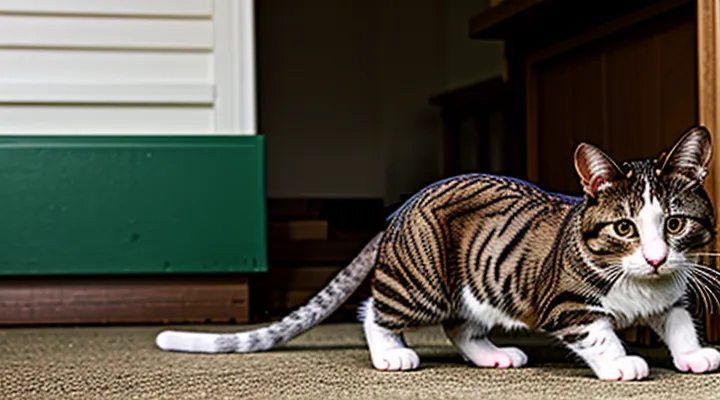
The Domestic Hunter's Instincts
Ancient Roots: From Wild Predator to House Pet
Survival Skills in the Wild
Cats that bring captured rodents to people demonstrate a direct link between domestic behavior and the survival repertoire honed in untamed habitats. The act reflects an instinctual response to a successful hunt, a process refined through generations of solitary predation.
In the wild, felines rely on precise coordination of sensory input and motor execution. Vision attuned to low‑light movement, auditory detection of minute rustles, and whisker feedback for spatial awareness converge to locate prey. Once identified, the animal employs a sequence of actions—silent approach, rapid acceleration, and a calibrated bite—to immobilize the target with minimal energy expenditure.
When a domestic cat presents a mouse to its owner, it repurposes this sequence. The capture is complete; the final step—consumption—shifts to sharing. The behavior satisfies a drive to demonstrate competence, potentially to reinforce the human’s role as a provider, and may serve as a teaching signal for younger cats observing the interaction.
Key survival competencies evident in the offering include:
- Stealth locomotion – low‑profile movement reduces detection.
- Acute auditory processing – isolates prey-generated sounds from background noise.
- Rapid burst speed – closes distance within seconds.
- Precision bite – targets the neck vertebrae, ensuring swift incapacitation.
- Tactile assessment – whiskers gauge prey size and positioning before capture.
The presentation of a mouse thus operates as a measurable outcome of ancient hunting expertise, translated into a domestic context. Recognizing this connection clarifies why the gesture persists across environments and breeds.
The Role of Instinct in Modern Cats
Cats that present captured rodents to their human companions act on a deep‑seated predatory program. The program originates in the wild ancestor’s need to secure food, defend territory, and demonstrate competence to the group. When a domestic cat catches a mouse, the same neural circuitry that once ensured survival now directs a sequence of actions: locate, stalk, seize, and deliver.
The hunting sequence relies on sensory triggers, motor patterns, and reward pathways. Visual motion activates the optic tectum, prompting a focused stare and low‑frequency body sway. Auditory cues fine‑tune the approach, while whisker contact confirms proximity. Successful capture releases dopamine, reinforcing the behavior and encouraging repetition.
Domestication supplies regular meals, yet the innate drive remains intact. Genetic studies show that genes governing prey‑catching behavior are conserved across feline breeds, indicating that modern house cats retain the same motivational architecture as their feral relatives. Consequently, the instinct to hunt surfaces even when food is abundant.
Factors that shape the act of bringing prey to owners include:
- Resource sharing: the cat interprets the human as a potential partner in feeding.
- Territorial signaling: the offered mouse marks the household as a defended zone.
- Social reinforcement: positive reactions from owners increase the likelihood of future deliveries.
- Teaching impulse: adult cats may use the gesture to instruct kittens in hunting skills.
Overall, instinct functions as the engine behind the familiar practice of cats gifting mice. The behavior illustrates how ancient predatory mechanisms persist within contemporary feline companions, guiding actions that appear purposeful to human observers.
Theories Behind the «Gifts»
The Teaching Hypothesis
Sharing Hunting Knowledge with «Kittens»
Adult felines often deposit captured rodents at a human’s feet not merely as a gift but as a demonstration for their young. The act supplies a visual and olfactory reference that kittens can study, replicate, and refine. By witnessing the precise bite, the swift immobilization, and the handling of prey, juvenile cats acquire a template for successful hunting.
Observation constitutes the primary learning channel. Kittens watch the adult’s posture, the timing of the strike, and the method of securing the animal. Simultaneously, the scent of the mouse imprints on the kitten’s sensory system, reinforcing the association between prey and reward. Repeated exposure accelerates the transition from playful swatting to efficient killing.
Owners can support this natural instruction by:
- Allowing safe, unharmed prey (e.g., live‑caught insects or frozen‑thawed rodents) under supervision.
- Positioning themselves where the adult cat can present the catch without interruption.
- Providing soft toys that mimic mouse size and movement for practice sessions.
- Recording brief video of the presentation to review technique with the kitten later.
When kittens internalize these lessons, they develop rapid reflexes, accurate targeting, and proper bite placement. The result is a self‑sufficient predator capable of controlling household pests and reinforcing the cat‑human partnership through shared success.
Assessing Owner's Hunting Prowess
Cats that deliver captured rodents to their humans provide a direct metric for evaluating the owner’s hunting competence. The act functions as a feedback loop: the cat tests the owner’s willingness, skill, and responsiveness to prey handling, then adjusts its behavior accordingly.
Key indicators of owner proficiency include:
- Frequency of deliveries – regular presentations suggest confidence that the owner can manage the catch safely.
- Prey size and condition – larger or intact rodents indicate trust in the owner’s ability to process more challenging trophies.
- Cat’s demeanor during hand‑off – calm, unhurried behavior reflects the cat’s assessment that the owner will not react with panic or aggression.
- Post‑delivery interaction – immediate acceptance of praise or food reward signals that the owner’s response reinforces the cat’s hunting effort.
Assessment methods rely on systematic observation. Record each incident with timestamp, prey characteristics, and cat posture. Compare patterns over weeks to identify trends in the cat’s gifting behavior. Supplement visual data with owner responses: note whether the owner restrains, inspects, or releases the prey, and whether they employ proper tools such as gloves or traps.
Consistent proficiency yields several outcomes. Skilled owners reduce risk of injury from bites or scratches, maintain hygiene by disposing of carcasses promptly, and strengthen the predator‑prey partnership. Conversely, hesitation or mishandling prompts the cat to withhold future catches, potentially weakening the mutual bond. Continuous monitoring of the outlined criteria enables owners to refine their handling techniques, ensuring both safety and sustained feline cooperation.
The «Provisioning» or Caregiving Hypothesis
Providing for the «Incompetent» Human
Cats often deliver captured rodents to the people who care for them. This act reflects an innate drive to secure resources for members of a social unit, extending the feline’s instinctual hunting success to the household environment. By presenting a mouse, the cat converts a solitary kill into a shared benefit, effectively turning the human into a recipient of the predator’s effort.
The behavior originates from ancestral patterns in which felines exchanged food with kin and mates to strengthen bonds and ensure group survival. When domestic cats recognize their caretakers as part of the same unit, the same exchange mechanism activates. The result is a tangible offering that compensates for the owner’s inability to procure prey directly.
Providing for an inept human manifests in several observable actions:
- Depositing a mouse near the owner’s feet or on a sleeping surface.
- Leaving the catch in a location associated with feeding, such as near a bowl.
- Repeating the delivery after a period without successful hunts, reinforcing the supply line.
These actions demonstrate that the cat perceives the owner’s lack of hunting competence as a cue to supply food, thereby maintaining the predator‑prey balance within the domestic setting. The practice satisfies the feline’s drive to contribute, while simultaneously addressing the human’s dependence on external sources for sustenance.
A Display of Affection and Trust
Cats present captured prey to their human companions as a clear signal of affection and trust. The act originates from instinctual hunting behavior, where the feline perceives the owner as part of its social group. By sharing a successful kill, the cat demonstrates that it values the relationship enough to provide resources that would otherwise be reserved for itself.
Key aspects of this communicative gesture include:
- Resource sharing: The cat offers the mouse as a tangible gift, indicating confidence that the owner will accept and appreciate the offering.
- Teaching instinct: In wild colonies, adults present prey to kittens to teach hunting skills; domestic cats extend this pattern to humans, reinforcing the bond.
- Safety assurance: Delivering the catch shows the cat trusts the owner to handle the prey safely, reinforcing mutual dependence.
The behavior reinforces the partnership between feline and human, confirming that the cat regards the owner as a reliable ally within its social hierarchy.
The Territory Marking Hypothesis
Asserting Dominance in the Shared Space
Cats deliver captured rodents to their human companions as a deliberate assertion of dominance within the shared environment. The act signals control over a valuable resource, reinforcing the feline’s status as the primary predator in the household. By presenting the prey, the cat demonstrates competence, claims ownership of the hunting domain, and reminds the owner of its superior position in the food hierarchy.
The behavior serves multiple functions:
- Resource monopolization – the cat secures the mouse, then offers it, confirming exclusive access to the hunt.
- Territorial communication – the presented prey marks the cat’s claim over the space, extending its influence to the human’s domain.
- Social hierarchy reinforcement – the gesture positions the cat as a provider, obligating the owner to acknowledge the feline’s authority.
- Behavioral conditioning – repeated deliveries encourage the owner to respond with attention or reward, further cementing the cat’s dominant role.
In households where the cat perceives the human as a subordinate participant, the delivery of prey becomes a ritualized reminder of the predator‑prey dynamic. The owner’s reaction—whether acceptance, praise, or dismissal—affects the ongoing balance of power, prompting the cat to adjust its frequency of deliveries to maintain optimal dominance.
Communicating Success to the Group
Cats often present captured rodents to their human companions as a tangible sign of hunting proficiency. This gesture carries information about the animal’s skill, territorial coverage, and health, which can be valuable for a community of owners who share observations and expectations.
Effective transmission of that achievement to the group requires clear, repeatable actions. Verbal praise, immediate physical contact, and brief descriptive remarks link the event to the cat’s behavior pattern. When multiple owners participate, a standardized protocol prevents misinterpretation and reinforces the desired outcome.
Practical steps for communicating a cat’s successful hunt:
- State the result succinctly: “Caught a field mouse, 8 cm length.”
- Add a timestamp and location to contextualize the capture.
- Record the incident in a shared log or digital platform accessible to all members.
- Highlight any unusual traits, such as prey size or capture method, to inform future observations.
- Offer a consistent reward, such as a treat, immediately after the report.
By following these measures, owners create a reliable feedback loop that validates the cat’s effort, encourages repeat performance, and enhances collective knowledge about feline hunting dynamics.
The Attention-Seeking Hypothesis
Reinforcement of Behavior through Owner Reaction
Cats frequently deliver captured rodents to the people they live with. The way a person reacts to this offering determines whether the cat will repeat the behavior. A response that the cat perceives as rewarding strengthens the act of hunting and presenting prey; a response that lacks reward or conveys displeasure weakens it.
Operant conditioning explains the mechanism. When a cat presents a mouse and the owner responds with attention, verbal praise, or a treat, the cat associates the prey‑delivery with a positive outcome. The brain releases dopamine, reinforcing the neural pathways that led to the successful hunt. Over time, the cat learns that bringing a mouse yields a predictable benefit, increasing the frequency of the behavior.
Typical owner actions that serve as positive reinforcement include:
- Immediate verbal acknowledgment (“Good job!”)
- Physical affection such as petting or gentle stroking
- Offering a small food reward or a favorite treat
- Allowing the cat to keep the mouse for a brief period before disposal
Conversely, reactions that diminish the behavior consist of:
- Ignoring the cat at the moment of presentation
- Using a stern tone or a brief reprimand
- Removing the mouse without any interaction, thereby denying the cat a reward
Owners who wish to discourage the practice should adopt neutral or mildly negative responses consistently, ensuring the cat does not receive any form of gratification. Those who find the gesture endearing can reinforce it deliberately, shaping the cat’s hunting routine to align with household preferences.
Gaining Interaction and Validation
Cats that present captured rodents to their human companions do so to secure social engagement and affirmation. The act signals a request for attention, reinforcing the bond between animal and owner. By delivering prey, the cat demonstrates competence, prompting the owner to respond with praise, petting, or feeding, which the feline interprets as validation of its hunting skill.
The interaction follows a predictable pattern:
- Cat captures and secures the mouse.
- Cat transports the prey to a location frequented by the owner.
- Owner reacts—by speaking, touching, or rewarding the cat.
- Cat receives positive feedback, strengthening the behavior.
These steps satisfy the feline’s innate drive to share resources and confirm its role within the household hierarchy. Validation arrives through immediate sensory cues: tactile contact, verbal acknowledgment, and occasional treats. The reinforcement loop encourages repeat performances, aligning the cat’s predatory instincts with the human desire for involvement.
From a behavioral perspective, the exchange serves dual purposes. It allows the cat to practice natural hunting sequences while simultaneously fulfilling a social need for recognition. Owners who respond affirmatively reinforce the cat’s perception that its contributions are valued, thereby maintaining a stable, interactive relationship.
Understanding Feline Communication
Interpreting Cat Behavior
Beyond the Obvious: Subtle Cues
Cats frequently present captured rodents to their human companions, a behavior that extends past simple hunting drive. The act conveys information through nuanced signals that owners often overlook.
- Scent imprinting: the mouse carries the cat’s odor, allowing the owner to detect the predator’s recent activity without direct observation.
- Visual demonstration: the cat displays the prey’s form, reinforcing its competence as a provider and confirming its ability to protect the household.
- Social reinforcement: delivering a catch triggers positive feedback from the owner, strengthening the cat‑human bond and encouraging repeat behavior.
- Resource allocation: the offering functions as a micro‑exchange, where the cat contributes food while the owner supplies safety and sustenance.
- Hierarchical cue: presenting a mouse can signal the cat’s status within the domestic group, asserting competence and earning respect.
Each cue operates subtly, shaping the relationship between feline and caretaker. Recognizing these signals enhances understanding of feline motivation and improves the quality of human‑cat interaction.
The Cat-Human Bond Dynamics
Cats and people have co‑evolved for millennia, producing a relationship that blends instinctual hunting with social exchange. When a cat delivers a mouse, it signals competence, reinforces mutual trust, and offers a tangible benefit to the owner. The act also taps into the animal’s innate drive to teach, a behavior observed in wild felids that share prey with offspring.
Key elements of the cat‑human bond in this context include:
- Reciprocal reinforcement – The owner’s reaction (praise, food, attention) rewards the cat’s hunting effort, encouraging repeat behavior.
- Communication of competence – Presenting prey demonstrates the cat’s ability to provide, strengthening its status within the household hierarchy.
- Emotional bonding – Shared experiences of capture and handling create a tangible link, deepening attachment.
- Evolutionary legacy – Domestic cats retain the predatory instincts of their ancestors, who once supplied meat to human groups, preserving a functional partnership.
Physiological responses support this dynamic. Dopamine release follows successful hunts, while oxytocin spikes when the cat interacts with its caretaker, fostering a sense of satisfaction for both parties. Observational studies show that cats receiving positive feedback after delivering prey exhibit higher rates of future gifting compared with those ignored or reprimanded.
Understanding these mechanisms clarifies why many owners find mouse deliveries meaningful rather than merely inconvenient. The behavior reflects a sophisticated exchange system rooted in centuries‑old interspecies cooperation, translating ancient hunting prowess into modern companionship.
Responding to Your Cat's Offerings
Appropriate Reactions and Discouragement
Cats deliver captured rodents as a natural extension of hunting behavior. Owners must decide how to respond without compromising the animal’s instincts or household hygiene.
- Accept the gift as evidence of the cat’s competence; clean the mouse promptly and dispose of it safely.
- Praise the cat with a brief, calm tone to reinforce the act of bringing prey, not the act of killing.
- Provide a designated area, such as a washable mat, where the cat can place its catch, reducing mess.
When the goal is to curb the practice, apply consistent deterrents:
- Offer alternative enrichment—interactive toys, puzzle feeders, and scheduled play sessions—that satisfy predatory drive.
- Restrict outdoor access during peak hunting periods; keep windows screened and doors closed.
- Reward the cat for bringing toys instead of live prey; deliver treats immediately after the preferred behavior.
- Remove any opportunity for the cat to encounter rodents by sealing gaps in walls, sealing basements, and maintaining a rodent‑free environment.
By combining respectful acknowledgment with targeted prevention, owners manage the cat’s hunting gifts while preserving a clean, safe home.
Strengthening the Relationship with Understanding
Cats that present captured rodents to their human companions act on an instinct rooted in predatory ancestry. The act signals success in hunting, a behavior historically directed toward the leader of a social group. When a domestic cat drags a mouse into the home, it reproduces this ancient message, designating the owner as a trusted member of its pack.
Evolutionary studies show that felines share a communication system in which prey delivery functions as a gift, a request for approval, or a teaching gesture. The gesture does not imply hunger; instead, it reflects the cat’s assessment of its environment and its desire to involve the human in its natural routine.
Recognizing the gesture as a form of dialogue changes the interaction from surprise to purposeful exchange. Interpreting the offering as a sign of confidence allows owners to respond in ways that reinforce mutual respect and trust.
Practical steps to deepen the bond through comprehension:
- Observe the cat’s body language at the moment of delivery; relaxed posture and slow blinking indicate comfort.
- Respond with calm verbal acknowledgment, avoiding sudden movements that could be perceived as threat.
- Provide an alternative outlet, such as interactive toys that mimic prey, to satisfy hunting urges without real kills.
- Reinforce positive behavior by rewarding the cat with gentle petting or a favorite treat after the gesture, linking the act to a safe, rewarding outcome.
By treating each mouse presentation as a communicative event rather than a nuisance, owners cultivate a relationship grounded in the cat’s natural instincts and foster a lasting partnership built on clear, respectful exchange.
The Practical Aspects of Feline Hunting
Prey Drive and Its Manifestations
The Thrill of the Chase and Capture
Cats experience a surge of adrenaline when a mouse darts across a room. The sudden movement triggers visual and auditory receptors, prompting a rapid release of catecholamines that sharpen focus and heighten reflexes. Muscles contract with maximal efficiency, allowing the predator to accelerate, pounce, and secure the prey within seconds.
The capture itself satisfies a deeply ingrained predatory sequence. Once the mouse is restrained, the cat engages a precise bite at the neck, severing vital arteries and ensuring swift immobilization. This action reduces struggle, conserves energy, and reinforces the animal’s confidence in its hunting competence.
Key physiological and behavioral elements of the chase:
- Sensory activation: whisker deflection and acute hearing detect prey vibrations.
- Motor coordination: synchronized limb movement generates explosive speed.
- Neurochemical reward: dopamine release follows successful capture, reinforcing the behavior.
- Learning reinforcement: repeated triumphs refine stalking techniques and improve future success rates.
When a cat presents the captured mouse to its owner, the act reflects an instinctual drive to share resources, a behavior rooted in ancestral provisioning of offspring. The gesture also serves as a tangible demonstration of the feline’s competence, confirming its role as an effective hunter within the household environment.
The Role of Play in Developing Hunting Skills
Cats refine predatory techniques through structured play. Young felines chase moving objects, pounce, and wrestle, mimicking the sequence of an actual hunt. Each bout reinforces motor coordination, timing, and bite precision, which later translate into successful captures of live prey.
Key developmental outcomes of play include:
- Enhanced visual tracking: rapid eye movements lock onto swift targets, sharpening depth perception.
- Refined limb coordination: alternating fore‑ and hind‑leg motions develop balance and power for explosive jumps.
- Bite force modulation: controlled mouthing during mock attacks trains the jaw to deliver an effective, humane kill.
Domestic cats retain these instincts, applying them when they capture rodents and present them to humans. The act of “gift‑giving” reflects a learned behavior where the cat demonstrates competence and fulfills an innate drive to share surplus prey with the social group. Play‑derived skills ensure the cat can subdue and transport the animal safely, preserving its vitality until delivery.
Research on feline behavior shows that kittens deprived of interactive play exhibit delayed hunting proficiency and reduced success rates in adult predation. Structured toys that simulate erratic movement—feathers, laser pointers, or small plush prey—provide the necessary stimulus to maintain and sharpen these abilities throughout the cat’s life.
Preventing Unwanted «Gifts»
Environmental Enrichment and Stimulation
Environmental enrichment supplies sensory, motor, and cognitive challenges that satisfy a cat’s predatory drive while keeping the animal occupied within the home. By presenting varied stimuli—such as moving toys, puzzle feeders, and climbable structures—owners replace the need for spontaneous hunting with structured play sessions that mimic the chase, capture, and kill sequence.
When enrichment mimics natural prey movements, the cat learns to execute the full predatory sequence on safe objects. This practice reduces the impulse to hunt live rodents and, if a cat still captures a mouse, the behavior is often redirected into a learned game rather than a gift for the owner.
- Interactive toys that flutter, roll, or flutter unpredictably
- Puzzle feeders that require problem‑solving to access food
- Vertical spaces (cat trees, shelves) that enable stalking from height
- Scheduled play periods lasting 10‑15 minutes, three times daily
- Scented objects (catnip, valerian) that stimulate investigative behavior
Consistent application of these stimuli lowers the frequency of live‑prey captures delivered to humans, channeling the cat’s hunting instincts into controlled, non‑destructive outlets.
Managing Outdoor Access and Supervision
Cats often present captured rodents to their owners as a natural extension of hunting instincts. This behavior signals competence, reinforces the bond, and provides mental stimulation. When a cat has unrestricted outdoor access, the frequency of such deliveries can increase, raising concerns about safety, hygiene, and wildlife impact. Effective management of outdoor access and supervision balances the cat’s need for exploration with responsible pet ownership.
Control strategies focus on three core actions: limiting unsupervised roaming, providing safe hunting outlets, and monitoring interactions with prey.
- Install a secure cat enclosure or “catio” that offers fresh air, climbing structures, and visual contact with the outside while preventing free-range excursions.
- Use a leash and harness for scheduled outdoor sessions, allowing the owner to observe hunting attempts and intervene if necessary.
- Schedule regular play sessions with interactive toys that mimic prey movements, reducing the urge to hunt real animals.
Additional measures reinforce safety and reduce unwanted deliveries.
- Conduct routine health checks, including parasite screening, to mitigate disease transmission from captured rodents.
- Keep the indoor environment enriched with scratching posts, puzzle feeders, and elevated perches to satisfy natural behaviors without external exposure.
- Train the cat to respond to recall commands, enabling quick recall when the animal approaches a potential prey encounter.
By implementing structured outdoor access and vigilant supervision, owners can preserve the cat’s predatory drive while minimizing risks associated with bringing rodents into the home. This approach respects the animal’s instincts and protects both household and local ecosystems.