
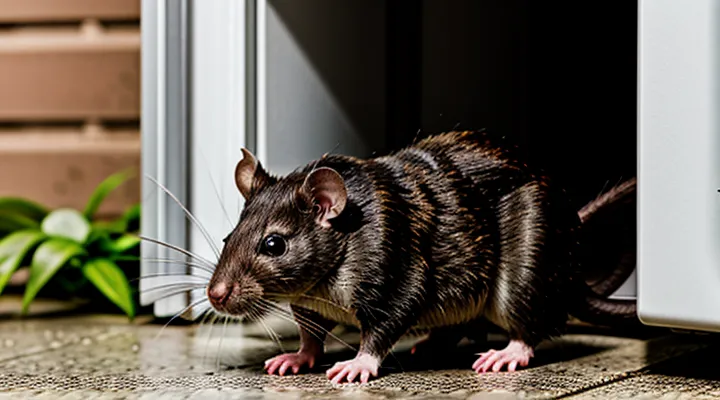
Understanding the Severity of a Rat Infestation
Why Immediate Action is Crucial
Health Risks Posed by Rodents
Rodent infestations in multi‑unit residences create immediate health hazards that demand prompt action. Rats contaminate surfaces, food supplies, and water sources with saliva, urine, and feces, introducing pathogens directly into living spaces.
Key diseases transmitted by rats include:
- Hantavirus pulmonary syndrome – inhalation of aerosolized rodent droppings can cause severe respiratory failure.
- Leptospirosis – contact with urine‑contaminated water leads to kidney damage, jaundice, and fever.
- Salmonellosis – ingestion of food tainted by fecal matter results in gastrointestinal distress and dehydration.
- Lymphocytic choriomeningitis virus – exposure to infected secretions may cause meningitis, encephalitis, or flu‑like symptoms.
- Rat‑bite fever (streptobacillary infection) – bacterial entry through bite wounds produces fever, rash, and joint pain.
Beyond infectious agents, rodent activity triggers allergic reactions to dander and stimulates mold growth by damaging insulation and plumbing. Persistent exposure aggravates asthma and chronic bronchitis, especially in children and the elderly.
Identifying the appropriate municipal or property‑management contacts accelerates mitigation, reduces disease transmission, and restores safe living conditions. Immediate reporting to building management, followed by notification of local health or pest‑control agencies, ensures coordinated eradication and prevents further health deterioration.
Property Damage Caused by Rats
Rats gnaw on wood, insulation, and electrical wiring, creating structural weaknesses that can compromise the integrity of an apartment building. Their constant chewing leads to exposed studs, damaged drywall, and broken conduit, increasing the risk of fire and collapse.
Moisture‑absorbing materials also suffer. Rats nest in ceiling tiles, carpet padding, and pipe insulation, leaving behind urine and feces that corrode metal surfaces and promote mold growth. This secondary damage often requires extensive remediation beyond the initial repairs.
The financial impact extends to utilities and appliances. Chewed power cords cause short circuits, while damaged water lines result in leaks and increased water bills. Replacing these components adds to the overall cost of addressing an infestation.
Typical rat‑induced damage:
- Chewed structural timber and joists
- Compromised electrical wiring and outlets
- Damaged plumbing and HVAC ducts
- Contaminated insulation and ceiling tiles
- Corroded metal fixtures and fasteners
Identifying these issues promptly allows tenants and building managers to contact the appropriate service providers—property maintenance, licensed pest control, and insurance adjusters—so that repairs can begin before the damage escalates.
Initial Steps Upon Discovering Rats
Documenting the Infestation
Taking Photos and Videos
Documenting a rodent problem with clear visual evidence is essential for communicating the severity of an infestation to property managers, pest‑control professionals, and health‑code inspectors. Photographs and video recordings provide objective proof that can accelerate response times, justify remediation costs, and protect tenant rights.
When capturing images, focus on the following elements:
- Entry points such as gaps around pipes, vents, or foundation cracks.
- Signs of activity, including droppings, gnaw marks, and urine stains.
- Live or dead rodents, nests, and any damage to food containers or wiring.
- Areas where rodents have been observed moving, especially in dark corners or concealed spaces.
Technical guidelines improve the usefulness of the material. Use a high‑resolution camera or smartphone set to the maximum megapixel count. Ensure adequate lighting; supplement with a flashlight or portable LED when photographing dim locations. Record video at 30 fps or higher to capture movement without motion blur. Include a ruler, coin, or known object in each frame to provide scale.
Organize files immediately after collection. Rename each file with a consistent format, for example: BuildingA_Floor2_EntryGap_2025‑10‑08.jpg. Store originals in a cloud folder with restricted access, and create a compressed archive for sharing. Maintain a brief log noting date, time, and exact location for each record.
When presenting the evidence to the appropriate parties, attach the visual files to a concise email that references the documented issues. Include the log summary, indicate the urgency based on observed damage, and request a written acknowledgment of receipt. This systematic approach ensures that every stakeholder receives reliable, actionable information, facilitating prompt and effective pest‑management action.
Noting Locations and Activity
Documenting the exact places where rodents are seen and the nature of their activity is essential before reaching out to any responsible party. Precise records eliminate guesswork, speed up response times, and provide evidence for accountability.
When gathering information, include:
- All interior sites (kitchens, bathrooms, storage closets, utility rooms) with visible droppings, gnaw marks, or nests.
- Exterior areas (basements, crawl spaces, roof vents, garbage chutes, building perimeter) where tracks or burrows appear.
- Time and frequency of sightings, noting whether activity occurs during daylight, night, or both.
- Types of evidence observed: droppings, urine stains, gnawed wires, chewed food packaging, or live captures.
- Environmental conditions that may attract rodents, such as standing water, overflowing trash, or gaps in walls and doors.
Present this compiled data to the building manager, the designated maintenance team, or a licensed pest‑control provider. If the issue persists, forward the same details to the local health authority or housing regulator, citing the documented evidence. Consistent, accurate reporting ensures that each contact can assess the severity, allocate resources appropriately, and implement targeted remediation measures.
Notifying Your Landlord or Property Manager
Importance of Written Communication
Effective written communication becomes indispensable when a rodent infestation threatens an apartment complex. A clear, documented request identifies the responsible party—property manager, maintenance staff, or pest‑control contractor—and establishes a timeline for response. Written records prevent misunderstandings, provide evidence of notification, and enable tenants to track progress.
Key benefits of documenting the complaint:
- Precise description of the problem, location, and severity.
- Date‑stamped evidence that can be referenced in future correspondence or legal proceedings.
- Formal acknowledgment from the recipient, confirming receipt and planned action.
- Ability to forward the same information to additional stakeholders without re‑creating the report.
By maintaining a written trail, tenants secure accountability, ensure coordinated action, and protect their rights throughout the remediation process.
Information to Include in Your Notification
When rats appear in a residential building, the notification you send must contain precise details that enable the recipient to assess the situation quickly and take appropriate action.
- Exact address of the affected unit, including floor and apartment number.
- Date the infestation was first observed and any subsequent sightings.
- Description of evidence: droppings, gnaw marks, nests, audible activity, or live rodents.
- Assessment of severity: isolated incident, multiple sightings, or signs of a growing colony.
- Actions already taken: traps set, bait applied, sanitation measures, or pest‑control visits.
- Contact information of the tenant reporting the problem: name, phone number, and email address.
- Reference to lease or building management clauses that address pest control responsibilities.
- Specific request: immediate inspection, professional extermination, or repair of structural entry points.
Including these elements creates a clear record, speeds the response from property managers or pest‑control services, and supports any follow‑up documentation required by housing regulations.
Key Contacts for Escalation and Resolution
Apartment Management and Landlord Responsibilities
Lease Agreement Clauses Regarding Pests
Lease contracts for multi‑unit residences usually contain specific provisions that define how rodent infestations are handled. These clauses assign responsibility, outline notification requirements, and set expectations for remediation.
The landlord’s duty to maintain a habitable environment typically includes pest control. Tenants must report sightings promptly, allowing the property owner to arrange professional treatment within a reasonable timeframe. Failure to comply with reporting obligations can delay service and affect liability.
Common clauses include:
- Habitability guarantee: Explicit statement that the unit will be free of pests at the start of tenancy and that the landlord will address infestations.
- Tenant notification: Requirement for the tenant to inform the landlord in writing within a set period (e.g., 24‑48 hours) after discovering rats or other vermin.
- Access for treatment: Permission for the landlord or contracted pest‑control provider to enter the unit for inspection and extermination, with notice as prescribed by law.
- Cost allocation: Specification that the landlord covers treatment costs unless the infestation results from tenant negligence (e.g., improper food storage).
- Follow‑up and warranty: Obligation for the landlord to conduct a post‑treatment inspection and guarantee effectiveness for a defined period.
- Termination rights: Clause allowing the tenant to terminate the lease or withhold rent if the landlord fails to remediate a confirmed infestation within the agreed timeframe.
Procedurally, tenants should document the infestation (photos, dates) and send a written notice to the designated contact—usually the property manager or leasing office. The landlord must acknowledge receipt, schedule treatment, and provide a written confirmation of completion. If the landlord neglects these steps, tenants may invoke local health‑code enforcement or pursue legal action for breach of the habitability clause.
Understanding these lease provisions equips residents to act swiftly and ensures that responsibility for rodent control remains clearly defined.
Rights and Responsibilities of Tenants
Tenants have the legal right to a habitable dwelling, which includes protection from rodent infestations. When evidence of rats appears—droppings, gnaw marks, or sightings—the tenant may demand prompt remediation from the property owner or manager.
The tenant’s responsibilities are to report the problem in writing, provide reasonable access for inspection and treatment, and refrain from actions that worsen the situation, such as improper waste storage or blocking entry points.
If the landlord fails to address the infestation within a reasonable timeframe, the tenant may:
- Contact the local health department or housing authority to file a complaint.
- Request a written statement of the landlord’s remediation plan.
- Seek rent abatement or repair costs reimbursement through a small claims court.
- Engage a licensed pest‑control contractor, with the landlord’s prior written consent, and deduct verified expenses from rent if the landlord does not act.
Documentation is essential. Tenants should keep copies of all communications, photographs of evidence, and receipts for any incurred expenses. These records support any formal complaint or legal action.
By exercising these rights and fulfilling their duties, tenants help ensure a swift and effective response to rodent problems while maintaining compliance with lease terms and local housing regulations.
Local Health Department
When to Contact Health Authorities
When rats are present in a multi‑unit residence, health authorities should be notified promptly under specific conditions. Immediate contact is required if any resident experiences illness potentially linked to rodent exposure, such as gastrointestinal symptoms, fever, or allergic reactions. Notify the agency as soon as these signs appear, because delayed reporting can hinder outbreak investigation and increase public‑health risk.
If the infestation spreads beyond a single apartment and appears to affect common areas—hallways, laundry rooms, stairwells, or garbage disposal zones—health officials must be informed. Widespread rodent activity raises the likelihood of contaminating shared surfaces and utilities, which falls under municipal health jurisdiction.
Contact health authorities when:
- Visual evidence of large numbers of rats or extensive droppings is observed in communal spaces.
- Structural damage caused by gnawing threatens building integrity or compromises fire‑safety systems.
- Local regulations mandate reporting of pest‑related health hazards, and the landlord fails to address the issue within a reasonable timeframe.
In situations where a landlord or property manager is unresponsive, escalation to the health department ensures that inspection, remediation guidance, and enforcement actions can be initiated. Timely reporting protects tenants, supports coordinated control efforts, and complies with public‑health statutes.
Services Provided by the Health Department
When a multi‑unit residence shows signs of rat activity, the local health department becomes the primary public‑health authority responsible for addressing the issue. Its mandate includes protecting residents from health hazards associated with rodent infestations and ensuring compliance with sanitation standards.
The department’s services typically encompass:
- Inspection and assessment – Trained inspectors conduct on‑site evaluations to identify entry points, nesting sites, and sanitation deficiencies that attract rats.
- Issuance of corrective orders – After inspection, the agency issues written directives requiring property owners or managers to remediate violations within a specified timeframe.
- Technical guidance – Officials provide detailed recommendations on structural repairs, waste management practices, and landscaping modifications that reduce rodent access.
- Coordination of pest‑control actions – The department may approve licensed exterminators, oversee bait placement, and verify that control measures meet safety regulations.
- Disease surveillance – Monitoring of rodent‑borne illnesses, such as leptospirosis and hantavirus, is conducted to detect outbreaks and initiate public‑health alerts.
- Complaint processing – Residents can file formal complaints, which are logged, investigated, and tracked through a case‑management system.
- Education and outreach – Workshops, flyers, and online resources inform tenants and landlords about prevention strategies, proper waste disposal, and reporting procedures.
By delivering these services, the health department ensures that rat infestations are addressed systematically, reducing health risks and maintaining safe living conditions for all occupants.
Pest Control Services
Understanding Professional Extermination
Professional rat control begins with verifying that the service provider holds a valid pest‑management license and is registered with local health or housing authorities. Licensing confirms compliance with safety standards, proper use of rodenticides, and adherence to disposal regulations. Request a copy of the license and ask whether the technician has completed recent training in integrated pest management (IPM).
When evaluating candidates, compare the following factors:
- Inspection procedure: a thorough assessment of entry points, nesting sites, and food sources.
- Treatment options: bait stations, traps, and, where appropriate, low‑toxicity rodenticides.
- Follow‑up plan: scheduled re‑inspections and monitoring to confirm eradication.
- Warranty terms: coverage period and conditions for additional visits at no extra cost.
After selecting a contractor, provide access to all affected units, common areas, and utility rooms. Ensure that residents receive written instructions on temporary food storage, waste handling, and any required evacuation of pets during treatment. Document the date of initial inspection, the methods employed, and the schedule for subsequent visits.
Final verification includes a post‑treatment inspection confirming the absence of fresh droppings, gnaw marks, or active bait stations. Retain the contractor’s report as evidence for building management records and for any future insurance claims.
Types of Pest Control Methods
Rats in multi‑unit residences require prompt, effective control to protect health and property. Selecting the appropriate method determines the speed of elimination and reduces the risk of re‑infestation.
- Chemical treatments – Bait stations and rodenticides applied by licensed technicians. Provide rapid mortality but demand strict placement to prevent accidental exposure.
- Mechanical solutions – Snap traps, electronic traps, and live‑catch cages. Offer immediate results, allow monitoring of catch rates, and eliminate the need for chemicals.
- Biological options – Predatory birds or feral cat programs in surrounding areas. Reduce population pressure but are impractical for indoor environments.
- Physical barriers – Sealants, steel mesh, and door sweeps that block entry points. Prevent new ingress and complement other tactics.
- Integrated Pest Management (IPM) – Combines inspection, sanitation, exclusion, and targeted treatments. Emphasizes long‑term prevention and minimal chemical use.
When rats appear in an apartment building, the first point of contact should be the property management office or building superintendent. They coordinate access for licensed pest‑control contractors, verify that exclusion measures are in place, and ensure compliance with local health regulations. If the building lacks a dedicated manager, residents should reach out to the municipal health department, which can mandate professional intervention and oversee remediation.
Legal Recourse and Tenant Rights
Consulting Tenant Rights Organizations
Understanding Your Legal Options
If rodents occupy a rental unit, tenants have statutory rights that compel landlords to remedy the condition. State habitability codes typically define a “healthy environment” as a legal requirement; failure to eliminate a rat problem constitutes a breach of the lease. Tenants may invoke these provisions by filing a written complaint with the property manager, citing the specific code violation and requesting prompt remediation.
When the landlord does not act within a reasonable timeframe—commonly 14‑30 days—the tenant can pursue additional legal avenues. Options include:
- Submitting a complaint to the local housing authority, which may conduct an inspection and issue a citation or order.
- Initiating a “repair and deduct” procedure, where the tenant arranges professional extermination, retains receipts, and deducts the cost from rent, provided the lease permits this action.
- Withholding rent under a “constructive eviction” claim, after documenting the infestation and the landlord’s inaction, then depositing the withheld amount in an escrow account.
- Filing a small‑claims lawsuit for damages, such as loss of personal property, medical expenses, or compensation for the diminished habitability of the dwelling.
If the building is governed by a homeowners’ association or cooperative board, the tenant should also notify that entity, as it may have jurisdiction over common‑area pest control and can enforce compliance with the building’s maintenance standards.
Legal counsel can assess the tenant’s position, advise on jurisdiction‑specific deadlines, and draft formal demand letters that reference applicable statutes, case law, and lease provisions. Engaging an attorney early reduces the risk of procedural missteps and strengthens the case for enforcement or compensation.
Seeking Mediation or Arbitration
When a multi‑unit building faces a rat problem, tenants and owners often disagree about responsibility, remediation costs, and timelines. Direct negotiation can stall, making formal dispute resolution a practical alternative.
The first point of contact for mediation is typically the property‑management office. Management can arrange a neutral mediator through a local community‑mediation program or a homeowners‑association board, if one exists. Municipal housing or health departments also offer mediation services for public‑health complaints, providing an impartial facilitator to help parties reach a settlement.
If mediation fails or parties prefer a binding decision, arbitration becomes the next option. Tenants may file a claim with a private arbitration organization such as the American Arbitration Association, which offers procedures tailored to landlord‑tenant disputes. Some jurisdictions maintain dedicated arbitration panels for housing issues; contacting the local consumer‑affairs office will reveal availability. Legal representation can assist in preparing the case for arbitration and ensure that any award complies with state statutes.
Steps to initiate mediation or arbitration:
- Notify the property‑management office in writing of the infestation and request mediation.
- If the management declines, contact the nearest community‑mediation center or municipal health department for assistance.
- Should mediation not resolve the dispute, identify an accredited arbitration service and submit a formal request for arbitration.
- Engage an attorney experienced in landlord‑tenant law to review the arbitration agreement and prepare supporting documentation.
By following this sequence, tenants secure a structured process that compels the responsible party to address the rodent issue while preserving legal rights and minimizing prolonged conflict.
When to Consider Legal Action
Failure of Landlord to Address the Problem
When a rental building becomes infested with rats and the property owner does not intervene, tenants must pursue alternative channels to compel remediation. The landlord’s refusal to act violates most residential lease agreements and local housing codes, creating legal and health liabilities.
First, document the infestation. Record dates, photographs, and any communication with the owner. This evidence supports subsequent complaints and legal actions.
Next, contact the local health or code enforcement agency. These departments have the authority to inspect the premises, issue violation notices, and mandate pest‑control measures. Provide the documentation and request an inspection as soon as possible.
If the health department does not resolve the issue, file a complaint with the municipal housing authority or tenant‑rights board. These bodies can mediate disputes, levy fines, and, in some jurisdictions, order the landlord to complete repairs within a specified timeframe.
Should administrative avenues prove insufficient, consider the following steps:
- Send a formal demand letter, citing lease provisions and applicable statutes, and set a deadline for corrective action.
- Initiate a small‑claims lawsuit for breach of the warranty of habitability, seeking reimbursement for expenses such as professional extermination and temporary relocation.
- Contact a tenant‑rights attorney to evaluate the case and explore options for injunctive relief or lease termination without penalty.
Finally, inform any renters’ insurance provider. Some policies cover loss of use or personal property damage caused by rodent activity, and the insurer may assist in recovering costs from the landlord.
By systematically escalating the complaint—from local health officials to legal recourse—tenants can enforce their right to a safe, rodent‑free dwelling despite the landlord’s inaction.
Breach of Habitability
A breach of habitability occurs when a landlord fails to provide a dwelling that meets basic health and safety standards. Legal codes require that rental units be free from conditions that threaten occupants’ well‑being, including infestations that compromise structural integrity or expose residents to disease.
Rats in a multi‑unit residence create unsanitary conditions, damage wiring and insulation, and violate local housing regulations. Their presence therefore constitutes a clear violation of the landlord’s duty to maintain a livable environment.
Contacts for addressing the violation
- Property manager or leasing office – submit a written complaint with dates and photographs.
- Building superintendent – request immediate pest‑control intervention.
- Local health department – file a formal report; inspectors can issue citations to the owner.
- Municipal housing authority – report non‑compliance; may mediate repairs or impose penalties.
- Licensed pest‑control firm – obtain a written estimate for eradication; keep the document for records.
- Tenant‑rights attorney – advise on remedies such as rent reduction, lease termination, or civil action.
After notifying the appropriate parties, document every communication, set a reasonable deadline for remediation (typically 7‑14 days), and request confirmation in writing. If the problem persists, tenants may pursue legal remedies, including withholding rent, filing a complaint with the housing court, or terminating the lease without penalty.
Preventative Measures and Long-Term Solutions
Sealing Entry Points
Identifying Gaps and Cracks
Rats enter buildings through openings as small as a quarter‑inch. Locating these entry points is the first step in deciding which professionals must be engaged. Conduct a systematic inspection of the exterior shell, interior walls, and utility penetrations. Record each defect with its dimensions and proximity to food sources.
- Gaps around windows, doors, and sliding panels – measure width; gaps >1 cm typically require a licensed carpenter or a property‑management maintenance crew.
- Cracks in foundation or masonry – assess depth; deeper than ½ inch often necessitates a structural engineer’s evaluation before any pest‑control measures.
- Openings around plumbing, electrical conduit, and ventilation ducts – note size and location; a certified plumber or HVAC specialist should seal these to prevent re‑entry.
- Unsealed gaps around garbage chutes, dumpster areas, and rooftop access – contact the building’s waste‑management contractor or a certified pest‑control provider for immediate remediation.
After documenting all openings, compile the list and forward it to the building’s management office. The office will assign the appropriate tradespeople—carpenters, engineers, plumbers, or pest‑control operators—based on the nature of each gap. If the management fails to act promptly, the tenant may file a formal request with the local housing authority, which can mandate repairs and coordinate with qualified service providers.
Recommended Sealing Materials
Rats gain access to multifamily dwellings through gaps, cracks, and openings that are not properly sealed. Effective sealing eliminates entry points, reducing the need for repeated pest‑control interventions and supporting the responsibilities of building managers, maintenance staff, or property owners.
- Steel wool or copper mesh: inserts into small holes, resistant to chewing.
- Cementitious caulk: fills gaps around pipes, vents, and window frames; adheres to concrete, wood, and metal.
- Expanding polyurethane foam: expands to seal irregular spaces, creates a durable barrier when trimmed flush.
- Metal flashing or sheet metal: covers larger openings such as utility penetrations and roof seams.
- Concrete or mortar: repairs foundation cracks and structural fissures.
- Hardware cloth (½‑inch gauge): secures larger gaps in exterior walls and vents; welds or screws to frame.
- Silicone sealant: seals joints around doors, windows, and interior fixtures; remains flexible for movement.
Apply each material according to manufacturer instructions, ensuring the surface is clean and dry. After installation, inspect seals periodically for wear, displacement, or new damage, and repair promptly. Coordination with the building’s maintenance team or designated property manager ensures that sealing efforts align with overall rodent‑control protocols.
Maintaining Cleanliness and Hygiene
Proper Food Storage Techniques
Proper food storage reduces the attraction of rodents to an apartment building, thereby supporting any effort to address a rat problem. Secure containers and disciplined handling limit the availability of edible waste, which is a primary driver of infestations.
- Store dry goods in airtight, metal or heavy‑plastic containers with sealed lids.
- Keep perishable items refrigerated or frozen; discard spoiled food promptly.
- Place trash bins with tight‑fitting lids in designated areas; empty them regularly.
- Clean countertops, floors, and appliances after each use; avoid leaving crumbs or spills.
- Seal pantry shelves and cabinets with caulking or weather‑strip to block entry points.
When rodents are observed, contact the building’s management office first, as they are responsible for coordinating maintenance and pest‑control services. If the response is inadequate, reach out to a licensed exterminator or the local health department, which can enforce sanitation standards and compel corrective action. Proper food storage complements these contacts by removing the food source that sustains the infestation.
Waste Management Best Practices
Effective waste handling reduces food sources that attract rodents in multi‑unit dwellings. Proper practices prevent waste from accumulating in corridors, stairwells, and trash rooms, limiting opportunities for rats to establish nests.
Key waste‑management steps:
- Use sealed, rat‑proof containers with tight‑fitting lids.
- Place containers on designated pallets away from building walls.
- Empty bins daily or as frequently as local collection schedules allow.
- Clean spillages and residue immediately; disinfect surfaces regularly.
- Inspect and repair damaged trash chutes, doors, and vent screens.
- Maintain clear pathways for collection trucks; remove obstacles promptly.
When a rat problem emerges, contact the following parties:
- Building superintendent or property manager to initiate immediate inspection and remedial actions.
- Licensed pest‑control provider contracted by the management for extermination and prevention measures.
- Local health department for compliance verification and possible enforcement.
- Municipal waste‑service agency to address collection irregularities or container deficiencies.
Coordinated communication among these contacts, combined with strict waste‑handling protocols, curtails rodent activity and restores a sanitary living environment.
Collaborative Community Efforts
Encouraging Neighborly Cooperation
When rodents appear in a multi‑unit building, swift collective action prevents escalation. Begin by informing every affected neighbor of the sighting; a shared email or posted notice ensures that all residents understand the scope of the problem.
Next, coordinate a unified request to the property manager or landlord. A single, well‑documented report—photos, dates, and locations—carries more weight than multiple isolated complaints. The manager can then authorize a licensed pest‑control service, which typically requires written consent from the building owner.
If the landlord fails to act, residents should jointly contact the local health department. Most municipalities provide a hotline for rodent complaints; a group call or a collective email referencing the building’s address accelerates the inspection process.
To maintain momentum, establish a short‑term plan:
- Assign one resident to track communication dates and responses.
- Schedule a brief meeting (in person or virtual) to review progress and adjust actions.
- Agree on interim preventive measures, such as securing trash containers and sealing food sources, and distribute responsibilities among units.
By presenting a coordinated front, tenants demonstrate seriousness, reduce administrative delays, and increase the likelihood that professional exterminators are engaged promptly. Cooperation transforms an individual nuisance into a manageable, building‑wide solution.
Regular Property Inspections
Regular property inspections provide the earliest reliable indication that a rodent intrusion is developing in a multi‑unit residence. Inspectors check for gnaw marks, droppings, compromised sealing, and signs of burrowing in common areas, utility rooms, and exterior walls. Detecting these signs before they spread reduces damage and limits health risks.
When inspections reveal evidence of rats, the chain of responsibility activates immediately. The following parties must be notified without delay:
- Property manager or building superintendent – coordinates access, authorizes repairs, and oversees communication with tenants.
- Maintenance team – seals entry points, removes debris, and repairs structural deficiencies identified during the inspection.
- Licensed pest‑control contractor – implements baiting, trapping, and sanitation measures according to local regulations.
- Local health or housing authority – receives reports of infestations that threaten public health and may conduct follow‑up inspections.
Prompt contact ensures that each specialist can apply their expertise, preventing the infestation from escalating and maintaining a safe living environment for all occupants.