
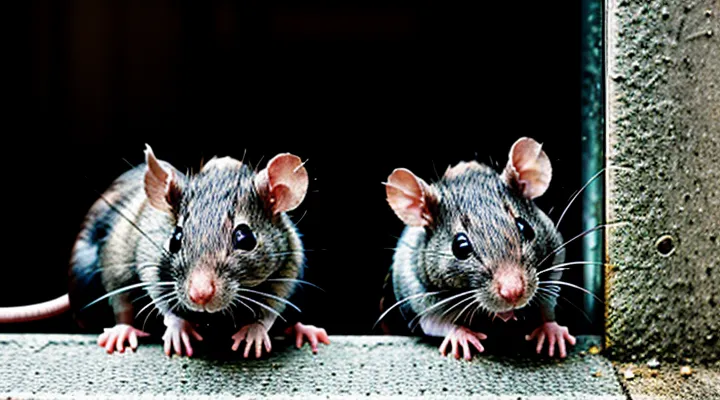
The Amazing Anatomy of a Rat
Skeletal Flexibility: The Key to Tight Squeezes
The Role of the Rib Cage
The rib cage of a rat consists of twelve pairs of ribs attached to the thoracic vertebrae and sternum, forming a semi‑rigid enclosure that protects the lungs and heart while allowing limited deformation. Cartilaginous segments at the anterior ends provide flexibility, enabling the thoracic cavity to narrow during lateral compression.
During locomotion through narrow openings, the rib cage determines the minimum transverse dimension a rat can achieve. Intercostal muscles contract to draw the ribs inward, reducing the overall width by up to 15 % of the resting span. This contraction is coordinated with spinal flexion, allowing the animal to align its body axis with the gap orientation.
Key mechanical factors influencing gap negotiation include:
- Length of the costal cartilage, which governs the range of rib movement.
- Elastic modulus of the rib bone, affecting resistance to bending.
- Activity of the intercostal musculature, controlling the speed and extent of compression.
Empirical measurements show that rats with a thoracic width of 2.5 cm can pass through gaps as narrow as 2.0 cm when rib cage compression is maximized. Larger gaps do not require significant rib deformation, but the ability to reduce thoracic diameter expands the range of accessible microhabitats and escape routes.
Overall, the rib cage functions as a dynamic structural element that limits and enables passage through constricted spaces, directly shaping the rat’s capacity to exploit narrow environmental niches.
Pelvic Girdle Adaptability
Rats exploit the flexibility of their pelvic girdle to maneuver through openings that are narrower than the width of their torso. The pelvis consists of a mobile sacroiliac joint, a flexible pubic symphysis, and a set of loosely articulated ilia, allowing rapid reshaping of the pelvic ring during locomotion.
Key anatomical features that enable this adaptability include:
- Sacroiliac joint laxity: cartilage and ligamentous structures permit slight rotation and translation, reducing overall pelvic width.
- Pubic symphysis elasticity: fibrocartilaginous tissue stretches under load, creating temporary separation of the left and right halves.
- Ilial mobility: muscular attachments to the gluteal and abdominal muscles adjust the angle of the ilia, narrowing the frontal profile.
During forward thrust, neural and muscular control synchronizes the contraction of abdominal and pelvic floor muscles, directing the pelvis into a streamlined configuration. This coordinated action reduces the cross‑sectional area to approximately 1.5 cm, matching the typical diameter of cracks and gaps encountered in urban environments.
The combination of skeletal pliability and precise motor regulation permits rats to infiltrate spaces that would otherwise be inaccessible to similarly sized mammals, highlighting the evolutionary advantage of a highly adaptable pelvic girdle.
The "Head-First" Rule: If the Head Fits, the Body Follows
Skull Dimensions as a Limiting Factor
The rat’s ability to enter narrow openings hinges on the size and shape of its skull. The cranium measures approximately 18 mm in length, 12 mm in width, and 10 mm in height in adult laboratory specimens. These dimensions establish the smallest rectangular aperture that can accommodate the head without deformation.
- Minimum vertical clearance: 10 mm
- Minimum horizontal clearance (side‑to‑side): 12 mm
- Minimum anteroposterior clearance: 18 mm
The bony orbit and nasal bone protrusions add 2–3 mm to the effective width at the facial region, reducing the usable gap for the head to about 9–10 mm. Soft tissue flexibility permits slight compression of the mandible, yet the rigid cranial vault remains the primary limiting factor.
Consequently, any opening narrower than the recorded cranial dimensions blocks entry, regardless of the rat’s overall body length or flexible spine. Structural assessments of potential entry points should therefore prioritize precise measurement of gap height and width relative to these skull parameters.
The Myth of Bone Compression
Rats achieve passage through minute openings by exploiting the flexibility of their skeletal joints and the elasticity of their cartilage, not by compressing bone tissue. Experimental observations show that the vertebral column maintains structural integrity while intervertebral spaces expand marginally under muscular control. This physiological adaptation allows the animal to reduce its cross‑sectional profile without altering bone density.
Key points disproving the compression myth:
- Bone mineral composition resists volumetric reduction; force required to deform cortical bone exceeds the muscular output of a rat.
- Imaging studies reveal unchanged bone dimensions during navigation of gaps as small as 0.5 cm in diameter.
- Muscular contraction and ligament laxity account for the temporary reduction in body width, measured at 10–15 % of original size.
Consequently, the belief that rats crush their bones to fit through narrow passages lacks empirical support. The true mechanism involves coordinated joint articulation and soft‑tissue pliability, enabling efficient movement through constrained environments.
The Minimum Gap Size: Quantifying the Squeeze
Studies on Rat Squeeze Capabilities
Research on the physical limits of rodent body compression has quantified the smallest apertures through which laboratory rats can pass. Experiments typically involve adjustable clearance rigs where rats are prompted to move toward a food source while the gap width is reduced in 0.5‑mm increments. High‑speed video captures body deformation, and pressure sensors record resistance forces.
Key observations from multiple studies include:
- Minimum viable gap width averages 1.2 cm for adult Sprague‑Dawley rats, corresponding to 45 % of their shoulder breadth.
- Juvenile specimens negotiate gaps as narrow as 0.9 cm, reflecting developmental flexibility.
- Muscular contraction of the thoracic cavity accounts for up to 30 % reduction in cross‑sectional area during passage.
- Elastic deformation of the rib cage contributes to an additional 10 % reduction, with no observable injury under controlled conditions.
These findings inform the design of containment systems, pest‑control devices, and biomedical models that rely on precise manipulation of rodent movement. Understanding the measurable thresholds of body compression also aids in interpreting behavioral responses to confined spaces, thereby improving welfare assessments in experimental settings.
Factors Influencing Squeeze Diameter
Rats can negotiate openings considerably smaller than their body length, yet the exact diameter they can squeeze through depends on several measurable factors.
Body morphology sets the baseline limit. The skeletal framework, particularly the width of the ribcage and pelvis, defines the minimal rigid dimension. Muscular elasticity allows the thoracic cavity to compress beyond the skeletal constraint; highly flexible intercostal muscles and a compliant spinal column reduce the effective cross‑section. Rats with a lower body mass and slimmer neck exhibit smaller minimum diameters.
Skin and fur contribute additional compliance. Loose pelage and a pliable dermal layer accommodate deformation without injury, while a tighter skin tension raises the minimum gap size. Age influences tissue elasticity; younger individuals retain greater skin stretchability, whereas older rats experience reduced pliability.
Environmental conditions affect the squeeze capacity. Ambient temperature modulates muscle tone; cooler environments increase stiffness, limiting compression, while moderate warmth promotes relaxation. Humidity influences fur hydration, altering bulk and flexibility. Surface texture of the surrounding material can either facilitate or hinder movement; smooth surfaces reduce friction, allowing tighter passage, whereas rough substrates increase resistance.
Behavioral motivation alters effort exerted during passage. High‑risk scenarios, such as predator evasion or food pursuit, trigger heightened muscular activation, enabling rats to force themselves through narrower gaps than during routine exploration.
Key determinants of squeeze diameter:
- Skeletal width (ribcage, pelvis)
- Muscular flexibility (intercostal, spinal)
- Skin and fur elasticity
- Body mass and neck circumference
- Age‑related tissue compliance
- Ambient temperature and humidity
- Surface texture of the gap material
- Motivational intensity (stress, reward)
Understanding these variables provides a quantitative framework for predicting the smallest aperture a rat can successfully navigate under specific conditions.
Implications for Pest Control
Sealing Entry Points: Prevention Strategies
Rats exploit any opening larger than a quarter‑inch. Effective prevention begins with systematic inspection of building envelopes, utility penetrations, and interior fixtures. Identify cracks in foundations, gaps around pipe sleeves, damaged weatherstripping, and unsealed vents. Document each opening, measure dimensions, and prioritize repairs based on size and proximity to food sources.
- Apply steel wool or copper mesh to small cracks before sealing with caulk or expanding foam.
- Install copper or stainless‑steel flashing around door frames, windows, and vent covers.
- Replace damaged soffit and fascia with solid, tightly fitted panels.
- Secure utility entries (electrical conduit, plumbing, HVAC) with metal sleeves and silicone sealant.
- Fit self‑closing door hardware and magnetic sweeps on exterior doors.
- Maintain roof integrity by repairing missing shingles and sealing attic access points.
Regular maintenance checks, preferably quarterly, ensure that repaired sections remain intact. Combine physical barriers with habitat modification—remove clutter, store food in sealed containers, and manage waste—to reduce attraction and limit opportunities for rodents to re‑enter.
Common Misconceptions About Rat Entry
Rats enter buildings through openings far smaller than most homeowners anticipate. The misconception that a rodent requires a gap larger than a quarter‑inch leads to inadequate sealing and persistent infestations.
- A ¼‑inch (6 mm) opening is sufficient for an adult rat to pass. Many people assume a gap must be at least the size of a pencil.
- Plastic pipe sleeves are often regarded as impenetrable, yet rats can gnaw through thin PVC and slip through the sleeve’s seam.
- The belief that only large cracks in foundations matter ignores the fact that rats exploit gaps around vent pipes, cable conduits, and utility penetrations as easily as structural cracks.
- Some assume that sealing exterior doors alone prevents entry, overlooking the multitude of minute exterior openings such as soffit vents and weather‑stripping gaps.
- The notion that rat activity is limited to the ground floor disregards their ability to climb and use internal pathways, including wall voids and ceiling spaces, once a single small entry exists.
Accurate assessment requires measuring every potential opening against the ¼‑inch benchmark. Sealants, steel wool, copper mesh, and hardware cloth effectively block these passages when installed correctly. Regular inspection of exterior and interior penetrations prevents the establishment of a foothold, eliminating the primary route rats use to infiltrate structures.
Beyond the Physical: Other Factors
Motivation and Necessity
Rats pursue food, water, and safe resting sites with a drive that compels them to explore any opening that might lead to those resources. Their flexible skulls and collapsible rib cages reduce the minimum aperture required for passage, turning even a few centimeters of clearance into a viable route. This anatomical advantage aligns directly with the need to infiltrate concealed caches, breach sealed containers, and reach subterranean burrows.
Urban and rural habitats present a mosaic of barriers—walls, pipes, and debris—that restrict access to essential supplies. When a gap meets the dimensional threshold for a rat’s body, the animal must decide whether the potential gain outweighs the effort of navigation. Failure to exploit such openings reduces food intake, heightens exposure to predators, and limits breeding opportunities, thereby decreasing individual fitness.
- Access to discarded food in waste containers
- Entry to insulated spaces for thermoregulation
- Creation of concealed nesting chambers
- Escape routes from predators or human disturbance
- Expansion of territorial range for mating prospects
These motivations generate a constant pressure to locate and utilize narrow passages. The necessity to overcome physical constraints reinforces exploratory behavior, shapes foraging patterns, and sustains population growth across diverse environments.
Environmental Conditions
Rats exploit gaps that match or slightly exceed the dimensions of their flexible skeletons. Environmental factors determine the size, shape, and accessibility of such openings.
- Ambient temperature influences muscular pliability; warmer conditions increase tissue elasticity, allowing passage through narrower spaces.
- Relative humidity affects skin hydration, which reduces friction and facilitates movement through tight cracks.
- Surface roughness of surrounding materials alters grip; smooth substrates enable smoother sliding, while rough textures may require additional force to overcome.
- Presence of debris or nesting material can temporarily enlarge openings, creating transient pathways.
Airflow patterns can push loose particles into gaps, modifying their effective width. Light intensity impacts nocturnal activity, prompting rats to seek darker, tighter passages for concealment. Seasonal shifts in vegetation density alter the frequency of natural fissures, thereby changing the availability of navigable routes.
Identifying Potential Entry Points
Gaps in Foundations and Walls
Cracks in Concrete
Rats exploit structural imperfections in concrete to gain access to buildings, utilities, and underground spaces. Cracks serve as pathways that accommodate the animal’s flexible spine and ability to compress its body. The size of a typical rat entry point ranges from 0.5 cm to 2 cm in width, allowing passage without significant resistance.
Concrete fractures originate from several mechanisms:
- Thermal stress: temperature fluctuations cause expansion and contraction, producing shrinkage cracks.
- Load bearing failure: excessive or uneven loads generate tension zones that separate the matrix.
- Moisture cycling: repeated wet‑dry cycles weaken the cement paste, leading to surface fissures.
- Chemical degradation: exposure to aggressive agents such as sulfates corrodes reinforcement, prompting crack propagation.
Each crack type presents distinct characteristics relevant to rodent intrusion:
- Hairline fissures – narrow, often invisible to the naked eye; rats may widen them by repeated use.
- Settlement cracks – irregular, occurring at joints where foundation movement occurs; provide direct routes to interior spaces.
- Shrinkage cracks – form during curing; typically vertical and shallow, yet sufficient for small mammals.
- Structural cracks – large, spanning several centimeters; indicate compromised integrity and serve as obvious entry points.
Detection relies on visual inspection, infrared thermography, and ultrasonic testing. Infrared imaging highlights temperature differentials caused by air movement through gaps, while ultrasonic pulses reveal discontinuities within the concrete mass.
Mitigation strategies focus on sealing and reinforcement:
- Epoxy injection – fills voids, restores continuity, and creates a barrier resistant to chewing.
- Hydraulic cement – expands upon contact with moisture, sealing active leaks.
- Metallic mesh – installed behind surface repairs to prevent re‑opening under load.
- Rodent‑proof flashing – integrates with foundation joints to block lateral movement.
Regular monitoring of crack development, combined with prompt sealing, reduces the likelihood of rat infiltration and preserves structural performance.
Unsealed Pipe Openings
Rats exploit any opening that matches the diameter of their flexible bodies. Unsealed pipe openings often provide such pathways, allowing rodents to travel from external environments into building interiors with minimal resistance.
Typical pipe dimensions that pose a risk include:
- 1‑inch (≈2.5 cm) diameter: easily accommodates a rat’s head and shoulders.
- 1½‑inch (≈3.8 cm) diameter: permits full body passage without compression.
- Larger than 2 inches (≈5 cm): enables rapid movement of multiple individuals.
Additional factors increase vulnerability:
- Lack of caps or gaskets creates direct exposure.
- Corrosion or damage to pipe joints enlarges gaps beyond original specifications.
- Inadequate sealing around pipe penetrations through walls, floors, or ceilings leaves continuous routes.
Effective mitigation requires:
- Installing rigid caps or metal covers that match or exceed the pipe’s nominal diameter.
- Applying high‑grade silicone or epoxy sealant to joint seams and cracks.
- Conducting regular inspections to detect corrosion, deformation, or missing fittings, and repairing identified deficiencies promptly.
Roof and Attic Access
Damaged Eaves and Soffits
Damaged eaves and soffits are common entry points for rodents. Cracks, rot, or missing panels create openings as small as a quarter‑inch, which rats can exploit to reach the attic and interior spaces.
Visible indicators of compromised eaves and soffits include:
- Splintered or warped wood
- Loose or detached vent covers
- Gaps around nails, screws, or flashing
- Accumulated debris or droppings near the roofline
These defects reduce the structural barrier that normally blocks rodent movement. Rats can wedge through narrow spaces, climb along eaves, and use the soffit cavity as a protected passage to the roof deck.
Effective remediation consists of three steps:
- Inspection – Conduct a thorough visual survey, probing for soft spots and measuring any openings.
- Repair – Replace rotted sections, seal cracks with weather‑resistant caulk, and reinstall securely fastened vent covers.
- Fortification – Install metal flashing or hardware cloth (¼‑inch mesh) over all eave and soffit openings to prevent re‑entry.
Regular maintenance, such as trimming overhanging branches and clearing debris, diminishes the likelihood that rodents will locate and use these vulnerable areas.
Gaps Around Vents
Rats exploit openings adjacent to ventilation fixtures because those spaces often exceed the animal’s minimal body width. The average adult rat can compress its skull and shoulders to a diameter of roughly 1.5 cm, allowing passage through gaps as small as 1 cm if the surrounding structure provides a smooth contour.
Typical vent configurations present several vulnerable points:
- Grille-to-frame clearance of 0.8–1.2 cm, especially when screws settle or mounting brackets shift.
- Damper housing gaps of 1.0–1.5 cm created during installation or by thermal expansion.
- Roof vent flashing seams that widen to 1.2 cm after weathering or improper sealing.
- Exhaust pipe collars where insulation contracts, leaving openings of 0.9 cm or more.
Inspection protocols focus on measuring each clearance with a calibrated caliper, confirming that no dimension falls below the 0.7 cm safety threshold. When a gap exceeds this limit, immediate remediation involves inserting steel mesh, applying high‑temperature sealant, or fitting a tighter grille with secured fasteners.
Preventive measures include routine visual checks after seasonal temperature changes, reinforcing vent frames with additional brackets, and installing removable rodent guards that maintain a continuous barrier while allowing airflow. Continuous monitoring reduces the likelihood that rats will identify and exploit vent‑related passages.
Doors and Windows
Undersized Door Sweeps
Undersized door sweeps leave openings at the bottom of entryways that match the size of a typical Norway rat, which can fit through gaps as narrow as ¾ inch. The sweep’s insufficient length or poor compression permits a measurable clearance, providing a direct path for rodents to move between exterior and interior spaces.
Rats exploit these gaps for shelter, food access, and escape routes. When a sweep does not reach the floor or fails to maintain contact under pressure, the resulting space remains continuously available, regardless of weather conditions or building activity.
Key characteristics of inadequate sweeps:
- Length shorter than the door‑to‑floor distance by at least ½ inch
- Material that loses elasticity after repeated use
- Mounting hardware that allows lateral movement
- Lack of overlap with adjacent thresholds
Remediation steps:
- Measure the exact gap from the door edge to the floor at multiple points.
- Select a sweep whose length exceeds the maximum measured distance by ¼ inch.
- Choose a durable, flexible material such as neoprene or silicone.
- Install the sweep with fixed, corrosion‑resistant fasteners, ensuring no play.
- Verify continuous contact by sliding a thin rod (e.g., a ¼‑inch dowel) along the sweep; no protrusion should remain.
Regular inspection of sweep condition and adjustment after door realignment prevent re‑creation of the gap. Maintaining a properly sized, well‑secured door sweep eliminates the primary conduit through which rats can infiltrate a building.
Gaps in Window Frames
Rats can pass through openings as small as 0.5 cm in diameter, exploiting any discontinuity in building envelopes. Window frames frequently present such discontinuities because of construction tolerances, material deformation, and wear.
Typical gap dimensions in window assemblies include:
- Clearance between sash and frame (often 1–2 mm);
- Space around hinges and lift mechanisms (up to 5 mm);
- Openings at the junction of frame and wall sheathing (variable, sometimes exceeding 10 mm);
- Cracks around sealant or weather‑stripping that have detached.
These apertures arise from:
- Seasonal expansion and contraction of wood or PVC;
- Improper installation that leaves uneven contact surfaces;
- Degradation of caulking and compression strips;
- Damage from impact or pest activity that widens existing cracks.
Effective control measures:
- Measure all gaps with a feeler gauge; any opening larger than 6 mm requires sealing.
- Replace worn weather‑stripping with a continuous, compressible profile.
- Apply high‑quality, flexible caulk to joints between frame and surrounding structure.
- Install steel mesh or metal flashing over larger openings to prevent entry while maintaining ventilation.
- Conduct periodic inspections, focusing on hinges, lift mechanisms, and the perimeter where the frame meets the wall.
By systematically identifying and sealing these vulnerabilities, the likelihood of rodent intrusion through window assemblies is markedly reduced.