
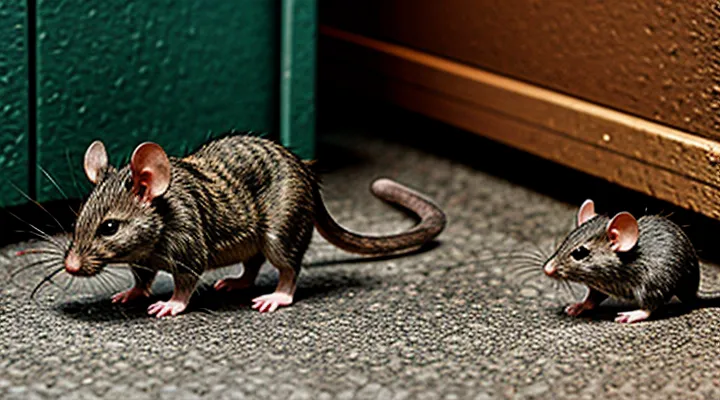
Introduction
Biological Significance of Rodent Tails
Evolutionary Adaptations
Rats and mice exhibit distinct tail morphologies that reflect divergent evolutionary pressures. Comparative analysis reveals variations in length, vertebral count, musculature, and integumentary structures, each contributing to species‑specific ecological performance.
- Tail length: rats possess longer tails (up to 30 cm) relative to body size, enhancing balance during arboreal excursions; mice display shorter tails (10–15 cm), favoring maneuverability in confined burrows.
- Vertebral architecture: rats contain 40–45 caudal vertebrae, providing greater flexibility for rapid directional changes; mice have 30–35 vertebrae, resulting in a stiffer tail that supports substrate anchoring.
- Muscular development: rat tail muscles are hypertrophied, enabling active propulsion and climbing; mouse tail muscles are reduced, serving primarily as a passive stabilizer.
- Sensory follicles: both species feature vibrissae, yet rat vibrissae are denser, improving tactile detection of aerial predators; mouse vibrissae are sparser, sufficient for ground‑level navigation.
- Fat deposition: rat tails store appreciable subcutaneous fat, offering an energy reserve during food scarcity; mouse tails contain minimal fat, reflecting a strategy of rapid turnover and reduced predation risk.
These adaptations align with each species’ habitat preferences. Rats, occupying open or semi‑arboreal environments, rely on elongated, flexible tails for locomotor agility and thermoregulatory surface area. Mice, confined to subterranean or densely vegetated niches, benefit from compact, sturdy tails that aid in spatial orientation and predator evasion. The structural divergence underscores how tail morphology evolves in response to locomotor demands, thermoregulatory needs, and predator‑avoidance strategies.
Role in Locomotion and Balance
The tails of rats and mice differ markedly in length, musculature, and vertebral count, producing distinct mechanical properties. Rats possess longer, more flexible tails with a higher number of caudal vertebrae, while mice exhibit shorter, stiffer tails with fewer segments. These morphological variations translate directly into functional performance during movement.
During rapid locomotion, the tail acts as a dynamic stabilizer. In rats, the extended, articulated tail generates torque that offsets angular momentum generated by the hind limbs, allowing tighter turns and higher speeds on narrow surfaces. Mice rely on a compact tail that provides limited torque but offers a rigid lever for thrust during short bursts of movement, enhancing acceleration in confined spaces.
Balance maintenance involves both mechanical and sensory contributions. The tail’s musculature supplies continuous low‑frequency adjustments that correct postural sway, especially when animals navigate uneven terrain. Cutaneous receptors distributed along the tail surface relay tactile information to the central nervous system, informing corrective limb placement and supporting equilibrium during vertical climbs or suspensions.
Key functional aspects:
- Torque generation for directional control (more pronounced in rats)
- Low‑frequency postural corrections via tail musculature
- Tactile feedback from dorsal and ventral skin receptors
- Lever effect for thrust during rapid acceleration (dominant in mice)
General Morphology
External Characteristics
Fur and Scales
The tail surfaces of rats and mice are covered by two distinct integumentary elements: hair follicles producing fur and epidermal scales that protect the underlying tissue.
In rats, the dorsal tail surface bears a dense coat of coarse guard hairs interspersed with fine underfur. Hair length averages 5–7 mm, with a gradual taper toward the tip. Ventral fur is sparser, allowing greater exposure of the underlying scale plates. Coloration follows the body pelage, ranging from brown to gray, and exhibits minimal regional variation.
Mice display a finer, more uniform fur layer. Guard hairs measure 3–4 mm, while underfur contributes to a plush texture. The fur density is slightly lower than that of rats, particularly on the tail’s distal segment, where hair coverage becomes patchy. Ventral scales are more prominently visible, reflecting a reduced protective hair layer.
Both species possess keratinized scales arranged in overlapping rows along the tail’s ventral aspect. In rats, scale rows number 6–8 per centimeter, each scale measuring 0.2–0.3 mm in length, forming a robust shield against abrasion. Mice exhibit 8–10 rows per centimeter, with smaller individual scales (0.1–0.2 mm), providing flexibility while maintaining protective function.
Key comparative points:
- Fur density: rat > mouse.
- Guard hair length: rat > mouse.
- Scale row count (ventral): mouse > rat.
- Scale size: rat > mouse.
These structural differences influence tactile sensitivity, thermoregulation, and resistance to mechanical stress in each rodent’s tail.
Length and Diameter Variations
Rats and mice exhibit distinct tail dimensions that reflect species‑specific functional demands. Average rat tail length ranges from 18 cm to 25 cm, whereas mouse tails typically measure 7 cm to 12 cm. This disparity corresponds to a proportional scaling of overall body size, with rat tails representing approximately 30 % of body length and mouse tails about 20 %.
Diameter measurements further differentiate the two taxa. Rat tail diameters average 4 mm to 6 mm at the base, tapering to 2 mm near the tip. Mouse tails display a narrower profile, with basal diameters of 2 mm to 3 mm and tip diameters below 1 mm. The reduction in cross‑sectional area in mice contributes to enhanced flexibility and reduced thermal loss.
Key quantitative contrasts:
- Length: rat 18–25 cm; mouse 7–12 cm
- Basal diameter: rat 4–6 mm; mouse 2–3 mm
- Tip diameter: rat ≈2 mm; mouse <1 mm
- Length‑to‑diameter ratio: rat ≈4:1; mouse ≈6:1
These measurements underline divergent morphological strategies: rats prioritize support and locomotor stability, while mice emphasize maneuverability and thermoregulation.
Internal Structure
Vertebrae and Caudal Bones
The caudal region of both rodents consists of a series of vertebrae that transition into reduced, fused elements forming the tail tip. In rats, the lumbar vertebrae are elongated, followed by approximately 55 caudal vertebrae. The first caudal vertebra (C1) retains a well‑developed centrum and neural arch, while successive vertebrae show progressive reduction in transverse processes and laminae. The terminal caudal segment comprises several small, cartilaginous bones that coalesce into a compact tip.
Mice possess a shorter lumbar series and roughly 40 caudal vertebrae. Their C1 vertebra exhibits a proportionally smaller centrum compared with the rat, and the neural arch is less robust. As the series progresses, vertebrae become increasingly gracile, with diminished transverse processes. The distal caudal bones are fewer and more tightly fused, producing a less flexible tail tip.
Key structural contrasts:
- Vertebral count: rats ≈ 55 caudal vertebrae; mice ≈ 40.
- Centrum size: rat caudal centra remain larger through the mid‑tail; mouse centra reduce earlier.
- Neural arch robustness: rat arches maintain thickness to the distal tail; mouse arches thin rapidly.
- Distal bone fusion: rat tail tip contains multiple fused cartilaginous elements; mouse tip shows a single consolidated bone mass.
These differences reflect species‑specific adaptations in tail length, flexibility, and mechanical support.
Tendons and Ligaments
The caudal appendage of laboratory rodents offers a compact system for examining connective‑tissue architecture. Both rat and mouse tails contain serially arranged vertebrae, each linked by a network of tendons and ligaments that transmit muscular forces and stabilize the skeletal column.
Tendons in the tail consist of densely packed collagen type I fibers aligned parallel to the direction of force. In rats, tendon cross‑sectional area averages 0.42 mm², whereas mouse tendons measure approximately 0.31 mm². The larger tendon mass in rats correlates with higher tensile strength, measured at 12 MPa versus 9 MPa in mice. Tendon insertion points on the caudal vertebrae are positioned more proximally in rats, providing a longer moment arm for tail flick movements.
Ligaments connect adjacent vertebrae and the musculotendinous complex to the vertebral processes. They are composed of a mixture of collagen types I and III, interspersed with elastin fibers that confer limited extensibility. Rat intervertebral ligaments display a mean thickness of 0.18 mm, while mouse counterparts average 0.12 mm. The elastic fiber proportion is higher in mice (≈15 % of ligament volume) than in rats (≈9 %), resulting in greater flexibility during rapid tail retraction.
Key comparative observations:
- Tendon cross‑section: rat > mouse
- Tensile strength: rat ≈ 12 MPa, mouse ≈ 9 MPa
- Ligament thickness: rat > mouse
- Elastic fiber content: mouse > rat
These structural distinctions reflect species‑specific adaptations in tail function, with rats favoring force generation and mice emphasizing agility.
Rat Tail Structure
Unique Features of Rat Tails
Musculature and Flexibility
The tails of rats and mice exhibit distinct muscular architectures that determine their functional flexibility. Both species possess epaxial and hypaxial muscle layers that surround the caudal vertebrae, yet the relative development of these layers differs markedly.
- Epaxial muscles (longissimus caudalis, iliocostalis caudalis) are more robust in rats, providing greater dorsal tension and enabling stronger upward bends.
- Hypaxial muscles (pubococcygeus, coccygeus) are proportionally larger in mice, supporting enhanced ventral curvature.
- Intersegmental muscles (transversospinalis caudalis) show a higher fiber density in rats, contributing to finer segmental control.
Flexibility derives from vertebral articulation, intervertebral joint morphology, and the distribution of connective tissue. Rat caudal vertebrae display larger intervertebral discs and more pronounced transverse processes, allowing a broader range of lateral and torsional motion. Mouse vertebrae, being shorter and more numerous relative to tail length, permit rapid, high‑frequency undulations but limit extreme angular displacement.
Overall, rat tails favor strength and extensive curvature, while mouse tails prioritize rapid, low‑amplitude movements. The muscular and skeletal variations directly shape each species’ tail maneuverability.
Blood Supply and Thermoregulation
The caudal arteries of rats and mice originate from the abdominal aorta and descend along the ventral surface of the tail. In both species the main artery bifurcates into paired dorsal branches that supply the skin and underlying musculature. Rats possess a larger caliber main caudal artery, providing higher volumetric flow, whereas mice exhibit a narrower vessel with a proportionally greater number of secondary arterioles. Venous drainage follows a parallel pattern, with the caudal vein collecting blood from the dorsal branches and returning it to the inferior vena cava. The venous plexus in rats is more extensive, supporting greater capacity for blood storage during thermoregulatory adjustments.
Thermoregulation relies on precise control of tail blood flow. Both rodents employ sympathetic innervation to induce vasoconstriction, reducing heat loss when ambient temperature falls. Conversely, vasodilation increases cutaneous blood flow, facilitating heat dissipation during warm conditions. Specific differences include:
- Rats: larger surface area and thicker tail skin allow more efficient heat exchange; vasomotor responses produce rapid temperature shifts.
- Mice: higher density of arteriovenous anastomoses enables fine‑tuned regulation despite smaller tail size; heat loss is moderated by a relatively thicker subcutaneous fat layer.
Countercurrent heat exchange occurs in the vascular bundles of each tail, with arterial blood delivering warmth to venous blood returning from the extremities. This mechanism conserves core temperature while permitting peripheral cooling. The structural arrangement of arterial and venous channels is more pronounced in rats, providing a stronger gradient for heat transfer; mice compensate with increased metabolic activity in tail musculature.
Overall, the vascular architecture and thermoregulatory control of the rat tail emphasize high flow capacity and robust heat exchange, whereas the mouse tail relies on dense microvascular networks and metabolic adjustments to achieve comparable thermal stability.
Sensory Receptors
Tactile Hairs and Nerve Endings
Tactile hairs covering the caudal surface of rodents are specialized mechanoreceptors that detect substrate contact and airflow. In rats, these hairs are longer, densely packed, and often form a distinct fringe near the tail tip, whereas mice exhibit shorter, more sparsely arranged hairs that lack a pronounced terminal fringe. Both species possess follicle‑sheathed hair cells innervated by low‑threshold mechanoreceptive fibers, yet the rat’s follicles show a higher proportion of lanceolate endings, indicating greater sensitivity to fine tactile stimuli.
Nerve endings embedded in the tail skin comprise Merkel cell complexes, Ruffini endings, and free nerve endings. Rat tails contain a higher density of Merkel complexes per square millimeter, providing precise static pressure detection, while mouse tails display a relatively greater proportion of free nerve endings, facilitating rapid nociceptive signaling. The distribution of Ruffini endings, responsible for skin stretch perception, remains comparable between the two species, concentrated along the lateral margins of the tail.
Key structural distinctions:
- Hair length: rat > mouse
- Hair density: rat > mouse, especially at distal segment
- Merkel complex density: rat > mouse
- Free nerve ending prevalence: mouse > rat
These differences reflect divergent ecological demands, with the rat’s tail optimized for detailed surface exploration and the mouse’s tail favoring rapid defensive responses.
Mouse Tail Structure
Unique Features of Mouse Tails
Bone Density and Cartilage
The caudal skeleton of rodents exhibits pronounced interspecific variation in mineralization and cartilage composition. In rats, tail vertebrae display higher ash content, indicating greater bone density, while mice possess lighter vertebrae with reduced mineral deposition. Quantitative densitometry consistently records rat tail bone mineral density (BMD) values 15‑20 % above those measured in mice of comparable age and sex.
Cartilage layers differ in thickness and proteoglycan concentration. Rat tail intervertebral discs contain a nucleus pulposus with elevated glycosaminoglycan content, providing enhanced compressive resistance. Mouse discs show a thinner annulus fibrosus, and the cartilage endplates exhibit lower collagen type II expression. These histological distinctions correlate with functional demands: rat tails, used for balance and locomotion, require stiffer support, whereas mouse tails, primarily sensory, tolerate greater flexibility.
Key comparative points:
- Bone density: rat > mouse; measured by dual‑energy X‑ray absorptiometry.
- Vertebral mass: rat vertebrae ≈ 30 % heavier than mouse counterparts.
- Cartilage thickness: rat intervertebral cartilage ≈ 1.2 mm; mouse ≈ 0.8 mm.
- Proteoglycan level: rat nucleus pulposus glycosaminoglycan concentration ≈ 25 % higher.
- Collagen type II: rat endplates exhibit stronger immunoreactivity than mouse endplates.
These metrics establish a clear structural hierarchy, reflecting divergent mechanical requirements of the two species’ caudal appendages.
Role in Social Communication
Rats and mice exhibit distinct tail morphologies that influence their social signaling. The rat tail is comparatively longer and more muscular, allowing pronounced lateral movements, while the mouse tail is shorter and more flexible, producing subtle twitches.
Tail movements convey information about dominance, stress, and reproductive status. Rapid, high‑amplitude sweeps indicate aggression or territorial defense, whereas low‑frequency vibrations accompany grooming or affiliative interactions. These motor patterns are detected by conspecifics through mechanoreceptors on the skin and whisker system, triggering appropriate behavioral responses.
Key communication channels mediated by the tail include:
- Visual display: contrast between dark dorsal surface and lighter ventral side creates a moving visual cue during locomotion.
- Tactile signaling: vibration frequency and amplitude transmitted through the substrate provide immediate feedback during close contact.
- Chemical marking: urine and scent glands located near the tail base release pheromones that spread during tail brushing against objects.
Differences in tail length and musculature modify the intensity and range of each channel. Rats, with greater reach, generate stronger visual and tactile signals over larger distances, whereas mice rely more on localized chemical cues. Understanding these structural variations clarifies how tail morphology shapes intra‑species communication and influences group dynamics.
Adaptive Differences
Predation Avoidance Mechanisms
Rats and mice exhibit distinct tail morphologies that influence their strategies for evading predators. The rat tail is typically thicker, longer relative to body size, and covered with dense fur, whereas the mouse tail is slender, proportionally shorter, and possesses a higher density of sensory hairs. These structural variations affect balance, agility, and tactile feedback during escape responses.
The rat’s robust tail functions as a counterbalance during rapid locomotion, allowing abrupt directional changes without loss of stability. Its muscular sheath provides limited contractile ability, enabling subtle adjustments that reduce exposure to predators. In contrast, the mouse’s lightweight tail contributes minimally to balance but excels in sensory detection; the abundant vibrissae transmit vibrations and airflow changes, alerting the animal to approaching threats.
Key predation avoidance mechanisms linked to tail structure include:
- Rapid directional pivot facilitated by the rat’s mass distribution and muscular tail control.
- Immediate detection of predator‑generated air currents via mouse tail vibrissae.
- Autotomy potential in some mouse species, where tail segments detach to distract predators.
- Enhanced grip during climbing, afforded by the rat’s fur‑covered tail, allowing escape into vertical refuges.
- Temperature regulation through vasodilation in the rat tail, preventing heat‑induced fatigue during prolonged chases.
These mechanisms illustrate how variations in tail anatomy directly contribute to survival strategies. Understanding the functional relationship between tail design and predator evasion informs broader studies of rodent ecology and adaptive evolution.
Comparative Analysis
Similarities in Tail Anatomy
Shared Evolutionary Heritage
The tails of rats and mice exhibit a common anatomical framework that reflects their shared ancestry within the Muridae family. Both species possess a vertebral column composed of caudal vertebrae, a muscular sheath, and a dense network of peripheral nerves, indicating a conserved developmental program inherited from a common rodent ancestor.
Key structural similarities include:
- Vertebral count: The number of caudal vertebrae falls within a narrow range (approximately 30–35) for both taxa, with minor species‑specific variation.
- Musculature: Dorsal and ventral tail muscles originate from the same embryonic myotomes, providing comparable flexion and extension capabilities.
- Innervation: The caudal plexus supplies analogous sensory and motor fibers, supporting similar reflexive responses to tactile stimuli.
- Dermatological features: Epidermal and subdermal layers contain comparable keratinized scales and vascular patterns, facilitating temperature regulation.
Genetic analyses reveal conserved expression of Hox gene clusters (Hox10–Hox13) governing caudal development, reinforcing the notion of a unified evolutionary pathway. Comparative fossil records show that early murine ancestors possessed tail morphologies indistinguishable from those observed in contemporary rats and mice, confirming that the present structures are derived rather than independently acquired.
The convergence of morphological, physiological, and genetic evidence underscores a robust evolutionary heritage that shapes tail architecture across these closely related rodents.
Functional Analogies
Rat and mouse tails exhibit a set of functional analogies that persist across species despite measurable differences in length, diameter, and vertebral count. Both structures serve as adaptive extensions of the axial skeleton, providing comparable contributions to locomotor efficiency and environmental interaction.
- Locomotion: caudal muscles generate propulsion during rapid sprints and facilitate precise directional changes.
- Balance: proprioceptive feedback from the tail stabilizes the body during climbing and aerial maneuvers.
- Thermoregulation: peripheral vasculature adjusts blood flow to dissipate or conserve heat.
- Communication: tail position and movement convey social signals in conspecific encounters.
- Sensory perception: mechanoreceptors detect airflow and substrate vibrations, enhancing spatial awareness.
Muscular organization follows a similar pattern of dorsal and ventral groups, enabling coordinated flexion and extension. Vascular networks display comparable branching hierarchies that support rapid temperature modulation. Peripheral nerves distribute across the dermal surface in a dense lattice, preserving tactile acuity.
These convergent features illustrate evolutionary pressure toward efficient tail utilization. Functional outcomes align closely, indicating that structural variation does not impede the preservation of core physiological roles across the two rodent models.
Key Structural Differences
Vertebral Count and Proportions
Rats possess a longer caudal series than mice, with typical counts ranging from 50 to 55 vertebrae in laboratory strains, whereas mice usually exhibit 38 to 44. The variation reflects species‑specific developmental patterns and influences overall tail length.
Key proportional metrics differ markedly:
- Average vertebral length: rat caudal vertebrae measure 1.2 mm each; mouse vertebrae average 0.9 mm.
- Total tail length: rats achieve 12–15 cm, mice attain 7–9 cm.
- Vertebral width‑to‑height ratio: rats maintain a ratio near 1.4, mice near 1.2, indicating a slightly more robust cross‑section in rats.
These figures demonstrate that rat tails contain more, longer vertebrae, resulting in greater elongation and a modestly higher cross‑sectional robustness compared with mouse tails.
Vascularization Patterns
The vascular network of the rodent tail provides the primary conduit for blood supply to distal tissues and supports thermoregulation. In rats, the main axial artery runs centrally along the vertebral column, branching into paired lateral vessels that supply the skin and subcutaneous musculature. These lateral branches form a dense capillary plexus beneath the epidermis, enabling rapid heat exchange. Venous return follows a mirrored pattern, with paired veins accompanying the arteries and a superficial venous plexus that drains into the caudal vena cava.
Mice exhibit a similar axial artery, but its diameter is proportionally smaller relative to body size. Lateral vessels are fewer and more spaced, resulting in a sparser capillary mesh. The reduced capillary density corresponds with the mouse tail’s limited role in heat dissipation. Venous channels are less extensive, terminating in a single dorsal vein that merges with the caudal vein.
Key comparative points:
- Axial artery size: rat > mouse (relative to body mass).
- Lateral branch density: rat exhibits higher branching frequency.
- Capillary plexus: rat possesses a denser subdermal network.
- Venous architecture: rat has dual dorsal veins; mouse relies on a single dorsal vein.
These differences reflect species-specific adaptations to environmental temperature regulation and locomotor demands, while maintaining the fundamental axial vascular scaffold common to both taxa.
Functional Implications of Structural Variations
Locomotion and Agility
Climbing and Gripping Capabilities
The rat tail exhibits a cylindrical vertebral column surrounded by dense, loosely arranged musculature that permits limited prehension. Cutaneous scales are reduced, allowing the skin to stretch over the tail tip and create a modest friction surface. In contrast, the mouse tail possesses a higher vertebral count relative to length, a more pronounced dorsal musculature, and a fine, flexible epidermis that forms a tighter grip when wrapped around small-diameter objects. These anatomical differences translate into distinct functional outcomes for arboreal navigation.
- Rat tail: supports balance on broad surfaces; achieves occasional grasp on twigs up to 2 mm in diameter; generates friction through skin elasticity rather than active contraction.
- Mouse tail: enables sustained attachment to narrow branches and cords as thin as 0.5 mm; employs coordinated dorsal and ventral muscle activation for active wrapping; provides tactile feedback that enhances climbing precision.
Jumping and Landing Support
The caudal appendages of rats and mice differ markedly in length, musculature, and skeletal composition, producing distinct mechanical contributions during locomotor events that involve vertical displacement. Rat tails extend up to 15 cm, contain a higher proportion of vertebral segments with robust intervertebral ligaments, and exhibit well‑developed axial muscles. Mouse tails average 7 cm, consist of fewer vertebrae, and possess comparatively weaker musculature.
During a jump, the longer, sturdier rat tail functions as a counterbalance, generating torque that stabilizes the body’s pitch and yaw axes. Muscular contraction along the dorsal and ventral surfaces produces a controlled swing that offsets forward momentum, allowing precise launch angles. In contrast, the shorter mouse tail provides limited torque; stability relies more on hind‑limb thrust and trunk adjustments, with the tail contributing modestly to angular control.
Landing demands rapid deceleration and shock absorption. The rat tail’s extensive vertebral column distributes impact forces across multiple joints, reducing peak stress on the pelvis and lumbar region. Elastic recoil of the tail muscles stores kinetic energy and releases it to cushion the body. The mouse tail, due to its reduced size, absorbs less energy; the primary shock‑mitigating mechanisms involve flexion of the hind limbs and compression of the intervertebral discs in the lumbar spine.
Key comparative points:
- Length: rat ≈ 15 cm; mouse ≈ 7 cm.
- Vertebral count: rat > mouse, providing greater structural rigidity.
- Muscular development: rat tail muscles exhibit higher cross‑sectional area, enhancing torque generation.
- Functional outcome: rat tail contributes significantly to both launch stability and landing damping; mouse tail offers limited assistance, with reliance on limb dynamics.
Overall, tail morphology directly influences the biomechanical strategies employed by each species to execute and absorb vertical movements, reflecting divergent evolutionary adaptations for aerial maneuvers.
Thermoregulation
Heat Dissipation Mechanisms
Rats and mice possess tail anatomies that facilitate thermoregulation through distinct vascular and integumentary adaptations. The rat tail exhibits a dense network of longitudinal arteries and veins, allowing rapid convective heat loss when the animal exposes the extremity to cooler air. Muscular sheaths surrounding the vascular bundles compress during tail extension, enhancing blood flow and accelerating heat transfer from core to surface.
The mouse tail, comparatively slender, relies on a higher surface‑to‑volume ratio and a thin epidermal layer to dissipate heat. A superficial plexus of capillaries lies close to the skin, enabling efficient radiative cooling. The reduced subcutaneous fat layer minimizes insulation, allowing ambient temperatures to influence tail temperature directly.
Key mechanisms underlying tail‑mediated heat dissipation include:
- Counter‑current heat exchange between arterial and venous vessels.
- Vasodilation of peripheral vessels in response to elevated core temperature.
- Increased blood flow driven by sympathetic nervous system activation.
- Enhanced evaporative cooling through sweat gland activity in the distal skin.
Structural differences, such as the rat’s larger diameter and thicker muscular envelope versus the mouse’s narrow, lightly insulated tail, dictate the relative contribution of each mechanism. The rat’s design supports greater convective loss, while the mouse’s morphology favors radiative and evaporative pathways.
Cold Weather Adaptations
Rats and mice exhibit distinct tail modifications that enable survival in low‑temperature environments. The rodent tail functions as a thermoregulatory organ; its vascular and integumentary features differ between the two species, reflecting divergent evolutionary pressures.
In rats, the tail surface is covered by dense fur and a thick layer of subcutaneous fat. These tissues reduce heat loss by providing insulation and limiting convective exchange with cold air. The arterial network runs close to the skin, allowing selective vasoconstriction that conserves core temperature while still permitting occasional peripheral blood flow for heat dissipation when ambient conditions rise.
Mice display a comparatively thinner fur coat on the tail, but possess a higher density of arteriovenous anastomoses. This arrangement facilitates rapid modulation of blood flow, enabling swift adjustments to sudden temperature drops. The epidermis of mouse tails contains a higher concentration of melanized cells, which may increase absorption of residual solar radiation during brief warm periods, supplementing metabolic heat production.
Key structural differences influencing cold adaptation:
- Insulation thickness: rat tail fur and fat > mouse tail fur and fat.
- Vascular control: rat arteries favor gradual constriction; mouse anastomoses allow rapid flow changes.
- Pigmentation: mouse tail epidermis exhibits greater melanin content; rat tail shows less.
- Surface area-to‑volume ratio: mouse tail is proportionally longer and slimmer, enhancing heat exchange when needed.
These anatomical variations illustrate how each species balances the need to retain warmth with the capacity for rapid heat release, optimizing tail function for cold climates.
Sensory Perception and Environment Interaction
Exploration and Navigation
The tails of rodents serve as essential sensory extensions that facilitate spatial awareness during locomotion. Mus musculus and Rattus norvegicus exhibit distinct morphological traits that influence how each species explores and navigates complex environments.
Rats possess longer, more robust tails with a higher density of mechanoreceptors along the dorsal surface. These receptors detect subtle airflow changes and surface textures, providing continuous feedback that guides rapid, agile movement across uneven terrain. The increased length enhances reach, allowing rats to assess gaps and obstacles before committing to a step, thereby reducing the risk of falls.
Mice display shorter, more flexible tails with a greater proportion of vibrissal-like hairs interspersed among the skin. The reduced length limits reach but improves maneuverability in confined spaces such as burrows or dense vegetation. The hair clusters amplify tactile signals, supporting precise adjustments during slow, exploratory foraging.
Key functional implications:
- Reach versus precision: Longer rat tails extend detection radius; shorter mouse tails favor fine-scale adjustments.
- Mechanical resilience: Rat tails exhibit thicker musculature, supporting weight-bearing during balance recovery; mouse tails rely on elasticity for rapid directional changes.
- Sensory distribution: Rat tails concentrate mechanoreceptors along the midline; mouse tails distribute them more uniformly, enhancing surface contact detection.
These structural variations dictate divergent navigation strategies. Rats prioritize rapid assessment of large-scale spatial features, while mice emphasize detailed tactile exploration within limited volumes. Understanding these differences informs experimental design in neurobehavioral studies and improves the interpretation of rodent locomotor data.
Predator Detection
Rats and mice possess tails that serve as sensory extensions, enabling rapid detection of approaching predators. The elongated, hair‑covered surface of the rat tail contains a dense array of mechanoreceptors that respond to air currents and vibrations. In contrast, the mouse tail is shorter, with a higher concentration of low‑threshold cutaneous receptors that detect tactile contact at close range.
The structural differences influence predator‑avoidance strategies:
- Length: Rat tails exceed body length, providing an early warning zone for aerial or ground threats; mouse tails offer limited reach but allow precise detection of nearby obstacles.
- Hair density: Rats exhibit thicker, longer guard hairs that amplify airflow disturbances; mice have finer pelage that enhances sensitivity to direct touch.
- Musculature: Rats retain more robust tail musculature, allowing swift repositioning to sample environmental cues; mice rely on subtle muscular adjustments for fine‑scale feedback.
- Neural innervation: Both species display high innervation densities, yet rats allocate a greater proportion of fast‑conducting A‑β fibers to the distal tail, facilitating rapid signal transmission.
These morphological traits determine the latency and reliability of predator detection. Longer, hair‑rich rat tails generate detectable signals earlier, granting a broader reaction window. Mouse tails, optimized for close‑range tactile input, support immediate evasive maneuvers when contact occurs. The comparative anatomy thus reflects divergent evolutionary pressures: rats prioritize early warning over distance, while mice emphasize precise, short‑range threat assessment.
Conclusion and Future Research Directions
Summary of Comparative Findings
Convergent and Divergent Evolution
The rat and mouse tail provide a compact model for examining how similar and distinct evolutionary forces shape homologous structures. Comparative anatomy reveals a shared basic plan—vertebral column, musculature, and integument—yet the details diverge in ways that reflect both parallel adaptation and lineage-specific modification.
Convergent features arise from comparable ecological demands. Both species exhibit:
- Elongated, tapered vertebrae that enhance flexibility for balance and locomotion.
- Dense keratinized scales that reduce friction and protect against abrasion.
- Muscles arranged to permit rapid, coordinated movements during climbing or evasion.
These traits evolved independently to meet similar functional requirements, illustrating parallel solutions to locomotor challenges in open and cluttered habitats.
Divergent characteristics trace separate evolutionary pathways. Notable differences include:
- Vertebral count: rats possess a higher number of caudal vertebrae, extending tail length relative to body size.
- Muscular architecture: mouse tails contain a greater proportion of fast‑twitch fibers, supporting swift flicking motions, whereas rat tails favor endurance fibers for sustained balance.
- Sensory innervation: rats exhibit a denser array of mechanoreceptors along the tail shaft, enhancing tactile feedback for navigation in burrows; mice display a more localized concentration near the tip, aiding precise grip.
Genetic analyses link these morphological variations to differential expression of Hox and Shh pathways during embryogenesis, with regulatory mutations fine‑tuning segment length and muscle fiber composition. Comparative genomics shows conserved coding regions for basic tail development, overlaid by species‑specific enhancer modifications that drive the observed phenotypic divergence.
The dual pattern of similarity and difference underscores the tail’s role as a diagnostic feature for phylogenetic reconstruction and functional inference. Convergent traits confirm selective pressures shared across rodent niches, while divergent traits preserve the evolutionary signature of each lineage, enabling researchers to delineate evolutionary relationships with high resolution.
Potential for Biomedical Research
Regeneration Studies
Regeneration research on the caudal appendages of rodents provides insight into species‑specific repair mechanisms. Comparative analysis of rat and mouse tails reveals distinct morphological and cellular patterns that influence regenerative capacity.
In rats, the distal segment retains a robust blastema, characterized by high proliferative activity of dedifferentiated mesenchymal cells and sustained expression of developmental genes such as Msx1 and Bmp2. The vertebral column exhibits partial resorption, allowing flexible remodeling of the axial skeleton during regrowth. Vascular networks reestablish within 48 hours, supporting nutrient delivery and waste removal.
Mice display limited blastemal formation, with regeneration confined to epidermal and peripheral nerve components. The axial skeleton remains largely intact; osteogenic activity is restricted to periosteal surfaces, resulting in a shortened, cartilaginous tail tip. Angiogenesis proceeds slower, reaching peak density after 72 hours.
Key comparative observations:
- Blastema size: rat > mouse
- Skeletal remodeling: extensive in rat, minimal in mouse
- Gene expression: broader developmental program activation in rat
- Regeneration timeline: faster tissue re‑epithelialization in rat
These differences underscore the importance of intrinsic cellular programs and extracellular matrix composition in shaping regenerative outcomes. Understanding the structural basis of tail repair in these models informs strategies for enhancing mammalian tissue regeneration.
Model for Spinal Cord Injuries
The rat and mouse caudal vertebrae provide a reproducible platform for inducing spinal cord lesions. Their elongated, flexible tails allow precise placement of impactors or compression devices, producing consistent injury parameters across subjects. The vertebral column in this region lacks the thoracic ribs and diaphragm attachment, simplifying surgical access and reducing collateral damage.
Structural differences between the two species influence lesion morphology. Rats possess larger vertebral bodies and a thicker epidural space, permitting higher impact forces before tissue rupture. Mice exhibit smaller, more compact vertebrae, resulting in narrower lesion cores and a higher proportion of spared white matter. These variations affect functional recovery trajectories and must be accounted for when extrapolating results.
Key considerations for employing this model include:
- Selection of species based on desired injury severity and anatomical resolution.
- Calibration of impactor velocity and compression depth to match vertebral dimensions.
- Monitoring of post‑injury locomotor function using standardized gait analysis.
- Histological assessment of lesion volume, axonal preservation, and glial response.
The tail‑based approach enables rapid screening of neuroprotective agents, gene‑therapy vectors, and biomaterial scaffolds. By aligning injury parameters with species‑specific anatomy, researchers obtain data that translate more reliably to larger mammalian models and, ultimately, to clinical applications.