
«The Origin of the Idiom»
«Historical Anecdotes and Nautical Lore»
«Early Maritime Observations»
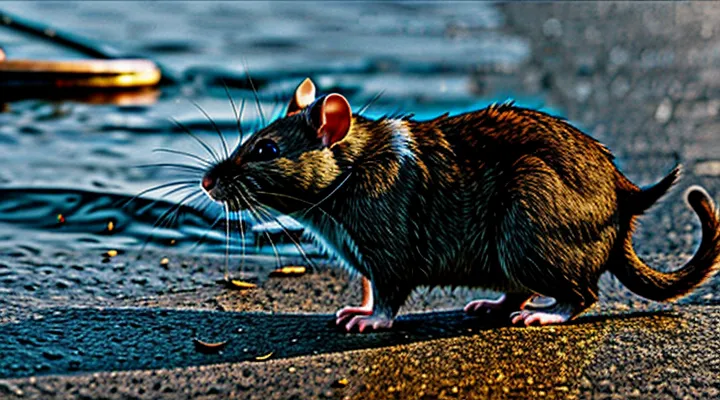
Early ship logs from the 16th to 18th centuries repeatedly record rodents fleeing decks as vessels listed. In a 1625 Dutch merchant diary, the author notes that “the rats scurried toward the open sea when the hull began to leak.” A British naval captain’s 1743 report describes a sudden surge of rats abandoning the galley minutes before a storm‑driven collision, interpreting the behavior as an instinctive response to water ingress.
Mariners of the Age of Sail identified several observable cues linked to this phenomenon:
- Rapid increase in rat activity near the waterline when the ship takes on water.
- Collective movement toward any available opening, such as portholes or gun‑ports, shortly before structural failure.
- Audible rustling and squeaking that intensify as the vessel’s stability declines.
These observations informed practical measures on board. Crews began to monitor rodent movement as an informal early‑warning system, assigning lookouts to watch for sudden exoduses. Some captains ordered the sealing of hatchways at the first sign of mass rodent flight, aiming to delay water entry while the crew prepared evacuation procedures.
«Cultural Impact and Figurative Use»
The image of rodents fleeing a sinking vessel has become a persistent cultural shorthand for cowardly abandonment. Literature, cinema, and journalism repeatedly invoke this metaphor to condemn individuals or groups that escape responsibility while others remain in peril. In classic novels such as Moby‑Dick and contemporary news headlines, the phrase “rats leaving the ship” signals a moral judgment without elaboration, relying on a shared symbolic history.
- Early maritime folklore portrayed rats as early indicators of disaster; sailors observed frantic scurrying as a warning sign, reinforcing the association between animal behavior and human foresight.
- 19th‑century political cartoons employed the motif to criticize leaders who abandoned their constituencies during crises, cementing the visual parallel between pest and politician.
- Modern advertising occasionally repurposes the image to suggest product reliability, contrasting the “rat‑like” tendency to abandon with the brand’s steadfastness.
The figurative use extends beyond condemnation. Academic discourse adopts the metaphor to describe systemic failure: scholars speak of “rat‑flight” when institutions retreat from obligations, emphasizing the collective impact of individual desertion. The metaphor’s durability stems from its vividness and its grounding in observable animal behavior, allowing it to traverse languages and eras with minimal reinterpretation.
«Biological and Behavioral Factors»
«Rats' Sensory Acuity»
«Detection of Environmental Changes»
Rats possess acute physiological systems that register fluctuations in air pressure, temperature, and humidity long before human observers detect them. Their whisker receptors, inner ear balance organs, and olfactory bulbs respond to subtle changes in the environment, generating rapid behavioral signals. When a vessel begins to take on water, pressure drops and volatile compounds from rising moisture accumulate; rats interpret these cues as imminent danger and instinctively seek higher ground.
The detection process can be broken down into three observable stages:
- Sensory intake: Whiskers sense minute air‑current alterations; the vestibular apparatus monitors tilt and vibration; olfactory receptors detect increased dampness and chemical signatures of seawater.
- Neurological processing: Sensory data converge in the brainstem, triggering an acute stress response that overrides routine foraging behavior.
- Behavioral output: Immediate locomotion toward escape routes, often climbing ladders, rigging, or decking structures, precedes any crew reaction.
Experimental studies on shipboard rodent populations confirm that escape attempts occur minutes before measurable water ingress, providing a natural early‑warning system. Monitoring rat activity—via motion sensors, infrared cameras, or automated tracking—offers a cost‑effective method to flag hazardous conditions. Integrating such biological indicators with conventional ship diagnostics enhances safety protocols, allowing crews to respond to environmental degradation before structural failure becomes apparent.
«Sensitivity to Vibrations and Water Levels»
Rats abandon a vessel well before it begins to list, driven by acute perception of mechanical and fluid cues. Their vibrissae contain densely packed mechanoreceptors that translate minute hull oscillations into neural signals. Even low‑amplitude tremors, undetectable to humans, produce rapid firing in the trigeminal pathway, prompting immediate locomotor responses.
In addition to vibration detection, rats monitor changes in water pressure. Specialized cutaneous receptors sense slight shifts in hydrostatic load caused by rising water levels. When pressure gradients exceed a narrow threshold, the central nervous system triggers escape behavior. This dual sensory system allows rodents to recognize the onset of flooding long before visible signs appear.
Key physiological elements underpinning this early warning capability:
- Vibrissal mechanoreceptors: high spatial resolution, low activation threshold.
- Cochlear hair cells: detect low‑frequency hull vibrations, complementing whisker input.
- Cutaneous pressure sensors: respond to incremental water depth changes.
- Rapid neural integration: brainstem circuits convert sensory data into swift motor output.
The convergence of these mechanisms explains why rats consistently lead the evacuation of sinking ships, outpacing other species that rely on visual or auditory cues alone.
«Survival Instincts»
«Flight Response to Danger»
Rats exhibit an exceptionally rapid flight response when a vessel begins to submerge. The behavior stems from a combination of sensory detection, neural circuitry, and evolutionary pressure that prioritizes immediate evacuation over other survival strategies.
- Auditory and vibrational cues signal water intrusion; the cochlear and mechanoreceptor pathways transmit alerts within milliseconds.
- The amygdala processes threat intensity, triggering the hypothalamic‑pituitary‑adrenal axis.
- Catecholamine surge accelerates heart rate and muscle readiness, enabling swift locomotion toward escape routes.
The same mechanisms that drive rodents to abandon a capsizing ship also govern their escape from predators and fire. Evolution favored individuals that reacted instantly, because delayed action often resulted in drowning or predation. Consequently, rats possess a lower threshold for initiating flight, a trait observable in maritime incidents where they vacate the deck before human crew members can react.
Comparative studies show that mammals with similar ecological niches—such as mice and shrews—display comparable thresholds, yet rats consistently rank highest in speed and consistency of departure. This pattern confirms that the flight response to imminent danger is a primary determinant of their early exit from sinking vessels.
«Preference for Stable Environments»
Rats exhibit a strong preference for stable environments because their survival strategy depends on predictable shelter, consistent food sources, and minimal exposure to stressors. When a vessel begins to flood, the rapid loss of structural integrity, temperature fluctuations, and increased acoustic disturbances create an environment that deviates sharply from the conditions rats consider safe. Sensory receptors detect changes in humidity, pressure, and vibration, triggering an immediate relocation response.
Key drivers of the preference for stability include:
- Shelter reliability: Rats construct nests in crevices that provide protection from predators and weather. Structural collapse eliminates these refuges.
- Food security: Stored provisions become inaccessible as water inundates compartments, disrupting foraging patterns.
- Physiological homeostasis: Sudden shifts in temperature and humidity impose osmotic stress, impairing thermoregulation.
- Predation risk: Turbulent conditions reduce the ability to detect and evade predators, increasing mortality probability.
Evolutionary pressure has selected individuals that rapidly abandon unstable settings, ensuring that only those capable of preserving the above conditions reproduce. Consequently, the observed tendency of rodents to flee a sinking ship reflects an instinctual avoidance of environmental volatility in favor of the stable habitats that support their reproductive success.
«Social Dynamics within Rat Colonies»
«Collective Behavior in Perilous Situations»
Rats abandon a capsizing vessel almost immediately, often before crew members become aware of the danger. This rapid departure results from a combination of sensory detection, social signaling, and innate risk‑avoidance mechanisms.
When a ship begins to flood, rats sense changes in humidity, temperature, and vibration through their whiskers and skin receptors. The initial individuals that detect the threat emit ultrasonic vocalizations and release stress‑induced pheromones. These cues propagate through the colony, prompting nearby rats to alter their locomotion patterns and seek escape routes. The process unfolds as follows:
- Detection of environmental shift by a few individuals.
- Emission of acoustic and chemical alerts.
- Immediate adjustment of movement speed and direction in conspecifics.
- Coordinated flow toward exits, often using the same pathways.
The collective response mirrors patterns observed in other taxa facing imminent danger. Flocking birds, swarming insects, and herd mammals all exhibit similar cascade effects: a minority perceives risk, communicates it, and the majority follows. The key distinction in rodents lies in the high density of individuals within confined spaces, which accelerates signal transmission and minimizes decision latency.
Understanding rat evacuation provides a baseline for constructing predictive models of crowd behavior under extreme stress. By quantifying trigger thresholds, signal propagation rates, and exit selection criteria, researchers can refine algorithms used in safety engineering, emergency planning, and robotic swarm control. The rodent example demonstrates that, in perilous situations, collective behavior hinges on rapid sensory integration and efficient information sharing rather than individual deliberation.
«Individual Risk Assessment»
Individual risk assessment (IRA) evaluates the probability that a specific organism will encounter a hazardous condition and its capacity to respond. In the case of rodents abandoning a compromised vessel, IRA explains their rapid departure.
Rats possess acute sensory systems that detect changes in water pressure, vibrations, and chemical cues associated with flooding. These inputs generate a high‑risk signal that surpasses the threshold for escape behavior. As a result, the individual risk calculation for each rat reaches a level that triggers immediate flight.
Key elements of the IRA process for rats on a sinking craft:
- Perceptual input: detection of rising water levels, acoustic disturbances, and altered oxygen concentration.
- Risk quantification: integration of sensory data into a neural assessment of imminent threat.
- Decision threshold: a preset value that, when exceeded, initiates escape circuitry.
- Motor execution: rapid activation of locomotor pathways to reach exits or surface.
The collective effect of individual assessments produces a coordinated exodus, observable as the first mass movement away from the vessel. This mechanism contrasts with larger mammals, whose risk thresholds are higher due to greater inertia and different sensory priorities, leading to delayed evacuation.
«Modern Interpretations and Metaphorical Applications»
«Business and Politics»
«Predicting Decline in Organizations»
Predictive analytics identify early warning signs that signal an organization’s impending failure, much like the instinctive flight of small mammals when a vessel begins to submerge. By monitoring specific metrics, leaders can intervene before the collapse becomes irreversible.
Key indicators include:
- Rapid decline in cash flow relative to operating expenses.
- Concentration of critical talent in a single department, reducing redundancy.
- Persistent negative sentiment in internal communications, measured through sentiment‑analysis tools.
- Escalating turnover among mid‑level managers, indicating loss of operational knowledge.
- Diminishing customer acquisition rates despite stable marketing spend.
When these factors converge, the probability of systemic breakdown rises sharply. Effective response requires:
- Immediate reassessment of financial projections to adjust for liquidity constraints.
- Redistribution of essential personnel to create functional overlap.
- Deployment of targeted retention programs for at‑risk managers.
- Realignment of product or service offerings to address shifting market demand.
- Transparent communication with stakeholders to restore confidence.
Organizations that recognize and act upon these patterns avoid the fate of those that abandon ship too late. The ability to forecast decline transforms reactive crisis management into proactive stabilization.
«Identifying Disloyal Associates»
Rats instinctively flee a compromised vessel the moment water reaches their level. Their rapid departure signals structural failure before humans recognize danger. The same principle applies to disloyal associates: they abandon a failing enterprise at the first sign of trouble, often leaving a trail of warning signs.
Key indicators of impending betrayal include:
- Sudden disengagement from critical projects while others remain committed.
- Repeated excuses for missed deadlines, especially when the workload increases.
- Preference for external networking over internal collaboration, suggesting a search for alternative opportunities.
- Concealed communication channels, such as encrypted messaging or private groups, that bypass standard reporting structures.
- Reluctance to assume responsibility for outcomes, paired with frequent blame shifting.
By monitoring these behaviors, managers can isolate individuals whose loyalty deteriorates under pressure, thereby protecting organizational stability before a crisis escalates.
«Psychological Perspectives»
«Human Behavior Under Duress»
When a vessel begins to fill with water, the instinct to escape activates rapidly in organisms that perceive the threat as immediate. Rats demonstrate a near‑instantaneous flight response, abandoning the sinking structure before panic spreads among larger species. This observation provides a baseline for comparing how humans react when faced with sudden, life‑threatening pressure.
Human reactions under extreme stress fall into a limited set of patterns:
- Immediate self‑preservation: individuals who recognize the danger and move toward exits without hesitation.
- Delayed response: people who pause to assess the situation, often resulting in slower evacuation.
- Group dependence: persons who await direction from authority figures or peers before acting.
- Freeze or denial: subjects who remain immobile or refuse to accept the severity of the event.
Psychological research attributes these behaviors to factors such as perceived control, prior training, and the clarity of information available at the moment of crisis. Studies show that clear, actionable instructions increase the proportion of immediate self‑preservation responses, while ambiguous cues elevate reliance on group signals and prolong decision latency. Understanding these mechanisms allows emergency planners to design interventions that encourage prompt, independent evacuation, mirroring the rapid departure observed in smaller mammals.
«The Role of Intuition and Foresight»
Rats possess acute sensory systems that detect minute changes in air pressure, vibrations, and chemical cues. These inputs generate rapid, subconscious assessments of environmental instability, prompting immediate evacuation before a vessel succumbs to water.
- Pressure sensitivity: Specialized mechanoreceptors respond to decreasing atmospheric pressure, signaling imminent breach.
- Vibrational awareness: Whisker‑mediated detection of hull flexing provides early warning of structural failure.
- Chemical detection: Olfactory receptors pick up rising humidity and saline aerosols, indicating water ingress.
The integration of these signals forms an instinctive predictive model. Neural pathways prioritize threat patterns, allowing rats to anticipate danger without deliberative reasoning. This anticipatory capacity reduces response latency, ensuring that individuals abandon the vessel well before visible signs of sinking appear.
Evolutionary pressure has reinforced this predictive behavior. Populations that consistently withdrew from failing structures achieved higher reproductive success, embedding intuitive foresight into the species’ behavioral repertoire. Consequently, rats demonstrate a reliable, preemptive escape strategy that outpaces other organisms reliant on visual confirmation of catastrophe.