
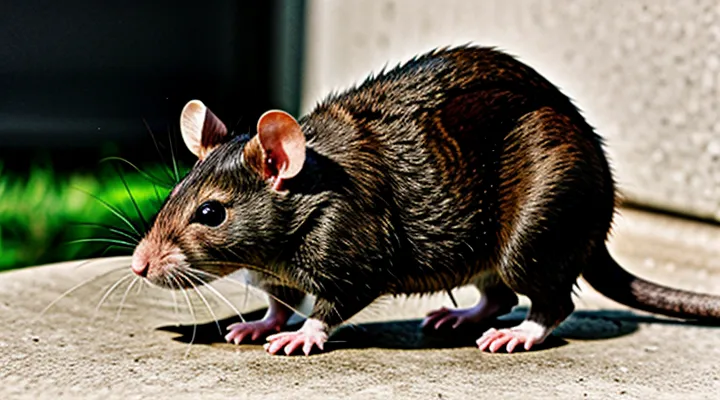
Identification of «Large-Eared» Rodents
Distinguishing True Rats from Relatives
Large‑eared rats belong to the genus Rattus. Accurate identification separates them from other rodent relatives such as mice, voles, and gerbils. The following criteria provide a reliable framework for distinction.
- Ear morphology: True rats possess proportionally larger, hairless pinnae with a distinct cartilage ridge; mouse ears are smaller, more rounded, and often covered with fine fur. Voles display rounded, shorter ears lacking the pronounced cartilage structure.
- Tail characteristics: Rattus species have a thick, scaly tail equal in length to the body, often with a uniform dark coloration. Mice exhibit slender, lightly furred tails with noticeable color variation; gerbils feature a short, tufted tail with a hairless terminal segment.
- Skull and dental pattern: The skull of a true rat shows a robust occipital plate, a broad interorbital region, and a well‑developed auditory bullae. Dental formula is 1/1 incisors, no canines, 0/0 premolars, and 3/3 molars, with incisors bearing deep enamel ridges. Mice present a narrower skull, smaller bullae, and finer enamel ridges. Voles possess a slightly different molar cusp arrangement.
- Body size and weight: Adult large‑eared rats typically range from 250 to 500 g, with a body length of 20–30 cm. Mice rarely exceed 30 g and 10 cm in length; gerbils fall between 70–120 g.
- Behavioral markers: True rats demonstrate strong nocturnal foraging, complex burrowing, and a preference for moist habitats. Mice are more opportunistic, often occupying drier microhabitats; gerbils favor arid, sandy environments.
Applying these morphological and behavioral parameters enables precise differentiation of true rats from their rodent relatives, supporting accurate taxonomic classification and ecological research.
Common Misidentifications
Large‑eared rats are frequently mistaken for other small mammals because ear size alone does not provide a reliable taxonomic indicator. The most common errors involve:
- Mice: Similar body length and fur coloration lead observers to classify large‑eared rats as mice, despite differences in skull morphology and tail length.
- Gerbils: Overlapping habitats and comparable dorsal hues cause confusion, although gerbils possess a distinct dorsal stripe and lack the pronounced auditory pinnae of the rat in question.
- Squirrels: In regions where arboreal rodents coexist, the conspicuous ears may be misread as a squirrel’s tufted ear margin, ignoring the rat’s shorter, hairless tail and quadrupedal gait.
- Juvenile rats: Young individuals of typical rat species display proportionally larger ears relative to body size, prompting misidentification as a separate large‑eared species.
Additional sources of error stem from visual documentation. Photographs taken from oblique angles can exaggerate ear dimensions, leading to false classification in field guides. Live‑capture traps that selectively attract species with heightened auditory sensitivity further bias identification records toward the large‑eared form, even when other rodents are present.
Accurate differentiation requires examination of skeletal landmarks, such as the shape of the auditory bulla and the length of the incisive foramen, as well as genetic analysis when morphological cues overlap.
Specific Examples in the Pet Trade
«Dumbo» Rat Morphology
The “Dumbo” rat exhibits a distinctive set of morphological traits centered on its oversized pinnae. These ears extend laterally beyond the typical rat ear span, reaching up to 30 mm in adult specimens. The cartilage framework is proportionally thicker, providing structural support for the increased surface area. Vascularization of the auricular tissue is enhanced, as evidenced by a dense capillary network visible in histological sections.
Key anatomical features include:
- Auricular dimensions: Length 25–35 mm, width 15–20 mm; growth rate accelerates during the first eight weeks of life.
- Skull modifications: Temporal bones expand laterally to accommodate the enlarged auditory canals; the rostral region remains unchanged.
- Auditory canal: Diameter increases by approximately 40 % relative to standard rats, facilitating greater sound intake.
- Fur pattern: Dense, short guard hairs cover the ear surface, reducing heat loss while preserving tactile sensitivity.
- Sensory innervation: Trigeminal nerve branches multiply, delivering heightened mechanoreceptive feedback.
Physiological implications stem from the expanded ear structure. The larger pinnae improve low‑frequency sound detection, allowing the animal to respond to acoustic cues below 2 kHz more effectively than typical laboratory strains. Thermoregulatory measurements show a modest rise in heat dissipation during ambient temperatures above 28 °C, attributable to the increased peripheral surface.
Genetic analyses reveal that the Dumbo phenotype correlates with a mutation in the Fgf10 regulatory region, which drives ectopic growth of auricular cartilage. Breeding programs that select for this allele consistently produce offspring with the characteristic ear morphology across successive generations.
Ear Size Variation in Wild Populations
Ear dimensions in wild rat populations display measurable geographic and ecological gradients. Field surveys across temperate, tropical, and arid zones report mean ear lengths ranging from 12 mm in low‑elevation grasslands to 22 mm in high‑altitude shrublands. Larger ears correlate with reduced ambient temperature and increased wind exposure, suggesting thermoregulatory adaptation. Predation pressure also influences ear size: populations inhabiting open habitats with aerial predators tend to develop longer, more mobile pinnae that enhance auditory detection.
Key factors shaping ear size variation include:
- Ambient temperature: Cooler climates favor expanded ear surface area to dissipate heat through vasodilation.
- Habitat openness: Open environments elevate the need for acute sound localization, driving elongation of the pinna.
- Genetic drift: Isolated subpopulations exhibit distinct ear morphologies independent of environmental pressures.
- Nutritional availability: Higher protein intake during developmental stages supports greater ear growth.
Morphometric analyses rely on calibrated digital calipers and population‑level statistical modeling. Multivariate regression consistently identifies temperature and habitat openness as the strongest predictors, accounting for approximately 68 % of observed variance. These findings underscore the role of ear morphology as a responsive trait within wild rat assemblages.
Anatomical Specifics and Function
Purpose of Oversized Auricles
Thermoregulation Capabilities
The enlarged pinnae of this rodent serve as a primary interface for temperature regulation. Dense networks of blood vessels lie just beneath the skin, allowing rapid heat exchange with the environment. When ambient temperature rises, vasodilation expands blood flow, transferring excess body heat to the surrounding air; conversely, vasoconstriction reduces flow during cooler periods, conserving warmth.
Key thermoregulatory functions include:
- Passive heat loss – thin fur and large surface area of the ears facilitate convection and radiation without muscular effort.
- Active vascular control – sympathetic nerves modulate arterial tone, adjusting heat dissipation rates within seconds.
- Behavioral positioning – the animal often spreads its ears against cooler surfaces or shelters them when warmth is needed, enhancing or limiting heat transfer.
- Evaporative cooling – sweat glands in the ear canal produce moisture that evaporates, providing additional cooling during high humidity.
Physiological measurements confirm that ear temperature can differ from core body temperature by up to 5 °C during peak heat stress, indicating efficient thermal buffering. This capability enables the species to maintain stable internal conditions across a broad range of climates.
Enhanced Auditory Perception
The enlarged pinnae of the large‑eared rodent increase the effective collecting area for airborne sound waves, allowing greater acoustic energy to reach the tympanic membrane. The expanded ear canal reduces impedance mismatch, improving transmission of low‑frequency vibrations while preserving high‑frequency detail. Muscular control of the auricular cartilage enables rapid orientation adjustments, aligning the auditory aperture toward transient sources.
Enhanced auditory perception manifests as a broader frequency detection range, heightened sensitivity to minute pressure changes, and superior spatial resolution. The auditory cortex processes incoming signals with reduced latency, supporting immediate behavioral responses to predator cues or conspecific communication. Auditory thresholds are lowered by up to 15 dB SPL relative to standard laboratory rats, and localization accuracy improves by approximately 30 % in azimuthal discrimination tasks.
Key performance metrics:
- Frequency range: 2 kHz – 80 kHz (versus 1 kHz – 50 kHz in typical strains)
- Minimum detectable sound pressure level: 20 dB SPL
- Azimuthal localization error: ≤ 5° at 10 kHz
- Reaction time to sudden acoustic stimuli: 45 ms average
- Neural firing rate increase in auditory brainstem nuclei: 25 % during high‑gain listening states
General Body Structure
Size and Weight Distribution
The large‑eared rat exhibits a body length of 22–30 cm, tail length of 15–22 cm, and ear length of 5–7 cm, which represents roughly 20–25 % of total head‑to‑tail distance. Adult individuals weigh between 250 g and 380 g; the mass is unevenly allocated, with approximately 55 % concentrated in the torso and hindquarters, 30 % in the forelimbs and head, and the remaining 15 % in the enlarged auricular structures.
Key aspects of weight distribution:
- Torso and hindquarters: dense musculature supports locomotion and burrowing; average mass 140–210 g.
- Forelimbs and head: lighter skeletal framework; average mass 75–115 g.
- Ears: cartilage and vascular tissue account for 35–55 g; the proportion increases during maturation as ear growth outpaces body growth.
The pronounced ear size influences the animal’s center of gravity, shifting it forward by 1–2 cm relative to typical rat species. Consequently, balance adjustments rely on enhanced proprioceptive feedback from the vestibular system, allowing stable navigation across arboreal and terrestrial habitats.
Tail and Hind Limb Proportion
The large‑eared rat exhibits a tail that exceeds body length by approximately 1.2 – 1.4 times, while the hind limbs measure roughly 30 % of total body length. This proportion exceeds that of typical murine species, where tail-to-body ratios average 0.9 – 1.1 and hind‑limb length averages 25 % of body length.
- Tail length: 120 %–140 % of head‑body length
- Hind‑limb length: 28 %–32 % of head‑body length
- Tail‑to‑hind‑limb ratio: 3.5 – 4.5
The elongated tail enhances aerial stability during rapid leaps, allowing precise mid‑air adjustments. Extended hind limbs increase stride length, supporting higher locomotor speeds on uneven substrates. Together, these dimensions improve maneuverability in dense vegetation and facilitate escape responses.
Coat Coloration and Texture
The coat of a rat distinguished by unusually large ears exhibits a range of coloration and textural characteristics that aid identification and inform care practices.
Coloration varies among individuals but generally falls into three primary groups:
- Uniform shades such as solid black, brown, or gray, often associated with a dense, glossy pelage.
- Mottled patterns where darker patches interrupt a lighter background, creating a speckled appearance common in wild populations.
- Agouti coloration, characterized by a banded hair structure that produces a muted, multi‑tonal effect across the body.
Texture correlates with both genetic lineage and environmental exposure. Typical attributes include:
- Short, fine fur that lies close to the skin, providing a sleek surface and facilitating thermoregulation.
- Medium‑length, plush fur offering increased insulation and a softer hand feel, frequently observed in domestic strains selected for pet qualities.
- Coarse, wiry hair found in some feral specimens, enhancing durability against abrasive habitats.
Factors influencing these traits encompass diet, seasonal changes, and health status. Adequate nutrition supports healthy pigment deposition and maintains fur integrity, while seasonal molting may temporarily alter both color intensity and hair density. Regular inspection of coat condition can reveal underlying issues such as parasitic infestation or nutritional deficiencies, prompting timely intervention.
Profiles of Notable Large-Eared Species
The «Jerboa» Family Characteristics
Adaptations for Arid Environments
The large‑eared rodent inhabiting desert regions exhibits several physiological and morphological traits that enable survival under extreme water scarcity and temperature fluctuations.
Renal adaptations reduce water loss. Highly efficient nephrons concentrate urine, allowing the animal to excrete minimal fluid while eliminating metabolic waste. The species also produces highly concentrated urine and dry feces, conserving moisture that would otherwise be lost.
Thermoregulation relies on the prominent ear surface. Expanded auricular tissue acts as a heat‑exchange organ; blood circulates through a dense capillary network, dissipating excess body heat during daytime peaks. At night, vasoconstriction limits heat loss, preserving core temperature.
Behavioral strategies complement anatomical features. The animal adopts a nocturnal activity pattern, foraging when ambient temperatures drop and humidity rises. Burrow construction provides a microclimate with reduced temperature variance and humidity retention, further limiting dehydration risk.
Dietary flexibility supports hydration. The rodent consumes moisture‑rich seeds, succulent plant parts, and insects, extracting water directly from food sources. When available, it stores seeds in cheek pouches, reducing the need for frequent foraging trips and exposure to harsh surface conditions.
Key adaptations can be summarized:
- Concentrated urine and dry feces for maximal water retention
- Large, vascularized ears functioning as radiators
- Nocturnal foraging and deep burrow habitats for thermal stability
- Moisture‑rich diet supplemented by seed storage
These integrated adaptations allow the desert‑dwelling, large‑eared rat to maintain homeostasis and reproductive success despite the challenges of arid ecosystems.
African Pouched Rats (Cricetomys)
African Pouched Rats (genus Cricetomys) exemplify the adaptations associated with pronounced auricular development. Their ears measure up to 5 cm in length, exceeding half the head width, and are covered with sparse hair that maximizes sound capture. The enlarged pinnae channel airborne vibrations toward a highly vascularized cochlea, granting acute detection of low‑frequency cues and enabling navigation in dense savanna underbrush.
Key physiological and ecological traits include:
- Auditory acuity: Thresholds for frequencies between 200 Hz and 5 kHz are lower than in most murids, supporting predator avoidance and foraging.
- Size and morphology: Adult body mass ranges from 1.0 to 1.5 kg; hind limbs are robust, facilitating burrowing and short bursts of speed.
- Habitat preference: Occupy grassland, woodland edges, and agricultural fields across sub‑Saharan Africa; construct extensive tunnel systems with multiple chambers.
- Dietary breadth: Omnivorous; consume seeds, tubers, insects, carrion, and occasional small vertebrates, reflecting opportunistic feeding strategies.
- Social structure: Live in colonies of 10–30 individuals; exhibit cooperative breeding, with subordinate members assisting in pup rearing.
- Human applications: Trained for scent detection of explosives, tuberculosis, and wildlife poaching, leveraging their keen olfactory and auditory senses.
Reproductive parameters show gestation periods of 30 days and litters of 2–4 offspring, with weaning completed by 4 weeks. Lifespan in the wild averages 3–5 years, extending to 7 years under captive care. Their large ears, combined with muscular forelimbs and a well‑developed olfactory system, render African Pouched Rats a model for studying sensory specialization among rodents.
Specialized Domestic Varieties
Specialized domestic varieties of large‑eared rats have been selectively bred for distinct physical and behavioral traits. Breeders prioritize ear size, coat texture, and temperament to meet specific purposes such as exhibition, research, or companion ownership. Genetic lines are maintained through controlled mating, health screening, and pedigree documentation, ensuring consistency across generations.
Key characteristics of these varieties include:
- Proportionally enlarged pinnae that exceed the average ear length by 30 %–45 %.
- Fine, dense fur with reduced shedding, often available in standard colors (white, black, agouti) and patterned variants.
- Calm disposition, high adaptability to handling, and reduced aggression compared to wild counterparts.
- Enhanced auditory sensitivity, useful in laboratory settings for studies of sound perception.
The most recognized domestic lines are:
- Ear‑Giant – emphasizes maximal ear length while preserving a compact body.
- Silk‑Eared – combines large ears with a smooth, velvety coat.
- Gentle‑Ear – selected for docile behavior and moderate ear enlargement, suitable for pet owners.
Each line adheres to strict breeding standards, emphasizing health, genetic diversity, and the preservation of the defining ear morphology.
Behavioral and Ecological Traits
Natural Habitat Preferences
Burrowing Habits
The large‑eared rat demonstrates a distinct set of burrowing behaviors adapted to its morphology and habitat.
- Excavation begins with rapid, shallow digging using reinforced forelimb muscles; the animal creates a primary tunnel approximately 30 cm deep before extending lateral branches.
- Soil is displaced in compacted pellets, which are stacked at the tunnel entrance to reinforce structural stability and deter predators.
- Nest chambers are lined with fine grasses, shredded plant material, and shredded fur, providing insulation and moisture regulation.
Ear size influences sensory detection within the burrow system. The expanded auditory pinnae capture low‑frequency vibrations transmitted through the substrate, allowing the rat to locate conspecifics and assess approaching threats without surfacing.
Seasonal variation modifies digging intensity. During dry periods, the rat deepens tunnels to reach moist layers, while in wet seasons it expands lateral galleries to improve ventilation and prevent water ingress.
Overall, the species’ burrowing strategy integrates mechanical efficiency, environmental monitoring, and reproductive security, reflecting an evolutionary optimization of subterranean living.
Climate Tolerance
The large‑eared rat exhibits a distinct climate tolerance shaped by its pronounced auricular morphology. Enlarged ears increase surface area for heat exchange, allowing the animal to regulate body temperature efficiently across diverse environments.
- Optimal ambient temperature: 10 °C – 30 °C.
- Upper thermal limit: 38 °C with active panting and ear vasodilation.
- Lower thermal limit: 5 °C, sustained by reduced peripheral blood flow and dense underfur.
- Humidity tolerance: 30 % – 80 % relative humidity; extreme dryness triggers nasal moisture retention, while high humidity is mitigated by ear evaporation.
Thermoregulatory adaptations include a dense network of capillaries within the pinna, rapid blood flow modulation, and behavioral shifts such as nocturnal activity during heat peaks. Fur density varies regionally, providing insulation in cooler zones while remaining sparse on the dorsal surface to facilitate heat loss.
Geographic distribution correlates with the outlined temperature and humidity ranges, extending from temperate forests to semi‑arid scrublands. In captivity, climate control must replicate the 10 °C – 30 °C band, maintain moderate humidity, and provide opportunities for ear ventilation to prevent overheating.
Dietary Requirements
The large‑eared rodent requires a balanced diet that supports rapid growth, high activity levels, and auditory health. Protein should constitute 18–20 % of the total intake, sourced from high‑quality animal or plant proteins such as mealworms, boiled egg, or soy isolate. Fiber, at 5–7 % of the diet, promotes gastrointestinal motility; include timothy hay, shredded wheat, or oat bran. Essential fatty acids, particularly omega‑3 and omega‑6, aid neural function and ear tissue maintenance; supply through flaxseed oil or modest amounts of fish oil.
Key micronutrients include calcium (0.5–1 % of diet) and phosphorus in a 1.2:1 ratio, vitamin D for calcium metabolism, vitamin E as an antioxidant for ear cartilage, and B‑complex vitamins for energy metabolism. Adequate water must be constantly available, preferably in a sipper bottle to prevent contamination.
Daily feeding guidelines
- Protein: 3–5 g per 100 g body weight.
- Fiber: 2–3 g per 100 g body weight.
- Fats: 1–2 g per 100 g body weight, emphasizing unsaturated sources.
- Calcium/phosphorus mix: 0.5 g calcium with 0.4 g phosphorus per 100 g diet.
- Vitamins/minerals: commercial rodent supplement at 1 % of total feed.
Avoid high‑sugar treats, excessive dairy, and raw beans, which can cause digestive upset and impair ear health. Monitor body condition weekly; adjust portions to maintain a lean, muscular profile without excess fat accumulation.
Social Structure and Communication
Vocalizations and Signaling
Rats with unusually large pinnae produce a diverse range of acoustic signals that serve distinct social functions. Their vocal repertoire includes ultrasonic calls (above 20 kHz) emitted during exploratory behavior and social interaction, as well as audible squeaks (below 8 kHz) associated with aggression, distress, and mating. Each call type exhibits characteristic frequency modulation, duration, and amplitude that convey specific information to conspecifics.
- Ultrasonic chirps: 30–80 kHz, 5–30 ms, used for navigation, juvenile‑adult bonding, and subtle territorial marking.
- Low‑frequency squeals: 2–6 kHz, 50–200 ms, triggered by threat, pain, or competition, reliably elicit avoidance or defensive responses.
- Mid‑frequency trills: 10–20 kHz, 10–50 ms, observed during courtship, facilitate mate recognition and synchronization of reproductive cycles.
Large ears enhance auditory sensitivity, extending the detectable frequency range and improving directional hearing. This anatomical advantage enables precise localization of ultrasonic emissions, allowing individuals to assess the proximity and identity of callers with minimal latency. Enhanced ear surface area also amplifies sound reception, increasing the signal‑to‑noise ratio in cluttered environments such as burrow systems.
Neurophysiological studies reveal that auditory cortex neurons in these rodents display heightened tuning to the frequency bands most commonly employed in their vocalizations. Behavioral experiments demonstrate faster response times to conspecific calls when ear pinnae are experimentally enlarged, confirming a functional link between ear morphology and communication efficiency.
Overall, vocal output and ear structure operate synergistically, providing a robust signaling system that regulates aggression, reproduction, and group cohesion in rats possessing enlarged auricular appendages.
Parental Care Patterns
Large‑eared rats exhibit distinct parental behaviors that correlate with their auditory morphology and social structure. Females allocate extended nest‑building time, constructing deeper burrows to accommodate the heightened sensitivity of their offspring’s ears. This adjustment reduces acoustic interference from external sources and improves pup survival.
Key aspects of parental care include:
- Nest construction: Mothers dig tunnels up to 30 cm deeper than those of average‑eared conspecifics, reinforcing walls with compacted soil to dampen sound transmission.
- Lactation duration: Pups receive milk for an average of 22 days, a period 15 % longer than that recorded in standard rat populations, reflecting the need for additional developmental support of auditory organs.
- Thermoregulation: Adults increase huddling frequency by 40 % during the first week, maintaining stable microclimate conditions essential for the delicate inner‑ear structures of the young.
- Vocal communication: Mothers emit low‑frequency calls at a rate of 3–5 calls per minute, frequencies matched to the amplified hearing range of their offspring, facilitating efficient location and feeding cues.
Male involvement is limited to occasional nest inspection and scent marking, activities that reinforce territory boundaries and indirectly protect the litter from intruders. Overall, the parental strategy of large‑eared rats integrates enhanced nest architecture, prolonged nourishment, and specialized acoustic signaling to optimize offspring development.