
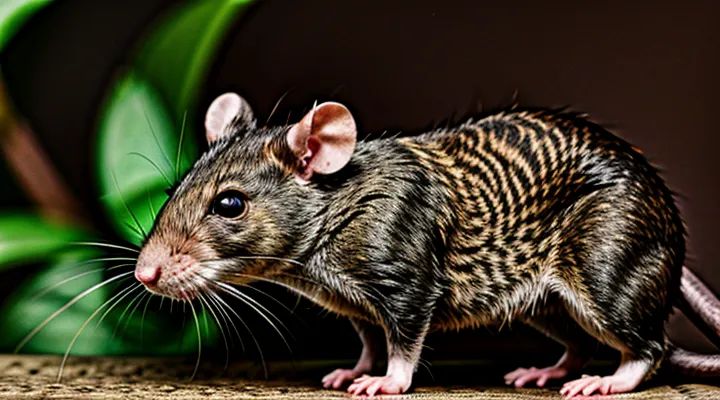
The Genesis of the «EarMouse»
Early Experiments and Public Reaction
Scientific Breakthroughs in Tissue Engineering
The alleged occurrence of a rodent bearing a human ear has sparked intense scrutiny. Recent advances in tissue engineering supply concrete methods that could produce such a construct, thereby moving the claim from speculation toward reproducible science.
- 3‑D bioprinting of heterogeneous tissues now achieves micrometer‑scale placement of human dermal fibroblasts and chondrocytes within biodegradable scaffolds.
- Vascularization techniques employing endothelial progenitor cells and perfusion bioreactors generate functional blood‑vessel networks capable of sustaining grafts larger than previously possible.
- Genome‑editing platforms, particularly CRISPR‑Cas systems, enable precise insertion of human‑specific regulatory elements into rodent genomes, directing ectopic expression of ear‑development genes.
- Decellularized extracellular‑matrix scaffolds derived from human auricular tissue retain native biochemical cues, guiding host cells toward authentic ear morphology when implanted in animal models.
These technologies collectively allow the fabrication of a human‑ear structure on a rat host, providing a testable framework for the disputed observation. Validation requires systematic histological comparison, immunohistochemical profiling of species‑specific markers, and rigorous documentation of surgical protocols. Ethical review boards must assess cross‑species tissue integration, while regulatory agencies should establish guidelines for reporting and reproducibility. Continued refinement of scaffold composition, cell‑source selection, and in‑vivo maturation will determine whether the phenomenon reflects a genuine scientific breakthrough or remains a myth.
Ethical Debates and Media Sensationalism
The claim of a rodent bearing a human ear has sparked intense ethical scrutiny. Researchers argue that any scientific investigation must respect animal welfare standards, obtain proper institutional review board approval, and avoid unnecessary harm. The possibility that the specimen is a hoax or a fabricated image raises additional concerns about the misuse of resources and the credibility of the scientific community.
Media outlets have amplified the story through sensational headlines, selective imagery, and repeated emphasis on rarity. Tactics include:
- Highlighting the “oddity” factor to attract clicks.
- Using emotive language that frames the creature as a monstrous curiosity.
- Omitting verification details that would allow readers to assess authenticity.
These practices generate public interest but blur the line between factual reporting and entertainment. The resulting misinformation can distort public perception of scientific methodology and animal rights, fostering distrust toward legitimate research.
Ethical debates focus on three core issues:
- Consent and dignity: Animals cannot provide consent, placing responsibility on investigators to justify invasive procedures.
- Transparency: Full disclosure of methodology, provenance, and peer review status is required to prevent deceptive narratives.
- Responsibility of journalists: Reporting must balance curiosity with accuracy, avoiding exaggeration that may inflame fear or fascination.
Balancing scientific integrity with public curiosity demands rigorous peer review, clear communication of evidence, and restraint from media that prioritize sensationalism over verification.
Deciphering the «Anomaly»
Biological Mechanisms and Transplant Techniques
Cartilage Scaffolding and Cellular Implantation
Reports of a rodent bearing a human‑like auricle have triggered scientific investigation into the mechanisms that could generate such tissue. Cartilage scaffolding combined with cellular implantation provides a reproducible platform for reconstructing ear morphology in laboratory models.
Cartilage scaffolds are three‑dimensional frameworks fabricated from biocompatible polymers (e.g., polycaprolactone, polylactic acid) or natural matrices (e.g., collagen, chitosan). They preserve pore architecture that supports nutrient diffusion, mechanical stability, and shape fidelity. Scaffold fabrication methods—electrospinning, 3D printing, freeze‑drying—allow precise control of curvature and thickness, matching the dimensions of a human auricle.
Cellular implantation introduces viable chondrocytes or mesenchymal stem cells (MSCs) onto the scaffold. Key steps include:
- Isolation of autologous or allogeneic MSCs.
- Expansion under defined culture conditions.
- Induction of chondrogenic differentiation via growth factors (TGF‑β3, BMP‑2).
- Seeding onto the scaffold at a density that ensures uniform coverage.
- In vivo implantation into a subcutaneous pocket or orthotopic site for maturation.
When applied to the rat model, the scaffold‑cell construct can be positioned on the auricular region of the animal. Over weeks, the implanted cells deposit extracellular matrix, converting the synthetic framework into hyaline cartilage that mirrors human ear shape. This approach enables systematic evaluation of:
- Genetic or epigenetic alterations that might predispose a rat to develop human‑type cartilage.
- The role of ectopic expression of human ear‑specific transcription factors (e.g., HOXA2, TBX1) in directing MSC differentiation.
- Potential environmental triggers (chemical exposure, viral vectors) that could induce ectopic cartilage formation.
Limitations include immune rejection of non‑autologous cells, incomplete vascularization of the scaffold, and species‑specific differences in cartilage turnover. Ethical oversight is required for any manipulation that creates chimeric phenotypes. Nonetheless, cartilage scaffolding with cellular implantation constitutes a rigorous method for probing the biological plausibility of a rodent presenting a human auricle, distinguishing genuine developmental anomaly from myth.
Immunological Considerations
The presence of a human auditory structure on a rodent raises immediate questions about immune compatibility. Human tissue expresses major histocompatibility complex (MHC) molecules distinct from those of rats, which normally trigger robust rejection responses. Any viable integration would require either an immunosuppressive environment or a profound alteration of antigen presentation pathways.
Key immunological factors include:
- MHC disparity: Differences in class I and II molecules provoke cytotoxic T‑cell activation and helper T‑cell–mediated antibody production.
- Innate recognition: Pattern‑recognition receptors detect non‑self proteins, initiating inflammatory cascades that can destroy grafted tissue.
- Tolerance mechanisms: Central and peripheral tolerance must be re‑established to prevent autoimmunity against the hybrid ear, demanding regulatory T‑cell involvement or deletion of reactive clones.
- Microbiome influence: The resident microbial community modulates immune thresholds, potentially affecting graft acceptance or rejection.
Experimental evidence from xenotransplantation demonstrates that successful cross‑species grafts rely on genetic engineering to reduce antigenicity or on chronic pharmacological immunosuppression. In the absence of such interventions, the immune system would likely reject the human ear tissue, leading to necrosis, fibrosis, or systemic inflammatory disease.
Consequently, the immunological barrier constitutes the primary obstacle to the existence of a rat bearing a functional human ear. Overcoming this barrier would necessitate unprecedented manipulation of immune recognition pathways, a requirement not documented in natural or laboratory settings.
The Question of «Humanity»
Defining the Boundaries of Interspecies Grafting
The claim that a rat possesses a human ear raises questions about the limits of interspecies grafting. Scientific literature distinguishes between accidental chimerism, intentional xenotransplantation, and experimental tissue integration. Each category demands separate evaluation of feasibility, risk, and ethical justification.
Feasibility depends on three factors:
- Compatibility of developmental pathways: rodent craniofacial morphogenesis and human otic placode formation must intersect without disrupting organogenesis.
- Immunological tolerance: grafted human tissue must evade innate and adaptive responses, often requiring genetic modification or immunosuppression.
- Structural integration: vascular and neural connections must support functional perfusion and signal transmission.
Regulatory frameworks draw boundaries based on species proximity, purpose of grafting, and potential for transgenerational effects. Guidelines typically prohibit:
- Permanent alteration of germline cells in either species.
- Creation of viable offspring carrying mixed genetic material.
- Deployment of grafts that could enhance sensory capacity beyond natural limits.
Ethical assessment focuses on consent, animal welfare, and societal impact. Human tissue use requires donor approval and adherence to medical ethics, while animal subjects must receive humane treatment and justification proportional to scientific gain.
Current consensus limits interspecies grafting to short‑term, non‑reproductive experiments that clarify developmental mechanisms or disease models. Claims of a rat bearing a fully functional human ear exceed these boundaries and lack corroborating evidence.
Philosophical Implications
The notion of a rodent bearing a human ear forces a re‑examination of species definition. Biological categories rely on genetic continuity; an anatomical hybrid challenges the assumption that phenotype can be neatly mapped onto taxonomy. This prompts philosophers to ask whether species are natural kinds or pragmatic constructs.
The anomaly raises questions about identity and personhood. If a creature possesses a distinctly human organ, does that confer any moral status beyond typical animal considerations? The debate hinges on whether moral relevance follows from shared characteristics or from capacities such as consciousness and self‑awareness.
Epistemologically, reports of such a creature test the limits of empirical verification. The tension between anecdotal testimony and scientific scrutiny illustrates how knowledge claims are evaluated when evidence is scarce. It underscores the role of falsifiability and the necessity of methodological rigor in distinguishing myth from genuine oddity.
Ethically, the prospect of creating or encountering hybrid organisms invites scrutiny of human intervention in nature. It compels a reassessment of the moral responsibilities associated with genetic manipulation, animal welfare, and the preservation of natural boundaries.
Key philosophical implications:
- Redefinition of species as fluid rather than fixed categories.
- Reconsideration of moral criteria tied to anatomical features.
- Illustration of epistemic standards for extraordinary claims.
- Reflection on ethical limits of biotechnological experimentation.
Impact and Future Directions
Advancements in Regenerative Medicine
Organogenesis and Personalized Medicine
The appearance of a rodent bearing a human ear raises questions about developmental pathways and therapeutic prospects. During organogenesis, the ear originates from ectodermal placodes that interact with mesenchymal signals. Disruption of these signaling networks can produce ectopic structures, explaining how cross‑species morphological anomalies might theoretically arise.
Personalized medicine leverages genetic and epigenetic profiling to predict and correct developmental errors. In the case of an atypical auditory organ, the following considerations become relevant:
- Whole‑genome sequencing identifies mutations in genes such as PAX2, EYA1, and SOX9, which govern ear morphogenesis.
- Single‑cell transcriptomics maps cell‑type composition within the abnormal tissue, revealing whether human‑like cell populations are present.
- CRISPR‑based editing offers a route to rectify pathogenic variants in animal models, allowing assessment of phenotype reversibility.
- Pharmacological modulation of pathways like FGF, WNT, and SHH can influence organ patterning during embryonic stages.
These approaches illustrate how a seemingly mythical specimen can serve as a platform for investigating developmental plasticity and for designing individualized interventions. By integrating precise molecular diagnostics with targeted therapies, researchers can transform rare developmental anomalies into opportunities for advancing regenerative strategies and for refining the predictive power of personalized medicine.
Reducing the Need for Donor Organs
The reported case of a rodent bearing a human‑derived ear raises questions about cross‑species tissue compatibility. If the anomaly is genuine, it demonstrates that human cells can survive on a non‑human host, suggesting a potential pathway to reduce reliance on human organ donors.
Research avenues emerging from this observation include:
- Xenogeneic scaffolding: Decellularized animal tissues serve as structural matrices for human cell repopulation, creating functional organs without human donor scarcity.
- Genetic modification of donor animals: Editing immune‑related genes in rodents or larger mammals minimizes rejection risk when human cells are introduced.
- In‑situ bioprinting: Direct deposition of patient‑specific cells onto living animal platforms could generate transplantable tissue with reduced immunogenicity.
Clinical translation demands rigorous validation of safety, long‑term functionality, and ethical compliance. Demonstrated viability of human tissue on a rodent platform would accelerate preclinical trials, offering a scalable alternative to traditional organ procurement.
Addressing Misconceptions and Public Understanding
Distinguishing Fact from Fiction
The claim of a rodent bearing a human ear has circulated in anecdotal reports and internet forums. Verification requires independent documentation, such as peer‑reviewed case studies, high‑resolution photographs with scale references, and histological analysis confirming human tissue architecture. Absence of these elements suggests the story remains unsubstantiated.
Key criteria for assessing authenticity:
- Proven provenance of the specimen (museum accession, veterinary record, or forensic report).
- Detailed morphological description distinguishing normal rodent ear structures from human anatomy.
- Genetic testing that identifies human DNA markers within the tissue sample.
- Reproducibility of findings by multiple, unrelated laboratories.
Historical precedents for similar anomalies include documented cases of interspecies chimeras, which are confirmed through rigorous scientific methods. When such standards are not met, the narrative typically reflects folklore or deliberate fabrication rather than genuine biological occurrence.
Current scientific literature contains no credible evidence supporting the existence of a rat with a human ear. Consequently, the phenomenon should be classified as myth until verifiable data emerge.
The Role of Scientific Communication
Scientific communication determines whether reports of a rodent bearing a human ear are evaluated as credible evidence or dismissed as folklore. Researchers must submit detailed methodology, morphological measurements, and genetic analyses to peer‑reviewed journals, allowing independent verification of the specimen’s origin and classification. Transparent reporting prevents the spread of unverified claims and provides a basis for reproducibility.
Effective dissemination reaches both specialist audiences and the broader public. Press releases and open‑access articles translate complex findings into accessible language, reducing reliance on sensationalist media coverage. By presenting data openly, scientists enable journalists to reference primary sources rather than speculative narratives.
Key functions of scientific communication in this context include:
- Rigorous peer review that filters methodological flaws.
- Open data repositories that allow reanalysis by independent teams.
- Interdisciplinary collaboration between zoologists, geneticists, and ethicists.
- Public engagement initiatives that clarify the evidence hierarchy.