
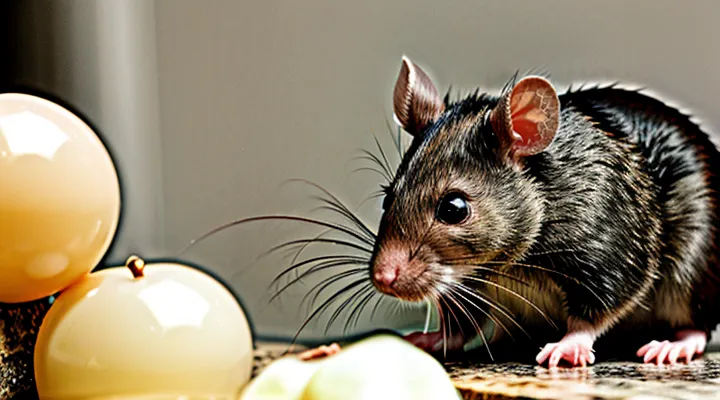
The Unique Anatomy of Rat Incisors
Continuous Growth and Self-Sharpening
Enamel and Dentin Composition
Enamel in rat incisors consists primarily of hydroxyapatite crystals arranged in tightly packed prisms. The crystals are elongated, parallel to the tooth surface, and oriented to resist compressive forces. Minor organic matrix components, chiefly enamelins and amelogenins, occupy intercrystalline spaces and influence crystal growth. Trace amounts of magnesium, carbonate, and fluoride substitute within the hydroxyapatite lattice, modifying solubility and mechanical resilience.
Dentin underlies the enamel layer and is composed of a collagenous framework reinforced by mineral deposits. Type I collagen fibrils form a scaffold that guides the deposition of hydroxyapatite platelets, yielding a composite material with high tensile strength. The dentin matrix contains non‑collagenous proteins such as dentin sialophosphoprotein (DSPP) and osteopontin, which regulate mineralization. Fluid-filled tubules extend from the pulp toward the enamel–dentin junction, providing pathways for nutrient transport and sensory signaling.
Key compositional elements:
- Hydroxyapatite (≈ 96 % of enamel by weight, ≈ 70 % of dentin)
- Type I collagen (≈ 20 % of dentin)
- Enamelins, amelogenins (enamel matrix proteins)
- DSPP, osteopontin (dentin non‑collagenous proteins)
- Magnesium, carbonate, fluoride (ionic substitutions)
The interface between enamel and dentin features a gradual transition in mineral density and protein content, creating a gradient that distributes mechanical stress across the tooth structure. This gradient enhances durability during gnawing activities typical of rodents.
The Role of Iron Pigmentation
Iron deposition within rat dentition produces a distinctive coloration that correlates with specific microstructural adaptations. The pigment accumulates primarily in the enamel matrix and cementum, where ferric ions bind to hydroxyapatite crystals. This binding modifies crystal orientation, resulting in increased hardness and resistance to abrasive wear.
Key functional outcomes of iron pigmentation include:
- Enhanced mineral density in enamel, raising fracture toughness.
- Stabilization of cementum attachment, reducing periodontal ligament strain.
- Altered optical properties that facilitate identification of wear patterns in paleontological specimens.
These effects collectively influence the mechanical performance of rat incisors, supporting the high gnawing frequency characteristic of the species.
Molar Morphology and Function
Cuspal Patterns for Grinding
The grinding surfaces of rat molars exhibit distinct cuspal configurations that optimize the breakdown of fibrous and hard food items. Each molar presents a series of high, sharp cusps arranged in a predictable pattern, allowing efficient shearing and crushing during occlusion.
Key characteristics of the cuspal arrangement include:
- Triangular cusps positioned at the anterior edge, providing initial penetration into plant material.
- Rounded basal cusps situated posteriorly, delivering sustained crushing force.
- Intercuspal ridges that connect adjacent cusps, forming a continuous grinding platform.
- Enamel thickness variation, thicker at cusp tips to resist wear while remaining thinner on slopes to facilitate abrasion.
The combined effect of these features creates a self‑reinforcing grinding surface that maintains functional integrity despite continuous wear, supporting the rat’s high‑throughput chewing demands.
Absence of Canines and Premolars
Rats possess a dental formula of 1/1 incisors, 0/0 canines, 0/0 premolars, and 3/3 molars, indicating a complete lack of canine and premolar teeth. The absence of these tooth types simplifies the occlusal surface to a single incisor pair at the front and three molar pairs at the back.
- Incisors are hypselodont, growing continuously to compensate for constant gnawing wear.
- Molars are brachydont, adapted for grinding seeds, nuts, and plant material.
- The gap left by missing canines and premolars eliminates intermediate crushing surfaces, allowing a direct transition from sharp incisors to broad molars.
Functional consequences stem from this arrangement. The incisor’s chisel-like edge creates a focused bite force that initiates material removal, while the molars provide extensive grinding area for thorough mastication. Jaw musculature aligns with this pattern; the masseter and temporalis generate forces optimized for the two functional zones rather than for intermediate tooth classes.
Evolutionary pressure favors dental reduction in rodents. Eliminating canines and premolars reduces tooth development costs and streamlines the mandible for rapid gnawing cycles. Comparative studies show that species with retained canines exhibit slower incisor wear, whereas rats maintain high gnawing efficiency through the simplified dentition.
Dental health in rats depends on the balance between incisor growth and abrasive wear. Excessive wear on molars can impair grinding, while insufficient incisor wear leads to overgrowth, altering bite alignment. Monitoring wear facets on both tooth groups provides reliable indicators of nutritional adequacy and overall oral condition.
Evolutionary Adaptations for Gnawing
Jaw Mechanics and Muscle Structure
Mandibular Movement
Rats exhibit a highly specialized mandibular apparatus that coordinates dental function with precise skeletal motion. The lower jaw operates through a combination of hinge-like elevation and depression, lateral translation, and subtle rotational adjustments, enabling continuous gnawing without interruption of occlusion.
- Opening: depression of the mandible driven by the digastric and geniohyoid muscles.
- Closing: elevation powered primarily by the masseter, temporalis, and medial pterygoid.
- Transverse shift: lateral movement facilitated by the lateral pterygoid, allowing unilateral grinding.
- Rotation: minute torsional motion at the temporomandibular joint compensates for uneven tooth wear.
Structural integration of the incisors with the mandible ensures that each movement maintains contact between the labial and lingual surfaces. The incisors emerge at a 90‑degree angle to the lower jaw, and their continuous growth is matched by the jaw’s capacity to adjust bite force and direction. Muscle attachment sites on the mandibular ramus are positioned to maximize leverage, while the temporomandibular joint provides a stable yet flexible pivot.
These biomechanical features produce a repetitive chewing cycle that minimizes tooth wear and sustains the high‑frequency gnawing behavior typical of rodents. The coordinated motion supports efficient material processing, from hard seeds to soft plant matter, and preserves the alignment essential for dental health.
Masseter Muscle Development
The masseter muscle in rodents undergoes a coordinated sequence of growth events that directly influence the morphology of the incisors. Early post‑natal proliferation of myogenic precursor cells establishes the primary muscle fiber bundle, which aligns parallel to the mandibular ramus. Subsequent hypertrophy of these fibers coincides with the eruption of the first permanent incisors, providing the mechanical force required for gnawing and maintaining the characteristic curvature of the teeth.
Key developmental milestones include:
- Myoblast migration into the mandibular region (days 1–5 post‑birth).
- Fusion of myoblasts into multinucleated myotubes (days 6–10).
- Fiber elongation and increased contractile protein expression (days 11–21).
- Integration with the temporomandibular joint and innervation by the trigeminal nerve (weeks 3–4).
The maturation of the masseter establishes a functional load on the incisor enamel and dentin, shaping the enamel thickness gradient and the self‑sharpening edge typical of rodent teeth. Disruption of any stage—such as impaired myoblast differentiation or delayed innervation—results in altered bite force, leading to abnormal incisor wear patterns and compromised dental integrity.
Dental Formula and Lifespan Implications
Advantages of Ever-Growing Incisors
Rodent incisors grow continuously throughout life, a trait that eliminates the need for replacement teeth and sustains dental function despite constant abrasion.
- Persistent growth compensates for material loss during gnawing, ensuring a functional biting edge at all times.
- The open-root structure creates a self-sharpening mechanism: wear on the outer enamel exposes softer dentin, producing a chisel‑like profile without external intervention.
- Unlimited length permits adaptation to varied food textures, from soft seeds to hard wood, expanding dietary niches.
- Continuous eruption reduces the risk of periodontal disease, as the tooth surface remains free of stagnant plaque layers that accumulate on static crowns.
- Energy expenditure for tooth maintenance stays low; metabolic resources are allocated to growth rather than periodic remodeling or replacement.
These characteristics give rodents a competitive advantage in environments where food sources fluctuate and mechanical demands on the dentition are high. The ever‑growing incisors support relentless gnawing activity, maintain oral health, and broaden ecological opportunities without reliance on specialized dental repair mechanisms.
Common Dental Problems
Rats possess continuously growing incisors that require precise alignment and regular wear. When this balance is disrupted, several dental disorders become prevalent.
- Overgrown incisors (malocclusion) develop when the grinding surfaces fail to contact properly, leading to sharp, elongated teeth that impede food intake.
- Uneven wear patterns result from dietary inconsistencies or trauma, causing one side of an incisor to dominate, which can create bite misalignment.
- Dental abscesses form around infected pulp chambers, often following fracture or severe wear, producing swelling and pain.
- Tooth loss may occur when severe decay or trauma compromises the structural integrity of the tooth, reducing the animal’s ability to gnaw.
- Periodontal disease, though less common in rodents, can arise from plaque accumulation, leading to inflammation of the supporting tissues.
Effective management relies on regular inspection of the gnawing surfaces, provision of appropriate chew materials, and prompt veterinary intervention when abnormalities are observed. Early detection prevents progression to more severe conditions that affect nutrition and overall health.