
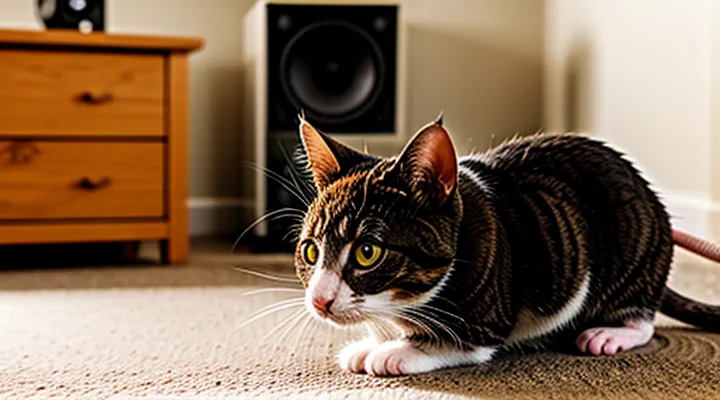
«Why Cats are Wired for the Hunt»
«Instinctive Predatory Drive»
Cats respond to recorded rodent noises because these sounds activate an innate hunting circuitry. The auditory cortex detects high‑frequency squeaks that match the acoustic pattern of a live mouse, sending rapid signals to the amygdala and hypothalamus. Those brain regions coordinate motor preparation, eye focus, and the release of catecholamines that heighten alertness.
The instinctive predatory drive operates through several linked processes:
- Sensory matching: Frequency and temporal structure of squeaks correspond to natural prey vocalizations, creating a template match.
- Emotional arousal: Amygdalar activation generates a brief surge of fear‑related neurotransmitters, which paradoxically increase motivation to chase.
- Motor priming: Motor cortex and brainstem circuits receive excitatory input, preparing the limbs for pouncing.
- Reward anticipation: Dopaminergic pathways anticipate successful capture, reinforcing the response.
When a cat hears a mouse‑like sound, the drive bypasses learned behavior and triggers a hard‑wired sequence that culminates in stalking and attack. The response persists even in indoor environments where actual prey are absent, because the neural template remains unchanged throughout the cat’s life. Consequently, auditory stimuli that mimic mouse vocalizations reliably elicit hunting behavior, confirming the central role of the instinctive predatory drive.
«Auditory Acuity: A Cat's Superpower»
Cats possess an auditory system tuned to detect minute acoustic cues. The pinna amplifies sounds from 1 kHz to 64 kHz, a range that encompasses most rodent vocalizations. Hair cells in the cochlea translate pressure waves into neural signals with sub‑millisecond latency, enabling rapid localization.
Mouse vocal repertoire includes ultrasonic squeaks between 20 kHz and 50 kHz, frequencies that fall squarely within feline hearing. These sounds carry information about movement, distress, and proximity. When a mouse emits a high‑pitched chirp, a cat’s auditory cortex registers the stimulus, triggers the predatory circuitry, and initiates a tracking response.
Key attributes of feline auditory acuity:
- Frequency sensitivity up to 64 kHz, surpassing most mammals.
- Directional hearing accuracy of less than 5 degrees.
- Temporal resolution capable of distinguishing intervals as short as 0.5 ms.
Consequences for stimulus design:
- Recordings must retain ultrasonic components; low‑pass filtering eliminates the trigger.
- Amplitude should mimic natural mouse output (≈40–60 dB SPL at 1 m) to avoid habituation.
- Playback intervals of 0.2–0.5 seconds reflect typical mouse chirp patterns and sustain engagement.
By aligning playback characteristics with the cat’s innate hearing capabilities, mouse sounds reliably activate the predatory response. The auditory superpower thus serves as the primary mechanism behind the effectiveness of such auditory stimuli.
«The Science Behind the Squeak»
«Frequency and Pitch: What Makes Mouse Sounds Irresistible»
Cats respond instinctively to sounds that mimic the acoustic signature of small prey. The most effective recordings concentrate on a narrow band of frequencies between 3 kHz and 15 kHz, a range where a mouse’s rustle and squeak are naturally concentrated. Within this band, the pitch rises sharply during rapid movements, creating a series of brief, high‑frequency bursts that trigger the feline auditory system.
Key acoustic characteristics that increase attraction:
- Peak frequency around 8–12 kHz, matching the dominant component of a mouse’s vocalizations.
- Fast onset and offset of each burst, producing abrupt changes that the cat’s ears detect more readily than steady tones.
- Amplitude modulation at 5–10 Hz, simulating the rhythmic footfalls of a scurrying rodent.
- Harmonic structure with minor overtones, adding realism without overwhelming the primary pitch.
The combination of these parameters exploits the cat’s heightened sensitivity to high‑frequency, rapidly changing sounds, making the recordings compelling and virtually irresistible.
«Mimicking Prey: The Art of Auditory Deception»
Auditory imitation of small rodents activates feline hunting circuits through precise acoustic cues. The sound spectrum of a typical mouse squeak concentrates energy between 2 kHz and 8 kHz, matching the frequency range where cats exhibit peak auditory sensitivity. Rapid amplitude fluctuations and irregular pulse patterns mimic the erratic movements of live prey, reinforcing the perception of a moving target.
Cats rely on temporal cues to estimate prey distance and velocity. Short, intermittent bursts separated by silent intervals create a rhythm that the feline brain interprets as escape attempts. This rhythm triggers motor planning areas, prompting stalking and pouncing behaviors without visual confirmation.
Effective cat‑targeted audio must satisfy three technical criteria:
- Frequency distribution centered on 2–8 kHz with modest high‑frequency roll‑off.
- Pulse duration of 30–80 ms, replicating the brief vocalizations of a mouse.
- Inter‑pulse intervals ranging from 100 ms to 300 ms, preserving the irregularity of natural distress calls.
When these parameters are reproduced in recordings or digital playback devices, cats display increased attentional focus and physical engagement. The response persists across breeds, indicating a conserved neurophysiological pathway rather than learned association.
Commercial products that employ these principles benefit from high‑fidelity speakers capable of reproducing the required frequency band without distortion. Additionally, embedding subtle background ambient noises—such as rustling leaves—enhances ecological validity, further stimulating predatory drive.
In research settings, controlled playback of mimicked rodent sounds provides a reliable method for quantifying feline motivation, stress levels, and motor coordination. The approach isolates auditory influence from visual stimuli, allowing precise assessment of sensory contributions to hunting behavior.
«Behavioral Responses to Mouse Sounds»
«Increased Alertness and Focus»
The high‑frequency squeaks and rustles that mimic a trapped mouse trigger a cat’s innate hunting circuitry. When a cat hears these sounds, the auditory cortex relays the signal to the midbrain periaqueductal gray, which coordinates motor preparation and visual attention. This neural cascade results in a measurable rise in cortical arousal, observable as increased pupil dilation and heightened heart rate.
Behavioral studies show that exposure to realistic rodent noises produces:
- Faster reaction times to moving stimuli on a screen test.
- Longer periods of focused gaze on a target object.
- Reduced latency before initiating a pounce in simulated hunting trials.
Neurochemical analysis reveals elevated norepinephrine levels during playback of mouse sounds, confirming the link between auditory cues and the sympathetic nervous system. The surge in norepinephrine sharpens sensory processing and suppresses distractions, enabling the cat to maintain concentration on the perceived prey.
In practical terms, owners who use recorded mouse noises during play sessions report more sustained engagement from their cats, with fewer interruptions for unrelated activities. The auditory stimulus therefore serves as a reliable tool for directing feline attention and amplifying alertness during enrichment exercises.
«Hunting Stance and Stalking Behavior»
Recorded rodent noises activate the feline predatory circuit, prompting an immediate transition to the classic hunting posture. The cat lowers its forequarters, aligns the spine in a neutral, slightly flexed position, and positions the hind limbs ready for a rapid thrust. Ears rotate forward, whiskers splay outward, and the tail may twitch to maintain balance.
The auditory cue also initiates a sequence of stalking actions. The cat reduces its body height, moves with minimal ground contact, and fixes its gaze on the perceived source. Each step follows a precise pattern designed to conserve energy while maximizing the chance of a successful pounce.
Key elements of the stalking phase include:
- Body compression: hips and shoulders contract to store kinetic energy.
- Visual lock: pupils dilate, and the visual focus narrows to track the sound source.
- Silent footfall: pads engage softly, reducing vibration that could alert prey.
- Tail adjustment: lateral movements counterbalance shifts in body weight during the approach.
These behaviors demonstrate how mouse sounds exploit innate feline hunting mechanisms, converting a simple auditory stimulus into a full predatory response.
«Play and Engagement: More Than Just Hunting»
Auditory recordings that imitate the squeaks and rustles of small rodents trigger instinctual responses in domestic felines. When a cat hears these cues, the brain engages neural pathways associated with predatory behavior, but the reaction extends beyond a simple chase. The sound prompts exploratory movements, paw swats, and rapid head turns that resemble play rather than a lethal pursuit.
These auditory cues serve as a low‑risk platform for skill development. Cats practice timing, coordination, and precision without physical injury, refining the motor patterns required for successful hunting. Repetition of the stimulus reinforces neural circuitry, leading to faster reaction times and more accurate targeting when encountering real prey.
The engagement also satisfies social and cognitive needs. Cats often alternate between solitary stalking and interactive play; the mouse‑like audio provides a focal point for solo activity, reducing boredom and associated stress behaviors. Regular exposure can lower the frequency of destructive actions such as furniture scratching or excessive vocalization.
Key benefits of incorporating rodent‑sound play:
- Enhanced motor agility through repeated paw strikes and pounce simulations.
- Strengthened neural pathways that govern prey detection and capture.
- Reduced stress markers by offering a predictable, controllable stimulus.
- Increased satisfaction of innate curiosity, leading to calmer household environments.
Overall, mouse‑sound playback functions as a multifaceted enrichment tool. It activates predatory circuits while simultaneously delivering a safe, repeatable play session that supports physical health, mental sharpness, and emotional balance in domestic cats.
«Practical Applications: Utilizing Mouse Sounds»
«Enrichment for Indoor Cats»
Indoor cats require stimulation that mimics natural hunting scenarios. Recorded rodent vocalizations provide a realistic auditory cue, triggering predatory instincts without the need for live prey. The sound alone can initiate stalking, pouncing, and chasing behaviors, thereby increasing physical activity and mental engagement.
Effective use of mouse sounds involves several steps:
- Choose high‑quality recordings that include squeaks, rustling, and occasional thumps, reflecting a range of prey movements.
- Play the audio at a moderate volume; excessive loudness may cause stress rather than interest.
- Pair the sound with interactive toys such as feather wands or laser pointers. The combination reinforces the chase sequence and encourages repeated play sessions.
- Schedule short intervals (2–5 minutes) several times a day. Brief bursts maintain novelty and prevent habituation.
Additional enrichment strategies complement auditory stimuli:
- Puzzle feeders that require manipulation to release food, simulating the effort of catching and processing prey.
- Vertical climbing structures, allowing cats to observe their environment from varied heights and to ambush simulated targets.
- Rotating toy collections, ensuring that each session presents a new object or texture.
Monitoring response is essential. Signs of engagement—focused attention, ear forward, tail flick—indicate successful stimulation. Conversely, avoidance, flattened ears, or vocal distress suggest the sound level or type is unsuitable and should be adjusted.
Integrating mouse vocalizations with tactile and problem‑solving elements creates a multi‑sensory enrichment program. This approach addresses the innate predatory drive of indoor felines, promotes exercise, and reduces boredom‑related behaviors.
«Training and Behavior Modification»
Recorded rodent noises trigger innate predatory responses in felines, providing a reliable stimulus for shaping desired behaviors. When the sound is paired with a specific cue—such as a clicker or a hand signal—the cat learns to associate the auditory cue with the expected action, whether it is to approach, stay, or refrain from a particular behavior.
Effective training sequence:
- Present the mouse sound at a low volume while the cat is relaxed.
- Immediately deliver the chosen cue and reward the cat for the correct response (e.g., staying calm, moving toward the source).
- Gradually increase the volume and vary the timing between sound and cue to reinforce the association.
- Introduce distractions and confirm that the cat responds to the cue despite competing stimuli.
Behavior modification relies on consistent reinforcement and the principle of extinction. If the cat exhibits an unwanted reaction—such as aggressive pouncing—interrupt the pattern by withholding the reward and replacing the sound with a neutral tone. Repeatedly denying reinforcement weakens the undesired response while the rewarded behavior strengthens.
Monitoring progress involves measuring latency between cue and action, frequency of correct responses, and the cat’s stress indicators. Data collected over several sessions guide adjustments to volume, cue timing, and reward type, ensuring that the auditory stimulus remains an effective tool for training and behavior change.
«Toy Design and Innovation»
The auditory cue of a small rodent’s squeak activates a cat’s predatory circuitry, making it a powerful stimulus for interactive toys. Designers translate this natural trigger into engineered products by embedding high‑frequency sound modules that replicate the acoustic signature of a live mouse while maintaining durability and safety for indoor use.
Effective toy construction balances acoustic fidelity with material resilience. Plastic shells molded with textured surfaces mimic fur and flesh, while sealed electronic chambers protect speakers from chewing and moisture. Battery life is extended through low‑power micro‑drivers that emit brief, irregular bursts rather than continuous tones, preserving the element of surprise.
Innovation focuses on adaptive sound patterns and multimodal feedback. Sensors detect a cat’s paw pressure and adjust pitch, volume, and timing to prevent habituation. Integration with motion‑activated mechanisms allows the toy to dart, roll, or vibrate in sync with the emitted sounds, creating a cohesive hunt‑simulation loop.
Key design considerations:
- Frequency range matching typical rodent vocalizations (2–8 kHz)
- Randomized interval sequencing to mimic erratic prey behavior
- Seamless enclosure to prevent access to electronic components
- Replaceable sound cartridges for variety and longevity
- Compliance with pet‑safety standards for materials and emissions
By aligning acoustic realism with robust mechanical design, manufacturers produce toys that consistently engage feline instinct, driving both user satisfaction and market differentiation.
«Beyond the Squeak: Related Auditory Stimuli»
«Bird Chirps and Insect Buzzes»
Bird chirps and insect buzzes serve as auditory stimuli that activate a cat’s predatory response in much the same way as recorded mouse noises. The frequencies of many avian calls (2–8 kHz) and the rapid wing‑beat vibrations of insects (15–30 kHz) fall within the hearing range where felines exhibit peak sensitivity, prompting orienting and stalking behaviors.
- High‑frequency components match the acoustic signature of small, moving prey.
- Temporal patterns, such as intermittent trills or irregular buzzes, mimic the erratic motion of live organisms.
- Harmonic structures provide cues about size and distance, enabling cats to assess potential capture opportunities.
- Naturalistic sound envelopes avoid the artificial flatness often found in generic recordings, preserving the dynamic amplitude changes that trigger instinctual hunting circuits.
Research on feline auditory perception shows that exposure to these sounds increases approach latency and pounce frequency, confirming their efficacy as enrichment tools. Incorporating bird and insect audio tracks alongside rodent recordings broadens the sensory repertoire offered to indoor cats, sustaining engagement and supporting natural hunting instincts.
«The Broader Spectrum of Prey Sounds»
Cats react to a wide array of auditory cues that signal vulnerable prey. The effectiveness of rodent vocalizations stems from their similarity to natural hunting signals, but the feline auditory system is tuned to detect many other frequencies and patterns associated with small animals.
High‑frequency bursts, intermittent chirps, and irregular rustling noises activate the cat’s predatory circuitry. These sounds share three acoustic traits: rapid temporal changes, tonal peaks above 2 kHz, and irregular amplitude modulation. When a sound meets these criteria, the cat’s brain registers it as a potential catch, prompting stalking and pouncing behavior.
The broader spectrum of prey sounds includes:
- Bird calls with sharp, staccato notes
- Insect wingbeats producing sustained high‑frequency hums
- Small mammal footfalls generating soft, irregular scuffles
- Amphibian croaks featuring low‑frequency pulses combined with higher harmonics
- Reptile rattles delivering rapid, repetitive clicks
Incorporating this diversity into auditory enrichment programs prevents habituation. Rotating sounds from different prey categories maintains the cat’s attention, reinforces natural hunting instincts, and supports mental stimulation without reliance on a single stimulus type.
«Potential Downsides and Considerations»
«Overstimulation and Stress»
Mouse vocalizations that mimic prey elicit a predatory response because they activate the auditory pathways linked to hunting instincts. When a cat experiences overstimulation—such as continuous exposure to loud noises, rapid movements, or prolonged play—the neural circuits responsible for attention become saturated. Saturation reduces the cat’s ability to discriminate the subtle frequencies of a mouse squeak, resulting in a delayed or absent reaction.
Stress produces physiological changes that interfere with the same circuitry. Elevated cortisol levels diminish sensitivity in the auditory cortex and suppress the release of dopamine, a neurotransmitter that reinforces rewarding hunting behavior. Consequently, a stressed cat may ignore mouse sounds that would otherwise provoke pursuit.
Key factors influencing the effectiveness of prey sounds under these conditions:
- Duration of prior auditory exposure: brief intervals preserve responsiveness; extended exposure leads to habituation.
- Ambient noise level: high background noise masks the frequency range of mouse vocalizations.
- Physical state of the cat: signs of anxiety (flattened ears, dilated pupils) predict reduced engagement with auditory stimuli.
- Recent interactions: recent aggressive play or handling can raise stress hormones, lowering the likelihood of a predatory response.
Managing overstimulation and stress—by providing quiet periods, limiting repetitive sound playback, and ensuring a calm environment—restores the cat’s natural reaction to mouse sounds. This restoration relies on the re‑establishment of optimal sensory processing and the re‑activation of reward pathways that drive hunting behavior.
«Desensitization: When the Magic Fades»
Recorded rodent noises trigger a cat’s predatory circuitry, prompting orientation, stalking and pouncing behaviors. The initial impact relies on novelty and the instinctual association between high‑frequency squeaks and prey.
Desensitization occurs when the same audio stimulus is presented repeatedly, leading to a measurable decline in response. The cat’s nervous system registers the sound as non‑threatening, and the neural pathways governing attention and arousal down‑regulate their activity.
Underlying mechanisms include sensory adaptation—reduced receptor sensitivity after continuous stimulation—and central habituation, where repeated activation of the auditory cortex diminishes the salience of the signal. Without reinforcement such as a tangible catch, the brain classifies the sound as irrelevant.
Observable signs of fading efficacy:
- Delayed head turn or no turn at all
- Shortened stalking sequence
- Complete disregard for the audio source
Countermeasures focus on restoring unpredictability and reinforcing the hunting loop:
- Rotate between multiple mouse‑type recordings, varying pitch and tempo
- Pair audio with brief visual cues (e.g., moving feather or laser dot)
- Limit playback sessions to 5–10 seconds, spaced by several minutes
- Randomize interval lengths to prevent pattern recognition
- Occasionally intersperse a real moving toy to provide tangible reward
Implementing these adjustments prolongs the stimulus’s potency, preserving the intended engagement without reliance on a single, overused sound file.