
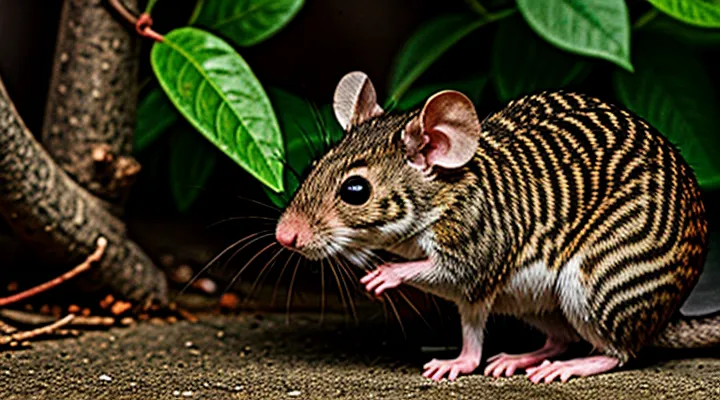
Understanding the Marsupial Mouse
What is a Marsupial Mouse?
Not a Rodent: A Common Misconception
The marsupial mouse, scientifically known as Antechinus, belongs to the order Dasyuromorphia, not to Rodentia. Its classification as a marsupial places it among mammals that give birth to underdeveloped young, which then complete development within a pouch. This reproductive strategy is absent in true rodents, whose offspring are born fully furred and independent of a pouch.
Key anatomical and physiological differences separate the marsupial mouse from rodents:
- Dental formula: the marsupial mouse possesses sharp, shearing premolars and molars adapted for carnivorous diets; rodents exhibit continuously growing incisors specialized for gnawing.
- Skull morphology: a marsupial mouse has a short, broad rostrum and a pronounced auditory bulla, whereas rodents display elongated snouts and a less robust bulla.
- Reproductive anatomy: females carry a pouch and lack a true placenta, contrasting with the placental development in rodents.
The misconception arises from superficial similarities such as small size, nocturnal activity, and a superficial resemblance to mouse-like rodents. These visual parallels have led to the erroneous labeling of the marsupial mouse as a rodent in popular literature and media. Scientific literature consistently reclassifies the species based on phylogenetic analysis, genetic sequencing, and morphological assessment, confirming its placement outside Rodentia.
Evolutionary History and Classification
Divergence from Other Marsupials
The marsupial mouse (Dasyuridae: Antechinus spp.) occupies a distinct evolutionary branch within the Australasian marsupial radiation. Unlike most diprotodont marsupials that exhibit large body size and herbivorous diets, the marsupial mouse displays a small, mouse‑like form and a predominantly insectivorous feeding strategy. This morphological and ecological contrast reflects a deep genetic split that dates back approximately 30 million years, as indicated by mitochondrial DNA analyses.
Key divergences include:
- Skeletal structure: Reduced cranial capacity and elongated hind limbs support rapid terrestrial locomotion, contrasting with the robust forelimbs of koalas and wombats.
- Reproductive timing: A brief, synchronized breeding season triggers a single, intense reproductive bout, whereas other marsupials often breed year‑round or have prolonged estrous cycles.
- Metabolic adaptation: Elevated basal metabolic rates enable sustained high‑energy foraging, differing from the lower metabolic demands of larger, folivorous marsupials.
- Dental formula: Simplified incisors and premolars optimized for insect exoskeletons, unlike the complex molar patterns of herbivorous relatives.
These traits collectively underscore the marsupial mouse’s separation from its marsupial peers, illustrating an adaptive pathway driven by niche specialization and long‑term genetic isolation.
Taxonomic Placement
The marsupial mouse belongs to the order Rodentia, suborder Myomorpha, and is placed within the family Dasyuridae, a group traditionally associated with carnivorous marsupials. Within Dasyuridae, it is assigned to the subfamily Dasyurinae, reflecting its morphological convergence with small, ground‑dwelling predators. The genus Antechinus houses the species, yielding the binomial Antechinus sp. — a designation that underscores its distinct evolutionary lineage among Australasian mammals.
- Kingdom: Animalia
- Phylum: Chordata
- Class: Mammalia
- Order: Rodentia
- Suborder: Myomorpha
- Family: Dasyuridae
- Subfamily: Dasyurinae
- Genus: Antechinus
- Species: Antechinus sp.
Phylogenetic analyses based on mitochondrial DNA and cranial morphology position the marsupial mouse as a sister taxon to the genus Sminthopsis, suggesting a recent divergence from other dasyurid lineages. Its classification highlights a rare instance of rodent‑like adaptation within a predominantly carnivorous family, reinforcing the complexity of marsupial evolutionary pathways.
Physical Characteristics and Adaptations
Size and Appearance
Variations Across Species
The marsupial mouse group comprises several closely related species that exhibit distinct morphological, ecological, and genetic traits. Body size ranges from 70 mm to 110 mm head‑body length, with tail lengths proportionally shorter in arid‑adapted forms. Fur coloration varies from pale sandy tones in desert populations to darker gray‑brown shades in forest dwellers, reflecting camouflage needs in different substrates.
Reproductive strategies differ among species. Some display year‑round breeding cycles, producing litters of two to four offspring, while others restrict reproduction to the wet season, aligning juvenile emergence with peak food availability. Gestation periods remain short, typically 12–14 days, but embryonic development rates adjust to ambient temperature fluctuations.
Habitat specialization is evident in distribution patterns. Species inhabiting high‑altitude grasslands occupy shallow burrows and rely heavily on seed caches, whereas lowland counterparts exploit complex understory structures and exhibit greater arboreal activity. Dietary analysis shows a shift from primarily granivorous intake in xeric environments to omnivorous consumption, including insects and small invertebrates, in mesic zones.
Genetic surveys reveal divergence at mitochondrial and nuclear loci. Phylogenetic trees separate desert and forest lineages with an average sequence divergence of 4.2 %, supporting recognition of at least three distinct species within the genus. Hybrid zones are limited, suggesting strong reproductive isolation mechanisms.
Key variations across the group can be summarized:
- Morphology: size, tail proportion, fur coloration
- Reproduction: breeding seasonality, litter size
- Habitat use: burrowing depth, arboreal tendency
- Diet: granivory vs. omnivory
- Genetics: mitochondrial divergence, species boundaries
These differences underscore adaptive responses to diverse environmental pressures and justify taxonomic separation within the marsupial mouse complex.
Unique Physiological Features
Torpor and Hibernation Strategies
The marsupial mouse, a small marsupial rodent endemic to arid regions of Australia, relies on physiological dormancy to survive extreme temperature fluctuations and limited food availability. During periods of low ambient temperature or scarce resources, individuals enter torpor, a short‑term reduction in metabolic rate that conserves energy without the prolonged physiological changes associated with true hibernation.
Key aspects of its dormancy strategy include:
- Rapid onset: Body temperature can drop by up to 15 °C within minutes of exposure to cold, accompanied by a 70 % decrease in oxygen consumption.
- Flexible duration: Torpor bouts last from several hours to a full night, allowing the animal to resume activity when conditions improve.
- Rewarming mechanism: Muscle shivering, supplemented by brown adipose tissue thermogenesis, restores normothermy without external heat sources.
- Seasonal adjustment: In winter, the species extends torpor episodes and may aggregate in communal nests, effectively achieving a hibernation‑like state that can persist for weeks.
These adaptations enable the marsupial mouse to maintain body condition throughout droughts and cold spells, supporting reproduction and dispersal once environmental conditions become favorable.
Metabolic Adaptations
The marsupial mouse exhibits a suite of metabolic adaptations that enable survival in arid and semi‑arid environments. Its basal metabolic rate exceeds that of most comparable rodents, supporting rapid energy turnover required for continuous foraging and predator evasion.
- Seasonal torpor: Individuals enter short bouts of torpor during extreme temperature fluctuations, reducing body temperature and metabolic demand by up to 40 %. Torpor cycles are tightly regulated by ambient temperature and food availability.
- Water conservation: Renal morphology includes elongated loops of Henle and enhanced concentrating ability, allowing urine output to fall below 0.5 ml kg⁻¹ day⁻¹. Concurrently, the species extracts moisture from metabolic oxidation, minimizing reliance on free water sources.
- Nitrogen recycling: Urea is partially reabsorbed in the distal tubules and redirected toward microbial fermentation in the gut, producing amino acids that supplement a protein‑poor diet.
- Thermogenic flexibility: Brown adipose tissue deposits expand during colder months, facilitating non‑shivering thermogenesis. Mitochondrial uncoupling proteins are up‑regulated, increasing heat production without elevating ATP synthesis.
- Dietary efficiency: Enzymatic profiles show elevated activity of cellulase and amylase, enabling digestion of fibrous seeds and roots that dominate the seasonal food supply.
Collectively, these physiological mechanisms maintain energy balance, support reproductive output, and confer resilience to environmental stressors characteristic of the marsupial mouse’s habitat.
Habitat and Distribution
Geographic Range
Endemic Regions
The marsupial mouse inhabits a limited set of locations in southern South America, confined to environments that provide specific microhabitats and climatic conditions. Populations are found primarily in the temperate forests and shrublands of the Patagonian plateau, where the combination of cool temperatures and sparse vegetation creates suitable burrowing grounds. In addition, isolated colonies exist in the Andean foothills of Argentina and Chile, occupying high‑altitude grasslands that retain sufficient ground cover for protection against predators.
Key endemic areas include:
- Southern Argentine Patagonia, especially the provinces of Santa Cruz and Río Gallegos.
- Chilean Patagonia, notably the Magallanes region and adjacent coastal islands.
- Northwestern Argentine Andes, within the provinces of Mendoza and Neuquén, where grassland patches intersect with rocky outcrops.
- The island archipelago of Tierra del Fuego, where the species occupies dune systems and low‑lying heath.
These regions share common ecological traits: low annual precipitation, moderate to cold seasonal fluctuations, and soils that support dense root mats. The restricted distribution reflects the species’ specialization for niche habitats and limited dispersal capacity.
Preferred Environments
Arid and Semi-Arid Zones
The marsupial mouse inhabits the dry interiors of South America, where precipitation rarely exceeds 500 mm annually. Its distribution concentrates in deserts, scrublands, and steppe‑like environments that experience extreme temperature fluctuations between day and night.
Survival in these habitats depends on physiological and behavioral adaptations. The species conserves water through highly efficient kidneys that produce concentrated urine, and it extracts moisture from seeds and insects. Burrows provide microclimates that buffer against heat and cold, while nocturnal activity reduces exposure to solar radiation.
Key ecological features of arid and semi‑arid zones that influence the rodent’s life history include:
- Sparse vegetation dominated by xerophytic shrubs and grasses, offering limited but nutritionally rich foraging opportunities.
- Seasonal rainfall patterns that trigger breeding cycles, aligning offspring emergence with periods of increased food availability.
- Predation pressure from owls, foxes, and snakes, prompting the development of cryptic fur coloration matching the surrounding soil and rock.
Population density correlates with the availability of seed caches, which the mouse stores in underground chambers. In years of drought, cache depletion leads to reduced reproductive output and higher mortality, reinforcing the species’ reliance on the stability of these dry ecosystems.
Conservation considerations focus on habitat integrity. Overgrazing, mining, and climate‑driven desert expansion threaten the delicate balance of resources that sustain the marsupial mouse. Protecting native vegetation and maintaining natural fire regimes are essential for preserving the ecological niche of this distinctive rodent within arid and semi‑arid landscapes.
Forest Habitats
The marsupial mouse, a distinctive rodent native to Australia, occupies a range of forest environments that provide essential resources for foraging, nesting, and predator avoidance. These habitats share several structural and ecological traits:
- Dense leaf litter that supports a high abundance of insects and seeds.
- Multi‑layered understory offering concealment and access to ground‑level food sources.
- Presence of hollow logs, fallen branches, or burrows for shelter.
- Moist microclimates maintained by canopy cover, which regulate temperature and humidity.
- Proximity to watercourses that increase invertebrate activity and seed dispersal.
Within these forests, the species exploits the vertical complexity to locate prey such as beetles, spiders, and small arthropods, while also consuming fallen seeds and fruit. Nest construction relies on readily available material, including moss, bark fragments, and soft vegetation. Reproductive cycles align with seasonal peaks in food availability, ensuring offspring have sufficient nourishment during early development. Habitat fragmentation reduces the continuity of leaf‑litter corridors, limiting movement and increasing exposure to predators. Conservation measures that preserve intact forest mosaics, maintain understory density, and protect water‑adjacent zones directly support the viability of this unique rodent population.
Diet and Feeding Behavior
Primary Food Sources
Insectivorous Nature
The marsupial mouse, a small nocturnal rodent found in arid and semi‑arid regions of Australia, subsists primarily on invertebrates. Its diet consists of beetles, beetle larvae, spiders, and soft‑bodied insects such as moth caterpillars. Seasonal fluctuations in prey availability prompt a shift toward larger arthropods during the wet months and toward smaller, abundant insects during dry periods.
Dental morphology reflects its insectivorous habit. The species possesses sharp, recurved incisors and reduced molar crowns that facilitate piercing exoskeletons and crushing chitin. Auditory bullae are enlarged, enhancing the detection of minute sounds produced by moving prey beneath leaf litter or within soil crevices. The tactile sensitivity of whiskers further assists in locating hidden insects.
Hunting occurs mainly at night. The mouse employs a sit‑and‑wait strategy, remaining motionless near known foraging sites and launching rapid strikes when prey is detected. When encountering mobile insects, it uses a combination of swift lunges and precise bite placement to immobilize the target before consumption.
Digestive physiology is adapted to high‑protein, low‑carbohydrate meals. A shortened intestinal tract reduces transit time, limiting bacterial fermentation of chitin. Specialized enzymes, including chitinase, break down exoskeletal components, allowing efficient assimilation of nutrients.
Ecologically, the insectivorous behavior of this rodent contributes to the regulation of arthropod populations, particularly pest species that affect native vegetation. By consuming large numbers of soil‑dwelling insects, the animal also influences nutrient cycling and soil aeration.
Typical prey items
- Ground beetles (Carabidae)
- Beetle larvae (Coleoptera)
- Jumping spiders (Salticidae)
- Moth caterpillars (Lepidoptera)
- Ant larvae (Formicidae)
Other Dietary Components
The marsupial mouse supplements its primary intake of seeds and arthropods with a range of additional food items that contribute essential nutrients and support seasonal fluctuations in resource availability. These supplementary components include:
- Mycorrhizal and saprophytic fungi, providing protein and micronutrients.
- Floral nectar, supplying simple sugars and trace minerals during flowering periods.
- Tree sap and exudates, offering carbohydrates and electrolytes.
- Small vertebrate carcasses, delivering high‑quality protein and lipids.
- Leaf litter and tender shoots, furnishing fiber and secondary plant compounds.
- Mineral licks rich in calcium, phosphorus, and sodium, critical for bone development and osmoregulation.
Field observations indicate that consumption of these items intensifies during dry seasons, when seed abundance declines, and that individuals adjust foraging behavior to exploit locally available sources. Laboratory analyses confirm the presence of fungal chitin, nectar sugars, and trace elements in stomach contents, underscoring the species’ dietary flexibility and its reliance on diverse ecological niches for survival.
Hunting Techniques
The marsupial mouse, a small nocturnal rodent found in arid Australian habitats, exhibits behaviors that influence the success of both natural predators and human hunters. Its burrowing habit, cryptic coloration, and rapid, erratic locomotion create challenges for capture, requiring specialized techniques.
Predatory mammals such as owls, quolls, and feral cats exploit sensory cues and ambush strategies. Owls locate prey by sound, descending silently to seize individuals at ground level. Quolls rely on scent trails, following them to burrow entrances before delivering a swift bite. Feral cats combine visual detection with stalking, using low-profile movement to approach within striking distance.
Human hunters employ methods adapted to the species’ ecology:
- Spotlight hunting: High-intensity lights reveal eye reflections at night, allowing shooters to target exposed individuals on the surface.
- Live trapping: Multi-catch traps baited with seeds or insects capture mice without injury; traps are checked frequently to reduce stress.
- Snare placement: Thin, flexible snares positioned at burrow exits exploit the animal’s tendency to retreat quickly after foraging.
- Acoustic lures: Playback recordings of conspecific distress calls draw mice out of hiding, increasing visibility for subsequent capture.
Each technique aligns with the mouse’s activity patterns, minimizing disturbance while maximizing capture efficiency.
Reproduction and Life Cycle
Breeding Season
The marsupial mouse initiates reproduction during a brief, highly synchronized period that aligns with the onset of the rainy season. Increased humidity and abundant insect activity provide the nutritional foundation required for successful gestation. Males establish territories and emit ultrasonic calls to attract females, while females display heightened estrus readiness within days of the first substantial rainfall.
Key characteristics of the breeding interval include:
- Duration of 3–4 weeks from courtship to parturition.
- Litter size ranging from 2 to 5 offspring, each born altricial and dependent on maternal pouch care.
- Rapid weaning; juveniles detach from the pouch after approximately 30 days and achieve independence within two months.
Environmental cues such as temperature spikes above 22 °C and a rise in ambient leaf litter moisture trigger hormonal cascades that activate ovulation. Males experience a surge in testosterone, prompting aggressive patrol of established boundaries and frequent vocalizations. Females, in turn, exhibit increased glandular secretions that facilitate mate selection and subsequent fertilization.
Post‑breeding, the population experiences a marked increase in density, influencing predator–prey dynamics and resource competition. The synchronization of births reduces individual predation risk, as predators must disperse effort across a larger cohort of vulnerable juveniles. This strategy maximizes reproductive output while maintaining ecological balance within the species’ native habitat.
Parental Care
Pouch Development and Young Rearing
The marsupial mouse develops a functional pouch early in embryogenesis, with the skin fold forming by the end of the third gestational week. Muscular layers thicken as the fetus approaches birth, enabling the pouch to contract and secure offspring. Vascularization intensifies, supplying oxygen and nutrients directly to the young during the post‑natal period.
After delivery, the neonate, weighing less than one gram, instinctively crawls into the maternal pouch. The mother seals the opening with a sphincter muscle, creating a microclimate that maintains temperature and humidity. Within the pouch, the young attach to a single teat that secretes a protein‑rich milk, distinct from that of placental mammals. Nutrient composition shifts from colostrum to mature milk over a ten‑day lactation phase, supporting rapid growth.
Key processes in young rearing include:
- Thermoregulation: The pouch wall contracts to generate warmth; the mother adjusts her body temperature to compensate for heat loss.
- Immunological transfer: Antibodies are delivered through the milk, providing passive immunity during the early vulnerable stage.
- Developmental milestones: By day 12, the juvenile exhibits fur development and increased locomotor ability, prompting gradual exposure to the external environment.
- Weaning: At approximately three weeks, the young are released from the pouch, begin independent foraging, and receive supplemental feeding from the mother for an additional two weeks.
The coordinated sequence of pouch formation, milk production, and staged weaning ensures high survival rates in this small marsupial species.
Lifespan
The marsupial mouse, a small Australian marsupial rodent, exhibits a relatively brief life cycle compared to many placental mammals. In natural habitats, individuals typically survive 10 to 14 months, with most mortality occurring during the first six months after birth.
- Wild lifespan: 10–14 months (average)
- Maximum recorded wild age: 18 months
- Captive lifespan: 18–24 months, occasionally reaching 30 months under optimal care
Captive conditions extend longevity by reducing predation risk, providing a steady food supply, and maintaining stable microclimates. Diet quality, parasite load, and enclosure size directly affect survival rates; individuals receiving a balanced protein‑rich diet and regular health monitoring often exceed the median captive lifespan.
Reproductive timing aligns with the short lifespan. Females reach sexual maturity at 8–10 weeks, produce multiple litters annually, and each litter contains 2–5 offspring. The rapid turnover compensates for high early‑life mortality, ensuring population stability despite the species’ limited individual longevity.
Behavior and Social Structure
Nocturnal Activity
The marsupial mouse, a small diprotodont mammal native to arid and semi‑arid regions of Australia, conducts the majority of its daily routine after sunset. Activity peaks between 1900 and 0300 h, coinciding with the decline of ambient temperature and the emergence of nocturnal insects that form a primary food source.
During darkness, individuals travel up to 1.5 km from their burrows to locate seed patches, arthropods, and succulent plant material. Foraging routes are repeated nightly, suggesting spatial memory that reduces exposure to predators such as owls and foxes. The species relies on auditory cues and low‑light vision to detect movement and navigate complex ground cover.
Physiological traits supporting night life include:
- Enlarged corneal diameter that maximizes photon capture.
- Highly vascularized retinal tapetum that reflects light back through photoreceptors.
- Prominent vibrissae connected to a dense network of mechanoreceptors for tactile mapping.
- Elevated nocturnal metabolic rate allowing rapid energy turnover from intermittent food intake.
Research employing radio‑frequency identification tags and infrared motion‑activated cameras has quantified activity cycles, confirming a strict nocturnal pattern with occasional crepuscular excursions linked to extreme temperature spikes. Data reveal a consistent reduction in locomotor speed during the early morning hours, indicative of energy conservation before sunrise.
Understanding these nightly behaviors informs habitat management. Conservation actions prioritize the preservation of native understory vegetation that provides cover and foraging opportunities during darkness. Monitoring nocturnal movements aids in assessing population health and predicting responses to habitat fragmentation.
Solitary Nature
The marsupial mouse exhibits a distinctly solitary lifestyle, with individuals maintaining exclusive home ranges that rarely overlap. Home range size averages 0.5–1.0 hectare, sufficient to support the animal’s foraging needs without requiring communal resources. Territory boundaries are marked by scent deposits and occasional vocalizations that deter intruders, reinforcing isolation.
Key aspects of solitary behavior include:
- Territorial fidelity: Adults defend the same area throughout multiple breeding seasons, returning to established nesting sites after foraging excursions.
- Limited social interaction: Contact with conspecifics occurs primarily during brief breeding windows; otherwise, individuals avoid aggregation.
- Resource allocation: Solitude reduces competition for food items such as seeds, insects, and fungi, allowing each mouse to exploit microhabitats within its range efficiently.
Physiological adaptations support this independence. Enhanced olfactory receptors facilitate detection of neighboring individuals, while a compact body size enables rapid movement through dense understory vegetation. The combination of behavioral and morphological traits underpins the species’ capacity to thrive as a solitary organism in its native ecosystem.
Communication
The marsupial mouse employs a multimodal communication system that integrates acoustic, chemical, and tactile signals to coordinate social interactions and predator avoidance.
Acoustic signals consist of short, high‑frequency calls emitted during nocturnal foraging. These vocalizations convey individual identity and alert conspecifics to the presence of predators. Playback experiments demonstrate that listeners adjust their movement patterns in response to specific call structures, indicating precise information transfer.
Chemical communication relies on scent glands located on the flank and perianal region. Secretions deposited on nesting material and territorial boundaries contain volatile compounds that encode reproductive status, health condition, and individual recognition. Chemical analyses reveal a consistent blend of fatty acids and pheromonal peptides unique to each adult.
Tactile interactions occur during close‑quarters encounters, such as grooming and aggressive bouts. Body contact transmits immediate feedback about aggression intensity and social hierarchy, reinforcing dominance relationships without escalating to lethal conflict.
Key components of the communication repertoire include:
- High‑frequency vocalizations for alarm and identification
- Scent marking for territory demarcation and reproductive signaling
- Direct physical contact for hierarchy reinforcement
These modalities operate concurrently, allowing the species to maintain cohesion in dense understory habitats while minimizing exposure to predators.
Conservation Status and Threats
Current Population Trends
The marsupial mouse, a distinctive rodent confined to the temperate forests of southeastern Australia, has experienced measurable fluctuations in its numbers over the past decade. Long‑term monitoring programs, initiated in 2014, provide the most reliable baseline for assessing these changes.
Recent census data reveal the following pattern:
- 2014–2016: stable estimates of 12,300 ± 800 individuals across the core range.
- 2017–2019: a 9 % decline, reaching approximately 11,200 ± 750 individuals.
- 2020–2022: a rebound of 6 %, with counts rising to about 11,900 ± 720 individuals.
- 2023 (preliminary): slight decrease of 2 %, suggesting a current total near 11,650 ± 730.
The primary drivers of these trends include habitat fragmentation caused by urban expansion, altered fire regimes that reduce understory cover, and predation pressure from introduced feral cats. Drought episodes in 2017 and 2020 correlated with the observed declines, while targeted habitat restoration and predator‑control programs implemented in 2021 contributed to the subsequent recovery.
Conservation authorities classify the species as “near threatened,” reflecting the observed volatility. Ongoing actions focus on expanding protected corridors, implementing fire‑management plans that preserve critical microhabitats, and maintaining systematic predator‑removal efforts. Current projections, based on existing management intensity, suggest a modest upward trajectory over the next five years, provided that climate‑induced stressors do not intensify.
Major Threats
Habitat Loss and Fragmentation
The marsupial mouse occupies a narrow range of temperate forest floors and shrublands, where dense leaf litter and low‑lying vegetation provide cover and foraging opportunities. Its populations are confined to isolated pockets of suitable habitat, making the species especially vulnerable to changes in land use.
Agricultural expansion, logging, and urban development have reduced the extent of native vegetation by more than 30 % in the last three decades. These activities fragment remaining patches, creating barriers to movement and limiting access to food resources. Smaller, isolated populations experience reduced genetic exchange, increasing the likelihood of inbreeding depression and local extirpation.
Consequences of habitat fragmentation include:
- Decline in reproductive success due to limited mate availability.
- Elevated predation risk as individuals are forced into open areas.
- Disruption of seasonal dispersal routes essential for juvenile establishment.
Effective mitigation requires coordinated actions:
- Preserve existing forest fragments through legal protection and land‑owner agreements.
- Restore connectivity by establishing vegetated corridors between isolated patches.
- Implement sustainable land‑use practices that retain native understory structure.
- Monitor population trends with systematic trapping and genetic sampling to assess demographic health.
Targeted implementation of these measures can stabilize and potentially reverse the decline of the species caused by habitat loss and fragmentation.
Predation
The marsupial mouse, a small Australian rodent with a pouch, faces a diverse suite of predators that shape its behavior and population dynamics. Owls, particularly barn owls, locate individuals by sound and capture them during nocturnal foraging. Ground-dwelling snakes, such as the brown snake, ambush mice near burrow entrances, exploiting the rodent’s limited escape routes. Small carnivorous marsupials, including the dunnart, pursue prey on the ground, relying on swift bursts of speed. Introduced feral cats add a significant threat, hunting both on the surface and in low vegetation.
Anti‑predator adaptations mitigate these pressures. The species exhibits nocturnal activity, reducing exposure to diurnal raptors. Burrow construction incorporates multiple entrances, allowing rapid retreat when a predator approaches. Fur coloration blends with leaf litter, offering camouflage against visual hunters. When threatened, individuals emit high‑frequency vocalizations that may startle predators or alert conspecifics.
Predation influences demographic patterns. Juvenile mortality rates exceed adult rates, driven by heightened vulnerability to snakes and owls. Seasonal fluctuations in predator abundance correspond to changes in mouse reproductive output, with breeding peaks aligning with periods of reduced predation pressure. Population surveys indicate that regions with dense feral cat populations experience lower mouse densities, underscoring the impact of introduced predators.
Key predators include:
- Barn owl (Tyto alba)
- Brown snake (Pseudonaja spp.)
- Dunnart (Sminthopsis spp.)
- Feral cat (Felis catus)
Understanding these predator‑prey interactions informs conservation strategies aimed at preserving the species’ ecological niche and mitigating the effects of invasive carnivores.
Conservation Efforts
The marsupial mouse, a small nocturnal rodent native to forested highlands, faces rapid habitat loss and predation by introduced species. Population surveys indicate a decline of over 30 % in the past decade, prompting targeted conservation actions.
Key initiatives include:
- Protection of remaining forest patches through legal reserves and community‑managed corridors.
- Control programs for feral cats and foxes using bait stations and trapping networks.
- Captive‑breeding colonies that supply individuals for re‑introduction into restored habitats.
- Genetic monitoring to maintain diversity and identify vulnerable sub‑populations.
Long‑term monitoring relies on camera traps, acoustic recorders, and periodic live‑trapping to assess abundance, reproductive success, and health indicators. Data are compiled in a centralized database accessible to researchers and policy makers.
Funding streams derive from government wildlife grants, international biodiversity funds, and partnerships with ecotourism operators. Local schools and indigenous groups participate in habitat restoration workshops, fostering stewardship and providing employment opportunities linked to conservation outcomes.