
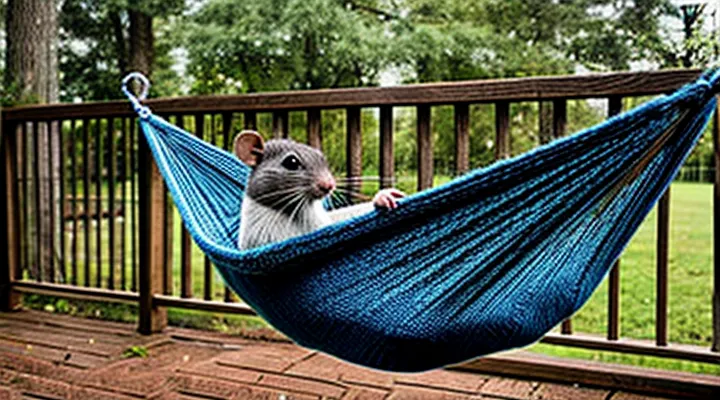
Why a Knitted Hammock for Your Rat?
Benefits for Your Pet
Comfort and Security
A knitted hammock designed for rats must provide a surface that supports the animal’s natural tendency to curl while preventing pressure points. Soft yarns such as cotton or bamboo, blended with a small proportion of acrylic, create a breathable fabric that retains shape and resists wear. The stitch pattern should be dense enough to hold the rat’s weight without sagging, yet loose enough to allow airflow and easy cleaning.
Safety considerations begin with the hammock’s dimensions. The interior space should accommodate a rat’s length plus a margin of 2–3 cm to avoid confinement. Edges must be securely tied or sewn to eliminate loose strands that could be chewed or swallowed. Attachment points on the cage should use metal hooks or reinforced loops, positioned to keep the hammock level and prevent swinging that could lead to falls.
Key factors that enhance comfort and security:
- Material: natural‑fiber blend, hypoallergenic, machine‑washable.
- Stitch density: 12–15 stitches per inch, providing support without rigidity.
- Size: length 30–35 cm, width 15–20 cm for an adult rat.
- Anchoring: stainless‑steel clips, double‑knotted loops, tested for load of 150 g.
- Maintenance: removable cover, spot‑cleanable, resistant to odor buildup.
Implementing these specifications results in a durable, comfortable resting place that reduces stress and promotes the well‑being of pet rats.
Enrichment and Play
A knitted hammock offers a portable, soft perch that satisfies a rat’s natural climbing instinct while providing a safe space for rest. The structure encourages voluntary exercise, promotes muscular development, and reduces stress by mimicking natural arboreal habitats. When introduced correctly, the hammock becomes a focal point for exploration and social interaction, enhancing overall well‑being.
Key enrichment and play benefits include:
- Vertical exploration: Rats navigate up and down the hammock, strengthening hind‑limb muscles and improving coordination.
- Sensory stimulation: The texture of yarn engages tactile receptors, encouraging grooming and investigative behavior.
- Social engagement: Multiple rats can share the hammock, fostering bonding and cooperative play.
- Environmental variety: Adding a hammock diversifies cage layout, preventing monotony and reducing stereotypic behaviors.
To integrate the hammock effectively, place it at a modest height above the cage floor, secure it with sturdy clips or hooks, and ensure the yarn is non‑toxic and free of loose ends. Observe the rats during the first sessions; adjust positioning if any individual shows hesitation or difficulty accessing the perch. Consistent use of the knitted hammock contributes to a dynamic, enriched environment that supports both physical health and mental stimulation.
Why DIY?
Cost-Effectiveness
A knitted hammock for small rodents can be produced at a fraction of the price of commercial alternatives when the design focuses on material efficiency and labor optimization. Selecting inexpensive, readily available yarn—such as acrylic or recycled cotton—reduces material costs without compromising structural integrity. Bulk purchasing of yarn further lowers the unit price, especially when the same color palette serves multiple builds.
Minimizing waste during the knitting process enhances cost-effectiveness. Using simple stitch patterns that require fewer yarn passes shortens production time and limits excess consumption. A single, continuous piece of fabric eliminates the need for additional seams, reducing both material usage and the time required for finishing.
Durability directly influences long‑term expenses. A tightly knit weave resists tearing and prolongs the hammock’s service life, decreasing the frequency of replacements. Reinforcing attachment points with a small amount of stronger thread prevents premature failure while adding negligible cost.
Practical measures to maximize savings
- Purchase yarn in multi‑kilogram spools; allocate only the needed length per hammock.
- Choose a basic stitch (e.g., single crochet) that balances comfort and yarn efficiency.
- Cut the yarn lengths precisely to avoid leftover scraps.
- Use a single loop for hanging; avoid extra hardware such as metal brackets.
- Test a prototype with one rat before scaling production to verify durability and adjust material usage accordingly.
By concentrating on low‑cost fibers, streamlined knitting techniques, and reinforced yet minimal hardware, the overall expense per hammock remains minimal while delivering a functional and comfortable resting platform for rats.
Customization Options
A knitted hammock designed for small rodents can be adapted to suit individual preferences and specific cage environments. Customization begins with yarn selection; cotton, bamboo, and acrylic fibers each provide distinct texture, durability, and washability. Color choices range from solid shades to variegated blends, allowing contrast with cage décor or matching the animal’s coat.
- Size adjustments – increase length or width by adding extra rows or stitches; reduce dimensions by decreasing stitch count.
- Pattern variations – employ plain stockinette, ribbed edges, or decorative cables to enhance grip and visual interest.
- Attachment methods – integrate loops, snap hooks, or elastic cords for flexible hanging positions on cage bars or corner brackets.
- Safety features – add reinforced seams, non‑slip fringe, or detachable chew‑proof panels to prevent fraying and maintain structural integrity.
- Accessory integration – embed small pockets for treats, attach miniature toys, or incorporate scented sachets for enrichment.
When implementing modifications, maintain consistent tension to avoid uneven stretch, test load capacity before installation, and verify that all added components do not obstruct ventilation. Regular inspection ensures that customized elements remain secure and hygienic throughout the hammock’s lifespan.
Materials You'll Need
Yarn Selection
Type and Fiber Considerations
When creating a knitted hammock for a small rodent, the selection of stitch pattern and yarn material directly affects safety, durability, and comfort.
The stitch pattern determines the hammock’s load‑bearing capacity and flexibility. Single crochet produces a dense, firm surface that resists tearing, while double crochet yields a looser weave that offers greater stretch and breathability. A combination of both—alternating rows of single and double crochet—balances strength with softness, preventing the animal from slipping while allowing easy cleaning.
Fiber choice influences several critical factors:
- Cotton: high absorbency, easy to wash, low static; may fray under heavy chewing.
- Acrylic: resistant to moisture and UV light, retains shape after repeated laundering; can generate static electricity.
- Bamboo blend: naturally antimicrobial, soft to the touch; less tolerant of high‑temperature washes.
- Wool (merino): excellent insulation, naturally elastic; may cause overheating in warm environments and can be itchy for some rodents.
Additional considerations include yarn weight and ply. A medium‑weight (worsted) yarn offers sufficient bulk for structural integrity without adding excessive weight. Two‑ply or three‑ply yarns provide extra strength and reduce the likelihood of single‑strand breakage. Gauge must be matched to the chosen stitch pattern; a tighter gauge (more stitches per inch) yields a sturdier hammock, while a looser gauge improves ventilation.
Overall, an optimal construction uses a balanced stitch pattern, a medium‑weight, low‑pilling fiber such as cotton‑acrylic blend, and a tightly gauged knit to ensure the hammock supports the animal safely while remaining easy to maintain.
Color and Texture
When selecting yarn for a rodent hammock, color and texture directly affect durability, hygiene, and the animal’s visual comfort.
A well‑chosen palette should contrast with the cage’s interior to prevent the hammock from blending into the background. Dark or muted tones hide wear, while bright shades facilitate quick inspection for tears or droppings. UV‑resistant fibers maintain hue stability under lighting.
Texture influences grip and load distribution. A smooth, tightly spun yarn reduces friction against the rat’s paws, minimizing skin irritation. Slightly raised stitches—such as rib or seed stitch—provide gentle traction, helping the animal maintain position without slipping. Coarse, bulky yarns increase bulk but may cause claw snagging; fine, medium‑weight yarns balance softness with strength.
Key considerations:
- Fiber type: acrylic for easy cleaning, cotton for breathability, bamboo for antimicrobial properties.
- Stitch pattern: single crochet for uniform density; half‑double crochet for moderate loft; moss stitch for added texture.
- Color combination: neutral base with contrasting accent stripes; single‑color for uniform inspection; patterned yarn for visual enrichment.
- Finish: wash‑stable dyes, low‑pilling yarn, no attached tags that could irritate.
By aligning color visibility with texture suitability, the finished hammock offers a safe, comfortable perch that simplifies maintenance and enhances the rodent’s environment.
Tools for Knitting
Knitting Needles
Choosing the correct knitting needles determines the fabric’s density, strength, and comfort for a small rodent hammock. A smooth, even stitch formation prevents gaps where a rat could become trapped and ensures the hammock retains its shape under the animal’s weight.
- Needle material: steel for fine, rigid control; bamboo for slight flex and reduced slipperiness; aluminum for balanced weight and durability.
- Needle size: US 0–2 (2.0–2.75 mm) for fine yarn that creates a tight weave; US 3–5 (3.25–3.75 mm) for thicker yarn that adds bulk without sacrificing strength.
- Needle tip: pointed tips for intricate patterns; slightly rounded tips for faster knitting and reduced yarn snagging.
A circular needle set with a short cable (12–16 inches) allows the hammock to be worked in the round, eliminating seams that could weaken the structure. When knitting, maintain consistent tension; excessive tension tightens the fabric and may cause the yarn to break, while lax tension creates loose loops that compromise safety.
After completing the piece, block the hammock by gently steaming or dampening the fabric, then shaping it to the desired dimensions. This step sets the stitches, enhances durability, and provides a smooth surface for the rat to rest on.
Scissors and Tapestry Needle
Scissors must be sharp, stainless‑steel, and sized to handle yarn strands without crushing them. A pair with a comfortable grip reduces hand fatigue during repeated cuts of the hammock’s fabric panels. When trimming excess yarn, the blade should glide cleanly to prevent frayed edges that could snag a rat’s paws.
The tapestry needle, a blunt‑ended, large‑eye instrument, is required for joining knitted sections and securing the hammock’s suspension cords. Its size accommodates bulky yarn and allows seamless passage through multiple stitches. Using the needle to weave the cords through the fabric creates a durable attachment point that holds the weight of an active rodent.
Key considerations for both tools:
- Blade length: 4–6 inches for precise control.
- Needle length: 10–12 inches to reach across the hammock’s width.
- Material: corrosion‑resistant steel for longevity.
- Handle design: ergonomic shape to maintain grip during extended use.
Proper maintenance—regular sharpening of scissors and cleaning of the needle’s eye—ensures consistent performance throughout the construction process.
Additional Supplies
Hanging Hardware
When attaching a knitted rat hammock, the hardware must support the animal’s weight, resist chewing, and allow secure mounting. Choose components rated for at least twice the expected load (typically 200 g for a large rat) to provide a safety margin.
- Ceiling hooks: stainless‑steel, screw‑in anchors with a minimum 2 mm shank diameter; use wall anchors if studs are unavailable.
- Carabiners: lock‑type, 3 mm opening gap, corrosion‑resistant finish; attach directly to the hook and to the hammock’s loop.
- S‑shaped hangers: coated in polymer to deter gnawing; ensure a smooth curvature to avoid stress points on the yarn.
- Adjustable cords: nylon or polyester braids, 2 mm thickness, with integrated swivel to prevent twisting.
Installation proceeds in three steps. First, locate a sturdy structural element (joist, beam, or reinforced cage wall) and pre‑drill a pilot hole matching the hook’s diameter. Second, insert the anchor and tighten the screw until the hook is flush with the surface, confirming no wobble. Third, connect the carabiner to the hook, thread the hammock’s loop through the carabiner, and adjust cord length so the hammock hangs 15–20 cm above the floor, allowing the rat to climb without strain.
Regular inspection is essential. Verify that screws remain tight, hooks show no corrosion, and cords exhibit no fraying. Replace any compromised component immediately to maintain a safe environment for the pet.
Measuring Tape
When constructing a knitted hammock for a pet rat, a measuring tape provides the essential reference for every dimension. Accurate measurements prevent excess material, ensure a comfortable fit, and maintain structural stability.
First, determine the hammock’s length by measuring the distance between the two attachment points in the cage. Record the value to the nearest millimeter; a common span for standard cages ranges from 200 mm to 300 mm. Next, measure the width required for the rat to stretch without restriction—typically 100 mm to 130 mm. Finally, assess the rat’s body length and girth to set the drop height, allowing the animal to hang safely without touching the cage floor.
Key considerations for the tape itself:
- Choose a flexible, fiberglass‑reinforced tape that bends without kinking, ensuring consistent contact with curved surfaces.
- Opt for a metric scale with clear markings; metric units align with most knitting pattern specifications.
- Verify that the tape lock retracts smoothly to avoid accidental shortening during measurement.
- Use the tape’s hook end to anchor the tool on cage bars, providing a stable reference point while noting positions.
During yarn preparation, the same tape marks the length of each knitted panel. Measure the cast‑on edge, then add the planned stitch count multiplied by the stitch gauge (e.g., 5 mm per stitch). Mark the total on the tape, cut the yarn accordingly, and repeat for each row. Consistent use of the measuring tape throughout the project guarantees that the final hammock matches the intended dimensions and supports the rat’s natural hanging posture.
Getting Started: Basic Knitting Techniques
Casting On
Casting on establishes the foundation for a knitted hammock sized for small rodents. Choose a yarn with a soft texture and a weight that supports gentle support without excessive bulk; a sport‑weight acrylic or cotton blend works well. Use needles one size larger than the yarn recommendation to achieve a looser edge that won’t dig into the animal’s paws.
- Make a slip knot and place it on the needle.
- Pull the working yarn through the slip knot to form the first loop.
- For a long‑tail cast‑on, measure a tail length of approximately four times the desired width of the hammock; this provides sufficient yarn for the initial row and the first few rounds.
- Execute the long‑tail method: insert the needle into the tail loop from front to back, wrap the working yarn around the needle, pull the loop through, and tighten.
- Continue until the required number of stitches is reached; for a hammock 30 cm wide, aim for 40–45 stitches, adjusting for gauge.
Maintain even tension throughout the cast‑on row. After completing the edge, secure the tail by weaving it into the first few stitches with a tapestry needle. This initial row should be slightly stretchy to accommodate the hammock’s curvature when the body is later shaped. The cast‑on edge will serve as the top rim, providing a smooth, reinforced border that resists fraying and offers a comfortable grip for the rat’s claws.
Knit Stitch
The knit stitch serves as the structural foundation for a small, suspended sleeping platform intended for rodents. It creates a uniform, interlocking loop that distributes weight evenly across the fabric, which is critical for maintaining shape and preventing sagging under the animal’s movement.
Common variations include the plain knit, the purl, and combinations such as ribbing and garter. Plain knit provides maximum elasticity, while ribbing adds lateral stability. Selecting a pattern that balances stretch with firmness ensures the hammock retains its form while allowing the rat to curl comfortably.
To construct the hammock, follow these steps:
- Cast on a number of stitches that matches the desired width; typical dimensions range from 30 to 40 stitches using a medium‑weight yarn.
- Work a row of plain knit stitches to establish the base.
- Switch to a rib pattern (e.g., knit 2, purl 2) for the next 4–6 rows to reinforce the edges.
- Continue with plain knit stitches for the central section, maintaining consistent tension.
- When the length reaches the intended size (approximately 40–50 rows), begin decreasing by knitting two stitches together at each end of every second row until the fabric tapers into a narrow strip.
- Bind off the remaining stitches, leaving a long tail for attachment.
Finish the project by:
- Weaving the tail through the tapered end and securing with a knot to form a hanging loop.
- Reinforcing the outer edges with a simple slip‑stitch border to prevent fraying.
- Washing the completed piece in cold water and drying flat to preserve yarn integrity.
The resulting knit structure offers a lightweight, durable hammock that supports a rat’s natural inclination to perch and rest while remaining easy to clean and replace.
Purl Stitch
The purl stitch creates the reverse side of a knit fabric, producing a series of visible bumps that contrast with the smooth knit side. In a rat hammock, the purl side faces upward, offering a soft, textured surface that enhances grip and comfort for small pets.
To work the purl stitch, insert the right-hand needle from back to front into the front of the left-hand needle, wrap the yarn clockwise around the right-hand needle, and draw the loop through the front of the stitch before slipping the original stitch off the left-hand needle. Repeating this motion on every row yields a fabric of uniform purl texture.
When constructing the hammock, combine purl rows with knit rows to form a ribbed pattern that provides elasticity. A common configuration is a 2‑by‑2 rib: two knit stitches followed by two purl stitches, repeated across the width. This structure expands when the rat moves, then returns to its original shape, preventing sagging.
Key steps for integrating purl stitch into the hammock:
- Cast on the required number of stitches to achieve the desired width.
- Alternate knit and purl sections according to the chosen rib pattern.
- Maintain consistent tension; excessive tightness reduces elasticity, while too loose a tension creates gaps.
- Bind off on a purl row to preserve the texture on the edge that contacts the rat.
The purl stitch also contributes to the durability of the hammock. Its raised loops distribute pressure more evenly across the fabric, reducing wear on any single point. Selecting a soft, washable yarn—such as a brushed acrylic or a cotton blend—ensures the purl surface remains gentle on the rat’s skin while allowing easy cleaning.
By mastering the purl stitch and applying it within a ribbed construction, the maker produces a resilient, comfortable hammock that supports the activity and safety of pet rodents.
Binding Off
Binding off is the final stage that secures the hammock’s edges and prevents unraveling. Use a needle size one or two steps larger than the one employed for knitting to ensure a firm yet flexible finish. Slip the first stitch onto the right‑hand needle, then knit the next stitch. Pull the first stitch over the second and off the needle; repeat until only two stitches remain. Cut the yarn, leaving a tail of at least six inches, and draw the tail through the last two stitches to lock the edge.
Key considerations for a rat-sized hammock:
- Yarn choice: soft, breathable fibers such as cotton or bamboo reduce the risk of irritation.
- Edge tension: a slightly tighter bind‑off creates a sturdy rim that supports the animal’s weight without sagging.
- Tail length: a longer tail allows for a secure seam when weaving the edge back into the body of the hammock.
After the bind‑off, use a tapestry needle to weave the tail through the remaining stitches, then hide it within the fabric. This step eliminates loose ends that a curious rodent could chew. The completed edge should feel smooth to the touch and resist fraying under repeated use.
Designing Your Rat Hammock
Hammock Shape and Size
Rectangular Hammocks
A rectangular hammock provides a stable, spacious platform that fits the natural resting posture of laboratory and pet rats. Its shape distributes weight evenly and allows easy entry from either end, which reduces stress during placement.
Materials
- 100 % cotton or bamboo yarn, 4 mm thickness, 200 g total
- 4 mm circular knitting needles, size US 6
- Two 30 cm wooden dowels for suspension
- Non‑slip rope or stainless‑steel cable for hanging
- Scissors, tapestry needle, measuring tape
Construction steps
- Cast on 70 stitches with a long‑tail method.
- Knit a 4 × 4 cm ribbed border (k2, p2) for three rows to prevent fraying.
- Switch to stockinette stitch; continue until the piece measures 60 cm in length.
- Bind off loosely, leaving a 5 cm tail for seam reinforcement.
- Fold the fabric in half lengthwise, aligning the short edges.
- Stitch the long edges together using a mattress stitch, creating a closed tube.
- Insert the wooden dowels through the tube ends, securing them with a few rows of slipped stitches.
- Attach the suspension rope to each dowel, ensuring equal length for level hanging.
Safety considerations
- Verify that yarn is free of loose fibers that could be ingested.
- Test the hammock’s load capacity with a 200 g weight before use.
- Position the hammock at least 30 cm above the cage floor to prevent accidental falls.
Maintenance
- Hand‑wash in lukewarm water, rinse thoroughly, and air‑dry flat.
- Inspect seams weekly for wear; re‑stitch any gaps promptly.
A properly knitted rectangular hammock combines durability, comfort, and ease of cleaning, making it a reliable enrichment item for rats.
Square Hammocks
Square hammocks provide a stable, evenly distributed surface that prevents a rat from slipping off the edges of a knitted suspension. The geometry eliminates stress points, allowing the animal to rest comfortably while the fabric remains taut.
Materials required
- 100 % cotton or acrylic yarn, medium weight
- Two 12 inch wooden dowels or plastic rods for support
- Small eye hooks or metal rings for attachment
- Scissors, yarn needle, measuring tape
Construction steps
- Measure and cut four equal lengths of yarn, each 24 inches, to form the perimeter of the square.
- Cast on 30 stitches with the first strand, knit straight rows until the piece reaches 24 inches in height, then bind off.
- Repeat the process for the remaining three sides, ensuring identical dimensions.
- Align the four panels to create a square, leaving a 1‑inch gap on each side for the attachment loops.
- Using the yarn needle, sew reinforced loops at the midpoint of each side, threading the eye hooks through the loops.
- Insert the support rods through opposite eye hooks, adjust tension so the fabric remains flat, and secure the rods with knots or zip ties.
Final adjustments
- Verify that all loops are firmly anchored; any looseness may cause the hammock to sag.
- Trim excess yarn, then test the structure by placing a small weight equivalent to a rat’s mass.
- Position the hammock at a height that allows easy access for the animal, avoiding exposure to drafts or direct sunlight.
The square configuration delivers a reliable, low‑maintenance habitat accessory that integrates seamlessly with any knitted rat hammock project.
Custom Shapes
When constructing a knitted hammock for a small pet rodent, the shape of the fabric determines both the comfort of the animal and the stability of the suspension. Customizing the silhouette allows the maker to match the cage dimensions, the rodent’s size, and the desired aesthetic.
Begin with a base pattern that outlines a rectangular or triangular panel. Adjust the outlines by adding or removing sections to create shapes such as:
- Oval loop that follows the animal’s natural curling position
- Crescent that fits against the cage wall for added support
- Hexagonal panel that distributes weight evenly across multiple attachment points
After selecting the shape, calculate the required yarn length by measuring the perimeter of the modified pattern and adding a 15 % surplus for knitting tension. Use a gauge swatch to verify that the stitch count produces a fabric width appropriate for the chosen silhouette.
Finalize the piece by reinforcing the edges with a single crochet border or a slip‑stitch hem. Attach sturdy loops or eyelets at each corner, ensuring that the attachment points align with the cage’s support beams. This method yields a tailored hammock that conforms to the rodent’s anatomy while maintaining structural integrity.
Edge Finishes
Garter Stitch Edges
Garter stitch edges provide a flat, stable border that resists curling, making them ideal for the perimeter of a small rodent hammock. The stitch pattern alternates knit rows on every round, eliminating the tension reversal that occurs with stockinette. This uniform tension keeps the hammock’s edge smooth and prevents gaps where a rat could snag its claws.
To incorporate garter stitch edges into the hammock:
- Cast on the required number of stitches for the desired hammock width, adding the edge stitch count (typically 4‑6 stitches per side).
- Work the first 2‑3 rows in garter stitch: knit every stitch on each round.
- Transition to the main body pattern (e.g., plain stockinette or rib) for the central section.
- After completing the body height, resume garter stitch for the final 2‑3 rows.
- Bind off loosely to maintain edge elasticity.
The edge height should match the hammock’s thickness, usually 1‑1.5 cm, to create a comfortable rim that supports the rat’s weight without excessive bulk. Using a medium‑weight yarn (e.g., DK or worsted) and a 4.5 mm needle yields a firm yet pliable edge. When the hammock is finished, block the piece lightly to set the garter stitch, then attach suspension loops or rings to the edge stitches, ensuring even load distribution. This method produces a durable, curl‑free border that enhances safety and comfort for the pet.
Ribbed Edges
Ribbed edges provide the necessary elasticity and structural integrity for a knitted hammock designed for small rodents. The alternating knit‑and‑purl stitches create a fabric that stretches when the animal settles into the hammock and contracts when it moves, preventing sagging and maintaining a snug shape.
When constructing the ribbed border, select a yarn with a smooth texture and moderate weight (DK or sport). A yarn with a slight stretch enhances the overall give of the edge. Use a circular needle size appropriate for the yarn, typically two to three sizes larger than the label recommendation, to achieve a looser, more flexible rib.
The basic rib pattern consists of:
- 2 × 2 rib: K2, P2 repeated across the row.
- 1 × 1 rib: K1, P1 repeated across the row.
Choose the 2 × 2 configuration for a broader, more cushioned edge; the 1 × 1 version yields a tighter, firmer border. Cast on a multiple of the pattern repeat plus a few extra stitches to accommodate the hammock’s width. Knit the rib for a height of 1–2 inches, depending on the overall size of the hammock.
After completing the ribbed edge, bind off loosely to preserve elasticity. Slip the edge into a single‑crochet slip stitch, then weave the tail through the stitches with a tapestry needle for a clean finish. The resulting ribbed perimeter distributes the animal’s weight evenly, reduces stress on the main body of the hammock, and simplifies attachment to the support structure.
Step-by-Step Knitting Instructions
Creating the Base Fabric
Deciding on Dimensions
When planning a knitted hammock for a pet rodent, the first step is to define the hammock’s dimensions. Accurate sizing ensures comfort, prevents escape, and supports the animal’s weight.
Measure the rat’s body length from nose to base of tail while the animal is relaxed. Add 2–3 cm to this figure to accommodate stretching and movement. The width should be at least twice the animal’s shoulder width, providing space for the front paws to rest without crowding. Height—the distance from the supporting surface to the lowest point of the hammock—must allow the rat to lie flat without its belly touching the floor; a clearance of 3–4 cm typically suffices.
Consider the following factors when establishing dimensions:
- Weight capacity: Select yarn thickness and stitch density that can bear the rat’s mass plus a safety margin of 20 %.
- Knot spacing: Tighten stitches for structural integrity; a spacing of 0.5 cm between rows offers adequate support.
- Cage constraints: Verify that the finished hammock fits within the cage’s interior dimensions, leaving at least 1 cm of clearance on all sides.
- Material shrinkage: Account for up to 5 % reduction after washing; increase initial measurements accordingly.
After determining the target measurements, draft a simple schematic on paper. Mark length, width, and height, then calculate the total yarn length required using the formula:
Yarn length = (Length × Width × Stitch factor) + (Safety allowance)
where the stitch factor reflects the chosen stitch pattern’s consumption rate.
Finalize the dimensions by testing a prototype made from inexpensive yarn. Adjust length, width, or height based on the animal’s behavior before knitting the final hammock with the selected material. This systematic approach eliminates guesswork and yields a reliably sized accessory.
Knitting the Main Body
Begin by selecting a soft, washable yarn such as 100 % acrylic or merino blend, weight 4 (medium). Choose circular needles sized 4 mm to achieve a gauge of approximately 22 stitches per 4 in (10 cm) in stockinette stitch. Measure the intended span between the two support points; a typical rat hammock measures 12 in (30 cm) long and 8 in (20 cm) wide when relaxed.
- Cast on 80 stitches using the long‑tail method. Join to work in the round, being careful not to twist the stitches.
- Knit 4 rows in rib (K2, P2) to create a sturdy edge that resists fraying.
- Switch to stockinette stitch and continue knitting until the piece reaches the desired length, usually 30 rows for a 12‑inch hammock.
- Reduce width gradually to form a gentle curve: decrease 2 stitches every 4 rows on each side (K2tog, SSK) until the total stitch count is 40.
- Knit 4 rows without further decreases to establish the central dip where the rat will rest.
- Mirror the decrease sequence to restore the original stitch count, creating a symmetrical arch.
- Finish with 4 rows of rib to reinforce the opposite edge, then bind off loosely to preserve elasticity.
After completing the main body, block the hammock by dampening it, shaping to the intended dimensions, and allowing it to dry flat. Attach two sturdy loops at each short edge using a slip‑knot and a single crochet, ensuring the loops can accommodate standard cage hooks without slipping. Inspect all seams for gaps; any opening larger than 0.5 cm should be sewn closed to prevent the animal from escaping. The finished knitted rat hammock combines durability, comfort, and ease of maintenance.
Adding Hanging Loops
Attaching Loops Securely
When constructing a knitted hammock for small rodents, the stability of the suspension points depends on the strength and reliability of the loops that connect the fabric to the support. Secure loops prevent sagging, tearing, and accidental release, which could endanger the animal.
Begin by selecting yarn with sufficient tensile strength; a blend of cotton and acrylic typically offers a balance of durability and flexibility. Use a single, tight crochet or knit stitch to form each loop, ensuring that the loop’s circumference matches the diameter of the hanging cord or metal ring. Do not rely on loosely formed stitches, as they can stretch under load.
To reinforce the loop, follow these steps:
- Create a base ring – knit a small circular foundation of 6–8 stitches, then increase evenly to achieve the desired size.
- Work a reinforcing round – knit two additional rounds using a denser stitch (e.g., single crochet) around the base ring, tightening each stitch to eliminate gaps.
- Add a locking stitch – incorporate a slip stitch or a back loop slip stitch at the junction where the loop meets the hammock body; this locks the loop in place and distributes tension evenly.
- Secure the tail – thread the working yarn through the loop’s interior, pull tight, and finish with a few short tails that are woven back into the fabric to prevent unraveling.
After the loop is formed, test its strength by applying a gradual load equivalent to twice the expected weight of the rat. Observe any deformation; if the loop stretches, repeat the reinforcement process with a tighter stitch pattern or a thicker yarn.
For attachment to the support structure, use a metal D‑ring or a sturdy plastic clip. Pass the loop through the ring, then tie a double knot using the yarn tails, followed by a quick-release bowline made from the support cord. This dual‑knot system provides both permanent security and easy removal for cleaning.
Regular inspection is essential. Check the loops weekly for signs of wear, fraying, or looseness. Replace any compromised loop immediately to maintain the hammock’s integrity and the animal’s safety.
Reinforcing Stress Points
When constructing a knitted hammock for small rodents, the areas that bear the most load require extra reinforcement to prevent tearing and ensure durability. Identify the points where the animal’s weight concentrates: the attachment loops that connect the hammock to a support, the central suspension seam, and the corners where the fabric folds under tension.
Reinforcement techniques:
- Double‑knit seams – work two rows of identical stitches on each side of the primary seam, then bind them together with a slip stitch. This creates a thicker, more resistant band at the central suspension line.
- Cable inserts – incorporate a short length of sturdy yarn or thin cord into the fabric at each corner. Knit the cable into the surrounding stitches, then secure it with a series of back‑stitches to distribute stress evenly.
- Reinforced loops – form the attachment loops using a larger gauge yarn or a blend of cotton and nylon. After knitting the loop, stitch a series of single crochets around its base to lock the fibers in place.
- Edge edging – finish the hammock’s perimeter with a tightly worked rib or garter stitch, adding a row of slip knots that bind the outer edge to the underlying fabric. This prevents fraying where the hammock meets the support.
Testing each reinforced point with a gradual load—starting with a few grams and increasing to the rat’s full weight—confirms that the modifications hold under real conditions. Adjust any area that shows elongation or looseness before final installation.
Finishing Touches
Weaving in Ends
Weaving in ends secures the hammock’s structure, prevents fraying, and creates a smooth surface for the rodent’s comfort. The technique integrates the final row of stitches into the existing fabric, eliminating loose loops that could catch fur or cause injury.
Before beginning, ensure the knitting is complete and the work is lying flat. Use a blunt tapestry needle, matching yarn, and a pair of scissors. Trim any excess yarn leaving a tail of about five centimeters; this length provides enough material to work through the stitches without excess bulk.
- Insert the needle at the base of the last row, catching the first loop on the right‑hand side.
- Pull the tail through, creating a secure anchor knot.
- Continue to draw the tail through each subsequent stitch, moving from right to left, maintaining even tension.
- When the last stitch is reached, form a small loop, pass the tail through it, and tighten to form a finishing knot.
- Trim the remaining tail close to the knot, leaving a neat edge.
The completed edge should be smooth, evenly tensioned, and firmly attached to the hammock body. Inspect the seam for any gaps; reinforce with an additional row of slip stitches if necessary. Properly woven ends extend the hammock’s durability and ensure safe, comfortable use for the small pet.
Attaching Hanging Hardware
When installing a knitted rat hammock, secure mounting is essential for the animal’s safety and the hammock’s durability. The hardware must be chosen to support the weight of the hammock plus a fully grown rat, and it should be compatible with the cage’s structure.
Materials required:
- Two stainless‑steel S‑hooks or carabiners rated for at least 200 g.
- One length of 2 mm nylon or stainless‑steel cord, 30–40 cm long.
- Two small eye screws or a reinforced metal eyelet, sized to fit the S‑hooks.
- A drill with a 3 mm bit (if the cage frame is wood or plastic).
- A pair of pliers for tightening knots.
Procedure:
- Identify two opposite points on the cage frame that can bear load, preferably near the top corners.
- If the frame lacks pre‑drilled holes, drill a 3 mm opening at each point, ensuring the hole does not compromise the cage’s integrity.
- Insert an eye screw or metal eyelet into each hole, tightening it until flush with the surface.
- Thread one end of the cord through the first eyelet, loop it back, and tie a secure double‑overhand knot. Trim excess cord.
- Repeat the knotting process with the second eyelet.
- Attach an S‑hook to each knot, then connect the hooks to the hammock’s reinforced loops or woven rings.
- Test the assembly by applying gentle downward pressure, confirming that the hardware remains stable and the knot does not slip.
Final verification:
- Ensure the hammock hangs level, with no excessive tilt.
- Check that the cord and hooks show no signs of fraying or corrosion.
- Observe the rat’s interaction for any signs of stress on the hardware, adjusting tension if necessary.
Care and Maintenance of Your Knitted Hammock
Washing Instructions
Hand Washing
When working with yarn, needles, and small rodents, clean hands prevent contamination of the fibers and protect the animal’s skin. Soap removes oils, dirt, and microbes that can weaken yarn fibers or cause irritation to the rat’s fur and paws. Hand washing before each handling session preserves the integrity of the hammock and reduces the risk of infection.
Effective hand washing routine
- Wet hands with warm water.
- Apply a generous amount of liquid soap.
- Rub palms, backs of hands, between fingers, and under nails for at least 20 seconds.
- Rinse thoroughly until no suds remain.
- Dry with a clean, lint‑free towel or air dryer.
Perform the routine before cutting yarn, after touching any surface that may contain contaminants, and immediately after adjusting the hammock on the cage. Use antibacterial soap if available; avoid scented or heavily moisturized products that can leave residues on the yarn.
When gloves are necessary for handling the rat, wash hands before putting them on and after removal. This double barrier maintains hygiene even if the gloves become soiled.
Regular hand washing integrates seamlessly into the construction process, ensuring a safe, durable knitting project for small pets.
Machine Washing Tips
Proper maintenance extends the life of a hand‑crafted rat hammock. Follow these machine‑washing guidelines to preserve yarn integrity and prevent damage.
- Use a gentle cycle with cold water; hot temperatures relax fibers and cause shrinkage.
- Select a mild, enzyme‑free detergent; harsh chemicals break down natural fibers and affect color.
- Place the hammock inside a mesh laundry bag; the barrier protects delicate loops from snagging on the drum.
- Avoid spin speeds above 600 rpm; excessive agitation strains the stitch structure.
- Do not overload the washer; excess load reduces water flow and hampers thorough rinsing.
- After washing, lay flat on a clean towel to dry; avoid hanging, which can stretch the fabric.
Routine laundering using these steps maintains softness, prevents pilling, and keeps the hammock safe for small pets.
Inspecting for Wear and Tear
Repairing Small Holes
When a knitted hammock for a pet rodent develops a small hole, the structure risks tearing further and the animal may lose a secure resting place. Prompt repair restores integrity, prevents enlargement, and maintains the comfort of the enclosure.
- Identify the damaged area; clear surrounding fibers of loose yarn.
- Select a yarn that matches the original gauge and color.
- Thread a needle with a length of yarn long enough to complete the patch without tension.
- Align the yarn parallel to the existing stitches, then insert the needle through the fabric on one side of the hole.
- Use a whip stitch: pull the needle through the opposite side, wrap the yarn around the needle tip, and pull tight. Repeat along the perimeter of the hole, keeping stitches even.
- After closing the gap, reinforce the repair with a second row of stitches slightly offset from the first.
- Trim excess yarn close to the fabric to avoid protrusions.
For lasting results, apply a mild fabric stiffener to the repaired section, allow it to dry completely, and inspect the hammock regularly for additional wear. Maintaining consistent tension during stitching prevents new stress points and extends the hammock’s service life.
When to Replace the Hammock
The knitted rat hammock should be inspected regularly to determine whether it remains safe and functional. Replacement is required when the fabric shows any of the following conditions:
- Frayed or broken stitches that reduce structural integrity.
- Holes larger than the diameter of the rat’s body.
- Persistent odors after washing, indicating bacterial buildup.
- Loss of elasticity causing the hammock to sag excessively.
- Visible discoloration or mold growth.
Even if none of these signs are present, a time‑based schedule helps maintain hygiene. For cages with daily use, replace the hammock every three to four months. In environments with higher humidity or frequent cleaning, a two‑month interval is advisable. Conversely, low‑traffic setups may extend the interval to six months, provided visual inspections remain clear.
Additional factors influencing replacement timing include:
- The rat’s size and activity level; larger or more vigorous animals accelerate wear.
- The type of yarn used; natural fibers degrade faster than synthetic blends.
- Cleaning methods; harsh detergents or high‑temperature washes can weaken fibers.
When a new hammock is installed, record the installation date and note any observed wear during each routine check. This record simplifies decision‑making and ensures the hammock is swapped before it compromises the animal’s comfort or safety.