
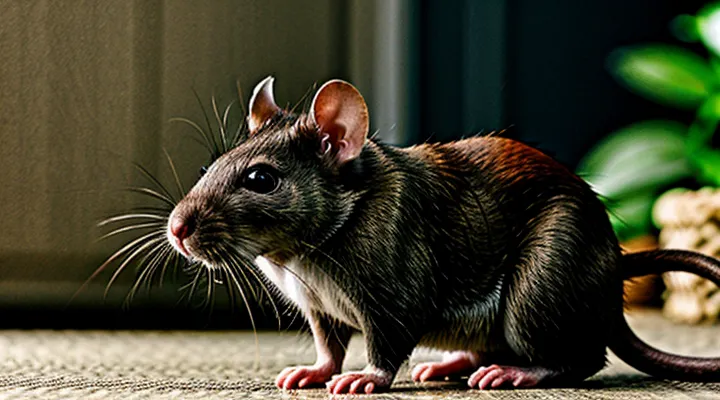
Beyond the Squeak: Unveiling Rat Intelligence
Cognitive Prowess
Problem-Solving Abilities
Rats exhibit sophisticated problem‑solving skills that rival those of many larger mammals. Laboratory tests consistently reveal their capacity to navigate mazes, manipulate objects, and adapt strategies when conditions change.
Key observations include:
- Rapid acquisition of maze routes after only a few trials, indicating efficient spatial memory.
- Use of tools such as sticks to retrieve food placed out of reach, demonstrating causal reasoning.
- Ability to solve multi‑step puzzles, for example pressing a sequence of levers to unlock a reward compartment.
- Flexible adjustment to altered reward patterns, showing behavioral flexibility and learning from negative feedback.
Neurobiological studies link these abilities to a well‑developed prefrontal cortex and extensive hippocampal networks, which support planning, working memory, and decision‑making processes. The combination of behavioral evidence and brain imaging confirms that rats possess advanced cognitive functions relevant to problem solving.
Learning and Memory
Rats serve as primary subjects in research on learning and memory because their neural architecture closely mirrors that of humans, allowing direct observation of cognitive processes.
- Maze navigation tests reveal that rats acquire spatial solutions after as few as three trials, demonstrating rapid associative learning.
- Electrophysiological recordings identify long‑term potentiation in the hippocampus, a cellular mechanism underlying memory consolidation.
- Place cells within the rat hippocampus fire in response to specific locations, providing a neural map of the environment.
- Observational learning experiments show that rats replicate a demonstrated task without direct reinforcement, indicating the capacity for social transmission of knowledge.
- Studies of episodic‑like memory demonstrate that rats distinguish between “what,” “where,” and “when” components of an event, suggesting a form of contextual recall.
- Whisker‑based tactile exploration enables rats to construct spatial representations in darkness, highlighting multimodal integration in memory formation.
- Adult neurogenesis in the dentate gyrus contributes to pattern separation, allowing rats to discriminate between similar but distinct experiences.
Collectively, these findings illustrate the depth of rat cognition and underscore their value for unraveling the mechanisms of learning and memory.
Social and Emotional Complexity
Communication and Cooperation
Rats rely on a sophisticated array of signals to coordinate group activities. Ultrasonic vocalizations, inaudible to humans, convey immediate alerts about predators, food sources, and territorial breaches. The frequency and pattern of these calls differ according to urgency, allowing listeners to assess threat level within milliseconds. Scent marks deposited from the anal glands serve as long‑term identifiers of individual presence and hierarchical status; conspecifics decode these chemical cues to navigate social hierarchies without visual contact.
Tactile interaction complements acoustic and olfactory channels. Whisker contact during close encounters transmits information about body orientation and emotional state, while grooming exchanges reinforce social bonds and reduce stress hormones. Rats also exhibit coordinated movement through “follow‑the‑leader” behavior in maze navigation, where experienced individuals guide naïve group members toward food caches, demonstrating collective learning.
Cooperative breeding occurs in densely populated colonies. Subordinate females frequently assist in pup care, providing additional warmth and nourishment, which increases offspring survival rates. In resource‑rich environments, rats engage in communal nest construction, aligning burrow dimensions to accommodate fluctuating group size and temperature regulation needs. During foraging expeditions, individuals share discovered food items through mouth‑to‑mouth transfers, ensuring equitable distribution and minimizing competition.
These communication mechanisms and cooperative strategies enable rats to maintain cohesive societies, adapt swiftly to environmental changes, and exploit ecological niches with remarkable efficiency.
Empathy and Affection
Rats demonstrate complex social behaviors that include genuine empathy and affection toward conspecifics. When a cage‑mate experiences distress, observers increase grooming and huddling, actions that reduce the stressed individual’s heart rate and cortisol levels. These responses mirror neurobiological mechanisms identified in larger mammals, indicating that rats possess the capacity to recognize and react to the emotional states of peers.
Key observations illustrate the depth of rat social connectivity:
- Rescue attempts: In experimental mazes, rats free trapped companions by opening a door, even when no food reward is offered.
- Emotional contagion: Exposure to a frightened peer triggers heightened vigilance and stress markers in bystanders, suggesting shared affective states.
- Affectionate bonding: Pairs develop lasting preferences, spending more time together, exchanging allogrooming, and displaying reduced aggression over weeks.
- Maternal empathy: Mother rats adjust nursing posture and vocalizations in response to pups’ ultrasonic cries, optimizing care delivery.
These findings underscore that rats are not solely opportunistic scavengers; they engage in sophisticated affective interactions that support group cohesion and survival.
A Rat's World: Unique Adaptations and Behaviors
Physical Marvels
Sensory Perception
Rats possess a highly developed sensory system that enables them to thrive in diverse environments. Their whiskers (vibrissae) serve as tactile antennas, detecting minute changes in air currents and surface textures. This capability allows precise navigation through narrow passages and rapid identification of obstacles.
- Olfactory acuity: rats can discern odor concentrations as low as one part per million, facilitating efficient foraging and predator avoidance.
- Auditory range: hearing extends to frequencies up to 90 kHz, far beyond human limits, supporting communication through ultrasonic vocalizations.
- Visual adaptation: eyes contain a high proportion of rod cells, granting sensitivity to low‑light conditions and motion detection rather than color discrimination.
- Gustatory specialization: taste buds detect bitter compounds at low thresholds, providing early warning against toxic substances.
Collectively, these sensory modalities form an integrated network that underpins rats’ adaptability, social interaction, and survival strategies.
Agility and Survival
Rats demonstrate extraordinary agility that enables rapid navigation through complex environments. Their flexible spine permits tight turns and vertical climbs, while powerful hind limbs generate bursts of speed exceeding 8 mph. Reflexive whisker movements detect obstacles within milliseconds, allowing swift avoidance of predators and hazards.
- Ability to squeeze through openings as small as ½ inch in diameter
- Jumping capacity of up to three times body length
- Rapid directional changes without loss of balance
- Skilled use of forepaws for manipulation and grooming
Survival hinges on adaptive behaviors and physiological resilience. Rats possess a highly efficient metabolism that sustains activity during food scarcity, and their keen sense of smell locates edible resources across vast territories. Social structures facilitate information sharing about safe routes and danger zones, while prolific breeding ensures population stability despite high predation rates.
- Omnivorous diet expands food options in urban and rural settings
- High reproductive rate: up to 12 offspring per litter, multiple litters annually
- Strong immune response reduces susceptibility to many pathogens
- Ability to enter a state of torpor during extreme temperature fluctuations
Collectively, these traits illustrate how rats maintain dominance across diverse habitats, from sewers to agricultural fields.
Habits and Habitats
Diet and Foraging
Rats consume a remarkably varied diet, ranging from grains and seeds to fruits, insects, and human waste. Their omnivorous nature enables survival in diverse habitats, from agricultural fields to urban sewers. Key components include:
- Cereals (wheat, rice, corn)
- Legumes and pulses
- Fresh produce (berries, leafy greens)
- Invertebrates (beetles, larvae)
- Protein-rich scraps (meat, dairy)
- Non‑nutritive items (plastic, paper) ingested incidentally
Foraging occurs primarily during nocturnal hours, when reduced light lowers predation risk. Rats employ a combination of scent tracking, tactile exploration, and memory of previous food caches. Their whiskers detect surface textures, while a highly developed olfactory system identifies nutrient sources from several meters away. When resources are scarce, individuals increase exploratory range, often traveling up to 50 m from a nest to locate food.
Metabolic adaptation allows rapid conversion of low‑quality matter into energy. Rats can extract up to 85 % of calories from carbohydrate‑rich diets and efficiently store excess nutrients as fat, supporting reproductive cycles and high‑frequency breeding. Their gut microbiota adjusts to dietary shifts, enhancing digestion of cellulose when plant material dominates and producing enzymes for protein breakdown when animal matter is abundant. This flexibility underpins the species’ success across ecosystems.
Reproductive Strategies
Rats reproduce with remarkable speed and efficiency, a characteristic that contributes to their success in diverse environments.
Females reach sexual maturity at 5–6 weeks, experience a gestation period of about 21 days, and can produce litters of 5–12 offspring. After giving birth, they enter a postpartum estrus, allowing immediate re‑mating and potentially several litters per year. This rapid turnover enables populations to expand quickly when conditions are favorable.
Key aspects of rat reproductive biology include:
- High fecundity: Each female can generate up to 10 litters annually, resulting in exponential growth under optimal resources.
- Flexibility in mating: Both monogamous and promiscuous pairings occur, with females often selecting mates based on scent cues that signal genetic compatibility.
- Paternal involvement: In some species, males assist in nest building and protect pups, enhancing offspring survival.
- Maternal investment: Mothers provide extensive care, including grooming, thermoregulation, and milk production rich in antibodies.
These strategies ensure that rat populations can recover swiftly after setbacks, maintain genetic diversity, and exploit a wide range of habitats.