
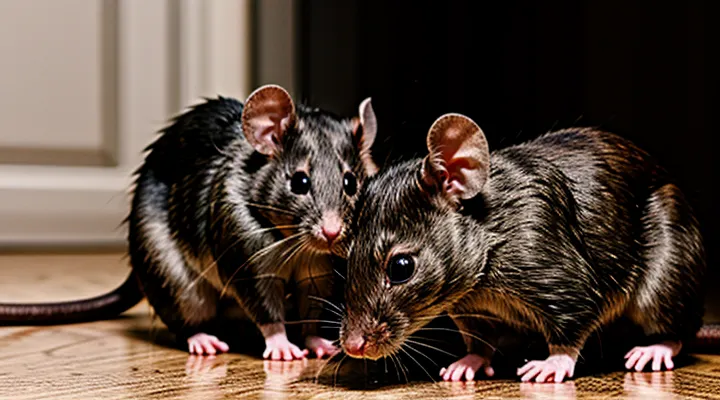
Understanding Rat Anatomy for Sexing
Key Anatomical Differences
Anogenital Distance
Anogenital distance (AGD) is the linear measurement from the center of the anus to the base of the genital papilla. In rodents the distance reflects the influence of prenatal androgen exposure, resulting in a consistent size difference between males and females.
Males exhibit a longer AGD than females at all developmental stages. The disparity appears within hours after birth and persists into adulthood, providing a reliable morphological marker for sex identification.
Measurement protocol
- Use a calibrated digital caliper with a resolution of 0.01 mm.
- Restrain the animal gently on a flat surface; avoid excessive pressure that could distort soft tissue.
- Locate the anal opening and the genital papilla (or scrotal ridge in males).
- Align the caliper tips with the two landmarks and record the distance to the nearest hundredth of a millimeter.
- Perform three consecutive measurements and calculate the mean value.
Typical AGD values (mean ± SD) reported for common laboratory strains:
- Neonatal (postnatal day 1): males ≈ 1.8 ± 0.2 mm, females ≈ 1.2 ± 0.1 mm
- Weanling (postnatal day 21): males ≈ 4.5 ± 0.3 mm, females ≈ 3.2 ± 0.2 mm
- Adult (8 weeks): males ≈ 7.1 ± 0.4 mm, females ≈ 5.0 ± 0.3 mm
Factors that can modify AGD measurements include:
- Age: values increase with growth; age‑matched reference ranges are required.
- Strain: genetic background influences baseline distances.
- Environmental temperature: extreme cold or heat may cause tissue contraction or swelling.
- Anesthetic agents: some compounds relax musculature, potentially altering landmark positions.
When applied correctly, AGD provides a rapid, non‑invasive criterion that distinguishes male from female rats with high accuracy, complementing other techniques such as genital morphology inspection or molecular sexing.
Testicles in Males
Testicles provide the most reliable external indicator for distinguishing male rats from females. In adult specimens, the paired organs lie within the scrotum, visible as small, oval masses posterior to the hind limbs. Their size ranges from 2 mm in young adults to 5 mm in mature individuals, and the surface appears smooth, covered by thin skin. Palpation can confirm presence: gentle pressure reveals firm, movable structures distinct from surrounding tissue.
When visual assessment is insufficient—such as in juvenile or hair‑dense animals—dissection offers definitive confirmation. A mid‑ventral incision along the abdomen exposes the internal reproductive tract; the presence of testes attached to epididymal ducts unequivocally identifies a male. Histological examination of testicular tissue further validates sex, revealing seminiferous tubules and Leydig cells.
Non‑invasive imaging supports rapid screening. High‑frequency ultrasound detects hypoechoic, rounded structures within the scrotal sac, enabling sex determination without sacrificing the animal. Radiography is less effective due to low contrast but can assist when combined with contrast agents that highlight vascularization of the testes.
Key considerations for accurate identification:
- Age: Testicular development initiates around post‑natal day 15; prior to this, external cues are unreliable.
- Species variation: Laboratory strains (e.g., Wistar, Sprague‑Dawley) exhibit consistent testicular morphology, whereas wild‑caught specimens may show size differences.
- Health status: Atrophy or cryptorchidism can obscure typical appearance; thorough palpation and imaging mitigate misclassification.
Employing a tiered approach—visual inspection, palpation, imaging, and, when necessary, dissection—ensures precise sex identification based on testicular characteristics.
Nipples in Females
Nipples provide a reliable external marker for distinguishing female rats from males. In mature females, a pair of prominent mammary glands appears on the ventral abdomen, typically located between the forelimbs and the hindlimbs. These structures are absent or vestigial in males, making their presence a decisive criterion when visual inspection is possible.
Key observations for accurate identification:
- Location: Two nipples positioned symmetrically on the lower abdomen, approximately midway between the ribs and the pelvis.
- Size and shape: Small, rounded protrusions that become more pronounced with age and reproductive status.
- Development stage: Detectable in juveniles after the first post‑natal week; fully visible in adults.
When conducting sex determination, examine the animal in a calm, well‑lit environment, gently lifting the abdominal skin to expose the region. Record the presence or absence of nipples alongside other morphological cues (e.g., anogenital distance) to increase diagnostic confidence.
Methods for Sexing Young Rats (Pups)
Visual Inspection
Observing Anogenital Distance
Observing anogenital distance (AGD) provides a rapid, reliable indicator of rat sex. The measurement exploits the consistent size difference between male and female pups, with males displaying a longer distance between the anus and the genital papilla.
To implement AGD assessment effectively, follow these steps:
- Select appropriate age – Measure pups between post‑natal day 1 and day 5; tissue growth stabilizes after this window, reducing overlap between sexes.
- Prepare equipment – Use a calibrated digital caliper with a resolution of 0.01 mm; sterilize tips before contact with each animal.
- Position the animal – Place the pup on a warmed, flat surface; gently restrain the hindquarters without applying pressure to the abdomen.
- Identify landmarks – Locate the external opening of the anus and the base of the genital papilla (males) or the vaginal opening (females).
- Record measurement – Align caliper jaws with the two landmarks and read the distance directly; repeat three times per pup and calculate the average.
- Classify sex – Compare the average AGD to established threshold values (e.g., > 2.5 mm for males, ≤ 2.5 mm for females in standard laboratory strains). Adjust thresholds for strain‑specific variations if necessary.
Key considerations:
- Temperature control – Maintain ambient temperature at 22 ± 2 °C; fluctuations affect tissue elasticity and measurement accuracy.
- Observer training – Consistent technique reduces inter‑observer variability; periodic proficiency checks are recommended.
- Data documentation – Log raw measurements, calculated averages, and final sex assignments in a standardized spreadsheet to facilitate audit trails.
Potential sources of error include improper landmark identification, excessive handling stress, and measurements taken outside the optimal age range. Mitigating these factors enhances the precision of sex determination in rat colonies.
Palpating for Testicles
Palpation of the scrotum is the most direct method for confirming male rats when external genitalia are not yet obvious. The technique requires gentle handling, proper lighting, and an awareness of developmental timing.
Young male rats develop palpable testicles between 21 and 28 days of age. Before this window, the scrotal sac appears empty and cannot be used reliably for sex determination. After the testicles descend, they are located ventral to the hind limbs, within a thin, mobile sac that feels firm compared to surrounding tissue.
Procedure
- Restrain the animal by supporting the tail and gently cradling the body with the other hand.
- Expose the ventral abdomen and locate the inguinal region just posterior to the pelvic bone.
- Apply light pressure with the thumb and forefinger, sliding them inward toward the midline.
- Feel for a pair of oval, slightly raised structures beneath the skin. The testicles are smooth, firm, and move independently of the surrounding tissue.
- Confirm symmetry; asymmetry or absence of palpable masses suggests a female or an immature male.
Precautions
- Use gloves to maintain hygiene and reduce stress for the animal.
- Avoid excessive force; aggressive pressure can damage the testes or cause distress.
- Perform the assessment in a quiet environment to minimize agitation.
- Record findings immediately to prevent confusion with later observations.
If palpation fails to reveal testicles in a rat older than 30 days, alternative methods such as visual inspection of the anogenital region or genetic testing should be considered. Proper execution of scrotal palpation provides a rapid, accurate determination of sex for laboratory, breeding, and veterinary purposes.
Comparison Method
Using Known-Sex Pups as Reference
Accurate sex identification in laboratory rats often relies on visual comparison with pups whose sex has been previously confirmed. This approach minimizes misclassification when external genitalia are ambiguous, especially in early developmental stages.
When a known‑sex reference is available, follow these steps:
- Place the target pup beside the reference animal on a clean, well‑lit surface.
- Align the ventral view to expose the anogenital region of both individuals.
- Observe the distance between the anus and the genital papilla. In males, the distance is typically greater, and the genital papilla appears more pronounced; in females, the anus and genital opening are close together, forming a compact vulvar slit.
- Confirm the observation by checking secondary characteristics such as the presence of a scrotal sac in males or the lack thereof in females.
- Record the sex determination immediately to avoid confusion with subsequent handling.
Using a reference pup eliminates reliance on subjective interpretation of subtle morphological cues. It also provides a quick verification method when genetic or hormonal assays are unavailable. Consistent application of this comparative technique enhances data reliability across breeding colonies and experimental groups.
Methods for Sexing Adult Rats
Visual Inspection
Examining the Genital Area
Accurate sex identification in laboratory rats relies on direct observation of the external genitalia. The genital area provides definitive morphological markers that distinguish males from females.
In males, the anogenital distance is noticeably greater than in females. The testes are visible as paired, oval structures within the scrotum, and the penis is recessed beneath the prepuce. The presence of a prominent scrotal sac and a visible urethral opening at the ventral surface confirm male sex.
In females, the anogenital distance is shorter. The vulva appears as a small, round opening flanked by the labia, and no scrotal sac or testes are present. The perineal region is smooth, and the vaginal opening is centrally positioned.
To examine the genital area correctly, follow these steps:
- Restrain the rat gently but securely, using a calm hand or a restraint device.
- Place the animal on a clean, flat surface with the ventral side upward.
- Locate the anogenital region by feeling for the distance between the anus and the genital opening.
- Observe the external structures:
- For males, identify the scrotum, testes, and recessed penis.
- For females, note the small vulvar opening without scrotal tissue.
- Record findings immediately to avoid misclassification.
Proper lighting and magnification, such as a dissecting microscope, enhance visibility of subtle features. Regular practice improves speed and reliability of sex determination.
Identifying Nipple Presence
Accurate sex determination in laboratory rats relies on reliable external markers; nipple presence offers a definitive criterion for distinguishing females from males after weaning.
Female rats develop a complete set of functional nipples along the ventral abdomen, typically eight pairs symmetrically arranged. Males retain only rudimentary nipple buds, which remain inconspicuous and lack the characteristic papillae seen in females.
To assess nipple presence, follow a standardized procedure:
- Anesthetize or gently restrain the animal to prevent movement.
- Position the rat in dorsal recumbency on a clean, well‑lit surface.
- Apply a mild depilatory agent or use a fine brush to remove hair from the lower thoracic to inguinal region.
- Examine the skin under magnification (10–20×).
- Count visible nipple papillae; eight pairs confirm a female, fewer than four pairs indicate a male.
Common errors include misidentifying hair follicles as nipples, examining too early (pre‑pubertal animals may lack fully developed nipples), and neglecting symmetrical distribution. Verify findings by cross‑checking with additional sex markers such as anogenital distance when uncertainty persists.
Behavioral Cues
Male-Specific Behaviors
Male rats exhibit distinct behavioral patterns that can serve as reliable indicators of sex when visual inspection is ambiguous. These patterns emerge after puberty and are consistent across laboratory strains.
- Territorial marking: males deposit urine or glandular secretions on the cage perimeter, creating a noticeable scent trail.
- Aggressive encounters: males initiate and sustain fights with conspecifics, displaying chasing, biting, and wrestling behaviors.
- Mounting attempts: males frequently attempt to mount other rats, regardless of the partner’s sex, especially in the presence of estrous females.
- Ultrasonic vocalizations: males produce higher‑frequency calls during mating attempts and competitive interactions, distinguishable from female vocal profiles.
Observing these actions in a controlled environment, such as a clean cage with limited enrichment, enhances detection accuracy. Repeated assessment over several days reduces false classifications caused by stress‑induced anomalies.
Female-Specific Behaviors
Female rats exhibit a set of observable behaviors that differ markedly from those of males, providing reliable cues for sex determination. These behaviors arise from hormonal influences and reproductive physiology.
- Nest‑building activity intensifies during the estrous cycle; females construct and maintain more complex nests compared to males.
- Urine marking patterns are less frequent and less extensive in females; males typically display prominent scent‑marking along cage walls.
- Aggressive encounters are rare among adult females; males often initiate and sustain dominance fights, especially when unfamiliar conspecifics are introduced.
- Maternal nesting and pup‑retrieval actions emerge in sexually mature females, characterized by rapid collection of pups and consistent grooming.
- Vocalizations during mating differ: females emit distinct high‑frequency squeaks during lordosis, whereas males produce low‑frequency grunts.
In addition to these overt actions, subtle physiological signs accompany behavioral expression. Vaginal patency becomes evident during estrus, allowing visual inspection of swelling and moisture. Females also display a shorter latency to lordosis when presented with a male, measurable in laboratory settings.
Combining behavioral observation with brief physical checks yields a robust protocol for sex identification. Prioritize continuous monitoring of nest construction, scent marking, and social interaction patterns, then corroborate findings with a quick examination of the perineal region. This integrated approach maximizes accuracy while minimizing handling stress.
Factors Influencing Accuracy
Age of the Rat
Challenges with Very Young Pups
Determining the sex of neonatal rat pups presents several practical obstacles. External genitalia are not fully developed until the second week of life, making visual identification unreliable. Tissue translucency hampers contrast, and the small size of structures limits resolution of standard magnification tools.
Key challenges include:
- Undifferentiated genitalia: Pre‑pubertal morphology lacks distinct male or female features.
- Rapid growth: Morphological changes occur within hours, requiring precise timing of observation.
- Observer bias: Subjective assessment of subtle cues increases error rates.
- Equipment limitations: Low‑power stereomicroscopes often fail to resolve minute anatomical differences.
Mitigation strategies focus on timing, technique, and verification. Conduct assessments on post‑natal day 5–7, when gonadal structures become marginally visible, using high‑magnification optics equipped with differential interference contrast. Supplement visual inspection with molecular markers such as Sry gene PCR, which provides definitive sex confirmation irrespective of external development. Record findings with photographic documentation to enable retrospective review and reduce bias.
Clarity in Adults
Accurate identification of sex in mature rodents is essential for experimental validity, colony management, and disease modeling. Errors in classification compromise data integrity and may inflate animal use.
Clarity in adult specimens depends on observable anatomical features that differentiate males from females without ambiguity. Primary indicators include the size and shape of the genital papilla, the presence or absence of a scrotum, and the relative distance between the anus and the genital opening.
Methods that provide reliable differentiation:
- Direct visual inspection of external genitalia under adequate lighting.
- Measurement of anogenital distance (AGD) with calibrated calipers; males exhibit significantly longer AGD.
- Palpation to detect testes in the scrotal sac; absence confirms female status.
- High‑resolution ultrasound to visualize internal reproductive structures when external signs are inconclusive.
- Polymerase chain reaction assays targeting sex‑specific genetic markers for definitive confirmation.
Best practice protocol:
- Restrain the animal gently to minimize stress.
- Position the rat on a flat surface, ensuring the ventral side is exposed.
- Examine the genital papilla; a prominent, rounded papilla suggests male, while a smaller, less pronounced structure indicates female.
- Measure AGD; record values and compare against established sex‑specific thresholds.
- If uncertainty remains, perform a quick ultrasound scan or collect a tissue sample for PCR analysis.
Consistent application of these steps eliminates subjective interpretation and yields reproducible sex classification in adult rats.
Lighting and Environment
Proper illumination is a prerequisite for reliable visual assessment of rat genitalia. Use a light source that delivers uniform, shadow‑free illumination across the examination area. LED panels with a color temperature of 5000–6500 K provide a clear, neutral spectrum that enhances contrast without altering tissue coloration.
Maintain a consistent environment to prevent stress‑induced anatomical changes. Recommended conditions include:
- Ambient temperature: 20–22 °C (68–72 °F)
- Relative humidity: 45–55 %
- Quiet room with minimal vibrations
- Clean, non‑reflective work surface (e.g., matte white or grey)
Position the animal on a low‑profile platform to keep the genital region at eye level for the observer. A magnifying lens (2.5–5×) or a stereo microscope with adjustable focus further improves detail resolution, allowing clear differentiation between male and female structures.
Record lighting intensity (lux) for each session; values between 3000 and 5000 lux are optimal for distinguishing subtle morphological features without causing glare. Consistency in these parameters reduces variability between observers and enhances the accuracy of sex determination.
Experience of the Observer
The observer’s first impression of a laboratory rat revolves around external morphology. Males typically present a larger anogenital distance, a more pronounced scrotal sac, and a broader abdomen. Females exhibit a shorter distance between the anus and genital papilla, a less visible scrotal region, and a more tapered ventral profile. Accurate visual assessment requires consistent lighting, magnification of at least 10×, and a calibrated measurement tool for the anogenital gap.
During repeated examinations, the observer notes that stress influences genital visibility. Rats under restraint display reduced muscle tone, which can obscure the scrotal sac in males. To mitigate this effect, the observer employs a brief acclimation period of two minutes before measurement, allowing the animal to regain baseline posture. Observations confirm that measurements taken after acclimation differ by less than 0.2 mm from those obtained under ideal conditions.
Key observations derived from experience:
- Anogenital distance consistently exceeds 4 mm in males, remains below 3 mm in females.
- Testicular bulge becomes evident only when the animal is warm; external heating for 30 seconds improves detection.
- Vaginal opening in females appears as a shallow, rounded slit; probing with a fine cotton swab confirms the structure without causing injury.
- Repeated measurements on the same individual yield a standard deviation under 0.1 mm, indicating high intra‑observer reliability.
The observer’s cumulative data support a protocol that couples precise visual criteria with brief thermal stimulation and standardized handling. This approach reduces misidentification rates to below 2 % across diverse rat strains.
Common Mistakes and How to Avoid Them
Misinterpreting Swelling
Swelling of the inguinal or abdominal region often leads researchers to assign sex incorrectly. In many strains, females develop estrous‑related edema, while males may exhibit transient testicular enlargement after handling stress. Both phenomena can be mistaken for definitive sexual characteristics if observations are limited to a single time point.
Key sources of error:
- Timing of observation – Swelling peaks during the estrus phase in females and may subside within hours; a snapshot taken during this window appears male‑like.
- Stress‑induced edema – Acute handling or anesthesia can cause fluid accumulation in the scrotal sac of males, mimicking the size of a mature testis in juveniles.
- Hormonal manipulation – Administration of estrogenic compounds produces abdominal swelling in males, leading to false classification.
- Species‑specific variation – Certain rat strains exhibit naturally larger mammary glands in females, which can be confused with inguinal swelling.
Accurate sex determination requires corroborating swelling with additional markers:
- Examine anogenital distance; males consistently display a longer measurement than females.
- Inspect the presence of a visible scrotum and testicular descent; absent or under‑developed scrotum indicates a female.
- Perform a quick genital papilla check; the male papilla is typically larger and more pronounced.
- Use genetic or molecular assays (e.g., Sry PCR) when morphological cues are ambiguous.
By recognizing that swelling alone is unreliable, researchers can avoid systematic misclassification and ensure data integrity in studies involving rat sex identification.
Rushing the Observation Process
Accurate sex identification in laboratory rats depends on careful observation of anatomical markers. Rushing this process reduces reliability and may compromise experimental outcomes.
Premature handling often leads to misidentification of the anogenital distance, which is the primary external indicator. Inadequate exposure of the ventral surface can obscure the presence of the preputial or vaginal opening, resulting in false classification. Quick assessments also increase stress levels, causing temporary swelling that masks true tissue dimensions.
Key drawbacks of a hurried approach include:
- Elevated error rate in sex assignment
- Increased animal stress and potential physiological alteration
- Need for repeat examinations, extending study timelines
- Compromised data integrity across downstream analyses
To maintain precision, follow a structured protocol:
- Allow the animal to acclimate for at least five minutes after removal from its cage.
- Position the rat on a clean, warm surface to promote relaxation.
- Gently expose the lower abdomen and perineal region using minimal restraint.
- Measure anogenital distance with calibrated calipers, recording to the nearest 0.01 mm.
- Verify the presence of sex‑specific structures (preputial folds in males, vaginal opening in females) before finalizing the record.
Implementing these steps eliminates the temptation to shortcut observation, ensuring that sex determination remains both accurate and reproducible.
Assuming Sex Based on Size or Temperament
Inferring a rat’s sex from body size or behavioral traits is a frequent shortcut in laboratory and pet settings. The practice rests on the assumption that males are larger and more aggressive, while females are smaller and more docile.
Body‑weight data show extensive overlap between sexes. Juvenile males may weigh less than mature females, and diet, strain, and housing conditions can shift growth curves enough that size alone cannot reliably separate males from females.
Temperament assessments suffer similar limitations. Aggression, activity level, and nesting behavior are influenced by age, environment, and individual variation rather than sex. Studies report female rats exhibiting high levels of exploration and males displaying calm behavior under identical conditions.
Key reasons to reject size‑ or temperament‑based sex assignment:
- Overlapping weight ranges across developmental stages.
- Strain‑specific growth patterns that blur size distinctions.
- Environmental factors (e.g., enrichment, group housing) that modify behavior.
- Hormonal fluctuations in females that affect aggression and activity.
- Risk of misclassification leading to experimental bias or breeding errors.
Accurate sex determination requires direct examination of external genitalia. In juvenile rats, the anogenital distance (AGD) differs markedly: males have a longer AGD and a visible scrotal sac, while females present a shorter distance and an enclosed vaginal opening. In adult specimens, the presence of testes or a palpable uterus provides definitive identification. Photographic guides and magnification tools improve consistency, and training protocols for personnel reduce observer error.
When visual inspection is impractical, molecular methods such as PCR amplification of sex‑specific genes (e.g., Sry) offer a definitive alternative. These techniques eliminate reliance on indirect traits and ensure data integrity across research and breeding programs.