
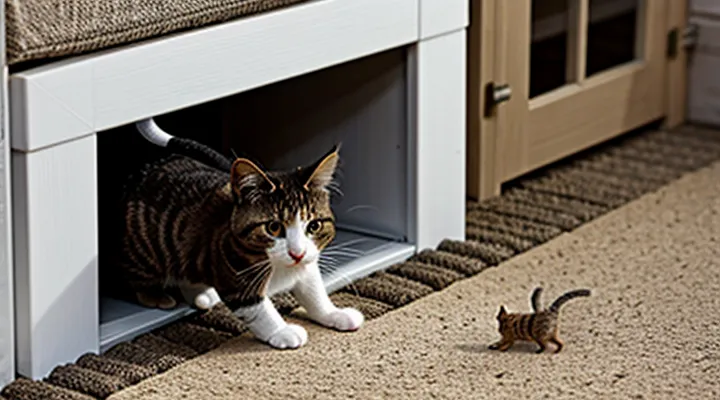
The Hunter’s Instinct: Feline Predatory Behavior
Evolutionary Roots
Ancestral Hunting Skills
Domestic felines preserve hunting techniques that originated in their wild ancestors. These techniques emerged through millennia of natural selection and remain functional in modern pets.
The Felidae lineage evolved a suite of sensory and motor adaptations for stealth predation. Sharp auditory perception detects the faint rustle of small prey. Vibrissae provide spatial feedback in low‑light environments. Retractable claws enable rapid, controlled strikes. A highly flexible spine stores kinetic energy for explosive acceleration during a pounce.
Key ancestral skills that facilitate rodent capture include:
- Precise sound localization to pinpoint movement.
- Whisker‑mediated detection of air currents and surface contours.
- Rapid extension of forelimbs powered by spinal flexion.
- A bite pattern that severs the spinal cord at the neck, ensuring swift immobilization.
- Ability to swallow prey whole, aided by a loosely hinged jaw and expandable throat.
When a cat encounters a mouse, it follows a predictable sequence: quiet approach, crouched stance, sudden leap, clawed grip, neck bite, and ingestion. Each step relies on the inherited abilities described above, demonstrating continuity between ancestral wild behavior and contemporary domestic activity.
Even cats that receive regular meals exhibit these predatory responses, reflecting the deep‑rooted genetic program that governs feline hunting.
Domestication and Instinct Preservation
Domesticated cats retain the neural circuitry that triggers pursuit, stalk, and capture of small rodents. Selective breeding for companionship did not eliminate the motor patterns encoded in the brainstem and forebrain that coordinate rapid acceleration, precise paw placement, and bite force sufficient to immobilize prey. Genetic studies show that alleles associated with hunting behavior remain at frequencies comparable to wild ancestors, indicating that domestication imposed minimal pressure to suppress these traits.
The preservation of instinct manifests in several observable mechanisms:
- Sensory amplification: whisker proprioception and auditory sensitivity detect minute movements of concealed mice.
- Motor readiness: a high proportion of fast‑twitch muscle fibers enables sudden bursts of speed during the chase.
- Behavioral sequencing: innate patterns of crouch, pounce, and bite follow a fixed action pattern triggered by visual or tactile cues.
- Reward circuitry: dopamine release upon successful capture reinforces hunting attempts even in indoor environments.
Environmental enrichment that mimics natural hunting scenarios sustains these instincts. Providing toys that emulate prey movement, installing vertical spaces for ambush, and allowing occasional supervised outdoor access prevent atrophy of the predatory sequence. Consequently, domestic cats continue to exhibit efficient mouse‑killing techniques despite centuries of cohabitation with humans.
Sensory Acuity for Prey Detection
Vision: Night Vision and Motion Detection
Cats possess visual adaptations that enable effective predation on small rodents under low‑light conditions. Their eyes contain a high concentration of rod photoreceptors, which amplify faint photons and provide superior sensitivity at night. The reflective layer behind the retina, the tapetum lucidum, redirects unabsorbed light back through the photoreceptor layer, effectively doubling the chance of photon capture. Large, vertically oriented pupils expand rapidly, allowing maximal light entry and maintaining image clarity even in near darkness.
Temporal resolution of feline vision supports precise motion detection. Cats can discern movement at frequencies exceeding 80 Hz, far above human capability, which permits the identification of rapid, subtle shifts typical of mouse locomotion. The visual streak—a band of densely packed retinal cells—enhances peripheral awareness, enabling cats to track prey that moves across the field of view without direct fixation. This combination of high rod density, reflective retinal tissue, and rapid flicker fusion thresholds creates a visual system optimized for locating and pursuing nocturnal rodents.
Key visual characteristics contributing to successful rodent capture:
- Tapetum lucidum for photon recycling
- Rod‑dominant retina for low‑light acuity
- Pupillary dilation up to 12 mm for maximal light intake
- Flicker fusion frequency >80 Hz for fine motion discrimination
- Visual streak extending peripheral field and enhancing tracking
These features collectively allow cats to detect, lock onto, and intercept moving prey in dim environments with remarkable efficiency.
Hearing: Pinpointing Ultrasonic Sounds
Cats rely on acute auditory perception to locate rodent prey. Their ears can detect frequencies up to 65 kHz, well beyond the human hearing limit of 20 kHz. This range encompasses the ultrasonic vocalizations and foot‑step sounds produced by mice during movement and communication.
The feline auditory system amplifies high‑frequency signals through a combination of ear‑muscle adjustments and specialized cochlear hair cells. The tensor tympani and stapedius muscles contract reflexively, sharpening the focus on rapid pressure changes. Outer hair cells in the basal turn of the cochlea respond preferentially to ultrasonic wavelengths, converting them into neural impulses that travel via the auditory nerve to the brainstem.
Neural processing centers, particularly the inferior colliculus and auditory cortex, filter these impulses, extracting temporal and spectral cues that reveal the direction and distance of the source. Cats can discriminate minute time differences—on the order of microseconds—between the arrival of a sound at each ear, allowing precise triangulation of a mouse hidden under debris or within narrow burrows.
Key mechanisms enabling ultrasonic detection:
- Frequency range extension: Inner ear structures tuned for 30–65 kHz.
- Dynamic ear positioning: Muscles rotate the pinna to maximize gain toward specific angles.
- Rapid temporal resolution: Sub‑millisecond phase detection for accurate localization.
- Neural specialization: Dedicated pathways prioritize high‑frequency inputs over lower‑frequency background noise.
By integrating these auditory capabilities, felines can pinpoint and intercept rodents even when visual cues are absent, ensuring successful capture and consumption.
Olfaction: Scent Tracking
Cats rely heavily on their sense of smell to locate hidden rodents. The olfactory epithelium, packed with millions of receptor cells, detects volatile compounds emitted by mice, such as urine, feces, and skin secretions. These chemicals create a scent plume that persists in the environment, allowing a cat to follow concentration gradients toward the source.
When a feline encounters a faint mouse odor, it performs a series of short, low‑amplitude sniffs. Each sniff draws air across the nasal cavity, refreshing the olfactory receptors and sharpening the spatial map of the scent. By comparing the intensity of odorants between successive sniffs, the cat determines the direction of increasing concentration and adjusts its path accordingly.
Key aspects of scent tracking include:
- Detection threshold: Cats can perceive mouse-derived compounds at concentrations as low as a few parts per billion.
- Temporal resolution: Rapid sniff cycles (up to 8 Hz) enable real‑time updates of the odor map.
- Neural integration: The olfactory bulb and piriform cortex process scent information, linking it to memory of prey locations and hunting strategies.
Environmental factors influence effectiveness. Wind direction disperses scent plumes, creating a directional bias that cats exploit by positioning themselves upwind of the suspected mouse habitat. Humidity and temperature affect molecule volatility, altering plume strength and detection distance.
Ultimately, olfaction provides the initial cue that triggers the predatory sequence, guiding the cat from detection to pursuit and capture of the rodent.
Vibrissae: Navigational and Sensory Tools
Cats rely on their whiskers to locate, track, and seize small prey. Each vibrissa is a deeply rooted hair connected to a dense network of nerves, providing precise tactile feedback about objects within a few centimeters of the face. When a mouse darts through vegetation, the cat’s whiskers detect subtle air currents and surface textures, allowing the predator to judge the prey’s position without direct visual contact.
The sensory system of vibrissae supports several critical actions:
- Spatial mapping – bilateral whisker arrays create a three‑dimensional map of the immediate environment, enabling the cat to navigate tight spaces and adjust its strike angle.
- Motion detection – rapid deflection of whiskers registers the mouse’s movement, triggering reflexive adjustments in the cat’s head and forelimb posture.
- Force assessment – mechanoreceptors gauge the resistance of the prey’s hide, informing the amount of bite pressure needed to immobilize the mouse.
During the final capture phase, whiskers guide the mouth to the mouse’s neck, ensuring a clean, swift kill. After the bite, the cat’s facial muscles contract, pulling the prey toward the throat while vibrissae continue to monitor resistance, preventing accidental escape.
Overall, the whisker system functions as an integrated navigation and sensory apparatus, converting minute physical cues into coordinated motor responses that enhance hunting efficiency.
The Stalk and Capture
Pre-Hunt Rituals and Body Language
Focusing Attention
Cats rely on precise visual and auditory focus to locate rodents. When a mouse moves, the feline’s eyes lock onto the motion, and the brain filters out unrelated stimuli. This selective attention narrows the field of perception to the prey’s trajectory.
The cat’s whiskers detect subtle air currents generated by the mouse’s movement. By concentrating sensory input on these vibrations, the predator discerns distance and direction without distraction from ambient noise.
During the chase, the animal maintains a fixed gaze, adjusting head position to keep the target centered. This sustained focus enables rapid acceleration and accurate timing of the pounce.
Key aspects of attention in feline predation:
- Continuous tracking of the mouse’s position
- Suppression of peripheral visual cues
- Integration of whisker feedback to refine depth perception
- Coordination of motor response with visual lock‑on
After capture, the cat’s attention shifts to handling the prey, using precise bite placement to immobilize. The transition from pursuit to consumption demonstrates the same concentrated focus that governs the initial hunt.
Low Crawl and Stealth
Cats rely on a flattened, silent approach when targeting rodents. The low crawl involves keeping the spine close to the ground, reducing the body’s silhouette and minimizing wind displacement. Muscles in the hind limbs contract in a staggered rhythm, allowing the animal to advance a few centimeters with each step while maintaining full balance. The forepaws remain relaxed, ready to snap shut at the moment of contact.
The effectiveness of this technique stems from several physiological and environmental factors:
- Reduced visual profile – a crouched posture limits the amount of fur exposed, making detection by prey’s motion‑sensitive eyes less likely.
- Suppressed vibrations – soft pads on the paw pads absorb impact, preventing ground‑borne tremors that could alert a mouse.
- Enhanced auditory focus – the head stays low, aligning the ears with the sound source and improving the ability to locate minute rustles.
- Optimized energy use – short, controlled strides conserve stamina for the final burst required to seize the target.
When a mouse is within striking distance, the cat transitions from the crawl to a rapid, vertical leap. The low approach positions the predator directly above the prey’s escape routes, limiting the rodent’s options and increasing capture success. This method, refined through evolution, combines precise motor control with acute sensory input to secure food with minimal effort.
The Stalking Phase
Cover Utilization
Cats rely on environmental concealment to locate and capture small rodents. Cover provides visual obstruction that prevents prey from detecting the predator until the final moment.
Common sources of concealment include:
- Low vegetation such as grass or shrubbery
- Household objects like sofas, curtains, and boxes
- Shadowed areas created by lighting conditions
When a cat positions itself behind cover, it reduces its silhouette and minimizes motion cues. The animal then advances in short, controlled bursts, maintaining partial concealment until the distance is short enough for a decisive strike. This method maximizes the likelihood of a successful capture while minimizing energy expenditure.
After securing the prey, the cat often retreats to a protected spot. The selected location serves several purposes:
- Prevents interference from other predators or conspecifics
- Allows the cat to manipulate the carcass without disturbance
- Facilitates a quiet environment for consumption
Effective utilization of cover therefore enhances both the hunting phase and the feeding phase, ensuring higher success rates and safer consumption for the feline predator.
Patient Waiting
Cats that hunt rodents rely on a disciplined interval before striking. The animal remains motionless, eyes fixed on the target, while the prey moves unnoticed. This pause creates a tactical advantage, allowing the predator to calculate distance, speed, and direction before the decisive lunge.
The waiting phase shares characteristics with human patients awaiting medical procedures. Both involve controlled stillness, heightened awareness, and anticipation of a critical moment. During this period, physiological responses such as increased heart rate and focused attention are common to both predator and patient.
Key elements of the waiting stage include:
- Stable posture that minimizes detection.
- Continuous visual tracking of the intended target.
- Regulation of breathing to reduce noise and motion.
- Mental focus that suppresses external distractions.
By mastering these components, a cat maximizes the probability of a successful capture, while a patient improves readiness for treatment. The parallel underscores the universal value of patience as a strategic tool in both natural predation and clinical environments.
The Pounce
Leap Mechanics
Cats rely on precise leaping to intercept rodents. The motion combines rapid acceleration, coordinated limb extension, and controlled landing, allowing the predator to close distance and secure prey before the mouse can escape.
The leap begins with a crouch that stores elastic energy in the hind‑limb muscles and tendons. Primary contributors are the gluteus, quadriceps, and gastrocnemius, which contract explosively to generate forward thrust. Simultaneously, the forelimbs flex to prepare for impact and to grasp the target.
Key elements of the leap:
- Force generation: Peak ground reaction forces reach up to five times body weight, produced within 0.1 s.
- Trajectory control: Cats adjust launch angle between 30° and 45° to balance height and distance, matching the mouse’s typical hiding depth.
- Mid‑air orientation: Vestibular cues and visual tracking maintain body alignment, ensuring the paws meet the prey at the apex of the jump.
- Landing mechanics: Flexed forelimbs absorb impact, while claws dig into the mouse’s torso, immobilizing it instantly.
Timing is critical; the interval from launch to paw contact averages 0.2–0.3 s, leaving insufficient reaction time for the mouse. Muscular coordination and proprioceptive feedback enable cats to repeat this maneuver repeatedly with minimal fatigue, supporting efficient rodent capture.
Claw Engagement
Cats rely on precise claw mechanics when securing a mouse. The forelimbs extend sharply curved keratin hooks that penetrate the prey’s flank, creating a firm anchor. Muscular contraction in the shoulder and elbow drives the paws forward, while the digital flexor tendons lock the claws around the rodent’s body. This grip prevents lateral escape and distributes force across multiple points, reducing the chance of the mouse slipping.
The engagement process unfolds in several stages:
- Initial contact: Rapid paw strike contacts the mouse’s dorsal surface; claws puncture skin and muscle.
- Grip formation: Digital pads adjust to the animal’s curvature, allowing claws to embed deeper as the cat pulls the prey toward the chest.
- Immobilization: Sustained pressure from the forelimbs compresses the thorax, crushing ribs and disabling breathing.
- Transfer to mouth: Once the mouse is immobilized, the cat releases one paw while the other maintains the hold, positioning the prey for a bite that severs the spinal cord.
Claw maintenance supports this sequence. Continuous shedding of the outer sheath preserves sharpness, while regular scratching against surfaces removes debris that could dull the edges. The cat’s ability to retract claws when not hunting protects them from wear, ensuring optimal performance during each capture.
The Kill Bite
Neck Bite Technique
Cats capture mice by delivering a rapid, precise bite to the neck. The bite targets the cervical vertebrae and underlying spinal cord, causing immediate paralysis and death. Muscular contraction of the jaw produces a force sufficient to fracture the delicate vertebrae of a rodent, while the sharp incisors slice through skin and fur.
The technique relies on sensory cues. Vision detects movement; whiskers gauge distance; auditory signals locate the prey’s heartbeat. Once within striking range, the cat aligns its head, contracts the neck muscles, and snaps shut. The bite is timed to intersect the mouse’s neck at the level of the seventh cervical vertebra, where the spinal cord is most vulnerable.
Benefits of the neck bite include:
- Immediate incapacitation, reducing struggle and risk of injury.
- Efficient consumption, allowing the cat to swallow the prey whole after the neck is severed.
- Minimal energy expenditure compared to prolonged grappling.
Variations occur among individuals. Larger cats may apply greater bite force, enabling a single bite to crush the skull. Smaller kittens often practice the motion on play objects before mastering the lethal precision required for live prey.
Suffocation Method
Cats often subdue mice by applying pressure to the neck, cutting off the animal’s airflow. The process begins when the cat grasps the mouse with its forepaws, securing the prey against the chest. The jaws close around the mouse’s throat, and the cat’s incisors press against the trachea while the molars compress the soft tissue behind the larynx. This action collapses the airway, preventing oxygen from reaching the lungs.
The suffocation technique relies on several physiological factors:
- Neck musculature: A cat’s strong jaw muscles generate enough force to collapse the trachea of a small rodent.
- Bone structure: The cat’s sharp incisors act as levers, creating a fulcrum that pins the mouse’s neck.
- Respiratory shutdown: Immediate blockage of the airway leads to rapid hypoxia, causing loss of consciousness within seconds.
After the mouse stops breathing, the cat typically releases the grip, allowing the prey to become limp. The feline then proceeds to bite the carcass, often starting at the neck and moving toward the torso to extract edible tissue. This sequence minimizes struggle and reduces the risk of injury to the predator.
Consuming the Prey
Post-Capture Behavior
Playing with Prey
Cats often seize a mouse, release it, and resume the chase before delivering a final bite. This pattern, commonly called “playing with prey,” serves several functional purposes. The intermittent release allows the cat to assess the mouse’s movements, ensuring the animal is still vulnerable. Repeated attacks sharpen reflexes and maintain muscle coordination, which are essential for successful predation of small mammals.
- Evaluates prey stamina, confirming that the mouse cannot escape.
- Refines bite placement, directing force to the neck or spinal region for rapid incapacitation.
- Reinforces sensory feedback, linking visual cues with tactile response.
- Preserves hunting skill across generations by providing a low‑risk learning environment.
The behavior reflects an instinctual training cycle, enabling felines to transition from playful engagement to efficient consumption without unnecessary injury to themselves.
Securing the Kill
Cats secure a captured mouse through a series of precise actions that minimize the chance of escape and reduce the risk of injury. After the initial bite, the animal typically applies a strong, localized grip with its jaws, targeting the neck or spinal region. This pressure severs vital structures quickly, ensuring rapid immobilization.
The forepaws play a supporting role. One paw holds the prey against the body while the other delivers additional pressure or delivers a second bite if necessary. This dual‑handed approach prevents the mouse from twisting free and allows the cat to maintain balance during the kill.
Following immobilization, the cat proceeds to a safe location to consume the prey. The sequence includes:
- Dragging the mouse to a concealed spot or elevated perch.
- Re‑orienting the carcass to expose the neck and spine.
- Using teeth to separate the head from the torso, often leaving the head intact to avoid ingesting bones.
- Consuming the flesh in manageable bites, pausing to swallow and reposition as needed.
Throughout the process, the cat’s muscular coordination and sensory feedback guide each movement, resulting in a controlled and efficient consumption of the captured mouse.
Eating Habits
Dissection and Consumption
Cats typically kill a mouse with a swift bite to the neck, severing the spinal cord and causing immediate loss of consciousness. The bite is delivered with precise force, calibrated to avoid unnecessary tissue damage that could hinder subsequent handling.
After immobilization, the cat employs its forepaws to grasp the prey, positioning the head near the mouth. The animal then performs a rapid incision along the ventral midline, exposing internal organs. This dissection follows a consistent sequence:
- Sever the esophagus and trachea to prevent choking.
- Separate the abdominal cavity from the thoracic cavity by cutting through the diaphragm.
- Extract the heart and liver first, as these organs are rich in blood and nutrients.
- Remove the gastrointestinal tract, discarding fur and bone fragments that lack digestible protein.
The cat ingests the extracted tissues in order of decreasing toughness, beginning with soft organs and ending with muscle tissue. Saliva, containing enzymes and antimicrobial compounds, begins the digestive process before the food reaches the stomach. The stomach secretes hydrochloric acid and pepsin, breaking down proteins into peptides. Small intestines absorb amino acids, while the large intestine expels indigestible remnants. This systematic approach maximizes nutrient extraction from the captured mouse.
Nutritional Value of Mice
Mice constitute a compact source of protein, fat, vitamins, and minerals that satisfy the dietary requirements of felines during hunting. A typical adult house mouse (≈20 g) provides approximately 4 g of high‑quality protein, 1 g of digestible fat, and 20 kcal of metabolizable energy. The protein profile includes all essential amino acids, notably taurine, arginine, and methionine, which support retinal health, immune function, and tissue repair.
- Protein: 20 % of body mass; complete amino‑acid spectrum.
- Fat: 5 % of body mass; rich in linoleic acid and cholesterol.
- Energy: 100 kcal per 100 g; readily converted to usable ATP.
- Vitamins: B‑complex (B1, B2, B6, B12) and vitamin A precursors.
- Minerals: calcium, phosphorus, magnesium, iron, zinc, and selenium.
Nutrient composition varies with mouse species, age, and reproductive status. Juvenile mice contain higher moisture and lower fat, while pregnant or lactating females exhibit increased lipid stores and elevated calcium levels. Seasonal fluctuations affect vitamin D content due to changes in ambient sunlight exposure.
For wild‑hunting cats, the intake of whole mouse tissue delivers fiber from fur and gut contents, aiding gastrointestinal motility. The bioavailability of nutrients from fresh prey exceeds that of processed diets, reducing the need for supplemental additives. However, occasional consumption of rodents with parasites or toxins can introduce health risks, requiring balanced exposure in natural foraging contexts.
Sharing and Offering Prey
Instinctual Gifts
Cats possess a suite of innate abilities that enable efficient predation of small rodents. These abilities develop without training and function automatically in response to prey signals.
- Exceptional auditory sensitivity detects high‑frequency rustles produced by moving mice.
- Vision optimized for low‑light environments reveals motion silhouettes at distances beyond human perception.
- A highly flexible spine permits rapid acceleration and abrupt directional changes during a chase.
- Retractable, razor‑sharp claws provide secure grip and precise strikes.
- Reflexes measured in milliseconds allow immediate response to sudden prey movements.
- Bite force concentrated in the canine teeth delivers swift, lethal punctures to the neck or spinal cord.
- Digestive enzymes adapted to process vertebrate tissue facilitate rapid nutrient absorption after consumption.
When a mouse scurries across a floor, the cat’s ears capture the subtle squeak, triggering a focused visual sweep. The spine contracts, storing kinetic energy that releases as a burst of speed. At the moment of contact, claws embed, and the bite secures the prey’s vital structures. The cat then employs its specialized dentition to immobilize the mouse, followed by swallowing whole or in portions. The digestive system immediately activates enzymes that break down muscle, bone, and organ tissue, delivering essential amino acids and minerals. This coordinated series of instinctual gifts ensures that cats reliably capture and ingest rodents with minimal effort.
Understanding Feline Motivation
Cats pursue rodents because a combination of instinct, sensory processing, and metabolic demand activates a predatory circuit. The circuit originates in the hypothalamus, where hunger signals increase dopamine release in the nucleus accumbens. Elevated dopamine heightens attention to moving, high‑contrast objects, prompting the visual cortex to prioritize potential prey. Auditory and vibrissal inputs reinforce detection, allowing rapid orientation toward a mouse.
The hunting sequence unfolds in three stages:
- Stalk – Low‑frequency muscle tension contracts the hind limbs, reducing body heat and sound. Tail position stabilizes balance while the cat aligns its body with the target’s trajectory.
- Pounce – Fast‑twitch fibers generate explosive acceleration; the cat’s forepaws extend to grasp the prey’s torso.
- Kill and consume – Jaw muscles deliver a bite to the cervical vertebrae, severing spinal function. Saliva contains enzymes that begin protein breakdown, and the cat swallows the carcass whole, relying on gastric acids for digestion.
Motivation intensifies when environmental cues signal scarcity. Seasonal decline in insect populations forces cats to rely more heavily on small mammals, reinforcing the predatory response through positive feedback: successful capture reduces hunger, which in turn strengthens the neural pathways associated with hunting. Domesticated cats retain this loop, even when food is readily available, because the reward circuitry remains sensitive to the act of killing itself.
Learning shapes efficiency. Kittens observe adult predators, imitating stalking postures and pounce timing. Repeated exposure to live prey refines motor patterns, decreasing latency between detection and capture. Over time, cats develop individualized strategies—some favor ambush from concealed positions, others pursue with relentless sprinting—reflecting adaptive optimization of the underlying motivational system.