
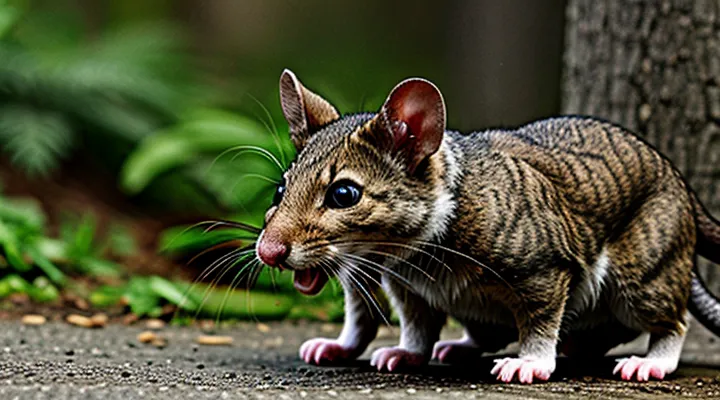
The Role of Mice in Ecosystems
Mice are among the most prolific terrestrial vertebrates, maintaining high reproductive rates that enable rapid population turnover. Their abundance provides a reliable energy source for a wide range of carnivorous species, including raptors, mustelids, small felids, and serpents. Predator numbers often correlate directly with local mouse densities, allowing these hunters to sustain breeding success and territorial stability.
The presence of mice influences several ecological processes:
- Seed transport and burial through foraging activity, contributing to plant regeneration.
- Soil disturbance via burrowing, enhancing aeration and nutrient mixing.
- Regulation of arthropod communities by consuming insects, reducing herbivore pressure on vegetation.
- Vector control through predation on disease‑carrying insects and arthropods.
Mice serve as a conduit for energy flow from primary producers to higher trophic levels. When mouse populations decline, predator reproduction rates typically fall, leading to reduced predation pressure on other prey species and potential shifts in community composition. Conversely, population surges can trigger short‑term increases in predator reproductive output, reinforcing top‑down control mechanisms.
Overall, mice function as a keystone prey element that stabilizes food webs, supports biodiversity, and mediates nutrient cycling across diverse habitats. Their role underpins the persistence of many predatory taxa and contributes to the resilience of ecosystem structures.
Common Mammalian Predators
Feline Predators
Domestic Cats
Domestic cats (Felis catus) are among the most common mammalian predators of mice in human‑occupied environments. Their predatory efficiency derives from a combination of physiological and behavioral traits that have been refined through centuries of co‑evolution with rodents.
Cats possess acute vision tuned to detect motion in low‑light conditions, a flexible spine that enables rapid acceleration, and retractable claws that provide grip and penetration. The hunting sequence typically follows a pattern of stealth approach, brief pause, and swift bite to the neck, delivering a lethal grip within seconds. This method minimizes the risk of injury from struggling prey.
Key characteristics that facilitate mouse predation:
- Sharp, serrated incisors designed for cutting soft tissue.
- Muscular forelimbs capable of delivering a forceful swipe.
- Highly developed auditory range, allowing detection of ultrasonic rodent vocalizations.
- Instinctual play behavior that reinforces hunting skills in juvenile cats.
In domestic settings, cats contribute to rodent control by reducing mouse populations in homes, farms, and warehouses. Studies indicate that a single cat can capture several mice per week under optimal conditions, though actual kill rates vary with individual motivation, access to alternative food sources, and indoor versus outdoor lifestyle.
Health implications for cats include nutritional benefits from protein‑rich mouse meat, which supplies essential amino acids, taurine, and micronutrients. However, consumption of wild‑caught rodents carries risks of parasite transmission (e.g., Toxoplasma gondii, helminths) and exposure to rodent‑derived toxins. Veterinary guidance recommends regular deworming and monitoring for gastrointestinal signs in cats that hunt regularly.
Overall, domestic cats serve as effective, biologically adapted predators of mice, influencing rodent dynamics in human‑dominated ecosystems while presenting both advantages and challenges for cat health management.
Wild Cats
Wild cats constitute a primary group of mammalian predators that regularly capture mice. Their physiological traits—sharp retractable claws, acute night vision, and rapid sprint speed—enable efficient pursuit of small rodents in diverse habitats ranging from temperate forests to arid savannas.
Most species integrate mice into a broader diet of birds, insects, and larger mammals, but the proportion of rodents can exceed 50 % of daily intake for several small‑to‑medium sized cats. Seasonal fluctuations in prey availability often increase reliance on mice during winter months when larger ungulate prey become scarce.
Typical wild‑cat species that include mice among their regular prey are:
- European wildcat (Felis silvestris)
- African wildcat (Felis lybica)
- Bobcat (Lynx rufus)
- Canada lynx (Lynx canadensis)
- Jungle cat (Felis chaus)
- Iberian lynx (Lynx pardinus)
Hunting techniques vary by species. Larger lynx species employ ambush tactics near rodent burrows, while smaller felids such as the jungle cat favor active stalking across grassland cover. All rely on stealth and a sudden, precise bite to the neck, delivering rapid incapacitation.
Population studies indicate that declines in mouse abundance correlate with reduced reproductive success in these felids, underscoring the ecological link between rodent availability and wild‑cat viability across their geographic ranges.
Canine Predators
Foxes
Foxes are medium‑sized canids found on most continents, characterized by a flexible diet and strong predatory instincts. Their physiological adaptations—acute hearing, night‑vision receptors, and rapid sprint speed—enable efficient capture of small rodents such as mice.
Hunting strategy relies on stealth and sensory cues. Foxes locate mice by detecting rustling sounds and scent trails, then execute a short burst of acceleration to seize the prey with a precise bite to the neck. This method minimizes struggle and reduces injury risk.
Key aspects of the fox‑mouse relationship:
- Mice constitute 10‑30 % of the diet of most red‑fox (Vulpes vulpes) populations, with higher percentages in agricultural zones where rodent density is elevated.
- Seasonal variation influences reliance on mice; winter months see increased consumption due to reduced availability of larger ungulate carrion.
- Juvenile foxes learn mouse‑hunting techniques through observation of adult pack members, reinforcing skill transmission across generations.
Ecologically, fox predation regulates mouse populations, limiting potential crop damage and disease transmission. By suppressing rodent abundance, foxes indirectly support plant community stability and maintain balanced trophic dynamics.
Distribution ranges differ among species. The red‑fox occupies temperate forests, grasslands, and suburban areas across Europe, Asia, and North America. The Arctic fox (Vulpes lagopus) exploits tundra ecosystems, where mice remain a vital food source during the brief summer thaw. Both species demonstrate adaptability to diverse habitats, ensuring persistent pressure on local mouse communities.
Coyotes
Coyotes (Canis latrans) are adaptable canids that regularly include mice in their diet across a broad geographic range. Their opportunistic hunting strategy allows them to capture small rodents both on the ground and in open fields, where swift pursuit and keen hearing facilitate detection of prey moving beneath vegetation.
Key biological traits that support mouse predation include:
- Acute auditory perception for locating hidden rodents.
- Flexible dentition capable of processing both flesh and bone.
- High metabolic rate that drives frequent foraging bouts.
- Social flexibility; solitary individuals and small packs can exploit mouse populations.
Habitat use influences coyote mouse consumption. In agricultural zones, they frequent crop edges where rodent densities rise, while in desert and grassland ecosystems they patrol nocturnal corridors to intercept active mice. Seasonal fluctuations in larger prey often increase reliance on small mammals, making mice a reliable food source during winter and early spring.
Population impact assessments indicate that coyote predation contributes to regulating mouse numbers, thereby affecting seed dispersal and disease vectors. Their presence in mixed‑use landscapes can reduce rodent-related crop damage, although excessive predation may alter local biodiversity by suppressing certain mouse species. Management practices that recognize coyotes’ role in rodent control can balance ecological benefits with potential conflicts in human‑dominated areas.
Mustelids
Weasels
Weasels (family Mustelidae, genus Mustela) are small, elongated carnivores specialized for hunting rodents, including mice. Their slender body, flexible spine, and short legs enable rapid entry into burrows and tight spaces where prey hides. Sharp teeth and a high metabolic rate demand frequent consumption of prey, often several times their body weight each day.
Key characteristics of weasel predation on mice:
- Hunting technique – Pursuit in open ground, followed by swift entry into nests; use of rapid lunges to seize prey.
- Killing method – Bite to the neck or skull, delivering a fatal blow within milliseconds.
- Diet composition – Primarily mice, supplemented by voles, shrews, and occasional insects or eggs when rodents are scarce.
- Territorial range – Home ranges vary from 0.5 to 2 km² depending on habitat quality and prey density.
- Reproductive cycle – Breeding season from early spring to late summer; litters of 4–7 kits, each reaching independence within 6–8 weeks.
Geographically, weasels occupy temperate and boreal regions across North America, Europe, and Asia. They thrive in grasslands, forests, and agricultural fields where mouse populations are abundant. Their presence regulates rodent numbers, reducing crop damage and disease transmission.
Conservation status for most weasel species is listed as Least Concern by the IUCN, reflecting stable populations. Threats include habitat fragmentation, pesticide exposure, and competition with introduced predators. Monitoring of population trends remains essential to maintain their role as effective mouse predators.
Stoats
Stoats (Mustela erminea) are small mustelids measuring 18–32 cm in body length, with a slender build and a long, flexible tail. Their fur changes seasonally, turning white in winter in northern ranges, which provides camouflage against snow. Sharp, retractable claws and a powerful bite enable rapid sub‑dual of prey.
Hunting strategy relies on speed and agility. Stoats pursue mice through dense vegetation, using a characteristic “mink‑like” zigzag sprint to flush the rodent from cover. Once contact is made, they deliver a precise bite to the neck, severing the spinal cord. This method minimizes struggle and reduces the risk of injury from the prey’s defensive movements.
Mice constitute a primary component of the stoat’s diet, especially during breeding season when energetic demands increase. In addition to rodents, stoats opportunistically consume shrews, voles, and small birds, but prey size seldom exceeds 250 g. Seasonal shifts in prey availability are compensated by increased hunting frequency rather than diversification of diet.
Stoats inhabit a wide range of environments, from boreal forests and tundra to temperate grasslands and agricultural fields. Their distribution spans Europe, Asia, and North America, extending into high‑altitude regions where mouse populations persist. Territorial behavior limits overlap between individuals; a typical home range covers 0.5–2 km², sufficient to sustain regular mouse predation.
Reproduction peaks in early spring. After a gestation period of approximately 21 days, litters of 5–10 kits are born, each weighing 3–5 g. Rapid growth and early weaning (around 4 weeks) are supported by the abundant mouse supply, ensuring high juvenile survival rates. Stoats therefore act as efficient regulators of mouse populations across their habitats.
Avian Predators
Raptors
Owls
Owls are nocturnal raptors that specialize in capturing small rodents, including mice. Their silent flight, acute hearing, and forward‑facing eyes provide a precise hunting system that functions in low‑light environments. The combination of a flexible neck, powerful talons, and a sharp beak enables rapid seizure and efficient killing of prey.
Common mouse‑eating owl species:
- Barn Owl (Tyto alba) – broad facial disc concentrates sound; diet often exceeds 80 % rodents.
- Eastern Screech‑Owls (Megascops asio) – small body size allows access to tight spaces; mice constitute a primary food source.
- Great Horned Owl (Bubo virginianus) – robust build; capable of subduing mice and larger mammals alike.
- Northern Saw‑whet Owl (Aegolius acadicus) – forest specialist; relies heavily on mouse populations for sustenance.
Ecological impact includes regulation of mouse numbers, which reduces crop damage and disease transmission. Predation pressure from owls can influence rodent behavior, prompting shifts in activity patterns and habitat use. Consequently, owl presence serves as an indicator of healthy, balanced ecosystems where small mammal populations are kept in check.
Hawks and Falcons
Hawks and falcons are diurnal raptors that frequently include mice among their prey. Their keen eyesight, rapid flight, and powerful talons enable efficient capture of small rodents in open fields, forest edges, and urban parks. Both groups belong to the order Accipitriformes (hawks) and Falconiformes (falcons), yet they share convergent hunting adaptations such as a hooked beak for tearing flesh and a high metabolic rate that demands regular intake of protein‑rich meals.
Mice constitute a measurable portion of the diet for many species:
- Red-tailed Hawk (Buteo jamaicensis): 30‑45 % of prey items recorded in North American studies are small rodents, primarily meadow voles and house mice.
- Cooper’s Hawk (Accipiter cooperii): 20‑35 % of diet consists of mice, supplemented by birds and insects.
- Peregrine Falcon (Falco peregrinus): 15‑25 % of captured prey are mice, especially during breeding season when nestlings require abundant protein.
- American Kestrel (Falco sparverius): 10‑20 % of diet includes mice, alongside insects and small birds.
Key physiological traits supporting mouse predation:
- Vision: Acute binocular sight detects movement of rodents up to 300 m away.
- Aerodynamics: Broad wings (hawks) and tapered wings (falcons) allow low‑altitude stoops and swift pursuits.
- Talons: Curved, robust claws deliver lethal grip; grip strength correlates with prey size.
- Digestive efficiency: Strong gastric acids rapidly process mammalian tissue, minimizing handling time.
Habitat use reflects prey availability. Hawks often patrol agricultural landscapes where mouse populations peak after harvest, while falcons exploit cliff ledges or urban structures to intercept rodents emerging from human‑made habitats. Seasonal fluctuations in mouse abundance influence breeding success; higher rodent densities correspond with increased clutch size and fledgling survival.
Overall, hawks and falcons serve as effective regulators of mouse populations, contributing to ecological balance by limiting rodent numbers and reducing associated agricultural and health impacts.
Other Birds
Crows and Ravens
Crows (Corvus brachyrhynchos) and ravens (Corvus corax) are among the most adaptable avian predators that regularly capture and consume mice. Their opportunistic foraging strategy allows them to exploit a wide range of habitats, from urban parks to remote alpine tundra, where rodent populations are present.
Both species possess keen visual acuity and acute auditory perception, enabling detection of small mammals concealed in vegetation or underground burrows. They employ a combination of aerial swoops and ground-based stalking to seize prey, often using their strong, hooked bills to deliver a swift kill.
Key characteristics of crow and raven predation on mice include:
- Dietary contribution: Mice can comprise up to 30 % of the total biomass intake during peak rodent activity periods.
- Hunting tactics:
- Spotting movement from perches or while in flight.
- Rapid descent to the ground or onto low branches.
- Grasping and immobilizing the mouse with the bill and feet.
- Seasonal variation: Increased reliance on rodents occurs in late summer and autumn when insect prey declines.
- Social dynamics: Individuals may hunt alone, but cooperative foraging has been observed, especially among raven pairs that flush rodents from cover.
Physiological adaptations support this predatory role. The robust musculature of the bill generates sufficient force to break bone, while the digestive tract efficiently processes both soft tissue and bone fragments, extracting maximum nutrients. Additionally, the high metabolic rate of corvids demands a protein-rich diet, making mice a valuable resource for energy maintenance and breeding success.
Observational studies across North America and Eurasia confirm that crows and ravens contribute significantly to the regulation of small rodent populations, influencing ecosystem dynamics through top‑down pressure. Their predatory impact is comparable to that of small mammalian carnivores, underscoring the importance of corvids in maintaining balanced rodent densities.
Herons
Herons are wading birds that regularly capture small rodents, including mice, as part of their opportunistic diet. Their long, sharp bills and swift, low‑angle strikes enable them to seize prey hidden among vegetation or on the ground. Most heron species hunt during daylight, relying on keen eyesight to detect the movement of a mouse beneath surface cover.
Key characteristics of herons that facilitate mouse predation:
- Bill morphology: elongated, pointed, and capable of rapid closure, delivering sufficient force to kill small mammals.
- Stature: leg length allows access to shallow water and marsh edges where mice forage.
- Behavioral adaptation: patient standing or slow walking, followed by a sudden thrust that minimizes escape chances.
- Habitat preference: wetlands, riverbanks, and agricultural fields where rodent populations are abundant.
Representative species known to include mice in their meals are the Great Blue Heron (Ardea herodias), the Grey Heron (Ardea cinerea), and the Little Egret (Egretta garzetta). Studies of stomach contents and direct observation confirm that these birds can derive a significant portion of their protein intake from captured rodents, especially during breeding seasons when high‑energy food is required.
Reptilian Predators
Snakes
Constrictors
Constrictor snakes represent a significant segment of mammal‑predating reptiles, with several species regularly capturing and swallowing mice. Their hunting method relies on rapid enclosure, muscular pressure, and subsequent suffocation, allowing efficient subjugation of prey comparable in size to the predator’s girth.
Key constrictor species that include mice in their diet:
- Northern brown‑backed python (Python regius) – commonly consumes house mice in captivity and in the wild, employing tight coils to immobilize the rodent before ingestion.
- Common boa (Boa constrictor) – opportunistically targets mice alongside larger mammals; muscular contractions restrict airflow, leading to rapid prey death.
- Red‑tailed boa (Boa constrictor melanogaster) – observed feeding on wild field mice, particularly in arid regions where small mammals constitute a primary food source.
- African rock python (Python sebae) – records indicate regular predation on rodents, including mice, during nocturnal hunts in savanna habitats.
Physiological adaptations supporting mouse predation include elongated bodies for engulfing prey whole, highly flexible jaws, and a circulatory system capable of sustaining prolonged muscular contraction. Digestive enzymes efficiently break down rodent tissue, allowing rapid nutrient absorption and subsequent growth. These traits collectively enable constrictors to maintain a reliable role in controlling mouse populations across diverse ecosystems.
Vipers
Vipers are a diverse group of venomous snakes that frequently include mice among their prey. Their elongated bodies and heat‑sensing pits enable precise strikes on small mammals, while potent hemotoxic venom rapidly immobilizes and begins digestion before the prey is swallowed whole.
Hunting behavior combines ambush and active pursuit. Vipers remain motionless in leaf litter or rocky crevices, detecting the thermal signature of a mouse. When a target approaches within striking distance, the snake launches a rapid, controlled bite, delivering enough venom to subdue the animal within seconds. After envenomation, the viper releases the mouse and tracks it by scent until it can be recovered.
Key ecological attributes of viper predation on mice:
- Broad geographic distribution: species inhabit temperate forests, deserts, and mountainous regions across Europe, Asia, and North America.
- Seasonal activity: peak hunting occurs during warm months when mouse populations rise.
- Reproductive impact: consumption of mice provides essential protein for vitellogenesis and embryonic development in gravid females.
- Population control: viper predation contributes to regulating rodent densities, influencing vegetation dynamics and disease vectors.
Representative viper species known for frequent mouse consumption include:
- European adder (Vipera berus) – widespread across Scandinavia and the British Isles; prefers open habitats with abundant rodent activity.
- Western diamondback rattlesnake (Crotalus atrox) – occupies arid grasslands of the southwestern United States; utilizes powerful strikes to capture field mice.
- Gaboon viper (Bitis gabonica) – large-bodied African species; relies on camouflage in rainforest floor litter to ambush small mammals.
- Eurasian meadow viper (Vipera ursinii) – inhabits alpine meadows; targets voles and mice as primary food sources.
Vipers’ specialized venom composition, sensory adaptations, and habitat selection make them effective mouse predators, reinforcing their role in terrestrial food webs without reliance on extraneous commentary.
Lizards
Lizards represent a diverse group of reptilian predators capable of subduing small rodents such as mice. Their success as mouse hunters derives from a combination of rapid locomotion, keen visual acuity, and powerful jaw mechanics that generate sufficient bite force to immobilize prey.
Species most frequently reported consuming mice include:
- Common wall lizard (Podarcis muralis) – opportunistic feeder that captures mice using ambush tactics in urban gardens.
- Green iguana (Iguana iguana) – primarily herbivorous but documented to ingest juvenile mice when protein sources are scarce.
- Mexican beaded lizard (Heloderma horridum) – employs a constriction method, wrapping its body around the mouse before delivering a venomous bite.
- Komodo dragon (Varanus komodoensis) – large-bodied monitor that actively hunts and kills mice alongside larger mammals.
- Asian water monitor (Varanus salvator) – aquatic and terrestrial forager that pursues mice near water margins.
Physiological adaptations supporting murine predation encompass:
- Dentition: Sharp, recurved teeth facilitate gripping slippery fur and preventing escape.
- Tongue: Some species possess a prehensile tongue that can detect chemical cues, aiding in locating hidden rodents.
- Thermoregulation: Ectothermic metabolism allows lizards to remain active during cooler periods when rodents are less vigilant.
Ecological impact of lizard predation on mouse populations includes regulation of rodent density in microhabitats, reduction of disease vectors associated with rodents, and contribution to nutrient cycling through the conversion of prey biomass into reptilian tissue.
Conservation considerations highlight that habitat fragmentation and pesticide use diminish lizard abundance, potentially disrupting this predator‑prey dynamic. Protecting native vegetation, maintaining ground cover, and limiting chemical runoff preserve the conditions necessary for lizards to continue fulfilling their role as effective mouse predators.
Amphibian Predators
Frogs
Frogs represent a diverse group of amphibian predators capable of capturing and ingesting small rodents such as mice. Their opportunistic feeding strategy relies on rapid tongue projection, strong jaw muscles, and a flexible digestive tract that accommodates prey larger than typical insects. Species exceeding 10 cm in snout‑vent length can subdue a mouse weighing up to 25 g, using ambush or active foraging techniques in aquatic or terrestrial habitats.
Key physiological traits enable mouse predation:
- Tongue adhesion generated by mucous secretions and muscular acceleration.
- Wide mouth opening and expandable stomach allowing ingestion of prey up to half the frog’s body mass.
- Vision adapted for low‑light detection, facilitating nocturnal hunting when rodents are active.
Representative frog species documented to consume mice include:
- American bullfrog (Lithobates catesbeianus) – large-bodied, frequent in ponds and marshes; reports of mouse capture in both wild and captive settings.
- African clawed frog (Xenopus laevis) – aquatic, employs suction feeding and can swallow small mammals that fall into water.
- Goliath frog (Conraua goliath) – the world’s largest frog, inhabits West African rivers; capable of handling rodents comparable to its size.
- Pacific tree frog (Pseudacris regilla) – smaller but documented to eat juvenile mice when available near water edges.
Ecological impact of frog predation on mouse populations is localized, primarily affecting juvenile rodents in riparian zones or agricultural fields where water bodies attract both taxa. Their role complements that of larger vertebrate predators, contributing to the regulation of rodent numbers without direct competition for the same prey size range.
Toads
Toads are amphibians that occasionally include small rodents, such as mice, in their diet. Their contribution to controlling mouse populations is limited but measurable, especially in temperate regions where toads are abundant.
Adult toads possess a broad, sticky tongue capable of capturing fast-moving prey. When a mouse enters a toad’s foraging area—typically near water bodies, gardens, or agricultural fields—the toad may seize the rodent with a rapid tongue strike, then ingest it whole. Digestive enzymes break down the mammalian tissue, allowing the toad to extract protein and energy.
Key characteristics of toads that influence their predation on mice:
- Species: Common toads (Bufo bufo) and American toads (Anaxyrus americanus) are the most frequently reported rodent hunters.
- Size: Individuals larger than 100 mm in snout‑vent length are more likely to tackle mice.
- Habitat: Moist environments with abundant ground cover increase encounter rates with small mammals.
- Activity pattern: Nocturnal foraging aligns with the peak activity of many mouse species.
- Seasonality: Predation peaks in late spring and early summer when toads are in breeding condition and metabolic demands rise.
While toads do not specialize in mouse consumption, their opportunistic feeding behavior adds a secondary pressure on mouse populations, complementing the impact of more dedicated mammalian and avian predators.
Invertebrate Predators
Spiders
Spiders constitute a small but documented group of mouse‑eating predators. Their capacity to subdue vertebrate prey derives from size, venom potency, and web architecture.
- Theraphosa blondi (Goliath birdeater) – body length up to 12 cm, leg span over 30 cm; capable of capturing juvenile rodents that wander into its burrow or ambush site.
- Heteropoda maxima – giant huntsman spider, leg span up to 30 cm; employs rapid pursuit to seize small mammals on forest floor.
- Lycosa tarantula (European tarantula) – burrowing species; opportunistically grasps mice that enter its tunnel network.
- Phoneutria nigriventer (Brazilian wandering spider) – highly neurotoxic venom; has been observed immobilizing and feeding on newborn mice.
Spiders use silk to entangle prey, then inject venom that rapidly disrupts the nervous system, preventing escape. After envenomation, they inject digestive enzymes, liquefying tissues for ingestion. Some species, such as the Goliath birdeater, may also employ direct crushing with powerful chelicerae.
Mouse predation by spiders is occasional rather than primary. Juvenile rodents represent a supplemental food source, especially in habitats where insect abundance fluctuates. Consumption of mice contributes to local population regulation and provides essential protein for growth and reproduction.
Overall, spiders demonstrate specialized adaptations that enable occasional capture of small mammals, expanding their ecological niche beyond typical arthropod prey.
Centipedes
Centipedes belong to the class Chilopoda and encompass a wide range of species, many of which reach lengths sufficient to subdue small vertebrates such as mice. Their elongated bodies consist of numerous segments, each bearing a pair of legs equipped with sensory setae that detect movement and chemical cues. The frontmost pair of legs is modified into forcipules, which inject a potent mixture of neurotoxins and digestive enzymes into prey, immobilizing the animal and initiating external digestion.
Hunting behavior relies on rapid pursuit and the ability to navigate complex substrates, including leaf litter, soil, and crevices where rodents often hide. Once a mouse is captured, the centipede delivers a series of bites, delivering venom that disrupts muscular function and induces rapid paralysis. The predator then extracts liquefied tissues, leaving the carcass largely skeletal.
Ecological impact includes regulation of rodent populations in temperate and tropical ecosystems. By preying on juvenile and adult mice, centipedes contribute to the reduction of disease vectors and competition for resources among larger carnivores. Their presence indicates a healthy microhabitat with sufficient moisture and cover.
Key attributes relevant to mouse predation:
- Body length up to 30 cm in large tropical species, providing the physical capacity to overpower rodents.
- Venom composition rich in serotonin, histamine, and proteinaceous toxins, causing swift neuromuscular failure.
- Nocturnal activity patterns that coincide with mouse foraging times.
- Habitat flexibility, allowing occupation of agricultural fields, gardens, and natural forests where mice are abundant.
Predation Strategies and Adaptations
Hunting Techniques
Predators that specialize in catching mice employ a range of precise hunting methods adapted to their sensory strengths and physical capabilities. Mammalian hunters such as weasels, ferrets, and small felids rely on rapid acceleration and low‑profile movement to close the distance before the mouse can react. Their whisker‑sensitive facial muscles detect subtle vibrations, allowing a swift pounce that immobilizes the prey with a bite to the neck.
Avian predators, including barn owls and hawks, exploit aerial maneuverability and acute vision. They descend from perches or glide silently, aligning their trajectory with the mouse’s escape routes. A powerful talon grip secures the animal mid‑flight, and a swift bite delivers a fatal wound. Nocturnal species enhance success by timing hunts during low‑light periods when rodents are most active.
Many reptiles and amphibians supplement visual cues with heat detection. Snakes, such as the common garter, track the thermal signature of a mouse moving through leaf litter, then coil and constrict. Their elongated bodies enable entry into burrows where rodents seek shelter.
Typical hunting techniques include:
- Ambush: Positioning near mouse pathways, remaining motionless until the target passes.
- Pursuit: Chasing rodents across open ground, using speed and stamina to exhaust the prey.
- Burrow infiltration: Entering tunnels to locate hidden mice, often employing elongated bodies.
- Aerial swoop: Dropping from height to capture rodents on the ground or in low vegetation.
- Thermal tracking: Detecting body heat to locate concealed prey in low‑visibility environments.
Sensory Adaptations
Mouse‑hunting predators possess highly specialized sensory systems that enable precise detection and rapid capture of small rodent prey.
Visual adaptations include enlarged pupils, a high density of rod cells, and a reflective tapetum lucidum. These features enhance sensitivity to low‑light conditions, allowing predators such as owls and small wild cats to locate mice during twilight or darkness. Some species also exhibit forward‑facing eyes that provide binocular overlap and depth perception essential for judging the distance to moving prey.
Auditory adaptations feature enlarged external ears and an expanded cochlear region tuned to high‑frequency sounds. This configuration detects the ultrasonic vocalizations and footfalls of mice, giving predators like foxes and certain snakes the ability to triangulate prey location before visual contact.
Olfactory adaptations involve an expanded olfactory epithelium and a larger olfactory bulb. Enhanced scent detection permits identification of mouse urine, feces, and glandular secretions, guiding predators such as ferrets and mustelids toward concealed individuals.
Tactile adaptations rely on well‑developed vibrissae and mechanoreceptors on the snout and paws. Whisker arrays transmit minute air currents and surface textures, informing predators like weasels about prey position within confined burrows.
Key sensory adaptations
- Enlarged pupils, rod‑rich retinas, tapetum lucidum – superior low‑light vision.
- Large, mobile ears, high‑frequency cochlear tuning – acute hearing of ultrasonic cues.
- Expanded olfactory epithelium, enlarged olfactory bulb – heightened detection of rodent scent trails.
- Prominent vibrissae, dense mechanoreceptor fields – precise tactile mapping in tight environments.
These adaptations operate synergistically, granting mouse‑eating predators the ability to locate, track, and seize elusive prey across diverse habitats.
Ecological Impact of Mouse Predation
Predators that specialize in catching mice exert a direct regulatory effect on rodent populations. By removing individuals that would otherwise reproduce, these hunters lower the overall density of mice, which reduces competition for food resources among the remaining rodents and limits the spread of disease vectors carried by high‑density mouse communities.
The reduction in mouse numbers influences plant communities indirectly. Fewer herbivorous rodents diminish seed predation rates, allowing greater seed survival and potentially increasing plant recruitment. Simultaneously, decreased foraging pressure on ground‑level vegetation can alter litter accumulation, affecting soil moisture retention and nutrient cycling.
Key ecological consequences of mouse predation include:
- Trophic cascade moderation – predator activity curtails the upward pressure on primary producers caused by unchecked mouse herbivory.
- Pathogen transmission control – lower host density reduces the basic reproduction number (R₀) of mouse‑borne pathogens, limiting spill‑over to humans and other wildlife.
- Biodiversity support – by preventing mouse dominance, predators create niche space for other small mammals, insects, and ground‑nesting birds, enhancing species richness.
Long‑term ecosystem stability depends on maintaining functional predator populations. Habitat preservation, connectivity, and minimal disturbance ensure that these carnivores can continue to regulate mouse abundance and sustain the associated ecological benefits.